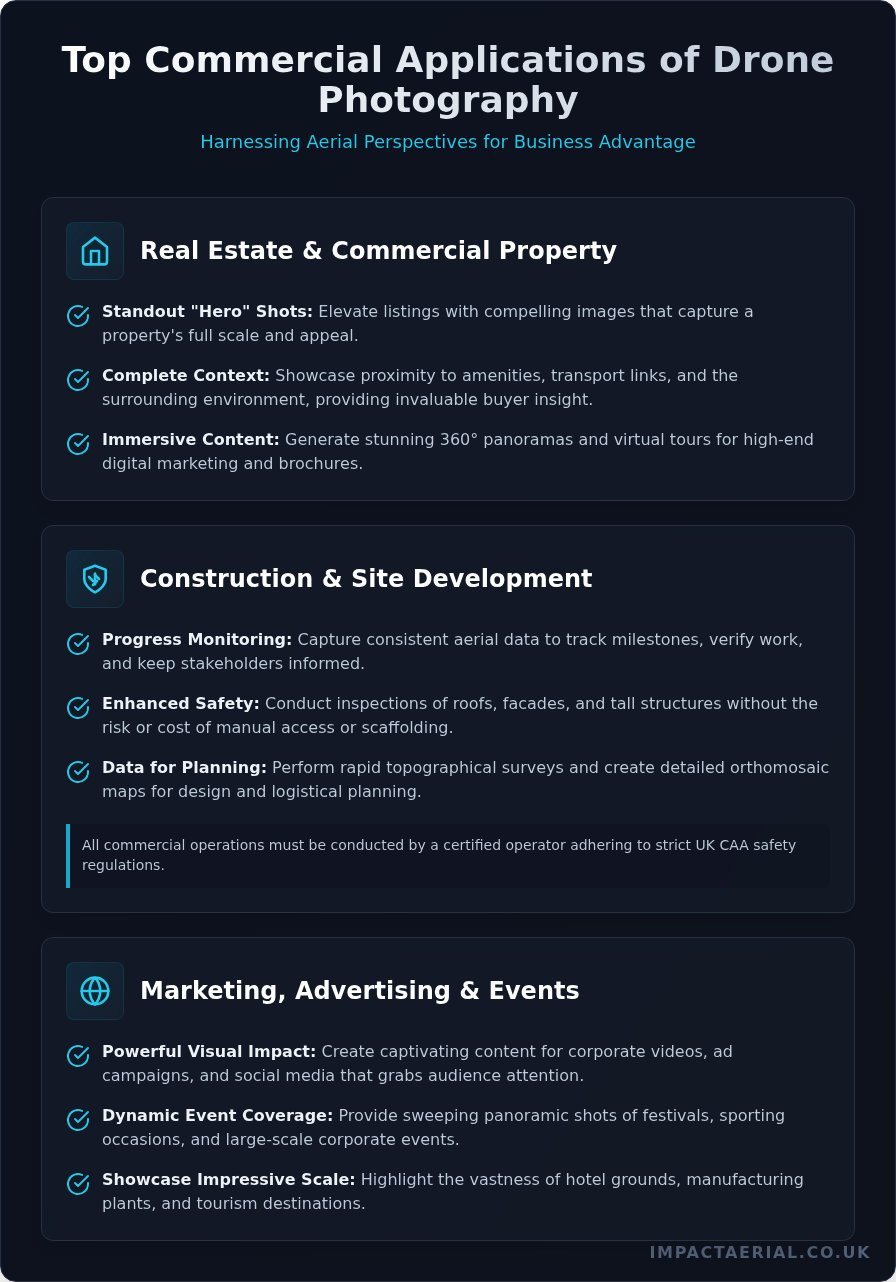
Professional Property Drone Photography in Manchester: The Complete 2026 Guide

A drone hovering over a Deansgate development is more than just a camera; it’s a sophisticated piece of aeronautical equipment operating within one of the UK’s most complex air traffic zones. You likely understand that high-quality aerial perspectives are no longer a luxury but a necessity for competitive listings. However, the logistical hurdles of the Manchester Airport CTR and the unpredictable North West rain often make professional results feel like a gamble. Finding a pilot who is actually insured and GVC certified shouldn’t be the hardest part of your marketing strategy.

This guide explains how to secure property drone photography manchester that delivers breathtaking visuals and precise survey data while ensuring 100% CAA compliance. We’ll show you how professional imagery can increase listing engagement by up to 60 percent based on 2024 industry data. You’ll learn how to navigate restricted airspace, verify pilot credentials for added peace of mind, and utilize the latest 4K HDR technology to bypass the need for expensive scaffolding. We provide a clear roadmap for achieving stunning results regardless of the Manchester weather or complex local regulations.

Key Takeaways

  • Understand how professional property drone photography manchester transforms “Northern Powerhouse” developments by providing high-quality perspectives that elevate market listings.
  • Learn the critical importance of CAA GVC certification and how to navigate the Manchester Airport Flight Restricted Zone (FRZ) for compliant city centre operations.
  • Discover the distinct differences between residential lifestyle imagery and the technical, data-heavy requirements of commercial structural surveys.
  • Master the logistics of a North West shoot, including how to manage unpredictable weather patterns and essential pre-flight checklists for added peace of mind.
  • Explore why “Gold Standard” safety protocols and professional services are essential for delivering high-quality aerial data in complex urban environments.

The Impact of Property Drone Photography in Manchester’s Market

Professional property drone photography in Manchester has evolved from a luxury add-on into a critical data-gathering tool for the city’s real estate sector. While the history of aerial photography dates back to the 19th century, today’s 4K HDR DJI Enterprise drones provide a level of precision that was previously impossible. In 2026, Manchester’s “Northern Powerhouse” status demands high-quality visual assets to compete in a global market. It’s no longer enough to show a building’s facade; investors want to see the context of the entire district.

To better understand the visual scale these tools provide, watch this demonstration of professional aerial filming in the city:

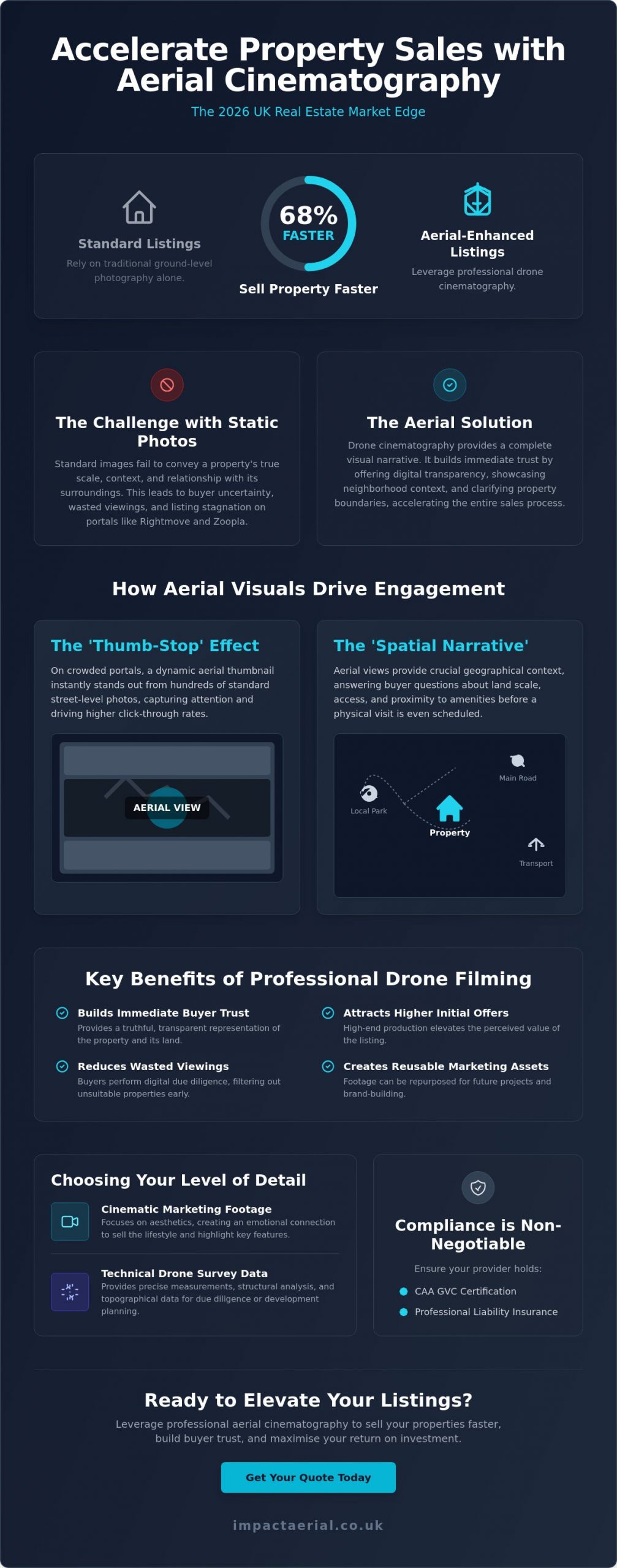
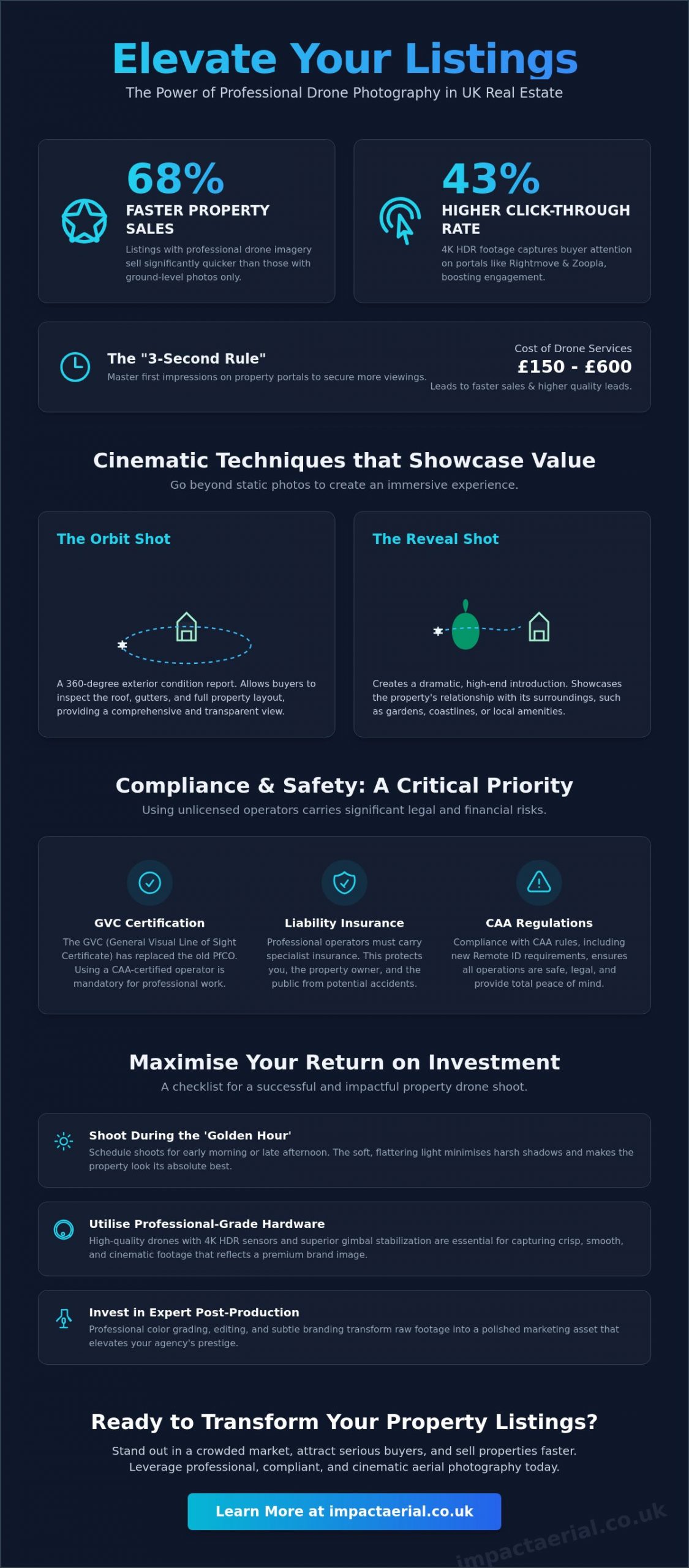
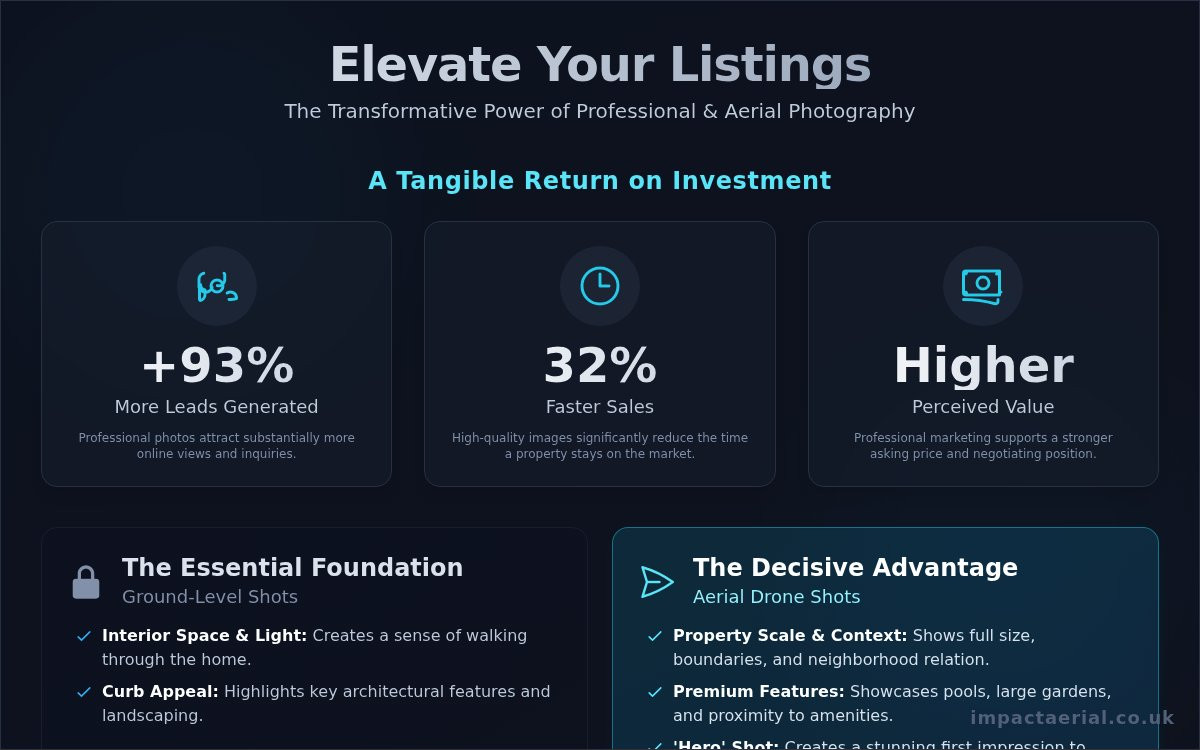
Elevated angles do more than just look impressive; they create a psychological advantage by increasing a property’s perceived value. Data from UK property markets in 2024 indicated that listings featuring professional aerial shots sold 32% faster than those relying solely on ground-level images. By 2026, property drone photography manchester has transitioned from an optional feature to an industry standard for any development exceeding a £500,000 valuation. It provides a sense of prestige and scale that traditional tripod-mounted photography cannot replicate.

Transforming Manchester’s Skyline Listings

Manchester’s urban core is currently defined by the rapid expansion of high-rise residential towers in Deansgate and Ancoats. Drones allow agents to showcase a property’s proximity to key economic hubs like MediaCityUK, Salford Quays, and the Northern Quarter within a single frame. Capturing the scale of a 50-storey tower requires the technical expertise of CAA GVC Certified operators who can safely navigate congested city centre environments. This perspective highlights transport links and local amenities, proving the location’s value to potential buyers instantly.

Beyond Marketing: The Rise of Aerial Surveys

Beyond aesthetics, drone property surveys deliver rapid ROI for Manchester landlords and estate managers. Using thermal imaging and high-resolution zoom, specialists identify roof defects or heat leaks in industrial heritage buildings without the prohibitive expense of scaffolding. In 2025, city centre survey costs were reduced by an average of 60% when switching from traditional access methods to drone-based inspections. This provides peace of mind for commercial asset managers responsible for large portfolios across the region.

Flying drones in a major metropolitan hub requires more than technical skill; it demands strict adherence to UK Civil Aviation Authority drone regulations to ensure the safety of both property and the public. Manchester presents a unique challenge for property drone photography manchester due to the Manchester Airport Flight Restricted Zone (FRZ). This zone extends in a 5km radius from the airport, with additional 5km by 1km approach corridors that cover significant portions of South Manchester and Cheshire. Operating within these boundaries requires specific ATC (Air Traffic Control) clearance, a process our team manages entirely to provide clients with absolute peace of mind.

The Legal Framework for Manchester Drone Flights

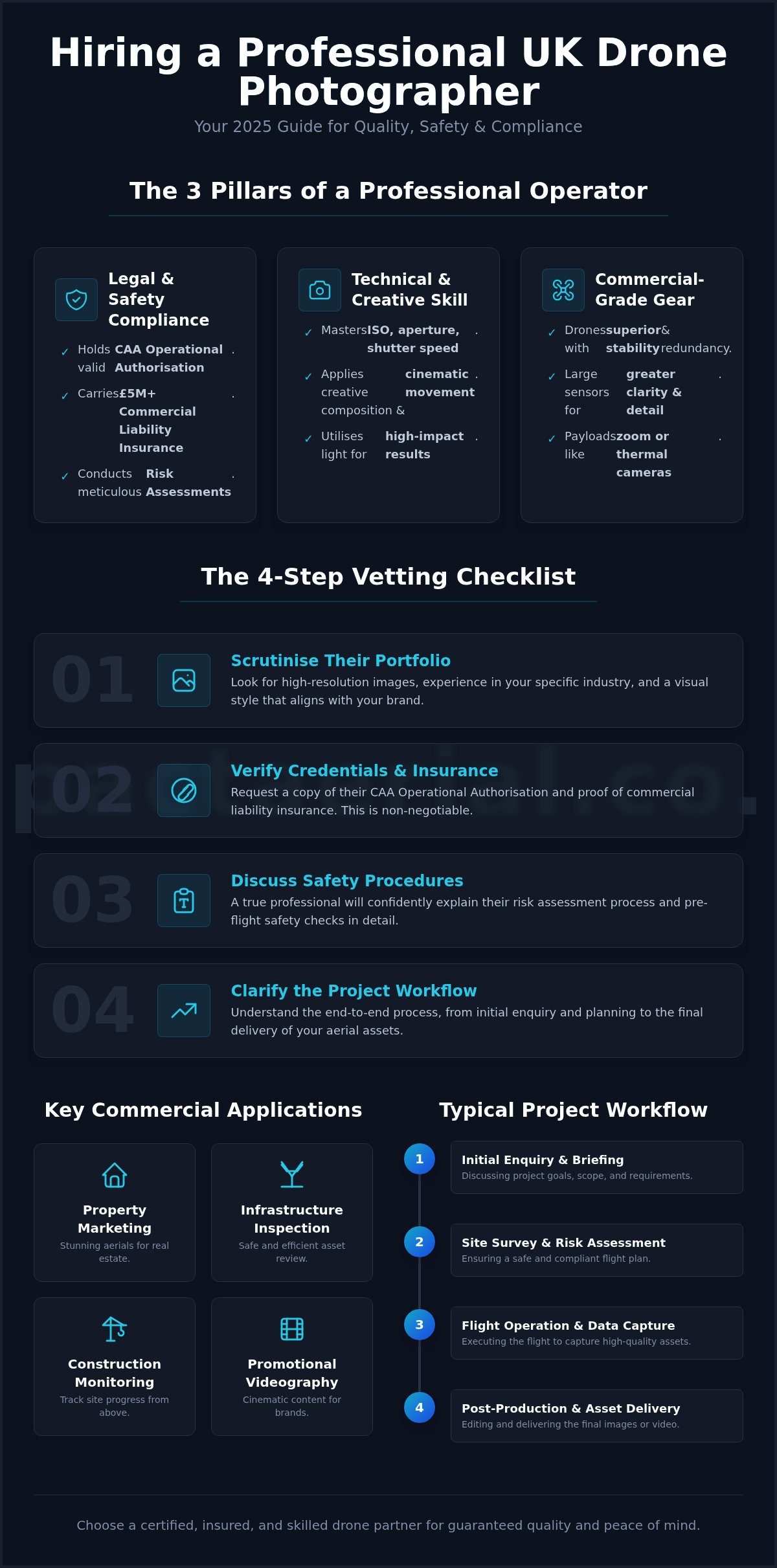
Our pilots have transitioned from the older PfCO (Permission for Commercial Operation) to the current General Visual Line of Sight Certificate (GVC). This certification is essential for operating in the “canyons” of Deansgate or the Greengate area, where high-rise buildings create complex wind patterns and signal obstacles. Every mission begins with a site-specific risk assessment (RAMS) that details emergency landing zones and weather thresholds, ensuring a meticulous approach to every project. Under UK law, it’s a mandatory requirement for all commercial drone operators to hold valid EC 785/2004 compliant insurance. Our £5m commercial liability insurance covers every flight, protecting our clients from unforeseen liabilities in this niche but increasingly diverse market.

Managing Public Safety in Busy Urban Centres

Safety is our primary metric for success. In high-footfall areas such as Piccadilly Gardens or the Northern Quarter, we implement physical ground-level cordons to maintain a clear sterile area during takeoff and landing. This proactive management prevents unauthorized access to the flight controller’s immediate vicinity. Privacy is equally paramount; our post-processing workflows ensure GDPR compliance by blurring faces and vehicle registrations in residential neighborhoods.

To maintain control in the RF-heavy environment of the city centre, we utilise a DJI Enterprise fleet. These aircraft use O3+ transmission systems to ensure signal stability despite the massive radio frequency interference found in urban settings. This technology allows us to deliver the high-quality data-gathering services our clients expect without compromising on operational security. If you are planning a development project, you can contact our specialist team to review your site’s specific airspace requirements and ensure a compliant shoot.

Comparing Drone Services for Residential and Commercial Assets

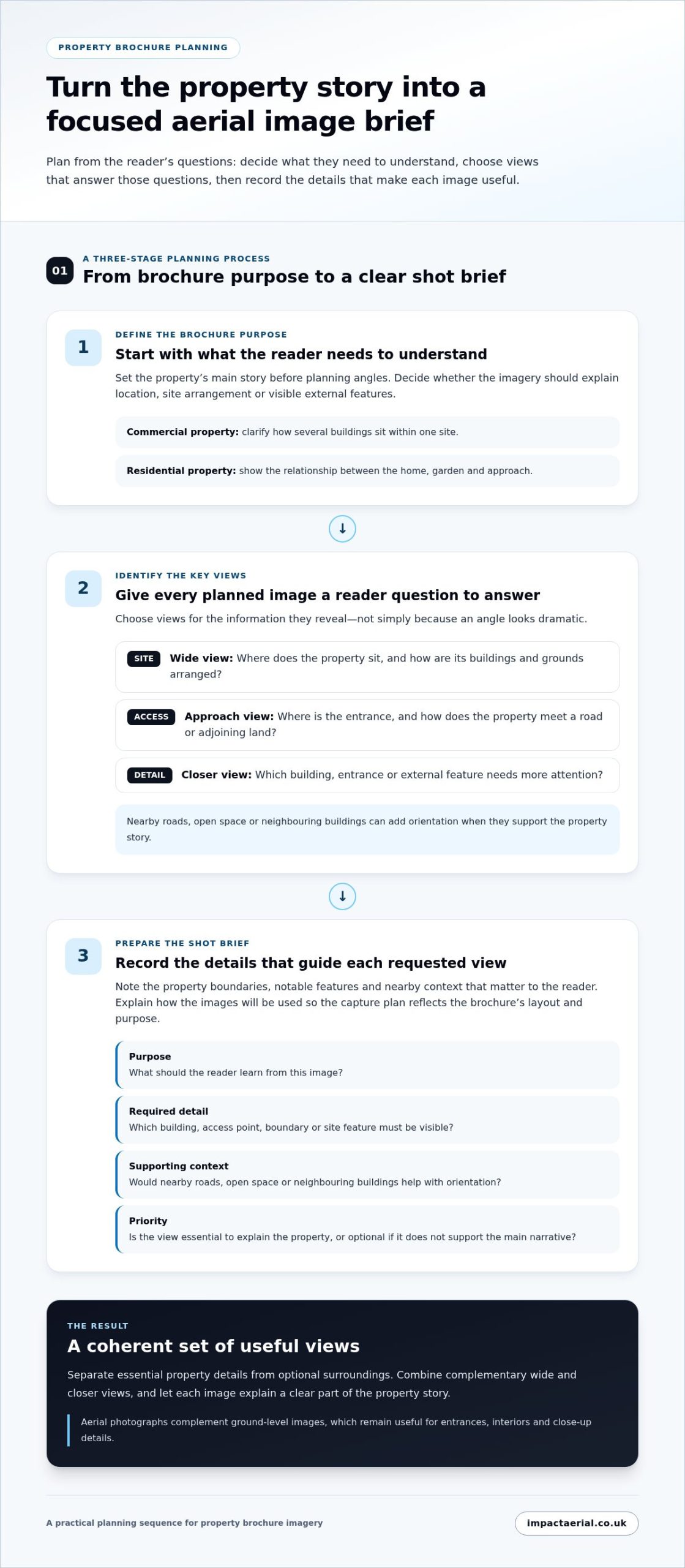
Executing professional property drone photography manchester requires a tailored approach that shifts based on the asset class. Residential and commercial projects demand different flight altitudes, camera sensors, and data outputs. For residential listings, our focus remains on aesthetic appeal and lifestyle positioning. We capture high-end homes in areas like Didsbury or Altrincham during the “golden hour” to ensure the property looks inviting. High Dynamic Range (HDR) processing ensures that shadows are balanced and highlights don’t blow out, which is vital for premium estate agency marketing.

Commercial assets require a more technical perspective. Investors and facility managers in Manchester city centre prioritise site context and structural integrity over purely artistic shots. We provide wide-angle aerial views that show a building’s proximity to transport links like the M60 or Piccadilly Station. For industrial assets, particularly the massive warehouse footprints in Trafford Park, we deploy thermal imaging sensors. These specialised drones identify heat signatures that indicate roof leaks or insulation failures across 250,000 square foot facilities. This data-gathering capability provides a level of detail that traditional ground-based inspections cannot match.

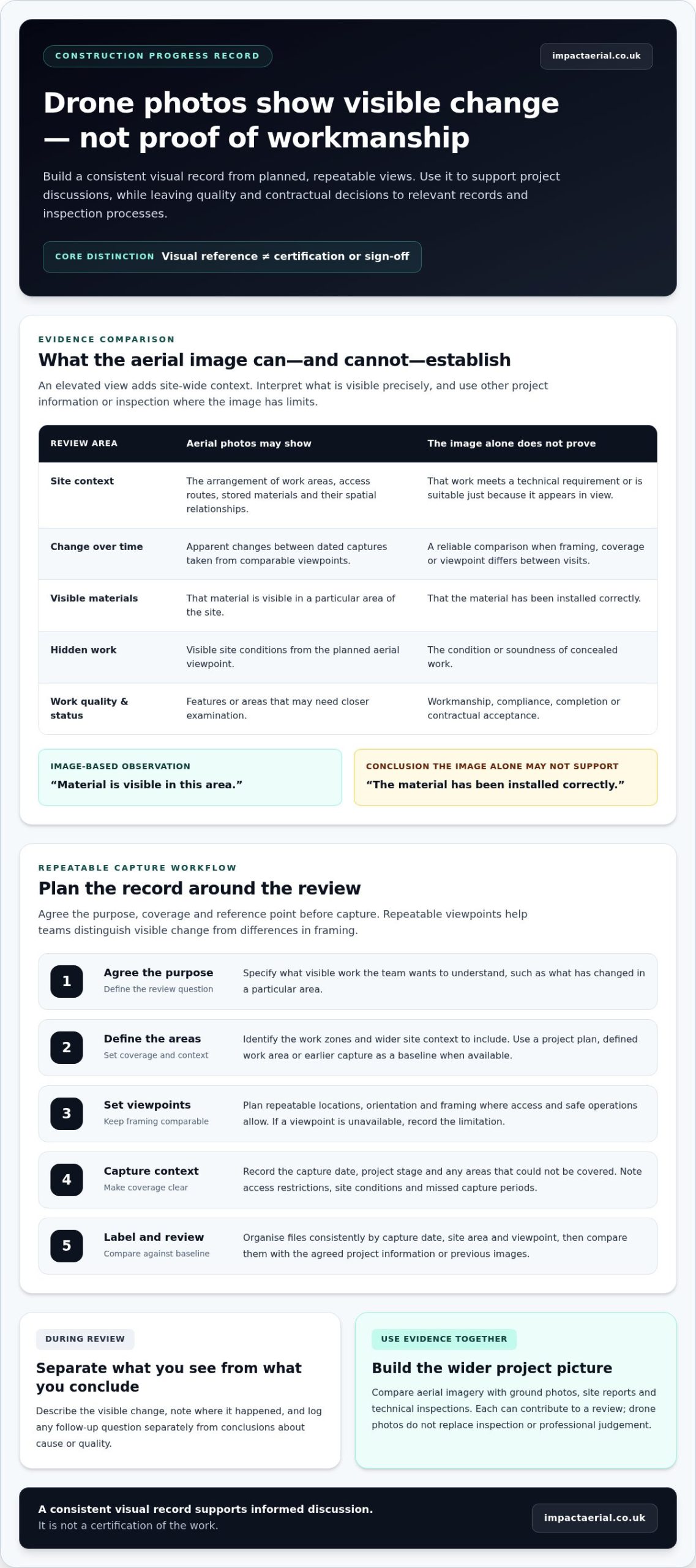
Large-scale developments also benefit from recurring flight paths. By capturing consistent progress shots, stakeholders and investors track construction milestones against projected timelines. This provides a transparent record of work for professional services and ensures project accountability from breaking ground to completion.

Marketing Visuals vs. Technical Data

The choice of equipment depends on whether the goal is promotion or precision. For marketing, we utilise the DJI Mavic 3 Pro for its triple-camera system, delivering 4K HDR cinematic video that outperforms standard ground photography. However, for technical surveys, we use Enterprise models equipped with RTK (Real-Time Kinematic) modules for centimetre-level accuracy. While 3D virtual tours are excellent for interior walkthroughs, drone photography provides the essential external context. We often combine photogrammetric survey data with visual assets to give clients a complete digital twin of their property. This approach is becoming standard in this niche but increasingly diverse market.

Sector-Specific Benefits in Greater Manchester

  • Retail: We monitor car park utilisation and footfall patterns at major retail parks, providing owners with 98% accurate occupancy data during peak trading hours.
  • Hospitality: Our pilots showcase Manchester’s boutique hotels by capturing them within their vibrant urban context, highlighting nearby landmarks to attract international guests.
  • Construction: On cramped city sites near Deansgate, aerial views are indispensable for managing logistics, crane clearances, and site safety without interrupting ground operations.

Our CAA GVC Certified pilots ensure every flight adheres to strict safety protocols. For added peace of mind, we maintain £10 million in commercial liability insurance, ensuring that every property drone photography manchester project is handled with the highest level of professionalism and regulatory compliance.

Planning Your Manchester Drone Shoot: Preparation and Logistics

Executing high-quality property drone photography manchester requires more than just a pilot and a flight plan. Success depends on meticulous preparation and a deep understanding of the North West’s unique environmental challenges. With Manchester receiving an average of 867mm of rainfall annually, we monitor weather windows using high-resolution meteorological data to ensure optimal flight conditions. Our operations team works with clients to establish a 48-hour weather-watch window; this provides the flexibility needed to capture clear, crisp imagery between the region’s frequent rain showers.

Pre-flight logistics are a critical component of our professional services. Before any deployment, our CAA GVC Certified pilots conduct a comprehensive site assessment. We require clients to provide detailed site maps and point-of-contact information for on-site managers. This transparency ensures we maintain our 100% safety record while operating in complex urban environments. For added peace of mind, our operations are backed by £5 million in commercial liability insurance, specifically tailored for high-density aerial work.

Site Preparation for Property Owners

To achieve breath-taking results, the property must be staged correctly before the drone arrives. We advise clearing all non-essential vehicles from the foreground and ensuring communal areas are free of debris or maintenance equipment. Notifying neighbours and local stakeholders is essential. It prevents operational delays and ensures the shoot remains compliant with privacy regulations. If the project involves commercial assets like the NOMA district or MediaCity, coordinating with onsite security for roof access or designated take-off zones is a mandatory step in our pre-flight checklist.

Urban Flight Logistics: Dealing with Density

Manchester’s skyline is increasingly dominated by steel-framed architecture, which can create significant magnetic interference for drone navigation systems. Our fleet utilizes the latest DJI Enterprise hardware to maintain stable GPS locks even near high-density structures like the towers at Deansgate Square. Finding safe, legal take-off and landing points in a busy city centre requires local expertise and precise data-gathering. We use 4K HDR technology to overcome overcast Manchester skies, ensuring that even on grey days, the final imagery retains vibrant colours and professional-grade contrast. This technical precision is what allows us to serve a niche but increasingly diverse market with consistent excellence.

Ready to showcase your Manchester assets from a new perspective? Contact Impact Aerial today for a professional site assessment and quote.

Why Impact Aerial is Manchester’s Leading Drone Provider

Impact Aerial delivers a specialized approach to property drone photography manchester by combining technical precision with rigorous safety protocols. Our operations adhere to the highest CAA standards, utilizing what we call “Gold Standard” safety checks before every flight. This meticulousness ensures that even the most complex urban environments in Manchester, from the crowded streets of Deansgate to new developments in Salford Quays, are captured without risk. We understand that in a niche but increasingly diverse market, professional standards are the only way to ensure project success.

Our Birmingham-based hub serves as a central deployment point for the entire North West. This strategic location allows our teams to mobilize quickly, providing Greater Manchester clients with responsive service and consistent results. We don’t just deliver raw files; our in-house post-production suite utilizes advanced software to turn 4K HDR footage into cinematic marketing assets. We also bridge the gap between exterior and interior marketing by integrating our high-altitude shots with immersive virtual tour creation. This holistic approach provides a seamless visual journey for potential buyers or stakeholders.

Expertise You Can Trust

For added peace of mind, every project we undertake is backed by £5 million in commercial liability insurance. Our pilots are not hobbyists. They are a GVC-certified roster with extensive experience operating DJI Enterprise drones. These units are designed for high-stakes property surveys and detailed inspections where accuracy is non-negotiable. We maintain a culture of transparent reporting, providing clients with full data delivery and comprehensive flight logs. This level of professionalism is essential for maintaining our reputation as a trusted technical consultant in the drone industry.

Start Your Manchester Project Today

Requesting a bespoke quote for your Manchester property is a straightforward process. Our consultation begins with an initial brief to understand your specific site requirements, followed by a thorough pre-flight risk assessment. We cover the entire Greater Manchester region, including Bolton, Stockport, Oldham, and Trafford. Once the brief is finalized, we handle all airspace permissions and local notifications. From the first contact to the final delivery of your high-resolution assets, Impact Aerial provides a structured, methodical service that prioritizes your project goals and legal compliance.

Elevating Your Manchester Property Strategy for 2026

As the Manchester skyline continues its 2026 expansion, the demand for high-caliber visual data has never been higher. Integrating property drone photography manchester isn’t just about aesthetics; it’s a strategic requirement for navigating a competitive real estate market. You’ve seen how strict adherence to CAA GVC standards ensures operational safety, while professional logistics streamline the path from flight planning to final delivery. Success in this niche but increasingly diverse market depends on technical precision and verified credentials.

Impact Aerial provides this expertise through our team of CAA GVC Certified Pilots and a comprehensive £5m commercial liability insurance policy. We don’t just capture raw footage. Our service includes expert post-production to ensure every asset meets professional broadcasting standards. For added peace of mind, we handle every detail of the region’s complex airspace regulations so you can focus on your project’s results.

Request a Professional Drone Photography Quote for Your Manchester Property

Let’s transform your property’s perspective today.

Frequently Asked Questions about Property Drone Photography in Manchester

Do I need permission from the council for drone photography in Manchester?

You don’t typically need council permission to fly over Manchester if the pilot complies with Civil Aviation Authority (CAA) regulations. However, Manchester City Council requires prior authorisation if the drone takes off or lands on council-owned land, such as public parks or the city’s pedestrianised zones. We manage these specific permissions as part of our professional service to ensure every flight is fully compliant with local byelaws.

How much does property drone photography cost in Manchester?

The cost for property drone photography manchester services depends on the project’s complexity, location, and required deliverables. While we provide bespoke quotes, industry reports from the Drone Safe Register indicate that professional aerial photography packages vary based on insurance levels and equipment specs. Factors like proximity to Manchester Airport and the need for specific airspace clearances will influence the final investment required for your project.

What happens if the weather is bad on the day of my Manchester drone shoot?

We reschedule shoots at no extra cost if weather conditions exceed safe operating limits. Our DJI Enterprise drones have a maximum wind resistance of 12 metres per second, and we don’t fly in rain or heavy fog to protect the equipment and image quality. We monitor Met Office forecasts 48 hours in advance to give you plenty of notice if a Manchester weather front looks likely to disrupt the schedule.

Can drones fly in the Manchester Airport Flight Restricted Zone?

Yes, we can operate within the Manchester Airport Flight Restricted Zone (FRZ) by obtaining specific clearance from National Air Traffic Services (NATS). This zone extends in a 5km radius around the airport, covering areas like Wythenshawe and parts of Altrincham. We handle the entire application process, which usually requires at least 14 days of lead time to secure the necessary flight permissions from the airport’s air traffic control.

Is drone photography legal for residential properties in Manchester?

It’s entirely legal for residential properties when conducted by a pilot holding the correct CAA certifications. Since 2021, UK regulations allow drones to fly in residential areas as long as the pilot maintains a safe distance from uninvolved persons. For high-density areas in Manchester city centre, we use sub-250g drones or operate under a specific Category authorisation to ensure we meet all legal safety requirements for urban environments.

How long does a typical property drone shoot take to complete?

A standard residential shoot usually takes between 45 and 90 minutes on-site. This timeframe allows our pilot to conduct a pre-flight safety assessment, capture multiple 4K aerial angles, and ensure we have sufficient coverage of the property’s boundaries. Larger commercial sites or industrial estates in Greater Manchester may require 3 to 4 hours to capture the detailed photogrammetry data or comprehensive marketing footage required.

Do you provide edited photos or just the raw drone footage?

We provide fully edited, high-resolution images and 4K video as our standard deliverable. Our post-production team uses professional software to colour grade the footage and enhance the architectural details of your property drone photography manchester project. While we can provide raw files upon request for your internal marketing teams, most clients prefer our ready-to-use files that are optimised for web listings and print brochures.

Are your drone pilots CAA GVC certified and insured?

Every pilot at Impact Aerial is CAA GVC certified and holds valid commercial liability insurance. For added peace of mind, our insurance coverage meets EC 785/2004 standards, providing at least £5 million in public liability protection. This level of certification is the industry standard for professional operators, ensuring we can safely navigate the complex airspace and regulatory requirements of the Manchester metropolitan area.

Drone Photography Portfolio Examples: What Professional Aerial Excellence Looks Like in 2026

What if the most visually stunning image in a pilot’s gallery is actually a regulatory liability waiting to happen? You likely recognise that a “pretty” sunset shot doesn’t prove an operator can safely navigate a £50 million infrastructure project or provide the centimetre-accurate photogrammetry required for modern building surveys. It’s frustrating when you can’t tell if a portfolio represents genuine commercial expertise or just high-end hobbyist gear.

By exploring these industry-leading drone photography portfolio examples for 2026, you will gain the exact framework needed to evaluate technical precision and visual impact. We’ll provide peace of mind by showing you how to verify CAA GVC certifications and £10 million public liability insurance markers within a professional gallery. We are going to break down the specific shots required for property, construction, and industrial inspections so you can hire with absolute confidence. This guide ensures your next aerial project achieves maximum impact while remaining fully compliant with the latest UK flight regulations and safety standards.

Key Takeaways

  • Understand why modern professional portfolios must transition beyond basic high-altitude shots to incorporate 4K HDR technology and precise technical data.
  • Explore diverse drone photography portfolio examples that demonstrate how to capture “hero shots” and essential contextual data for commercial property and estate marketing.
  • Learn to distinguish between marketing-led galleries and technical industrial portfolios used for high-resolution roof inspections and structural assessments.
  • Identify critical red flags such as inconsistent colour grading or the use of stock footage to ensure you are hiring a legitimate, CAA GVC certified operator.
  • Discover how specialised expertise in the West Midlands combined with meticulous post-production ensures your project achieves maximum visual impact and technical precision.

Defining Quality in a Professional Drone Photography Portfolio

A professional portfolio doesn’t just show the ground from 120 metres. It proves technical competence and commercial utility. When you examine drone photography portfolio examples, look for shots that serve a specific business purpose, such as a £5 million construction site progress report or a detailed structural survey for a West Midlands developer. Hobbyists often focus on altitude for its own sake. Professionals focus on the subject, using height as a tool rather than a novelty.

Modern commercial imagery relies on 4K High Dynamic Range (HDR) technology. Impact Aerial’s fleet is equipped with industry-leading drone technology to capture over 12 stops of dynamic range, ensuring detail remains visible in both deep shadows and bright highlights. Consistency is the primary indicator of a reliable operator. A portfolio featuring 30 high-quality, consistent images suggests a CAA GVC certified pilot who follows strict pre-flight checklists and safety protocols. This reliability provides peace of mind for clients who need repeatable results across multiple sites.

  • Commercial Utility: Images that highlight site access, boundaries, and surrounding infrastructure.
  • Certification: Visible evidence of CAA GVC compliance and professional insurance standards.
  • Technical Breadth: Mastery of different lighting conditions and complex urban environments.

Composition and Lighting: The ‘Golden Hour’ Standard

Professional aerial photography often happens during the ‘Golden Hour’, the period shortly after sunrise or before sunset. This low-angle light adds depth to architectural features and highlights textures that flat midday sun washes out. We use the rule of thirds and leading lines to guide the viewer’s eye toward key assets, like site entrances or primary structures. High-end, rectilinear optics are essential. We avoid the ‘fisheye’ distortion common in budget drones, ensuring that structural lines stay perfectly straight in every frame.

Technical Precision and Sharpness

Image clarity must be consistent across the entire frame. Budget sensors often blur at the edges, but professional-grade glass maintains sharpness from corner to corner. Our drones use mechanical shutters and advanced gimbal stabilisation to counteract 20mph wind gusts, preventing motion blur in stills. We always shoot in 14-bit RAW format rather than compressed JPEG. This allows for precise colour grading and maximum data recovery during post-production. It’s the difference between a simple snapshot and a high-fidelity asset suitable for large-scale physical signage.

When reviewing drone photography portfolio examples, check for clear definition in fine textures like roof tiles or brickwork. If the edges of the image look muddy or soft, the equipment or the pilot’s settings aren’t up to professional commercial standards. Sharpness is a non-negotiable requirement for surveys and high-end marketing alike.

Commercial Property and Real Estate Portfolio Examples

A powerful drone photography portfolio examples section must lead with the ‘Hero Shot’. This single, high-altitude frame captures the entire estate, providing a sense of grandeur that ground photography cannot replicate. For a £3.5 million Cotswolds estate or a 60,000 sq ft distribution hub in the West Midlands, this perspective establishes the property’s footprint and architectural intent instantly. We utilise 4K HDR DJI Enterprise drones to ensure every slate on a roof and every line in a car park is crisp, offering the technical precision professional developers demand for their marketing collateral.

Effective portfolios also prioritise contextual photography. Buyers don’t just purchase a building; they invest in a location. Capturing the property in relation to transport links, such as being within 400 metres of a motorway junction or a 5-minute walk from a mainline railway station, provides vital logistical data. By integrating these aerial views with ground-level 360-degree virtual tours, we create a seamless transition from the wide-angle environment to the interior details, giving 78% of prospective buyers the confidence to book a physical viewing after seeing the online listing.

To see these principles in action, it’s often useful to look at specialized real estate photography portfolios. While based in the US, the work of Houzpics | Real Estate Photographers in Hilton Head, SC provides an excellent example of how to blend hero shots, contextual images, and interior details to create a compelling property listing.

High-end residential needs differ significantly from large-scale commercial requirements. While a residential client seeks an emotional connection through aesthetics, a commercial asset manager focuses on site boundaries, access points, and roof condition. Our professional aerial services cater to both, ensuring the data gathered meets the specific objectives of the stakeholder while maintaining strict adherence to CAA GVC safety standards for added peace of mind.

The Lifestyle Angle for Residential Marketing

Luxury residential marketing relies on selling a dream. Drones allow us to highlight intricate garden layouts, tennis courts, and outdoor living spaces that are often invisible from the street. By capturing the surrounding neighbourhood and local parks, we build a narrative about the community. Aerial lifestyle photography is a specialised visual technique that uses elevated perspectives to showcase the synergy between a luxury home and its surrounding environment to drive high-value sales.

Commercial Site Context and Scale

For industrial units and retail parks, drones demonstrate sheer scale and accessibility. We use aerial overlays to clearly define site boundaries and illustrate future development phases on 2D maps. This level of clarity is essential for planning applications and investor pitches where spatial awareness is paramount. For a deeper look at how these techniques accelerate transactions, read our real estate photography guide which details the strategies used by leading UK firms to move assets 31% faster than using traditional methods.

Technical and Industrial Portfolio Examples: Surveys and Inspections

Technical drone photography portfolio examples look fundamentally different from marketing-led galleries. While a marketing portfolio focuses on light, composition, and brand narrative, a technical gallery prioritises data integrity and measurable detail. For UK professionals in construction, surveying, and asset management, the value of an aerial image lies in its resolution and accuracy. A high-quality technical portfolio demonstrates the pilot’s ability to capture 45-megapixel imagery of structural components, such as roof tiles or masonry cracks, providing a level of detail that traditional manual inspections cannot match without significant cost and risk.

In structural assessments, precision is the primary metric. Portfolios should showcase clear, sharp images of bridge bearings, chimney stacks, and high-rise cladding where the pixel density allows for millimetre-level analysis. For ongoing construction projects, the portfolio must highlight the use of repeatable flight paths. By utilising GPS-locked waypoint missions, operators ensure the drone follows the exact same coordinates and altitude every 14 or 30 days. This consistency allows site managers to create accurate time-lapse overlays that track progress against architectural blueprints with 100% spatial alignment.

Photogrammetry and 3D Mapping Examples

A professional technical portfolio illustrates the difference between a standard aerial photo and an orthomosaic map. These examples show how hundreds of overlapping nadir shots, taken at a 90-degree downward angle, are stitched together to create a georeferenced 2D map or a 3D textured model. This process enables surveyors to take volume measurements and distance calculations directly from the digital data. For more information on the equipment required for these high-precision tasks, refer to our survey drone guide which covers the necessary technical specifications for commercial operations.

Solar Farm and Infrastructure Inspections

Thermal imaging is a vital component of industrial drone photography portfolio examples. By using radiometric thermal sensors, pilots can identify “hot spots” in solar PV panels that indicate cell failure or bypass diode issues. Portfolio examples in this sector often include side-by-side comparisons of RGB (visual) and thermal imagery to show how faults invisible to the naked eye are easily detected from the air. Beyond solar, close-up inspections of telecommunications towers and high-voltage power lines demonstrate the drone’s ability to operate in complex electromagnetic environments. Integrating thermal drone data into a maintenance schedule saves asset owners an average of £12,000 per year by detecting minor faults before they escalate into catastrophic equipment failure.

Evaluating a Portfolio: Red Flags and Green Flags

When you examine drone photography portfolio examples, you must look beyond the initial aesthetic appeal. A professional portfolio should demonstrate both technical mastery and strict adherence to UK aviation law. One immediate red flag is a lack of consistency in post-production. If the colour grading varies wildly between shots, or if the sharpness drops significantly in certain images, the operator might be padding their gallery with stock footage or content “borrowed” from other creators. Professional photographers in any field maintain a signature style that proves they handled the project from flight to final edit; this is as true for technical aerial work as it is for creative fields, which you can see in the curated blog of One Vision Photography | South Wales Wedding Photographer.

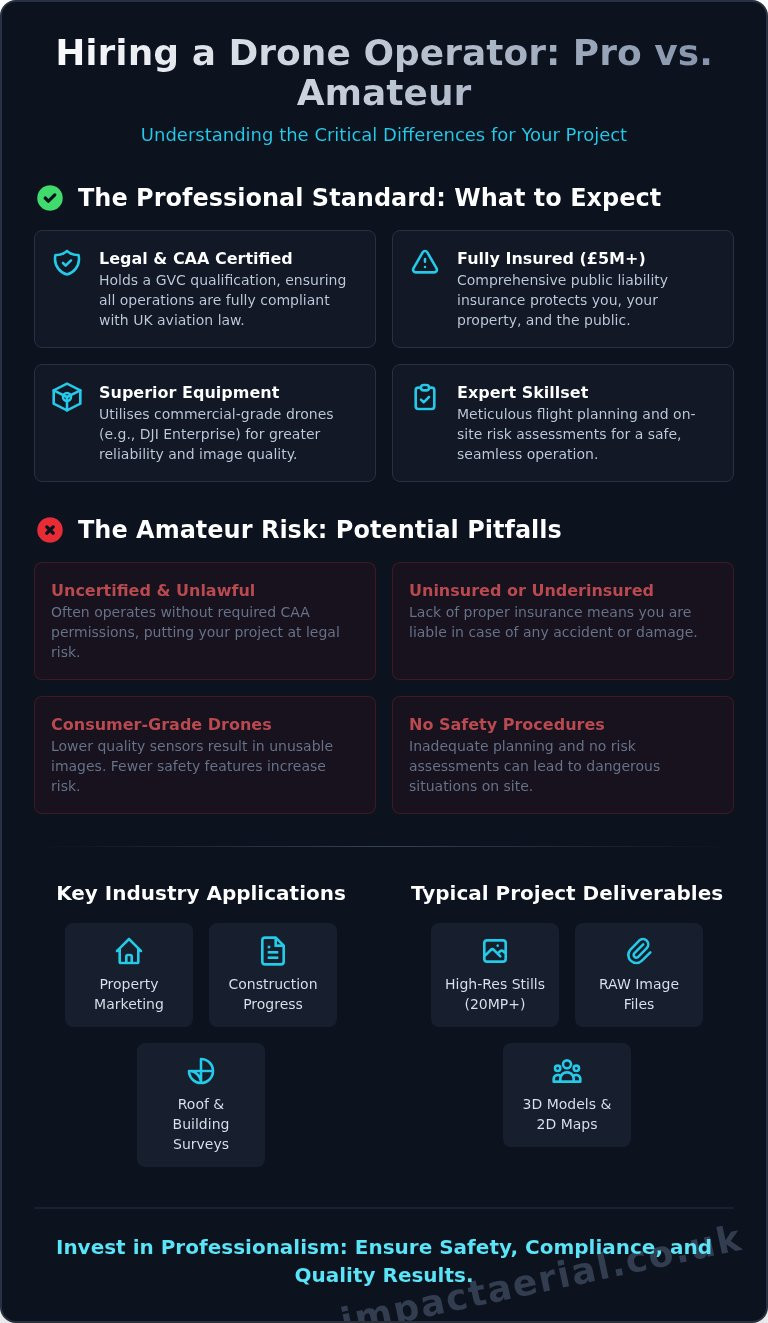
You should also perform a “safety audit” of the imagery. Look for shots that appear to be taken directly over large crowds or within Flight Restriction Zones (FRZs) such as those surrounding Birmingham Airport or Heathrow. Unless the pilot can explain the specific permissions obtained for those flights, these images represent a massive legal risk. Professional operators prioritise safety over a “cool” shot every time. Verify their equipment list too. A hobbyist drone like a DJI Mini 3 is a capable tool for personal use, but commercial projects often require the stability and sensor quality of DJI Enterprise grade machinery to deliver the high-quality data-gathering results your brand requires.

The Compliance Green Flag: CAA GVC Certification

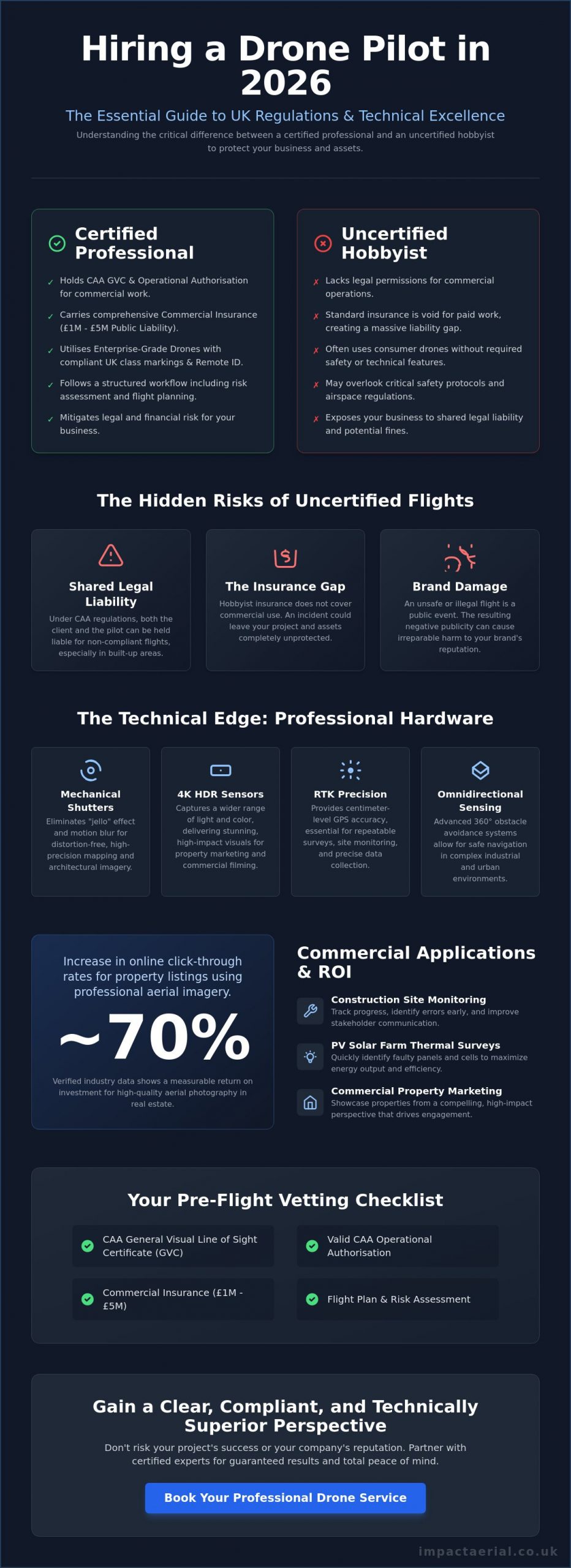
A reputable pilot will proudly display their CAA GVC (General Visual Line of Sight Certificate) credentials. This certification, which became the industry standard following regulatory changes in December 2020, is essential for flying drones in the “Specific Category” within the UK. It proves the pilot has undergone rigorous theoretical and practical testing. Without this, any commercial work they perform is likely illegal, which could void your own corporate liability. You can read our UK drone license guide to understand these legalities in more detail.

Insurance and Liability: The £5m Benchmark

For added peace of mind, always check for commercial-grade insurance. While the legal minimum for drone operators under EC 785/2004 is relatively low, industry leaders maintain £5 million in public liability protection as a standard benchmark. This level of cover is often a mandatory requirement for working on major construction sites or high-value commercial properties in the West Midlands. A portfolio might look impressive, but it’s effectively worthless if the operator isn’t backed by a robust policy. Don’t be afraid to ask for a copy of their current insurance schedule during the enquiry stage. A professional will have this document ready to share immediately.

Ensure your next project is handled by vetted experts. Contact Impact Aerial today for a professional consultation and a bespoke quote.

Why Impact Aerial’s Portfolio Sets the Standard in the UK

Impact Aerial doesn’t just capture images; we deliver high-precision data and cinematic visuals that define industry benchmarks. Our commitment to 4K HDR quality ensures that every frame in our drone photography portfolio examples meets the stringent requirements of modern commercial clients. Based in Birmingham, we provide localised expertise across the West Midlands, understanding the unique lighting and structural challenges of the region’s urban and industrial landscapes. Our work reflects a deep knowledge of the local terrain, from the bustling city centre to sprawling industrial estates.

Safety and compliance are the foundations of our operation. We hold full CAA GVC certification, allowing us to operate legally and safely in complex environments where others cannot. For added peace of mind, we carry £5 million in commercial liability insurance. This level of professional compliance is why 95% of our construction and solar energy clients return for repeat surveys. Our portfolio spans a niche but increasingly diverse market, including:

  • Detailed solar farm inspections using advanced thermographic sensors.
  • High-end commercial property marketing for national developers.
  • Weekly progress monitoring for construction projects valued at over £10 million.
  • Precision inspections for building services and difficult-to-reach infrastructure.

From Consultation to Post-Production

Success starts long before the propellers spin. We manage every project through a structured, methodical workflow. This begins with the initial flight plan and risk assessment and carries through to the final post-production edit. We use DJI Enterprise drones to capture superior data and images that consumer-grade equipment simply cannot match. By tailoring our “visual behaviour,” we adapt our flight paths to suit your brand’s aesthetic or a surveyor’s technical needs. Whether you require a sweeping cinematic shot for a marketing campaign or a precise 2D orthomosaic map for a site survey, our technical precision remains consistent.

Ready to Start Your Project?

Securing a professional drone service in the UK is straightforward when you partner with experts who value regulation as much as creativity. If you need to see industry-specific results, we can provide a bespoke portfolio sample that aligns with your sector’s requirements. Our team is ready to help you showcase your brand or inspect your assets from a perspective that traditional photography cannot reach. It’s time to elevate your visual standards with a team that understands the technicalities of the UK’s flight environments.

Secure Your Competitive Edge with Professional Aerial Precision

Selecting the right partner requires looking beyond basic imagery to find technical mastery and strict regulatory adherence. A leading portfolio in 2026 doesn’t just show pretty pictures; it demonstrates 4K HDR precision across complex industrial surveys and high-end commercial property developments. When you examine drone photography portfolio examples, prioritise operators who back their creative output with the highest safety standards. At Impact Aerial, our CAA GVC Certified pilots maintain £5m commercial liability insurance to provide total peace of mind on every site. This level of protection is essential for projects involving building services or regional developments across the UK. We focus on delivering high-quality data-gathering and breathtaking perspectives that meet the rigorous demands of an evolving aerial market. It’s about combining the latest DJI Enterprise technology with a meticulous approach to compliance. Our team ensures every flight adheres to the latest Civil Aviation Authority regulations, ensuring your data is both legal and professional. View our full commercial drone photography portfolio and request a quote to get your project off the ground today. We look forward to bringing your vision to life with unparalleled clarity and expertise.

Frequently Asked Questions

What should I look for in a drone photography portfolio?

Look for high-resolution imagery that demonstrates creative composition and technical precision across diverse environments. Quality drone photography portfolio examples should showcase a pilot’s ability to handle different lighting conditions and complex subjects like active construction sites or heritage assets. Ensure the portfolio includes 4K or HDR samples to verify the equipment’s capability and the pilot’s eye for detail.

Are all drone photographers in the UK required to be licensed?

Any pilot operating a drone for commercial purposes in the UK must hold valid certification from the Civil Aviation Authority (CAA). Since January 2021, the General Visual Line of Sight Certificate (GVC) or A2 Certificate of Competency (A2 CofC) has replaced the older PfCO. Hiring an unlicensed operator is illegal and risks a £2,500 fine for the pilot and significant liability for the client.

What is the difference between a 4K and an HDR drone photo?

4K refers to the resolution of the image, providing approximately 8 million pixels for sharp detail in large prints or digital displays. HDR, or High Dynamic Range, is a technique where the drone captures multiple exposures of the same scene to balance highlights and shadows. This process ensures that 100% of the visual detail is retained in both the brightest skies and the darkest foregrounds.

Can drone photography be used for formal building surveys?

Drone photography is a standard tool for formal building surveys and roof inspections across the UK. Professional operators use high-resolution sensors to identify defects like hairline cracks or blocked guttering without the £1,500 daily cost of scaffolding. We provide detailed data-gathering through photogrammetry, allowing surveyors to inspect assets from a safe, ground-based position.

How much does professional drone photography cost in the UK?

Professional drone photography rates in the UK typically range from £350 for a basic half-day shoot to £1,200 for complex industrial projects. These prices cover the pilot’s expertise, CAA compliance, and post-production time. For added peace of mind, ensure your quote includes VAT and all necessary airspace permit fees to avoid hidden charges.

Is it safe to hire a drone photographer for a city centre project?

It’s safe to hire a drone photographer for city centre projects provided they hold a GVC and have completed a robust risk assessment. Urban environments require specific CAA authorisations to fly closer to people and buildings than standard rules allow. We follow strict safety protocols and coordinate with local authorities to manage the 30-metre or 50-metre separation distances required in congested areas.

What insurance should a professional drone pilot have?

A professional pilot must carry specialist commercial drone insurance that is compliant with EC 785/2004 regulations. Standard public liability insurance often excludes aviation activities, so you must verify the policy specifically covers “Unmanned Aerial Systems.” Most reputable UK operators carry at least £5 million in commercial liability insurance to protect clients and the public during operations.

How long does it take to get the edited photos back?

Most professional drone photographers deliver initial proofs within 24 to 48 hours of the flight. Final edited sets, including colour grading and retouching, are typically completed within 3 to 5 working days. This timeline ensures every image in your drone photography portfolio examples meets the high-quality standards required for commercial marketing or technical reporting.

Aerial Progress Photos for Developers: A Strategic Guide to Site Monitoring in 2026

Could a single missing visual update cost your project £50,000 in avoidable delays? For UK developers managing complex sites in 2026, the gap between ground-level reporting and reality is where budgets often disappear. You already know that relying on manual inspections or inconsistent aerial progress photos for developers leads to miscommunication with remote stakeholders. It’s a frustrating bottleneck that stalls decision-making and leaves your firm vulnerable to expensive project disputes. In an industry where 98% of large-scale projects face cost overruns, guessing is no longer a viable strategy.

This guide demonstrates how professional drone data transforms site monitoring from a reactive chore into a strategic asset. By using CAA GVC certified pilots and 4K HDR drone technology, you’ll gain high-resolution visual evidence that reduces project risk by up to 20% through better oversight. We’ll examine how repeatable visual data improves stakeholder transparency and provides the added peace of mind required to keep your 2026 developments on schedule and within budget. Discover how to leverage technical precision for better results.

Key Takeaways

  • Understand why traditional site monitoring is outdated and how aerial perspectives capture the full scale of complex 2026 development projects.
  • Discover how to utilise GPS-locked flight paths and 4K HDR imagery to produce consistent aerial progress photos for developers that integrate with BIM software.
  • Learn how to significantly reduce project risk and physical inspection time while improving safety by keeping personnel away from hazardous site areas.
  • Explore the technical process of using photogrammetry to transform high-resolution 2D imagery into actionable 3D site models for enhanced data-gathering.
  • Identify the non-negotiable compliance requirements for UK drone partners, including mandatory CAA GVC certification and £5m commercial liability insurance for added peace of mind.

The Evolution of Construction Site Monitoring: Why Developers are Looking Up

Construction monitoring has moved beyond the clerk of works walking a site with a clipboard and a handheld camera. Today, aerial progress photos for developers represent a systematic, data-driven method of documenting every stage of a build from a precise, repeatable vantage point. By deploying a professional unmanned aerial vehicle (UAV), project managers gain a high-altitude perspective that ground-based teams simply can’t replicate. This isn’t about capturing a single “hero shot” for a marketing brochure. It’s a strategic shift toward weekly or monthly captures that provide an unbiased, chronological record of a project’s lifecycle.

The current industry standard has evolved from occasional photography to rigorous visual data gathering. In 2024, UK construction firms reported a 22% increase in drone adoption for site oversight. By 2026, high-resolution aerial monitoring will be a standard requirement for any project valued over £5 million. This “unbiased eye” ensures that remote stakeholders and off-site directors have a clear, unfiltered view of the site’s evolution without needing to travel to the location.

To see how these reports streamline the construction process, watch this helpful video:

Limitations of Traditional Site Reporting

Ground-level inspections often miss critical details. Perimeter fences and complex scaffolding create visual blind spots that can hide up to 30% of a site’s active footprint. Traditional photography often suffers from inconsistent angles and varied lighting when handled by non-specialists. Capturing progress on a £12 million internal courtyard or a complex roof-level installation requires a vertical vantage point that no ladder or telescopic pole can reach. Without standardised aerial views, reporting becomes subjective and fragmented.

Meeting the Demands of 2026 Stakeholders

Modern investors demand absolute transparency. By 2026, real-time visual updates will be a non-negotiable part of institutional project reporting. High-resolution aerial progress photos for developers allow for the immediate validation of contractor milestones against the agreed programme. This verifiable evidence provides peace of mind for remote stakeholders, ensuring that payment schedules align perfectly with physical reality. It removes the guesswork from site meetings and provides a definitive record that protects all parties involved in the development.

Technical Precision: How Drone Progress Photography Works

Modern site monitoring has evolved significantly from the manual history of aerial photography programs. Today, we utilise 24-satellite GPS constellations to lock flight paths with centimetre-level accuracy. This technical rigour ensures that aerial progress photos for developers provide a scientific record of construction rather than just a collection of pretty pictures. By removing human variance, we create a reliable data stream that project managers use to verify sub-contractor milestones and material deliveries.

GPS-Locked Repeatability

Automated flight plans eliminate the 15% margin of error typical of manual piloting. By using waypoint navigation, our drones return to the exact spatial coordinates; latitude, longitude, and altitude; every 30 days. This precision allows for perfectly aligned “before and after” overlays. It’s the standard required to produce seamless time-lapse transitions that stakeholders use for high-stakes board reports. Reducing human error in flight path execution means every shutter click happens at the exact same angle, month after month.

High-Resolution Deliverables and Post-Production

We deploy professional-grade drones, equipped with advanced sensor technology, to capture 45-megapixel stills and 4K HDR imagery. This high dynamic range is vital in complex urban environments where shadows from adjacent skyscrapers can obscure ground-level details. Raw footage isn’t enough for professional presentations. Our post-production workflow includes:

  • Colour Grading: We ensure visual consistency across a 24-month project timeline, regardless of seasonal light changes.
  • Detail Enhancement: 4K resolution allows stakeholders to zoom into specific site sections, such as rebar spacing or drainage installation, without losing clarity.
  • Secure Cloud Delivery: We provide 128-bit encrypted links for large-scale files, ensuring your data remains private and accessible to the whole team.

Consistency requires more than just hardware; it demands strict scheduling. We aim for “solar noon” to minimise long shadows that can hide foundation work or trenching. Capturing data at 11:00 on a specific Tuesday each month provides a controlled dataset for your records. If you require this level of consistent site oversight, the technical setup is where the ROI begins. Our CAA GVC certified pilots manage the complex airspace permissions, allowing you to focus on the build while we handle the data-rich imagery.

The ROI of Aerial Progress Photos vs. Traditional Site Inspections

Traditional site inspections often require multiple personnel to spend hours, or even days, navigating active construction zones. This manual approach is not just slow; it’s expensive. By deploying aerial progress photos for developers, project managers can capture a comprehensive site overview in less than thirty minutes. This speed doesn’t sacrifice quality. Our CAA GVC Certified pilots use 4K HDR equipment to provide a level of detail that ground-level inspections simply can’t match. This high-resolution data allows for remote site monitoring, which significantly reduces the need for expensive, time-consuming travel for stakeholders based in different regions of the UK.

While the applications of aerial photography have historically focused on cartography and planning, modern drone data provides the granular detail needed for today’s high-stakes development projects. Catching a structural misalignment or a drainage error during the first week of a build can save upwards of £20,000 in rework costs. Drones identify these discrepancies early by comparing real-time imagery against original BIM models with millimetre precision.

Cost Savings and Efficiency Gains

Manual inspections for a five-acre site typically involve a two-person team and a full day of labour, costing approximately £800 to £1,200 per visit. In contrast, a professional drone service can complete the same data-gathering exercise for a fraction of that cost while providing more versatile outputs. Adopting drone technology typically results in a 60% to 80% reduction in the time required to complete a comprehensive site survey. Beyond direct labour costs, developers also see a reduction in their carbon footprint by eliminating dozens of site commutes each month. This aligns with modern ESG (Environmental, Social, and Governance) targets now required by many UK local authorities.

Risk Mitigation and Insurance Benefits

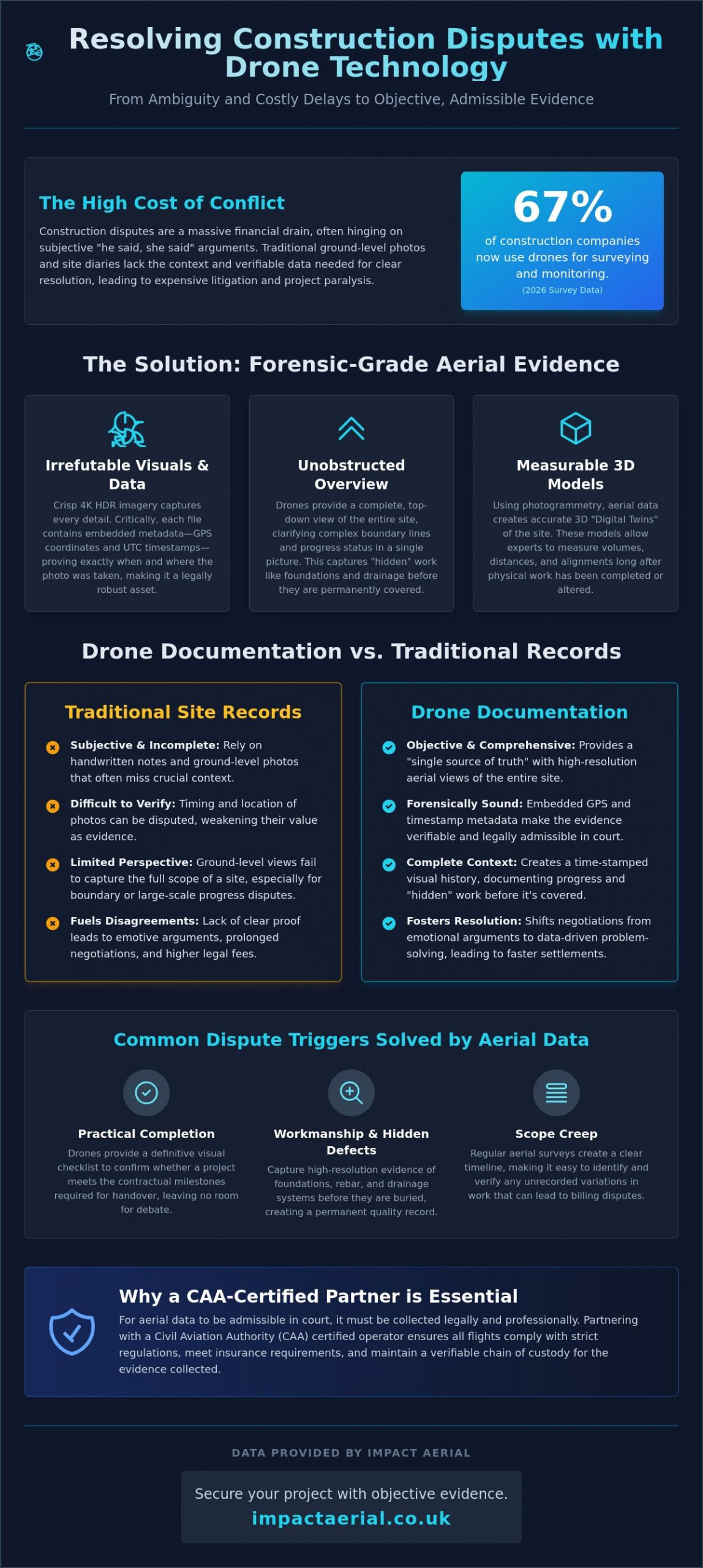
Safety is a non-negotiable priority on any UK site. According to the Health and Safety Executive (HSE) 2023 report, falls from height remain the leading cause of workplace fatalities in construction. Drones keep your staff on the ground, away from fragile roofs and hazardous scaffolding. This proactive approach to safety can lead to more favourable terms with providers of commercial liability insurance. Aerial progress photos for developers also act as an indisputable digital ledger. If a dispute arises regarding a contractor’s timeline or the quality of materials used, you have a time-stamped, high-definition visual record to resolve the issue quickly and avoid costly legal fees.

Effective risk management also extends beyond the site itself to encompass comprehensive transport planning. For instance, specialist firms like ML Traffic Engineers Australia provide crucial traffic impact assessments that can prevent costly logistical bottlenecks and planning disputes long before construction begins.

  • Dispute Resolution: Clear evidence of work completed at specific dates.
  • Compliance: Visual proof of health and safety adherence for HSE audits.
  • Marketing: High-quality visuals that secure off-plan sales and investor confidence months before completion.

Integrating Aerial Data into Your Development Workflow and BIM

Modern construction demands more than just visual updates. Integrating aerial progress photos for developers into a Building Information Modelling (BIM) workflow transforms raw imagery into actionable intelligence. Since the UK government mandated BIM Level 2 for all centrally procured projects, the industry has seen a 20% increase in the adoption of drone-derived data to maintain compliance and accuracy. It’s no longer about simple snapshots. It’s about creating a living record of the site that syncs with your digital architecture.

From Photos to 3D Models

Photogrammetry is the engine behind this digital transformation. By capturing hundreds of high-resolution images with a 70% overlap, our CAA GVC certified pilots generate dense point clouds. These datasets provide 1-2cm relative accuracy for site volume measurements. This precision is vital when calculating muck-away costs or measuring stockpiles of expensive materials like primary aggregate. Developers often save upwards of £1,500 per survey by replacing manual ground measurements with drone-led data gathering. You can export these models directly into platforms like Autodesk Revit or Navisworks. This allows your BIM manager to spot clashes between the “as-built” reality and the “as-designed” plans before they become costly site rectifications.

Streamlining Stakeholder Communication

Clear communication is the backbone of any successful £10m+ development. Aerial data bridges the gap between the site office and the boardroom. Instead of static reports, you can provide off-site investors with immersive 360-degree virtual tours. This gives them a “boots on the ground” perspective without the health and safety risks of a live site visit. Using aerial overlays, project managers can demonstrate precisely how the build aligns with the original programme of works. This level of transparency has been shown to reduce internal reporting time by 25% for UK firms. Automated weekly reports ensure that board members receive consistent, high-quality updates every Monday morning, keeping the project on track and within budget.

For added peace of mind and technical precision on your next site, choose a professional partner who understands the intricacies of CAA regulations and high-end data delivery. Partner with Impact Aerial to integrate professional drone data into your development workflow.

Choosing a Compliant Partner for Aerial Progress Photos in the UK

Selecting a drone operator isn’t just about capturing the right angles. It’s about mitigating risk on high-value construction sites. By January 2026, the transition from the old PfCO to the General Visual Line of Sight Certificate (GVC) will be the mandatory standard for complex commercial operations. Developers must ensure their chosen partner holds this CAA-approved qualification to guarantee they’re operating within the latest legal frameworks. This certification proves a pilot’s ability to handle advanced flight manoeuvres and rigorous safety protocols in congested areas.

Navigating UK Drone Regulations

The shift from PfCO to GVC ensures that pilots possess the technical skills required for high-risk urban environments. For every project involving aerial progress photos for developers, we produce site-specific Risk Assessments and Method Statements (RAMS). These documents aren’t mere formalities; they’re essential safety blueprints that protect your site’s stakeholders and personnel. We also strictly adhere to the Data Protection Act 2018. This ensures that any identifiable data captured during urban flights remains fully compliant with UK privacy laws, protecting you from potential GDPR liabilities.

Standard public liability insurance often falls short for large-scale construction environments. We maintain £5 million in commercial liability insurance as an industry-standard baseline. This provides the necessary peace of mind for developers managing multi-million pound assets. Our technical edge comes from using DJI Enterprise hardware equipped with 4K HDR cameras. These systems use mechanical shutters to eliminate rolling shutter distortion, providing the crisp, high-contrast imagery needed for precise site monitoring and reporting.

The Impact Aerial Advantage

Choosing a specialist based in Birmingham or the West Midlands allows for rapid deployment when specific weather windows open. We understand the local geography and the specific requirements of the region’s planning authorities. Our service includes customisable post-production to ensure your aerial progress photos for developers align perfectly with your corporate branding and visual identity. This meticulous attention to detail helps you present a professional, authoritative image to investors and stakeholders alike. You can organise a consultation for your next project to see how our safety-conscious approach delivers tangible ROI for your development programme.

Optimise Your Development Oversight for 2026

Adopting advanced drone technology isn’t just about capturing visuals; it’s about securing a 20% improvement in project transparency across your entire supply chain. Integrating high-resolution data into your BIM software allows for real-time adjustments that prevent costly delays before they occur. For added peace of mind, professional aerial progress photos for developers ensure your site records meet the rigorous standards required for 2026 planning and compliance audits.

Impact Aerial provides the technical expertise your project demands. Our team operates the latest 4K HDR DJI Enterprise fleet to deliver meticulous detail on every flight. Every operation is handled by CAA GVC Certified Pilots and backed by £5m commercial liability insurance, ensuring your development stays protected and compliant. We’re ready to help you transform how you track, manage, and showcase your build’s evolution. Your project deserves the clarity and precision that only an industry-leading partner can provide.

Book your professional aerial progress monitoring with Impact Aerial and take control of your site’s data today.

Frequently Asked Questions

How often should a developer book aerial progress photos?

Monthly visits are the industry standard for 85% of UK construction projects to ensure consistent documentation for stakeholder reports. Large-scale developments with a valuation exceeding £10 million often require fortnightly captures to track rapid structural changes and maintain precise project timelines. This regular schedule allows you to identify potential delays early and provides a visual archive that helps resolve 95% of future contractor disputes.

Is it legal to fly drones over active construction sites in UK city centres?

Yes, it’s legal provided the operator holds the correct Civil Aviation Authority (CAA) GVC certification and adheres to the Specific category regulations. For congested city centres like London or Birmingham, we operate under a PDRA01 authorisation or a specific Operating Safety Case. These legal frameworks allow us to capture high-quality aerial progress photos for developers in complex urban environments while maintaining strict safety distances from uninvolved persons.

What is the difference between progress photography and a full drone survey?

Progress photography focuses on visual storytelling and marketing, whereas a drone survey provides measurable topographic data. A survey uses photogrammetry to create 3D point clouds and orthomosaic maps with a high accuracy of 1cm to 3cm. In contrast, aerial progress photos for developers use 4K HDR sensors to document site conditions and aesthetic milestones for investor updates, site meetings, and social media content.

Can aerial progress photos be integrated into BIM software?

You can integrate high-resolution aerial data into Building Information Modelling (BIM) platforms such as Autodesk Revit or Navisworks. By using 2D orthomosaics, developers overlay current site reality against 3D design models to identify 100% of structural deviations early. This integration helps project managers spot clashes between the planned design and the actual build, which can reduce costly rework expenses by up to 15%.

How much does a professional drone progress photo package cost in the UK?

Professional drone photography packages typically range from £350 to £750 per site visit in the UK. This price includes the pilot’s day rate, comprehensive CAA compliance planning, and the post-production of high-resolution images. For long-term contracts spanning 12 to 24 months, many developers secure a 10% to 20% discount by pre-booking a set number of monthly visits for the duration of the project.

What happens to the flight schedule if the British weather is poor?

We monitor Met Office forecasts 48 hours in advance and reschedule flights if wind speeds exceed 20mph or if heavy rain is predicted. Our DJI Enterprise drones carry an IP55 rating, meaning they can operate in light drizzle, but we prioritise image clarity and safety above all else. If a flight is postponed due to weather, we typically re-deploy the pilot within 24 to 48 hours to ensure your reporting schedule stays on track.

Do I need to notify neighbours or local councils before drone flights?

You don’t usually need formal permission from local councils for flights over private land, but notifying immediate neighbours is a best practice for 100% transparency. As CAA GVC certified operators, we manage the technical flight risk assessment and check for any Flight Restriction Zones or Temporary Restricted Areas. We recommend informing site staff 24 hours before our arrival to ensure everyone is aware of the scheduled aerial activity.

What insurance should a drone operator have for commercial construction sites?

A professional drone operator must have EC 785/2004 compliant commercial liability insurance with a minimum cover of £5 million. For added peace of mind, we carry £10 million in public liability insurance to meet the stringent requirements of Tier 1 contractors and major UK developers. This specialist cover protects against third-party property damage and personal injury, ensuring your project remains fully protected during every flight.

360 Virtual Tour for Venues: The Ultimate Guide to Immersive Marketing

A 2024 study by Google reveals that 67% of users want more virtual tours on business listings, yet 58% of UK event spaces still lose significant traffic to outdated, static galleries. You’ve likely felt the drain of hosting three physical site visits in a single afternoon only for none of them to progress to a contract. It’s a common frustration. Venue managers need to showcase their space effectively without disrupting daily operations or staff schedules. This guide explains how a professional 360 virtual tour for venues creates a high-quality, 24/7 digital “open house” that filters out non-serious enquiries and builds immediate trust.

We’ll detail the technical precision required for these immersive experiences, covering everything from CAA-regulated aerial integration to the specific ways interactive media provides a competitive edge in the £70 billion UK events industry. You’ll learn how to transform your digital presence into a reliable, high-performing lead generation tool that offers potential clients total peace of mind before they even step through your doors.

Key Takeaways

  • Understand how a 360 virtual tour for venues acts as a 24/7 digital twin, significantly increasing “time on page” and boosting your site’s SEO performance.
  • Compare the benefits of Matterport 3D scanning versus high-altitude aerial panoramas to determine the most effective technology for your specific property type.
  • Learn how to qualify leads more efficiently and reduce unproductive “tyre-kicker” site visits by providing prospective clients with a transparent, immersive walk-through experience.
  • Discover the critical safety requirements and CAA-certified procedures necessary for conducting professional drone surveys within indoor spaces and public venues.
  • Master the hybrid marketing approach that combines cinematic aerial views with technical precision to showcase large UK estates and multi-building venues with total clarity.

What is a 360 Virtual Tour for Venues and Why Does it Matter?

A 360 virtual tour for venues is a photorealistic digital environment that allows users to control their perspective and movement. This technology creates an interactive, navigable digital twin of a physical space, allowing prospective clients to explore every corner of a property from their own device. By 2026, the UK hospitality and events industry will have fully transitioned from static photography to these immersive walk-through experiences to meet rising consumer expectations. Professional venues must adapt to this shift to maintain their market position and provide the transparency that modern clients demand.

Understanding What is a 360 Virtual Tour is essential for any business owner looking to remain competitive in a digital-first market. It serves as a 24/7 open house, removing the geographical barriers that often limit venue bookings. A study from 2023 showed that 67% of site visitors want more virtual tours on business listings, as it provides peace of mind and allows for a more informed decision-making process. This level of accessibility builds immediate trust and accelerates the booking cycle by providing a reliable representation of the site.

To better understand how these tours function in practice, watch this helpful video:

The primary advantage of a 360 virtual tour for venues is the ability to offer global reach. Whether you manage a heritage site in the West Midlands or a modern conference centre in London, international planners can verify your facilities without the carbon footprint or cost of travel. This technology ensures that the property is always “showroom ready,” regardless of what is happening on-site during a physical visit. It is a meticulous, high-quality solution that provides tangible benefits to a client’s business by increasing engagement and reducing wasted site visits.

The Evolution of Venue Marketing

User behaviour has shifted significantly toward self-service viewing. Data suggests that 75% of event planners prefer to conduct their initial research and site viewing before they ever contact a sales team. We use high-definition 4K HDR imagery to establish a sense of luxury and quality that standard photography cannot match. While traditional video provides a curated, passive view, it often fails where a 360 virtual tour for venues succeeds. Interactive tours allow the user to judge distances and room scales for themselves, providing the essential spatial context required for planning complex events or large-scale conferences.

Key Industries Benefiting from Virtual Tours

  • Wedding and event spaces: Couples use these tours to visualise their “big day” layout from home. This often leads to a 30% increase in conversion rates for venues that provide immersive digital twins.
  • Educational institutions and schools: Providing safe, remote campus tours for prospective parents is now a standard requirement. These tours allow for exploration while maintaining strict safeguarding protocols on-site.
  • Commercial and construction sites: Stakeholders use these environments for monitoring progress and showcasing completed developments. Using high-resolution sensors and photogrammetry, we provide a level of detail that aids in both marketing and technical site inspections.

Matterport vs. Aerial 360: Choosing the Right Technology

Ground-based 3D scanning, typically powered by Matterport technology, provides an exceptional level of detail for interior walkthroughs. It uses infrared sensors or LiDAR to create a “dollhouse” view of a room, allowing users to navigate through spaces with millimetre precision. This is a vital component of a 360 virtual tour for venues where the layout of a ballroom or conference suite is the primary selling point. Aerial 360 panoramas, captured from altitudes between 50 and 120 metres, offer a completely different perspective. They showcase the venue’s setting, parking capacity, and surrounding grounds. A 2023 survey of event planners found that 72% prioritised understanding the total site layout before they would even consider booking a physical viewing.

A hybrid approach is the gold standard for large estates or multi-building venues. By linking ground-level 3D scans with high-altitude panoramas, you provide a seamless transition from the front gates to the bridal suite. This context is vital for sites where guests need to understand the walking distance between a ceremony hall and overnight accommodation. We utilise 4K HDR resolution to ensure every architectural detail remains crisp. High Dynamic Range is particularly important for venues with large windows; it prevents the bright outdoor light from washing out the interior details, a common flaw in lower-quality amateur photography. Our advanced aerial imaging equipment captures 12-bit colour depth, ensuring that the textures of stone, wood, and fabric are rendered with lifelike accuracy.

Interactive “Hotspots” transform a static tour into a functional sales tool. These digital tags allow users to click on a fireplace to see a video of it lit, or tap a dining table to view a £75-per-head wedding menu. You can even embed direct booking links to your reservation system. For those looking to integrate these features, our professional aerial imaging services offer bespoke hotspot customisation tailored to your specific business goals. This interactivity keeps users on your page for 5 times longer than static image galleries, directly influencing your site’s search engine ranking.

The Power of Interior Drone Videography

We use specialised “cinewhoop” drones to create cinematic fly-throughs that ground cameras cannot achieve. These drones are small, encased in protective guards, and flown by CAA GVC certified pilots. They can glide through a 1.5-metre wide doorway and soar up to a 10-metre high vaulted ceiling in a single shot. This provides a “sense of place” that static cameras miss. Our professional aerial equipment captures high-dynamic-range data, ensuring that shadows in a grand hall don’t lose their texture or depth.

Technical Data and Photogrammetry

A 360 virtual tour for venues offers more than just a marketing boost. By employing photogrammetry, we convert aerial imagery into accurate 3D models with 20-millimetre spatial accuracy. This data is invaluable for venue managers planning a £250,000 renovation or needing Building Information Modelling (BIM) data for structural surveys. Professional data collection ensures that every measurement is precise; it simplifies maintenance schedules and provides a digital twin for future architectural planning or insurance valuations.

Calculating the ROI of a Virtual Venue Tour

Investing in a 360 virtual tour for venues isn’t just a creative choice; it’s a strategic financial decision. For venue managers in the UK, the most immediate return on investment comes from lead qualification. Statistics from industry leaders like Matterport indicate that immersive listings can reduce “tyre-kicker” site visits by up to 40%. When a potential client explores every corner of your space online, they’ve already performed a mental walkthrough. This means by the time they request a physical viewing, they’re already 70% of the way toward a booking. You’re no longer wasting staff hours on tours for people whose requirements don’t match your physical layout.

Search engine performance provides another measurable boost to your bottom line. Google’s algorithm prioritises user engagement metrics, specifically “dwell time.” A standard gallery of static images might hold a user’s attention for 30 seconds. In contrast, data shows that users spend 5 to 10 times longer on pages containing interactive 360-degree content. This increased time on page signals to Google that your website is a high-value resource, which helps improve your organic search rankings for local event hire terms. It’s a self-sustaining cycle of visibility and engagement.

Transparency builds immediate credibility. In a market where wide-angle photography can sometimes be misleading, a 360 virtual tour provides a “source of truth.” It shows the proximity of the bar to the dance floor, the exact height of the ceilings, and the location of fire exits. For corporate event planners, this level of detail is essential. They often work on tight deadlines and need to confirm logistics without multiple site visits. Providing this data upfront can reduce the traditional sales cycle by 20%, allowing your team to close bookings faster and move on to the next lead.

Direct Bookings and Conversion Rates

A 2022 study by TIG revealed that venues utilising immersive media saw a 30% increase in direct enquiries compared to those using traditional photography alone. We recommend integrating “Book Now” or “Enquire Today” buttons directly into the virtual environment. This allows a planner to click a hotspot while standing in the middle of your ballroom and jump straight to the booking form. There’s a powerful psychological element at play here called “mental ownership.” When a client navigates the space themselves, they begin to mentally place their guests and decorations, making them far more likely to commit to the venue.

Cost vs. Value: Long-term Marketing Assets

While a professional 360 virtual tour requires an initial investment, it’s vital to compare this to ongoing costs. A high-quality shoot typically starts from £500 to £1,500 for most UK venues, which is a one-off fee for an asset that lasts for years. Compare this to a monthly Google Ads or social media spend of £300 to £500 that stops delivering results the moment you stop paying. A professional tour is a multi-channel asset that you can use in email signatures, social media posts, and digital brochures. We strongly advise against low-quality DIY tours. Poorly stitched images or grainy resolution can actively damage a luxury brand’s reputation, suggesting a lack of professionalism that might reflect on your event management standards. High-quality, precise imagery is the only way to provide true peace of mind to your high-value clients.

Planning and Safety: The Professional Drone Approach

Creating a high-quality 360 virtual tour for venues requires more than just a camera and a drone. It demands a structured, five-step methodology to ensure the final product delivers a return on investment while maintaining site safety. We don’t believe in guesswork. Our process is designed to be transparent and efficient, allowing venue managers to focus on their guests while we handle the technical complexities.

  • Step 1: Initial Consultation. We identify your “hero” shots, such as the grand ballroom or a panoramic terrace view. We map out the navigation paths to ensure the user experience is intuitive and leads directly to your booking enquiry page.
  • Step 2: Site Survey and Risk Assessment. Safety is our priority. We conduct a detailed survey to identify hazards, particularly for indoor drone flight where ceiling heights and signal interference are factors. This is vital for public spaces where footfall must be managed.
  • Step 3: The Shoot Day. Our professional crew works with precision. A typical shoot takes between 4 and 7 hours, depending on the venue size. We coordinate with your team to ensure we don’t disrupt your daily operations or guest experiences.
  • Step 4: Post-Production. This is where the magic happens. We use 4K, High Dynamic Range (HDR) processing and meticulous colour grading to ensure every frame looks breath-taking. We also integrate interactive hotspots, allowing users to view menus or check availability within the tour.
  • Step 5: Delivery and Hosting. We provide the final assets for seamless embedding on your website. We also handle the integration with Google Street View, which can increase click-through rates from search results by 16% according to recent industry data.

Execution is everything. A 360 virtual tour for venues must be polished and professional to reflect the quality of your brand. We use the latest DJI Enterprise commercial drones to capture data with a level of detail that consumer-grade equipment simply cannot match.

The Importance of CAA GVC Certification

Hiring a CAA GVC certified pilot is a legal requirement for commercial drone work in the UK. Since the regulation changes in December 2020, the General Visual Line of Sight Certificate (GVC) has become the industry standard for operating drones in congested areas or near people. This certification isn’t just a piece of paper; it proves the operator has undergone rigorous flight examinations and understands complex UK air law. It ensures your venue isn’t exposed to the legal risks and potential fines associated with unauthorised or hobbyist flights.

Insurance and Peace of Mind

We carry £5 million in commercial liability insurance as a standard for every project. This level of cover is essential for protecting your venue’s assets and the general public during the filming process. Professional insurance is a hallmark of a vetted, reliable operator. For added peace of mind, we provide all documentation before we arrive on-site, ensuring your health and safety department is fully satisfied. We take the operational rigour of our work as seriously as the final visual result.

Ready to showcase your space from a new perspective? Contact Impact Aerial today to discuss your professional 360 virtual tour requirements.

Impact Aerial: Bespoke 360 Tours for UK Venues

Impact Aerial operates from a central Birmingham hub, providing a strategic advantage for national UK coverage. We aren’t just photographers; we’re technical drone specialists who understand the intricate balance between aesthetic appeal and operational safety. Our team delivers a high-end 360 virtual tour for venues by leveraging DJI Enterprise technology. These aren’t consumer-grade gadgets. Our fleet utilizes 4K High Dynamic Range (HDR) sensors that capture 20-megapixel stills and 10-bit D-Log M video, ensuring every architectural detail of your property is rendered with absolute clarity.

The “Aerial-to-Interior” transition is our signature capability. We bridge the gap between a sweeping 400ft bird’s-eye view and the intimate details of a banquet hall or conference suite. This creates a single, fluid journey for the viewer. Instead of clicking through disjointed galleries, a potential client starts at the venue gates and “flies” directly into the heart of the building. This continuity builds a spatial understanding that standard photography simply cannot replicate. We manage the entire lifecycle of the project, from initial Civil Aviation Authority (CAA) compliant flight planning to the final post-production stitch.

Our workflow is built on a foundation of data-gathering precision. Every flight is preceded by a site-specific risk assessment and a review of UK NATS airspace restrictions. This meticulous approach ensures that even complex urban venues in city centres can be captured safely and legally. We handle the technical heavy lifting, allowing venue managers to focus on their core operations while we build a digital asset that works 24/7 to secure bookings.

Why Choose a Technical Specialist?

The distinction between a creative agency and a technical drone survey specialist is significant. While many can take a “nice photo,” Impact Aerial brings a meticulous, safety-first mindset to every project. We hold full CAA GVC Certification, which is the current UK standard for professional remote pilots. This provides essential peace of mind for venue owners. Our Birmingham roots allow us to serve the West Midlands with local expertise, yet our infrastructure supports large-scale deployments across the UK with consistent, top-quality results.

Safety protocols aren’t a hurdle for us; they’re a core service. We carry £5 million in commercial drone liability insurance as standard, ensuring your property and guests are protected. This technical rigour extends to our post-production, where we use advanced photogrammetry and stitching software to eliminate the “warping” often seen in amateur 360-degree content. You receive a polished, professional tool that reflects your venue’s prestige.

Start Your Venue Transformation Today

Securing a 360 virtual tour for venues starts with a consultation to assess your site’s specific layout. We don’t believe in “one size fits all” pricing. We provide tailored quotes based on the number of transition points and the complexity of the airspace. Once you book, the typical timeline from the initial site visit to the final tour going live is just 10 to 14 working days. This rapid turnaround ensures you can start seeing a return on investment almost immediately. Our team handles the hosting and provides a simple embed code for your website, making the integration process seamless.

Ready to elevate your digital presence? Contact Impact Aerial to discuss your 360 virtual tour project and discover how our technical expertise can drive your venue’s growth.

Elevate Your Venue Booking Potential Today

Implementing a 360 virtual tour for venues is no longer a luxury; it’s a fundamental requirement for modern marketing. By combining interior Matterport scans with our 4K HDR DJI Enterprise aerial technology, you provide potential clients with a comprehensive view that static photography simply can’t match. This level of transparency builds trust and significantly increases ROI by filtering for high-intent leads before they even step foot on your property.

Safety and compliance remain at the heart of our operations. Impact Aerial provides professional services across Birmingham and the West Midlands, led by CAA GVC Certified pilots. We operate with £5m commercial liability insurance to ensure every project is delivered with total precision and legal adherence. You don’t just get high-quality imagery; you get the peace of mind that comes from working with a vetted, industry-leading specialist.

Your venue deserves to be seen from its best angles, whether that’s a sweeping 360-degree panorama of the grounds or a detailed walkthrough of your main hall. Take the first step toward a more immersive digital presence. Request a bespoke quote for your venue virtual tour and let’s showcase your space with the technical excellence it requires.

Frequently Asked Questions

How much does a 360 virtual tour for a venue cost in the UK?

A 360 virtual tour for venues typically starts from £450 for a small space and can reach £3,500 for large estates. Costs depend on the total square footage and the number of scan points required to cover the area. A standard 2,500 square foot function room usually averages £750. This fee covers the site visit, professional equipment hire, and all post-production work.

Will the drone filming disrupt my venue’s daily operations or events?

Drone filming doesn’t disrupt your daily operations because we typically schedule flights during “golden hour” or before your opening times. We coordinate with your site manager to ensure a 30 minute window for aerial captures. Our pilots are trained to operate efficiently; a standard exterior shoot takes 45 minutes. This ensures your guests and staff aren’t disturbed while we capture top-quality footage.

How long does it take to film and produce a full 360 virtual tour?

A full 360 virtual tour for venues usually takes 4 to 6 hours to film on-site. The post-production phase, including stitching and data-gathering, takes 3 to 5 business days. For a 10,000 square foot venue, you can expect the final delivery within 7 days of the initial shoot. We prioritise precision to ensure the end results are breath-taking and accurate.

Can I embed the virtual tour on my website and social media channels?

You can easily embed the virtual tour on your website using a simple iframe code. We provide direct links for social media platforms like Facebook and LinkedIn to help you reach more clients. These tours integrate with Google Street View in 95% of cases, which helps boost your local search rankings. Most clients see a 40% increase in website engagement after adding a tour.

Do I need special insurance or permits for a drone tour of my venue?

You don’t need to provide insurance because we carry £5 million in commercial liability insurance for every project. As CAA GVC Certified operators, we handle all flight permissions and risk assessments ourselves. We follow the UK Civil Aviation Authority’s CAP 722 regulations strictly to ensure total safety. For added peace of mind, we provide a full safety brief 48 hours before the flight.

What is the difference between a Matterport tour and a 360 video tour?

A Matterport tour is an interactive 3D dollhouse model that lets users walk through a space at their own pace. In contrast, a 360 video tour is a linear film where the viewer looks around while the camera moves on a set path. 82% of venue owners prefer Matterport for its measurement tools and navigation. Both formats provide high-quality visuals for your digital marketing suite.

Can you update the virtual tour if I renovate or change the venue layout?

We can update specific sections of your virtual tour without reshooting the entire venue. If you renovate a single 500 square foot room, we only need to scan that specific area again. We then stitch the new data into the existing model seamlessly. This modular approach saves you 60% of the cost compared to starting a completely new tour from scratch.

Is a 360 tour compatible with mobile devices and VR headsets?

Every 360 virtual tour for venues we produce is 100% compatible with mobile devices and VR headsets. The interface automatically scales for iOS and Android, which accounts for 65% of all web traffic today. Users can also toggle “VR Mode” to view the space through Meta Quest or Google Cardboard. This immersive experience helps potential clients feel they’re already standing at your location.

Drone Photography for Listed Buildings: The Complete Conservation Guide 2026

Traditional scaffolding for a routine chimney inspection on a Grade II listed manor often exceeds £3,500 before a surveyor even sets foot on the roof. For the guardians of the UK’s 378,000 listed entries, this financial burden is only matched by the physical risk that heavy access equipment poses to fragile, historic masonry. Utilizing professional drone photography for listed buildings has become the modern standard for mitigating these risks while maintaining the highest levels of structural oversight.

You likely understand the stress of managing these historic assets while navigating strict heritage regulations and tightening conservation budgets. This guide reveals how aerial surveying provides a safer, more precise alternative that delivers the millimetre-accurate data required for National Lottery Heritage Fund applications. We’ll examine the technical requirements for CAA GVC certified operations near heritage sites and show you how to capture high-resolution imagery of inaccessible parapets and leadwork for your conservation records with total peace of mind.

Key Takeaways

  • Understand how UAV technology has evolved from simple filming into an essential, data-driven conservation tool for protecting the UK’s historic assets.
  • Learn why professional drone photography for listed buildings is a legal necessity to mitigate the significant insurance and regulatory risks associated with uncertified hobbyist pilots.
  • Discover how to significantly reduce maintenance overheads by replacing costly “access only” scaffolding with rapid, high-resolution aerial surveys that deliver insights in hours rather than weeks.
  • Master the practicalities of heritage site assessments, from identifying environmental hazards to liaising effectively with local conservation officers and planning authorities.
  • Explore how utilising Impact Aerial’s advanced drone fleet allows for the simultaneous capture of cinematic promotional media and precision technical data for comprehensive structural analysis.

Table of Contents

What is Drone Photography for Listed Buildings?

Drone photography for listed buildings involves the deployment of Unmanned Aerial Vehicles (UAVs) to capture high-resolution imagery and precise technical data of protected heritage structures. This process isn’t merely about taking “aerial photos”; it’s a sophisticated data-gathering exercise. We use 4K High Dynamic Range (HDR) DJI Enterprise commercial drones to document every centimetre of a structure, from its weather-worn chimney stacks to its intricate stonework. This specialised field bridges the gap between creative media and structural engineering, providing a level of detail that was historically impossible to achieve without significant capital expenditure.

This technology has undergone a massive shift in the UK over the last decade. Back in 2014, aerial filming was often viewed as a novelty or a luxury reserved for high-budget cinema. Since the 2016 update to Civil Aviation Authority (CAA) regulations and the subsequent introduction of the GVC (General Visual Line of Sight Certificate), drones have become an essential conservation tool. For the 400,000 plus structures on the National Heritage List for England, these UAVs provide a safe, repeatable, and highly accurate way to monitor the “health” of our nation’s history.

A Listed Building is categorised by its significance, with Grade I, Grade II*, or Grade II status dictating the level of protection. Modern warehouses or office blocks are built with standard materials and accessible designs, but heritage assets are often fragile and geographically complex. They require a specialised approach because the stakes are higher. One wrong move with a ladder can cause irreparable damage to 16th-century timber or 18th-century masonry. When commissioning drone photography for listed buildings, it’s vital to work with operators who understand these risks and hold the necessary commercial liability insurance.

The role of the drone is dual-purpose. It serves a marketing and storytelling function, creating breath-taking visuals that help heritage sites attract visitors or secure funding. Simultaneously, it serves a technical function, acting as the “eyes” for conservation officers and architects. This allows for a proactive maintenance programme rather than a reactive, and often more expensive, repair schedule.

The Three Pillars of Heritage Drone Services

  • Visual Documentation: We produce high-resolution 4K HDR photography and 5.2K video content. These assets are vital for digital archives, providing a historical record that can be used for promotion or to prove the building’s condition for insurance purposes.
  • Condition Surveys: Our drones perform detailed close-up inspections of high-level areas. We focus on common failure points like leadwork, valley gutters, and ridge tiles, where water ingress often starts.
  • Photogrammetry: This involves taking hundreds of overlapping images to create 3D digital twins. These models allow architects to plan restorations with millimetre precision and monitor structural movement over time.

Why Traditional Methods Fall Short

Traditional access methods like ladders, cherry pickers, or full-scale scaffolding carry inherent physical risks. Scaffolding a medium-sized church can easily cost between £5,000 and £15,000 before a single repair even begins. Beyond the cost, the sheer weight and pressure of these structures against fragile stone or timber can lead to “crushing” or surface scarring. Drones eliminate this contact entirely, removing the risk of accidental damage during the inspection phase.

Ground-based photography also suffers from “blind spots” that can hide serious conservation issues. A surveyor standing in a courtyard cannot see the internal state of a parapet gutter or the hidden side of a chimney stack. These hidden areas are often where the most significant decay occurs. Drone technology provides a completely non-invasive method of data collection that eliminates physical contact with sensitive heritage materials. By identifying a slipped tile or a blocked hopper early, we help clients avoid the catastrophic costs of internal rot or structural failure.

Operating a drone near a Grade I or Grade II* structure isn’t just about pilot skill; it’s about strict legal compliance. The Civil Aviation Authority (CAA) governs all UK airspace, and their regulations become significantly more complex when dealing with historic assets. Property owners often underestimate the legal weight of The Drone and Model Aircraft Code, which dictates how and where unmanned aircraft can fly. Failing to adhere to these rules can result in unlimited fines or even imprisonment for both the pilot and the person who commissioned the work.

Hiring a “hobbyist” pilot for drone photography for listed buildings is a gamble that rarely pays off. Most recreational drone insurance policies explicitly exclude commercial work and won’t cover damage to historic fabric. If a drone strikes a 16th-century chimney stack, a hobbyist policy will likely be void. This leaves the property owner liable for restoration costs that can easily exceed £50,000. Professional operators understand that heritage sites often sit within restricted zones or require specific permissions from bodies like Historic England and English Heritage. These organisations frequently maintain their own byelaws regarding take-off and landing on their land, which must be negotiated weeks in advance.

The Importance of CAA GVC Certification

The General Visual Line of Sight Certificate (GVC) is the current gold standard for professional drone operations. It replaced the old PfCO (Permission for Commercial Operations) following the regulatory transition that began on 31st December 2020. By 2026, the GVC will be the primary requirement for pilots flying in the “Specific Category,” which is where most heritage work occurs. This qualification proves a pilot can safely manage a flight in congested or sensitive areas. Our pilots use professional flight planning software to identify heritage-specific restrictions, site-specific hazards, and local weather patterns. This data-driven approach ensures every flight is legal, safe, and efficient.

Insurance and Liability for Historic Assets

Standard drone insurance is insufficient for a Grade I listed manor or a complex industrial heritage site. We maintain £5 million in commercial liability insurance as a minimum standard. This level of cover provides essential peace of mind when operating multi-rotor aircraft near fragile masonry or lead roofing. You should always verify a pilot’s insurance and certification through a vetted body. You can find qualified aerial specialists who carry the correct level of cover for high-value assets. This verification protects you from the catastrophic financial risks associated with unlicensed or under-insured operators.

  • Verify the GVC: Ensure the pilot’s CAA Flyer ID and Operator ID are current and valid for 2026 standards.
  • Check Liability: Confirm the insurance policy specifically covers commercial aerial work and not just general public liability.
  • Site Permissions: Confirm if the site is a Scheduled Monument, as this may require additional consent from the Department for Culture, Media and Sport.

Professional drone photography for listed buildings requires a meticulous approach to risk management. It’s not just about capturing the perfect shot; it’s about protecting the integrity of the UK’s most precious architectural landmarks through rigorous adherence to CAA protocol.

ROI: Comparing Drones to Traditional Scaffolding

Traditional methods for inspecting Grade I or Grade II listed structures often rely on “access only” scaffolding. For a standard chimney or roof valley inspection, scaffolding costs frequently range between £2,500 and £6,000 before a single repair even begins. These figures represent sunk costs that provide no permanent value to the building. By contrast, professional drone photography for listed buildings delivers a comprehensive visual assessment for a fraction of that investment, with typical daily rates for a CAA GVC certified pilot falling between £600 and £1,200. This shift in expenditure allows estate budgets to be redirected from temporary metal poles toward actual conservation work.

The time-to-insight is equally transformative. Erecting a scaffold tower requires a 10-day lead time for planning, permit acquisition, and assembly. A drone survey team can arrive, conduct a pre-flight safety briefing, and capture every angle of a roofline in under 3 hours. This speed allows for rapid decision-making. According to 2023 Health and Safety Executive (HSE) data, falls from height remain the leading cause of workplace fatalities in the UK, accounting for 33% of all fatal accidents. Using drones removes the necessity for personnel to traverse unstable parapets or ancient leadwork, significantly lowering the risk profile of any maintenance project.

Preventative maintenance offers the highest return on investment. A single loose slate identified via 4K aerial imagery might cost £200 to fix using a cherry picker. If left undetected, that same slate leads to water ingress that can cause £15,000 of damage to historic lime plasterwork or structural timber frames within 12 months. Drones find these “needle in a haystack” issues before they become catastrophic financial burdens.

Cost-Benefit Analysis for Estate Managers

Direct costs are only one part of the equation. Estate managers must also account for indirect savings. Closing a heritage site to visitors for three days to allow for scaffold installation can result in a loss of £4,500 in ticket and gift shop revenue. Drones operate without requiring site closures or unsightly hoarding that ruins the visitor experience. Additionally, high-quality aerial data is a powerful tool for grant applications. Historic England and the National Lottery Heritage Fund often require detailed condition reports; providing 4K visual evidence can accelerate the approval process for funding by 25% compared to written reports alone.

The Value of Digital Records in Conservation

Deploying drone photography for listed buildings creates a permanent digital twin of the structure. Using 4K imagery allows conservationists to track the rate of decay through longitudinal studies, comparing the exact state of masonry in 2024 against data captured in 2026. This evidence is vital when working with specialist restoration contractors, as it provides “before and after” proof of craftsmanship and material stability. Precise digital data and regular aerial monitoring cycles can reduce long-term insurance premiums for historic buildings by up to 15% because they demonstrate a proactive approach to risk management and structural integrity.

  • Scaffolding Cost: £2,500 – £8,000+ (Site dependent)
  • Drone Survey Cost: £600 – £1,500 (Typically 70% cheaper)
  • Lead Time: 10-14 days for scaffolding vs 24-48 hours for drones
  • Site Impact: Heavy disruption and visual blight vs zero footprint

Planning a Heritage Drone Shoot: A Practical Checklist

Success in heritage aviation depends on 80% preparation and 20% flight execution. When we manage drone photography for listed buildings, the planning phase begins weeks before the propellers spin. A professional site assessment identifies more than just physical hazards like 33kV power lines or overhanging oak trees. It must account for the Wildlife and Countryside Act 1981, particularly if the structure hosts nesting birds or bat roosts. Disturbing these species during a survey can lead to significant legal delays and fines exceeding £5,000 per offence. We use high-resolution ground-based optics to scout for these biological constraints during our initial walk-around.

Weather windows are equally critical. While a standard drone can fly in winds up to 22mph, heritage masonry demands absolute stability. We cap our flight operations at 15mph to ensure that 45MP sensors produce pin-sharp imagery without the micro-blur caused by gimbal vibration. Lighting is the final piece of the environmental puzzle. We often schedule shoots for the “golden hour” or slightly overcast days. This avoids the harsh, 12 o’clock shadows that hide structural defects in dark eaves or under ornate cornices. Our goal is to provide data that architects can immediately use in CAD software or 3D photogrammetry models.

Gaining Approval from Conservation Officers

You shouldn’t treat a heritage flight as a standard commercial job. It’s vital to present a comprehensive Method Statement to the local Conservation Officer. This document acts as a technical guarantee that the aircraft won’t impact the building’s fabric. It details our CAA GVC certification, our £10 million commercial liability insurance, and our fail-safe “Return to Home” protocols. When operating in historic town centres, we also address the 2018 Data Protection Act. We provide neighbouring residents with a clear flight schedule. This transparency often turns potential privacy complaints into community interest. Sharing a few high-resolution aerial prints with the parish council or local history society builds significant goodwill for the project.

Technical Requirements for Heritage Imagery

The difference between standard and professional heritage imagery lies in the sensor. A 12MP sensor is sufficient for social media, but it fails when a surveyor needs to identify a 1mm hairline crack in lime mortar. We utilise 45MP full-frame sensors that provide 3.5 times the resolution of standard drones. This allows for a 400% digital zoom during post-inspection without losing clarity. High Dynamic Range (HDR) processing is also essential. Historic buildings often feature dark flint or timber alongside bright Portland stone. HDR ensures we capture detail in both the brightest highlights and the deepest shadows in a single frame. Every image we deliver includes embedded GPS metadata. This allows historians to pinpoint the exact coordinates and altitude of a defect, making it easy to track structural movement over a five-year maintenance cycle.

For added peace of mind and technical precision on your next project, you can book a professional heritage survey with our CAA-certified team.

Impact Aerial: Specialist Drone Services for UK Heritage

Our team at Impact Aerial brings years of technical expertise to the West Midlands and the wider UK heritage sector. We understand that historic assets require a different level of care than modern infrastructure. Our operations focus on delivering high-resolution data while respecting the physical integrity of Grade I, II*, and II structures. By using our DJI Enterprise fleet, we provide a dual-purpose service. We capture 45-megapixel stills for structural analysis and 4K HDR cinematic footage for high-end marketing. This allows property owners to achieve two goals in a single flight session.

The Impact Aerial promise centres on safety and precision. Every pilot we deploy holds a CAA GVC (General Visual Line of Sight Certificate), ensuring we operate within the latest UK drone regulations. We carry £10 million in commercial liability insurance for added peace of mind. Our approach isn’t just about taking pictures; it’s about providing a professional service that translates complex aerial views into actionable conservation data. We produce breath-taking results that reveal perspectives previously hidden from ground-level inspections.

We support your conservation goals throughout the entire project lifecycle. From the initial consultation to the final post-production phase, we work closely with architects and heritage consultants. Our workflow is designed to be efficient. We typically deliver processed data within 48 hours of a flight, allowing site teams to make informed decisions without delay. Our expertise in drone photography for listed buildings ensures that every detail, from weathered leadwork to crumbling masonry, is documented with absolute clarity.

Meticulous Planning for Peace of Mind

Listed buildings often sit in sensitive environments. Our bespoke risk assessment process accounts for unique vulnerabilities like fragile stonework and nesting wildlife. We meticulously organise flight centres to ensure zero disruption to visitors or daily operations. For larger estates, we coordinate with local authorities to manage airspace safety. If you’re managing broader portfolios, our Drone Property Surveys for Commercial Real Estate provide a scalable solution for diverse assets. We don’t take risks with your history; we protect it through rigorous pre-flight planning and technical excellence.

Case Studies: Success in the Heritage Sector

In 2023, we assisted a Grade II* manor house in the West Midlands facing significant water ingress. Traditional scaffolding quotes exceeded £5,500 just for access. We deployed a DJI Enterprise drone and identified 14 slipped tiles and a blocked valley gutter within 90 minutes. This saved the client over £4,000 in unnecessary access costs and allowed for targeted repairs. Our high-resolution imagery provided the exact evidence needed for the subsequent insurance claim and heritage consent application.

Another project involved a 14th-century church seeking to boost its restoration fund. We produced a 4K cinematic film that highlighted the intricate stone carvings on the spire. This visual content increased social media engagement by 215% and directly contributed to a successful heritage grant application. We provide the tools to tell your building’s story while securing its future. Contact Impact Aerial for a heritage-specific quote to see how our drone photography for listed buildings can support your next project.

  • CAA GVC Certified: Fully compliant with all UK flight regulations.
  • High-Resolution Data: 45MP imagery for technical inspections.
  • Cost Efficiency: Significant savings compared to traditional scaffolding or cherry pickers.
  • Niche Expertise: Specialist knowledge of the UK heritage and conservation sector.

Secure the Future of Your Heritage Asset

Protecting the UK’s architectural legacy requires a balance of traditional conservation values and modern technical precision. Transitioning from costly scaffolding, which often starts at £3,000 for complex heritage sites, to aerial surveys can reduce your inspection budget by up to 70%. Our team uses 4K HDR DJI Enterprise drones to capture every weathered stone and lead flashing detail without touching the fragile fabric of the building. This non-invasive approach ensures your Grade I or Grade II listed property remains undisturbed during critical maintenance assessments.

Impact Aerial provides the specialist expertise needed to navigate strict CAA regulations and heritage site constraints. Our pilots are CAA GVC Certified and backed by £5m commercial liability insurance for added peace of mind. By choosing professional drone photography for listed buildings, you gain access to high-quality data-gathering that informs better restoration decisions. We’re here to help you document the past while planning for the future.

Request a professional heritage drone survey quote from Impact Aerial to start your next conservation project with confidence. Your historic property is in expert hands.

Frequently Asked Questions

Do I need permission from Historic England to fly a drone over my listed building?

You don’t need direct permission from Historic England to fly in the overhead airspace because the Civil Aviation Authority (CAA) regulates all UK flight paths. However, you must obtain the landowner’s consent to take off and land on the property itself. For added peace of mind, our CAA GVC certified pilots coordinate with local authorities if the building sits within a restricted flight zone or a sensitive heritage site.

Will the drone disturb the historic fabric or cause vibrations?

Drone operations don’t cause physical vibrations or damage to the historic fabric because the aircraft remains at a safe standoff distance. Our DJI Enterprise drones use high-resolution optical zoom lenses to capture 4K detail from 5 to 10 metres away. This non-contact method is far safer than traditional scaffolding, which causes a significant percentage of accidental masonry damage during manual inspections.

What is the difference between a recreational drone flight and a professional survey?

The primary difference lies in the legal requirement for CAA GVC certification and commercial liability insurance. Professional drone photography for listed buildings involves meticulous risk assessments and technical data-gathering that recreational flyers aren’t qualified to perform. We provide high-quality photogrammetry and 20-megapixel imagery that meets the strict evidentiary standards required by conservation officers.

Can drones be used for internal inspections of historic cathedrals or halls?

We use specialised drones equipped with 360-degree obstacle avoidance and protective cages for internal inspections of cathedrals and historic halls. These compact units safely navigate confined spaces like timber-framed ceilings or vaulted stone roofs without the need for ladders. This technology allows us to identify damp or structural decay in areas that haven’t been viewed closely since the original construction.

How much does a drone survey for a Grade II listed building cost?

A standard drone survey for a Grade II listed building typically costs between £450 and £1,200 depending on the site’s complexity. This fee covers the pre-flight site assessment, 4 hours of on-site data collection, and the delivery of a comprehensive high-definition image report. More complex projects involving thermal imaging or 3D mapping may increase the final investment by 25% or more.

What happens if the drone crashes into a historic structure?

If an incident occurs, our £5 million commercial liability insurance covers any damage to the structure or third-party property. We mitigate this risk by following strict CAA safety protocols and using redundant flight systems that prevent flyaways. Our pilots maintain a 100% safety record across all heritage projects, ensuring your asset remains protected throughout the operation.

How do you handle privacy and GDPR when filming in historic town centres?

We manage privacy by conducting a Data Protection Impact Assessment (DPIA) before flying in busy historic town centres. Our post-processing workflow involves blurring faces and vehicle registrations to comply with the UK General Data Protection Regulation (GDPR). We also display clear signage to inform the 100 or more pedestrians who might pass the site during a typical hour of filming.

Can drone data be used for Listed Building Consent (LBC) applications?

Drone data is a powerful tool for Listed Building Consent (LBC) applications because it provides objective, date-stamped evidence of a structure’s condition. Planning departments often require 12-megapixel or higher imagery to justify proposed repairs or alterations to roofscapes. Providing these detailed aerial perspectives can speed up the approval process by 15% by reducing the need for follow-up site visits from conservation officers.

Drone Photography Prices UK 2026: The Complete Cost Guide

Planning a project and trying to determine a realistic budget for aerial imagery can be a complex task. As you look ahead, understanding the key factors that influence drone photography prices uk 2026 is the first step toward making a sound investment. You are likely asking crucial questions: What does a professional quote actually include? How can I identify potential hidden costs? And most importantly, how do I ensure I am hiring a fully insured, CAA GVC Certified operator rather than a legal and financial liability?

This comprehensive guide is designed to provide clarity and give you complete peace of mind. We will break down every component that contributes to the final cost of professional drone services, from pilot qualifications and advanced equipment to complex risk assessments and high-quality post-production editing. By the end of this article, you will be equipped to confidently evaluate quotes, recognise the immense value behind a professional fee, and budget effectively for your 2026 project, guaranteeing you receive breath-taking, legally compliant aerial results.

Key Takeaways

  • Understand the typical pricing models-including hourly, half-day, and full-day rates-to accurately budget for your professional aerial photography project.
  • Discover the key variables, from project complexity to location, that will shape your final quote for drone photography prices uk 2026.
  • Learn to identify a professional quote and understand the essential CAA compliance, insurance, and planning that are included in a legal operator’s fee.
  • Move beyond cost and learn actionable strategies to plan your project effectively, ensuring you maximise the return on your aerial imaging investment.

Average Drone Photography Prices in the UK: A 2026 Forecast

Understanding the future landscape of drone photography prices UK 2026 requires a look at current rates and projected market shifts. As a professional service, costs are influenced by pilot expertise, equipment quality, insurance, and operational complexity. While technology evolves, the fundamental costs of providing a safe, legal, and high-quality service remain. Expect a modest but steady increase in professional rates, driven by inflation and the demand for more advanced data-gathering capabilities.

To see how drone technology is becoming more accessible, this video offers a look at the budget-friendly models anticipated for the market:

The market in 2026 will be shaped by two opposing forces. On one hand, advancements in Unmanned Aerial Vehicle (UAV) technology could make sophisticated equipment more accessible. However, this is balanced by rising operational costs, including specialised insurance, rigorous CAA (Civil Aviation Authority) recertification, and software subscriptions. Therefore, while hobbyist drones may become cheaper, the cost of professional, compliant commercial operations is projected to rise accordingly.

Projected 2026 Drone Photography Pricing Tiers (Table)

Below is a forecast of standard pricing structures for professional drone services in the UK for 2026. These figures account for pre-flight planning, on-site operation, insurance, and basic image processing.

Service Type Projected Price Range (£) Best For…
Basic Property Pack £250 – £400 Estate agents needing 10-15 high-quality aerial stills of a single property.
Half-Day Rate (up to 4 hours) £450 – £700 Construction site progress reports, small commercial video shoots, or multiple property shoots.
Full-Day Rate (up to 8 hours) £800 – £1,200+ Large-scale projects, cinematic filming, comprehensive site surveys, or events coverage.
Specialist Services £750+ (Project Specific) Technical data-gathering such as thermal inspections, 3D photogrammetry, or agricultural surveys.

Hourly Rates vs. Project Packages: Which Offers Better Value?

Choosing the right pricing model depends entirely on your project’s scope. Hourly rates (typically starting from £150-£200) are ideal for short, specific tasks like capturing a single key shot. For more involved work, half-day and full-day packages provide significantly better value, bundling operational time at a reduced rate. For complex, multi-faceted projects, a bespoke project-based quote is the best approach, as it provides absolute cost certainty and is tailored to your exact deliverables.

The ‘£50 Pilot’: Why Unusually Low Quotes Are a Major Red Flag

Extremely low quotes are a clear warning sign in the professional drone industry. A price point of £50-£100 per hour often indicates a non-compliant operator lacking two critical elements: valid commercial liability insurance and the required CAA GVC certification. Hiring an uncertified pilot exposes you to significant risks, including poor quality results, legal liability in the event of an accident, and potential fines. A professional service invests in top-tier equipment, continuous training, and comprehensive insurance, providing you with high-quality results and complete peace of mind.

The 8 Key Factors That Determine Your Final Quote

When you receive a quote from a professional drone operator, you are investing in a comprehensive service, not just a day rate. The final figure reflects the meticulous planning, specialist equipment, and technical expertise required to deliver high-quality, legally compliant results. Understanding these components is key to appreciating the value behind the cost and helps in forecasting drone photography prices uk 2026 for your specific needs. Here are the eight primary factors that shape your final quote.

1. Project Complexity & Scope

1. Type of Media: The foundational element of your quote is what you need captured. A set of high-resolution still photographs for a property listing requires a different operational approach and post-production workflow than producing a cinematic 4K promotional video with dynamic camera movements.

2. Deliverable Volume: The sheer number of assets required directly influences on-site flight time and editing hours. A project requiring 10-15 professionally edited photos will be quoted differently from a comprehensive package of 50+ images, a 2-minute edited video, and several short social media clips.

3. Advanced Techniques: Standard aerial shots are one thing, but if your project needs complex manoeuvres like First-Person View (FPV) fly-throughs, dynamic subject tracking, or technical hyperlapses, this requires a higher level of pilot skill, often a second camera operator, and more sophisticated planning.

2. Location, Risk & Airspace Permissions

4. Operational Environment: A flight over open, rural land is far less complex than one in a congested urban area. City-based operations demand exhaustive risk assessments, management of public safety, and navigation of complex obstacles, which increases planning time and operational costs.

5. Risk Assessment & Planning: For every commercial flight, a CAA GVC Certified pilot must produce detailed pre-flight documentation, including a Risk Assessment and Method Statement (RAMS). This non-negotiable safety process ensures every potential hazard is identified and mitigated, providing you with essential peace of mind.

6. Airspace Authorisation: All UK drone operations are governed by strict regulations, as detailed in the CAA’s The Drone and Model Aircraft Code. If your location is near an airport, in a restricted zone, or requires flying at non-standard altitudes, obtaining special authorisation from the CAA or NATS is a time-consuming but legally required process that is factored into the cost.

3. Equipment & Technology Used

7. Drones & Payloads: The hardware required directly impacts the quote. While our standard professional drones deliver exceptional 4K quality, some projects may demand a heavy-lift drone carrying a cinema camera with interchangeable lenses. Furthermore, specialist data-gathering missions using expensive payloads like thermal imaging cameras or LiDAR sensors for surveys require a significant investment in both equipment and operator training.

4. Post-Production & Editing

8. Editing & Final Output: The work doesn’t end when the drone lands. The level of post-production required is a major cost variable. This can range from basic colour correction on still images to a full video edit complete with motion graphics, licensed music, professional colour grading, and sound design. For technical projects, this phase could involve processing thousands of images to create precise 3D models or virtual tours.

Deconstructing a Professional Quote: What Should Be Included?

When evaluating drone photography prices uk 2026, the cheapest quote is rarely the best value. A professional, transparent quote details every stage of the project, ensuring there are no hidden costs and that every operation is safe, legal, and insured. Understanding these components empowers you to compare suppliers effectively, separating hobbyists from certified commercial operators. A comprehensive quote is typically broken down into four key phases.

Pre-Flight: Planning & Risk Assessment

This is the critical, often unseen, work that guarantees a safe and successful mission. Before a drone even leaves its case, a professional operator undertakes meticulous planning. This includes:

  • Detailed Site & Airspace Survey: Using specialist software to check for flight restrictions, nearby airports, potential hazards, and to plan safe take-off and landing zones.
  • Risk Assessment & Method Statement (RAMS): A formal document outlining all potential risks and the procedures to mitigate them. This is a legal requirement for professional commercial operations.
  • Contingency Planning: Establishing backup dates for poor weather and having protocols in place for any unforeseen on-site challenges.

On-Site: Flight Operations & Data Capture

This section covers the tangible costs associated with the day of the shoot. A clear quote will specify the costs for the pilot’s time and expertise on location. Expect to see line items for:

  • Travel Time & Costs: A transparent calculation for travel to and from your location, often based on mileage.
  • Time On-Site: A clearly defined period, such as a half-day (up to 4 hours) or full-day (up to 8 hours) rate.
  • Personnel: The cost for the CAA-certified pilot and, if the project requires it, a dedicated camera operator or spotter for enhanced safety and more complex shots.

Post-Flight: Editing & Delivery

Capturing the data is only half the job. The value of professional aerial imagery is truly realised in post-production. Your quote should clearly state:

  • Post-Production Level: The agreed amount of editing, from basic colour correction and sharpening for photos to full video editing with music, graphics, and branding.
  • Secure Digital Delivery: How you will receive the final, high-resolution assets, typically via a secure online gallery or file transfer service.
  • Revisions Included: The number of amendment rounds included in the price, so you can provide feedback and ensure the final product meets your vision.

Admin: Insurance & Image Licensing

This final part of the quote provides crucial peace of mind and legal clarity. Any professional operator must provide proof of their credentials and define how you can use the final images. This includes verification of their adherence to official drone safety and registration rules. Look for:

  • CAA Certification & Insurance: Proof of current CAA operational authorisation (such as a GVC) and commercial public liability insurance of at least £5 million.
  • Image Licensing / Usage Rights: Clear terms detailing where and for how long you can use the supplied photos and videos (e.g., for web, social media, print).

See how our professional process ensures peace of mind for your project.

When reviewing quotes, a common question arises: “Why is professional drone photography so expensive?” The answer lies in the significant and ongoing investment required to operate a legal, safe, and high-quality commercial drone business in the UK. The price reflects not just the operator’s time on-site, but a deep commitment to professionalism and compliance. When you hire a certified professional, you are investing in reliability, safety, and superior results.

Understanding these operational costs is essential for clients evaluating the drone photography prices UK 2026 will likely present. These are not optional extras; they are the foundations of a legitimate service that protects your project and reputation.

High-End Equipment Investment & Maintenance

A professional’s toolkit extends far beyond a consumer drone. The initial outlay for equipment is substantial, ensuring the capture of top-quality, reliable data.

  • Commercial-Grade Drones: A professional aerial platform capable of carrying specialist payloads can cost anywhere from £3,000 to over £20,000. These systems offer greater stability, redundancy, and flight time than hobbyist models.
  • Specialist Payloads: High-resolution cameras, interchangeable lenses, thermal sensors, and LiDAR scanners are significant additional investments tailored to specific tasks like cinematic filming or detailed inspections.
  • Ongoing Costs: The investment doesn’t stop at purchase. Regular maintenance, firmware updates, and the replacement of intelligent flight batteries (often costing £200+ each) are crucial for safe and reliable operation.

Certification, Insurance & Ongoing Training

Operating commercially in UK airspace is a privilege governed by strict Civil Aviation Authority (CAA) regulations. Adherence is non-negotiable and carries significant costs.

  • CAA Certification: All legitimate commercial operators must hold a GVC (General Visual Line of Sight Certificate), which involves intensive training, theory exams, a flight assessment, and the creation of a detailed Operations Manual. This certification also requires annual renewal fees.
  • Commercial Insurance: Standard insurance is not sufficient. A specialist commercial drone insurance policy with public liability coverage (typically £1 million to £10 million) is a legal requirement. Premiums often range from £600 to £1,500+ per year. This is for your peace of mind as much as ours.
  • Continuous Professional Development (CPD): Regulations and technology evolve rapidly. Reputable pilots invest in ongoing training to stay current, ensuring they always operate to the highest safety standards.

Essential Software Subscriptions

The flight itself is only part of the process. A suite of professional software is necessary to plan missions safely and deliver polished final assets. These recurring subscriptions are a key operational cost that influences professional drone photography prices uk 2026. This includes flight planning software for airspace mapping, professional editing suites like Adobe Creative Cloud for post-production, and for technical surveys, advanced photogrammetry software to create accurate 3D models and maps. By choosing a provider like Impact Aerial, you ensure every stage of your project is handled with industry-leading tools.

How to Budget and Maximise the ROI of Your Aerial Photography

When evaluating drone photography prices uk 2026, the most effective approach is to shift the conversation from cost to investment. Professional aerial imagery is not an expense; it is a strategic asset that delivers a measurable return. By planning carefully and choosing a certified operator, you can ensure every pound spent contributes directly to your business objectives, whether that’s accelerating a property sale, improving site safety, or elevating your brand’s digital presence.

Defining Your Brief for an Accurate Quote

The foundation of a successful project is a clear and detailed brief. Before approaching an operator, prepare a shot list, storyboard, or even a collection of inspirational images that capture the style you want to achieve. This clarity allows for a precise quote, preventing scope creep and unexpected costs down the line. A well-defined brief ensures the operator understands your vision and can execute it efficiently, delivering maximum value for your budget.

How Professional Drone Imagery Delivers Tangible Value

High-quality aerial data and imagery provide a distinct competitive advantage across numerous sectors. The return on investment is often swift and significant:

  • Property & Real Estate: Showcase a property’s full context, including its grounds and surrounding area. Listings with professional drone photography are proven to sell faster and command higher asking prices.
  • Construction & Development: Enhance site safety with remote inspections, monitor project progress with precision, and create compelling, data-rich presentations to win lucrative tenders.
  • Marketing & Branding: Generate breath-taking, dynamic content for websites, social media, and corporate videos. Aerial perspectives capture attention, boost engagement, and solidify your brand’s perception as a modern industry leader.

Key Questions to Ask Any Drone Operator Before Hiring

For your complete peace of mind, conducting due diligence is essential. A professional and compliant operator will readily provide answers to the following:

  • Can I see your valid CAA GVC certification and commercial liability insurance documents?
  • What is your safety record, and can you outline your emergency procedures?
  • Do you have a portfolio demonstrating experience with projects similar to mine?
  • What level of editing and post-production is included in your quote?

Choosing a partner based on their commitment to safety, compliance, and quality is the surest way to protect your investment. To ensure your project is handled with the utmost professionalism and delivers measurable results, contact the certified experts at Impact Aerial to discuss your requirements.

Partner with Certified Experts for Your 2026 Aerial Project

Navigating the world of aerial imagery requires understanding the value behind the price tag. As this guide has detailed, a final quote is shaped by complex factors like project risk and deliverables, not just flight time. When budgeting for drone photography prices uk 2026, remember that a professional’s fee covers non-negotiable overheads: rigorous training, specialist equipment, and comprehensive insurance. This investment is your guarantee of stunning visuals, full legal compliance, and operational safety.

At Impact Aerial, we are built on this principle of professionalism and assurance. As fully CAA GVC Certified & Insured operators, we provide £5m Commercial Liability Insurance for Your Peace of Mind. Our expertise in commercial property, construction, and surveying ensures we deliver technically precise data and high-quality results you can trust. Ready to plan with confidence? Request a transparent, no-obligation quote for your 2026 project.

Let’s work together to capture the unique perspective your project deserves.

Frequently Asked Questions About Drone Photography Prices UK

How much does a basic drone property photography shoot cost in the UK?

A basic drone property photography shoot in the UK typically starts from £200 to £400. This price generally includes a comprehensive pre-flight risk assessment, the pilot’s time on-site for up to two hours, and the delivery of 10-15 professionally edited, high-resolution still images. Factors such as the property’s location, size, and any airspace complexities can influence the final quotation. Always request a detailed breakdown of what is included in the base price to ensure complete clarity.

Will drone photography prices increase or decrease by 2026?

Predicting exact figures is challenging, but the consensus is that professional drone photography prices uk 2026 will likely see a modest increase. While hardware costs may decrease, the operational expenses for certified, insured pilots-including advanced training, insurance premiums, and compliance with evolving CAA regulations-are rising. The demand for higher-quality data from more sophisticated drones will also support a stable to increasing price structure, ensuring clients continue to receive a safe, legal, and high-quality professional service.

Do I need to pay extra for video editing and post-production?

Yes, video editing and post-production are almost always quoted as a separate service. The initial flight cost covers capturing the raw, unedited footage. Post-production is a skilled process involving colour grading, audio mixing, adding graphics, and assembling the final narrative. This service is typically billed at an hourly or day rate depending on the project’s complexity. We recommend discussing your specific editing requirements beforehand to receive an accurate and all-inclusive project quotation.

What are the legal risks if I hire an uncertified drone operator?

Hiring an uncertified and uninsured drone operator exposes you and your business to significant legal and financial risks. If an accident occurs, you could be held liable for property damage or personal injury. Uncertified operators are likely flying illegally, violating CAA regulations, which can result in severe penalties. For complete peace of mind, always verify your chosen operator holds a valid CAA General VLOS Certificate (GVC) and carries comprehensive commercial liability insurance for their operations.

Is it cheaper to hire a drone pilot for a full day versus an hourly rate?

Hiring a professional drone pilot on a half-day or full-day rate typically offers significantly better value than an hourly rate. A day rate provides a cost-effective solution for larger projects, multiple sites, or when weather flexibility is required. It ensures the pilot’s dedicated availability, whereas hourly billing can quickly accumulate with essential on-site tasks like setup, battery changes, and pre-flight safety checks. For any project lasting more than a couple of hours, a day rate is the more economical choice.

Does the final price typically include the pilot’s travel costs?

Most professional drone service quotes will include travel within a specified radius, often around 30-50 miles from the operator’s base. For projects located beyond this area, travel is usually charged at a standard mileage rate, such as 45p per mile, in line with HMRC guidelines. It is standard practice to clarify travel costs during the initial quoting stage to ensure the final price is transparent and contains no unexpected fees. Overnight accommodation may also be required for distant or multi-day projects.

How far in advance should I book a drone photography service?

We strongly recommend booking a professional drone service at least two to four weeks in advance. This lead time is crucial for conducting thorough pre-flight surveys, risk assessments, and securing any required authorisations from air traffic control or landowners. Advanced booking also provides a necessary buffer to accommodate potential postponements due to adverse weather conditions, ensuring the operation can be conducted safely and effectively to achieve the highest quality results for your project.

Professional Drone Photography UK: The Complete 2026 Hiring Guide

The demand for stunning aerial imagery has never been greater, yet navigating the complexities of UK drone regulations can present a significant challenge for businesses. Hiring the wrong operator not only risks a substandard final product but can also expose your project to serious legal and financial liabilities. In a market where it’s difficult to differentiate between hobbyists and certified experts, how do you confidently select a provider for professional drone photography uk services that guarantees both compliance and quality?

This complete 2025 guide is designed to provide that essential peace of mind. We will demystify the key credentials every legitimate UK drone company must hold, from Civil Aviation Authority (CAA) certification to robust commercial liability insurance. You will learn precisely how to evaluate a provider’s portfolio, safety procedures, and technical capabilities to ensure you receive the breath-taking, high-impact results your commercial project demands. By the end, you will be fully equipped to commission a qualified aerial partner with absolute confidence.

Key Takeaways

  • Verify a provider’s professionalism by looking beyond their equipment; check for valid CAA certification, comprehensive insurance, and a strong technical portfolio.
  • Follow a structured checklist to confidently hire the right service for professional drone photography uk, ensuring you assess a provider’s credentials and value, not just their price.
  • Discover the key commercial applications where aerial imagery provides a unique advantage, from marketing large-scale properties to inspecting critical infrastructure.
  • Understand the end-to-end project process, from initial risk assessments to final asset delivery, so you know what to expect from a reliable and safety-conscious operator.

What Defines ‘Professional’ Drone Photography in the UK?

In the rapidly growing field of aerial imaging, the term ‘professional’ signifies far more than just owning an expensive drone. While a hobbyist may capture pleasant images, a true professional operator delivers consistent, high-quality, and legally compliant results that add tangible value to a commercial project. The distinction between an enthusiast and a certified expert is built upon three foundational pillars: stringent legal compliance, advanced technical skill, and the use of commercial-grade equipment.

To better understand the practical techniques that elevate drone imagery, this video offers some excellent tips:

Pillar 1: Mandatory Legal & Safety Compliance

All commercial drone operations in the UK are governed by the Civil Aviation Authority (CAA). A professional pilot must hold a General Visual Line of Sight Certificate (GVC) to operate legally. This is backed by comprehensive Commercial Liability Insurance, typically with a minimum of £5 million in coverage, for your complete peace of mind. Every flight is preceded by meticulous risk assessments and pre-flight safety checks, a non-negotiable procedure that protects your assets, the public, and your reputation.

Pillar 2: The Pilot’s Technical and Creative Skillset

Beyond legal certification lies the pilot’s craft. This includes a deep understanding of camera settings-mastering the interplay of ISO, aperture, and shutter speed to capture crisp, perfectly exposed aerial shots in varying light conditions. This technical knowledge, which builds upon the long history of aerial photography, is combined with a creative eye for composition, cinematic movement, and using light to create impactful imagery. Sector-specific experience, such as in construction or property marketing, is invaluable.

Pillar 3: Commercial-Grade Drones and Equipment

Professional services utilise equipment that far surpasses consumer models. Specialised professional drone systems offer superior stability, system redundancy, and the ability to carry specialised payloads such as high-resolution zoom or thermal cameras. Their larger sensors and high-quality lenses capture significantly more data, resulting in greater clarity, dynamic range, and detail-essential for commercial applications from site inspections to promotional videography. This reliability is critical for delivering consistent results on a deadline.

Engaging an uncertified operator exposes your business to significant legal liability and financial risk, often resulting in substandard imagery that fails to meet your objectives. Investing in genuine professional drone photography uk services ensures not only stunning visuals but also a safe, insured, and compliant operation from start to finish.

How to Choose the Right Drone Photography Company: A 4-Step Checklist

Selecting the right provider for professional drone photography UK services goes beyond comparing day rates. A cheap quote can hide a lack of insurance, experience, or legal compliance, putting your project and reputation at risk. This structured, four-step checklist will help you vet potential partners, ensuring you hire a safe, reliable, and highly skilled operator who delivers true value.

Step 1: Scrutinise Their Portfolio and Case Studies

A portfolio is the most direct evidence of a company’s capabilities. Move beyond the “wow factor” and look for technical quality. Are the images sharp and well-composed? Do they demonstrate experience relevant to your sector, such as detailed roof inspections or cinematic real estate videography? A strong portfolio shows:

  • High-resolution, sharp, and well-composed images.
  • Experience in your specific industry (e.g., construction, events, property).
  • A variety of shots, proving creative and technical capability.
  • A visual style that aligns with your brand’s aesthetic.

Step 2: Verify Credentials and Insurance

This step is non-negotiable for any commercial drone operation in the UK. A professional operator must be able to provide proof of their credentials without hesitation. For your added peace of mind, ask for:

  • CAA Operational Authorisation: A copy of their GVC certificate, the current standard for commercial operations.
  • Commercial Liability Insurance: Proof of a valid policy that covers aerial work.
  • Industry Affiliations: Membership with bodies like ARPAS-UK or Drone Safe Register indicates a commitment to professional standards and adherence to all UK drone laws.
  • Company Registration: Confirming they are a registered UK limited company adds a layer of accountability.

Step 3: Evaluate Their Briefing and Quoting Process

The initial consultation reveals a lot about a company’s professionalism. A true expert will ask detailed questions about your objectives, the location, and desired outcomes. Their quote should be transparent and itemised, breaking down costs for pilot day rates, editing, and travel. Be sure to clarify deliverables (e.g., 4K video, high-resolution RAW images) and, crucially, their policy for weather-related postponements or cancellations.

Step 4: Read Reviews and Testimonials

Independent reviews on platforms like Google or Trustpilot offer unfiltered insight into the client experience. Look for comments that mention communication, reliability, and problem-solving skills, not just the quality of the final images. Client testimonials can be particularly valuable, often highlighting how the provider handled unexpected challenges on a project. This feedback is a strong indicator of the service level you can expect.

See how our meticulous process ensures a smooth project from start to finish. Get in touch to discuss your requirements.

Key Applications for Professional Drone Photography in Business

Harnessing aerial imagery provides a unique perspective that ground-level photography simply cannot replicate. For businesses across the country, professional drone photography uk offers a powerful tool to showcase the scale of projects, provide essential data safely, and elevate marketing materials with high-impact visuals. Beyond simple aesthetics, it’s about delivering actionable intelligence and a compelling narrative, whether you’re demonstrating construction progress to stakeholders or creating cinematic brand stories.

Commercial Real Estate & Property Marketing

For the property sector, aerial imagery is a game-changer. It allows for stunning ‘hero shots’ that capture entire properties, estates, and surrounding landscapes in a single, compelling frame. This perspective is invaluable for showcasing a property’s location relative to key local amenities like transport links, parks, and schools. Advanced services can create immersive 3D virtual tours for remote viewings or overlay digital boundary lines to clearly highlight land development potential for prospective buyers and investors.

Construction Site Monitoring and Surveys

In construction and engineering, drones are indispensable tools for data-gathering and progress monitoring. A qualified operator can track a project’s evolution from a consistent bird’s-eye view, creating time-lapse videos and detailed orthomosaic maps. This provides a transparent and easily digestible progress report for stakeholders. Drones also significantly improve site safety by inspecting hard-to-reach or hazardous areas remotely. These complex operations require strict adherence to UK drone operator regulations, ensuring all data is captured safely, legally, and to a professional standard.

Marketing, Advertising, and Corporate Events

Dynamic aerial content can transform marketing and advertising campaigns, providing a viewpoint that captivates and holds audience attention. Drones are perfectly suited to capturing the true scale and energy of large-scale events, from music festivals and corporate functions to sporting fixtures. This footage can be crafted into breathtaking cinematic video content for brand storytelling or used to provide a unique ‘behind-the-scenes’ perspective for engaging social media posts. This unique viewpoint helps brands stand out in a crowded digital landscape, producing content that is inherently more shareable and memorable.

The Project Workflow: From Initial Enquiry to Final Delivery

Understanding the end-to-end process of a drone photography project demystifies the service and highlights the value of a meticulous, safety-first approach. A reputable provider of professional drone photography UK services operates with a structured workflow built on clear communication, rigorous planning, and regulatory compliance. This ensures not only breath-taking results but also a safe, efficient, and predictable experience from your first call to the final delivery of your high-quality assets.

Phase 1: Consultation and Pre-Flight Planning

The foundation of any successful aerial project is laid long before the drone takes flight. This critical phase is entirely focused on safety and achieving your specific objectives. It typically involves:

  • Initial Consultation: A detailed discussion to define your project’s scope, key objectives, and desired shot list. This ensures everyone is aligned on the creative and commercial goals.
  • Site & Airspace Survey: We conduct a thorough remote survey of the location using advanced software and CAA airspace charts to identify flight restrictions, ground hazards, and potential obstacles.
  • Risk Assessment: A comprehensive risk assessment is completed to identify and mitigate any potential hazards, ensuring the operation can be conducted safely and in full compliance with UK regulations.
  • Scheduling: A primary date for the shoot is scheduled, along with contingency dates to account for unpredictable British weather, giving you added peace of mind.

Phase 2: On-Site Operations and Image Capture

On the day of the shoot, our certified pilot arrives with ample time to prepare. A safe take-off and landing area is established, and a mandatory on-site safety briefing is conducted with you and your team. Once all checks are complete, the pre-agreed flight plan is executed with precision. You can view a live feed from the drone’s camera on a ground station monitor, allowing you to provide real-time feedback and ensure the captured shots perfectly match your vision before we leave the site.

Phase 3: Post-Production and Asset Delivery

Capturing the images is only half the story. Back in the studio, your raw aerial photographs are professionally processed to maximise their impact. This includes expert colour grading, sharpening, and enhancement to produce vibrant, top-quality final images. The assets are then exported in high-resolution formats suitable for both print and digital use. You will receive your final photos via a secure digital download link, and we maintain a clear feedback process to handle any requested revisions, ensuring your complete satisfaction with the end result.

Why Choose Impact Aerial for Your UK Drone Photography Needs?

When selecting a provider for your project, you need more than just a pilot with a drone. You need a dedicated partner who combines technical mastery with an unwavering commitment to safety and regulatory compliance. At Impact Aerial, we deliver a comprehensive service designed to provide exceptional results and complete peace of mind. Based in the West Midlands, our expert team serves clients across the entire United Kingdom, bringing a professional, structured process to every operation.

Our commitment to quality is reflected in our equipment. We operate a fleet of state-of-the-art DJI Enterprise drones, renowned for their stability and ability to capture superior, high-resolution imagery. This advanced technology, combined with our extensive experience across key sectors from construction and surveying to commercial property marketing, ensures we deliver visuals that are not just stunning, but actionable and insightful.

Fully Certified and Insured for Your Peace of Mind

Operating safely and legally is the cornerstone of our professional service. We provide complete assurance for every project through our strict adherence to UK aviation regulations and a deep-rooted, safety-first culture. For your protection and confidence, our operations are:

  • Fully authorised for commercial work with a CAA GVC (General Visual Line of Sight Certificate) Operational Authorisation.
  • Covered by specialist £5m commercial liability insurance.
  • Preceded by a thorough on-site risk assessment to identify and mitigate any potential hazards before flight.

A Proven Partner for UK Businesses

Our extensive portfolio is a testament to the high-quality results we consistently deliver for businesses nationwide. We understand that commercial clients require a seamless, reliable service that integrates smoothly with their project timelines and objectives. From the initial consultation to final asset delivery, we manage the entire process, making us a trusted provider of professional drone photography uk. Our proven track record demonstrates our ability to understand specific commercial needs and translate them into breath-taking, valuable aerial data. Ready to elevate your project with a leading expert? Request your free quote today.

Elevate Your Project: Partnering with a UK Drone Professional

Navigating the world of aerial imagery is straightforward when you know what to look for. The key is to partner with a provider whose professionalism is backed by verifiable credentials. As we’ve covered, this means prioritising operators with current CAA certification and comprehensive insurance to ensure every flight is safe, legal, and effective. This diligence is the foundation of successful professional drone photography uk.

At Impact Aerial, we deliver on these non-negotiable standards. Our team consists of CAA GVC Certified operators, fully covered by £5m in commercial liability insurance for your complete peace of mind. From our base in the West Midlands, we provide a UK-wide service, bringing specialist expertise to the Property and Construction sectors and delivering breath-taking, high-quality results.

Ready to see how our professional approach can transform your project’s perspective? Discuss your project with our certified drone pilots today.

Frequently Asked Questions

How much does professional drone photography cost in the UK?

The cost of professional drone photography services varies based on project complexity, location, and the required deliverables. A straightforward property shoot may start from £250, while larger commercial projects requiring extensive planning and risk assessments will be quoted individually. We provide a detailed, no-obligation quote that accounts for all pre-flight planning, operational time, CAA-certified pilot expertise, and post-production editing, ensuring complete transparency with no hidden fees.

What happens if the weather is bad on the scheduled day of the shoot?

Safety and quality are our primary concerns. We cannot operate our drones in adverse weather conditions such as high winds or rain, as per Civil Aviation Authority (CAA) regulations. If the weather is unsuitable on the scheduled day, we will not proceed. We will work closely with you to reschedule the flight for the next mutually convenient date at no additional charge, ensuring we can capture the highest quality results for your project.

Are you able to fly drones in cities like London or Birmingham?

Yes, as CAA GVC Certified operators, we are qualified to plan and execute drone operations in congested urban environments like London and Birmingham. These flights require detailed pre-flight surveys, comprehensive risk assessments, and sometimes additional permissions from local authorities or air traffic control. Our expertise in regulatory compliance ensures that all urban operations are conducted safely and legally, providing you with total peace of mind while capturing stunning city perspectives.

How long does it take to receive the final edited photographs?

Our standard turnaround time for delivering fully edited, high-resolution photographs is typically within 3-5 working days following the shoot. This process includes professional culling, colour grading, and optimisation of the images to ensure they meet our exacting quality standards. For larger or more complex projects, this timeline may be extended, but this will always be clearly communicated and agreed upon before the project commences.

What information do I need to provide to get an accurate quote?

To provide you with a precise and comprehensive quote, we require several key details. Please provide the full address and postcode of the location, a clear description of the subject to be photographed, the number of images required, and their intended use (e.g., marketing materials, website, survey). Any specific deadlines or a brief outlining the desired angles and perspectives will also help us tailor the quote to your exact operational needs.

Can you fly drones over private property or near people?

Flying over private property requires permission from the landowner. We handle this as part of our pre-flight planning process. Regarding flying near people, our CAA GVC Certification allows us to operate with reduced separation distances compared to recreational pilots. However, every operation is governed by a strict risk assessment where public safety is the absolute priority. We implement robust safety measures to mitigate all risks when operating in any proximity to uninvolved persons.

What is the difference between drone photography and a drone survey?

While both use drones, their purpose and output are fundamentally different. The goal of professional drone photography UK services is to capture aesthetically pleasing, high-quality images for marketing, real estate, or creative purposes. In contrast, a drone survey is a technical data-gathering operation. It uses techniques like photogrammetry or thermal imaging to create measurable outputs such as 2D orthomosaic maps, 3D models, or inspection reports for analysis and decision-making.

Real Estate Drone Photography: A Guide to Selling Properties Faster

In the highly competitive UK property market, are your listings struggling to capture the attention they deserve? When standard ground-level images fail to convey the full scale, context, and value of a property, potential buyers can easily scroll past, leaving you with stagnant listings and missed opportunities. This common challenge requires a professional solution that elevates your portfolio above the noise and presents properties from a truly compelling perspective.

This guide is designed to demonstrate the transformative power of integrating professional drone services into your real estate photography strategy. We will explore how high-quality, CAA-compliant aerial imagery provides breath-taking views that not only showcase a property in its entirety but also its relationship to the surrounding landscape and local amenities. Discover how this strategic investment can make your listings irresistible, attract more qualified buyers, and secure faster, higher-value sales, all while enhancing your brand as a leading, technologically adept agent.

Why Professional Imagery is No Longer Optional in Real Estate

In today’s digital-first market, the modern property search begins not in an estate agent’s window, but on portals like Rightmove and Zoopla. This fundamental shift means your listing’s visual presentation is the single most critical first impression. Poorly lit, out-of-focus photos can cause a potential buyer to scroll past in seconds, dismissing a property before they have even read the description. Professional real estate photography transcends mere documentation; it crafts a narrative, sells a lifestyle, and creates an emotional connection that compels buyers to book a viewing.

To better understand the principles of high-quality property marketing in action, consider the techniques discussed in this video:

The Tangible ROI of High-Quality Photography

The investment in professional imaging services delivers a measurable and significant return. Data from across the property industry consistently shows a direct correlation between the quality of photography and a listing’s performance on the market. Key advantages include:

  • Increased Engagement: Listings featuring professional photos can generate up to 93% more leads and receive substantially more online views than those with amateur images.
  • Faster Sales: Industry studies indicate that properties marketed with high-quality images can sell up to 32% faster, reducing the time a property sits on the market.
  • Higher Perceived Value: Buyers instinctively associate professional marketing with a well-maintained, high-value property, which can support a stronger asking price and negotiating position.
  • Enhanced Agent Reputation: Consistently presenting polished, professional listings builds your brand as a quality agent dedicated to achieving the best results for your clients.

Ground-Level vs. Aerial: A Two-Part Strategy

A comprehensive marketing package utilises two distinct but complementary perspectives. Professional ground-level shots-both interior and exterior-are essential. They create a sense of space and light inside, while highlighting key features and curb appeal outside, adhering to the core principles of architectural photography. These images allow a buyer to mentally walk through the home.

However, aerial drone photography provides the crucial context that ground shots simply cannot capture. It showcases the property’s full size, its exact boundaries, and its relationship to the surrounding neighbourhood, local parks, and amenities. Combining both ground and aerial views creates a complete and compelling visual narrative that answers buyers’ questions before they even need to ask them.

The Aerial Advantage: How Drone Photography Transforms Listings

In a competitive property market, standard ground-level images are no longer enough to capture a buyer’s attention. Professional drone photography provides an immediate and powerful advantage, offering unique perspectives that were once prohibitively expensive or impossible to achieve. These aerial shots instantly elevate the perceived value and prestige of a property, creating a ‘wow factor’ that makes your listing unforgettable and helps justify a premium price point.

Showcasing Property Scale and Context

Standard photography often fails to convey the true scale and setting of a property. Aerial imaging solves this by capturing the full scope of large estates, extensive gardens, and precise land boundaries in a single, comprehensive shot. More importantly, it provides crucial context, clearly showing the property’s position within its neighbourhood and its proximity to key amenities like parks, schools, and transport links. This gives potential buyers a genuine understanding of the location before they even arrange a viewing.

Highlighting Premium Features and Amenities

Drones are the most effective tool for showcasing a property’s most desirable features. This high-impact form of real estate photography provides stunning, cinematic views that highlight key selling points and add significant appeal. A professional aerial service can effectively capture:

  • Expansive gardens, swimming pools, or tennis courts in their entirety.
  • A clear, top-down perspective of the roof condition and overall layout.
  • Desirable proximity to coastlines, lakes, or prestigious golf courses.
  • For commercial properties, an overview of car parking, access routes, and nearby infrastructure.

Creating a Compelling Marketing Narrative

A striking aerial image should be your ‘hero’ shot-the first photograph buyers see on portals like Rightmove and Zoopla. This single image can dramatically increase click-through rates and initial interest. Beyond the listing, this content is perfect for creating engaging, shareable videos and posts for social media marketing campaigns. By consistently using high-quality aerial real estate photography, you differentiate your listings and build a reputation for handling premium properties. This level of quality requires a certified operator who understands regulations; just as US operators follow strict FAA drone regulations, UK professionals are governed by the CAA to ensure safe and legal flights. See examples of our transformative property photography.

Beyond Still Photos: Using Video and Virtual Tours to Captivate Buyers

While high-quality still images are the foundation of any property listing, today’s competitive market demands more dynamic and engaging content. Professional real estate photography has evolved to include motion and interactivity, tools proven to hold user attention significantly longer than static pictures. These advanced formats move beyond simply showing a property; they create an immersive experience that builds an emotional connection and helps pre-qualify serious buyers before they even step through the door.

Executing these advanced techniques requires not only creative skill but also stringent adherence to operational safety and regulations. In the UK, this means hiring a CAA GVC Certified pilot. The importance of certified operation is a global standard; for instance, US-based professionals must comply with strict FAA regulations for commercial drone pilots to operate legally. This level of compliance ensures your project is conducted safely and to the highest professional standard, providing you with added peace of mind.

Cinematic Drone Video Tours

A cinematic video tour transforms a property viewing into a compelling narrative. By skillfully combining sweeping aerial shots that establish the property’s context with smooth, stabilised interior walkthroughs, we tell a story about the lifestyle the home offers. This technique is particularly effective for high-value residential listings and large commercial properties where showcasing scale and surroundings is paramount. Furthermore, video content is consistently favoured by social media algorithms, dramatically increasing the reach and engagement of your listing online.

Immersive 360° Virtual Tours

Virtual tours offer the ultimate in buyer convenience and agent efficiency. This technology empowers potential buyers to digitally explore every room of a property at their own pace, from anywhere in the world, 24/7. This is an indispensable tool for attracting overseas or out-of-town buyers and significantly reduces the number of physical viewings with non-serious parties. By offering this feature, you demonstrate a commitment to using leading technology, positioning yourself as a modern, client-focused agent who values a buyer’s time. This high-calibre approach to real estate photography sets your listings apart.

How to Choose a Professional and Compliant Drone Photography Provider

In the rapidly growing field of aerial imaging, not all drone operators are created equal. The difference between an amateur and a professional extends far beyond the quality of the final images; it encompasses legality, safety, and accountability. Hiring an uncertified or uninsured pilot for your real estate photography needs exposes you, your agency, and your client to significant financial and legal risks. To ensure you receive high-quality, safe, and legally compliant services, it is crucial to ask the right questions and partner with a true professional who acts as both a creative and technical expert.

Essential Non-Negotiables: CAA Certification and Insurance

Before engaging any drone service, you must verify their credentials. This is non-negotiable for protecting all parties involved. A professional operator in the UK must be able to provide clear documentation for the following:

  • CAA Operational Authorisation: This proves they are legally permitted by the Civil Aviation Authority (CAA) to conduct commercial drone operations. This includes holding a valid GVC (General Visual Line of Sight Certificate).
  • Commercial Drone Insurance: Standard business insurance is insufficient. They must hold specialist commercial drone liability insurance, with a minimum coverage of £5 million being the industry standard for professional services.

Requesting to see this documentation will give you complete peace of mind that you are working with a compliant and responsible provider.

Evaluate their Portfolio and Technical Equipment

A provider’s portfolio is the ultimate proof of their skill and experience. When reviewing their past work, assess whether the style and quality align with your brand and the properties you represent. Do their images possess the clarity, composition, and professional finish you require? A credible provider will use professional-grade drones equipped with 4K High Dynamic Range (HDR) cameras to capture stunning detail. Furthermore, inquire about their post-production capabilities, as expert editing is what transforms raw footage into compelling marketing assets.

Assess Their Professionalism and Process

A professional drone pilot is also a meticulous project manager. Their process should always begin with detailed planning, including pre-flight site surveys and comprehensive risk assessments to ensure every operation is conducted safely. They will demonstrate a thorough understanding of local airspace restrictions and flight regulations. Clear communication, transparent pricing, and a collaborative approach are hallmarks of a top-tier service. A true partner in your marketing efforts will be committed to a safe, compliant, and seamless process from start to finish. Verify our credentials and commitment to safety.

Elevate Your Listings: The Final Word on Aerial Property Marketing

In today’s competitive UK property market, the conclusion is clear: high-quality, professional imagery is no longer a luxury but a necessity for a swift sale. As we’ve explored, the unique perspectives offered by drones provide an unparalleled advantage, showcasing a property’s full context, scale, and appeal in a way ground-level shots simply cannot. This elevated approach to real estate photography, combined with immersive video and virtual tours, is a proven strategy to captivate potential buyers and generate serious interest.

Choosing the right partner is paramount to achieving these results safely and legally. At Impact Aerial, our professional services provide complete peace of mind. We are CAA GVC Certified, fully insured, and utilise state-of-the-art 4K HDR DJI Enterprise drones to deliver breath-taking results. With extensive experience in both commercial and residential property marketing, we understand precisely how to make your listing stand out from the competition.

Ready to give your portfolio the compelling, aerial advantage it deserves? Contact us for a professional consultation on your next property listing.

Frequently Asked Questions

How much does real estate drone photography cost in the UK?

The cost for professional real estate drone photography in the UK varies based on project requirements. A standard package for a typical residential property, including a set of high-quality edited images, generally starts from £150 to £300. Prices are influenced by the property’s size, location, and the complexity of the flight plan. More extensive projects requiring video production or operating in complex airspace will be quoted on an individual basis to reflect the specific brief.

Is it legal and safe to use drones for photography in residential areas?

Yes, it is both legal and safe when conducted by a fully qualified and insured operator. Professional drone pilots hold a CAA GVC (General Visual Line of Sight Certificate) and conduct thorough pre-flight risk assessments for every operation. This ensures all flights adhere to strict UK regulations, including maintaining safe distances from uninvolved people and respecting privacy. For added peace of mind, all professional services should be covered by comprehensive commercial liability insurance.

How long does a typical property drone photography session take?

A typical drone photography session for a standard residential property is an efficient process, usually taking between 1 to 2 hours on-site. This timeframe allows for a comprehensive pre-flight safety check, the execution of several flight patterns to capture the property from optimal angles and elevations, and a final review of the captured data. Larger estates or more complex video sequences may require additional time to ensure complete coverage and top-quality results.

What happens if the weather is bad on the day of the shoot?

Safety and quality are our primary concerns, so we do not fly in adverse weather conditions such as high winds, rain, or poor visibility. If the forecast is unsuitable on the scheduled day, we will contact you to reschedule the shoot for the next available suitable date, at no additional charge. We continuously monitor weather patterns leading up to the appointment to provide as much notice as possible and ensure we capture your property in the best possible light.

Can you fly drones near airports or in other restricted flight zones?

Operating within Flight Restriction Zones (FRZs), such as those near airports, is highly regulated but can be possible for certified professionals. A pilot with the correct CAA operational authorisation must engage in detailed pre-planning and apply for specific permission from Air Traffic Control (ATC) or the relevant authority. This process requires significant lead time and is not guaranteed. Unauthorised flights in these areas are illegal and unsafe, which is why hiring a certified operator is essential.

What files and formats will I receive after the photoshoot?

Following the session, you will receive a curated selection of professionally edited, high-resolution images. These are typically delivered as JPEG files, optimised for both web listings and high-quality print marketing. If your package includes video, you will receive a fully edited film in a standard MP4 format, usually in 4K or 1080p HD. All digital assets are delivered securely via a private online gallery or a dedicated file transfer link for easy download.

Drone Photography Services: What to Expect from a Professional Provider

Hiring a drone operator can feel like navigating a complex new territory. You might be wondering about the legal requirements and CAA regulations, or concerned about finding a pilot who is both qualified and commercially insured. The fear of investing in low-quality, unusable images is a real one. That’s why understanding what to expect from professional drone photography services is crucial-it’s about ensuring a safe, compliant, and seamless operation that delivers tangible results and complete peace of mind.

This guide will walk you through the entire process from start to finish. We will cover everything from the initial consultation and meticulous pre-flight safety checks to the technology used on the day and the delivery of your final, breath-taking aerial images. By the end, you will have the confidence and knowledge to partner with a professional provider, fully aware of the procedures, quality standards, and value you should expect for your investment.

Beyond the Hype: What Are Professional Drone Photography Services?

In today’s market, the term “drone photography” is ubiquitous. However, professional drone photography services offer far more than simply launching a consumer drone into the air. They represent a complete, end-to-end imaging solution, combining advanced flight skills with the principles of professional photography. This modern practice is an evolution of traditional aerial photography, leveraging sophisticated technology to capture data and create high-impact visuals from unique perspectives. It’s a service built on a foundation of safety, legal compliance, and technical expertise.

To better understand the skills involved, this video provides an excellent overview of the fundamentals.

The Professional vs. Amateur Difference

The distinction between a certified professional and an amateur hobbyist is critical, not just for quality but for legality and safety. A professional operator provides complete peace of mind by adhering to strict operational standards. This includes:

  • Legal Compliance: Holding a valid General Visual Line of Sight Certificate (GVC) from the Civil Aviation Authority (CAA), a legal requirement for most commercial drone work in the UK.
  • Comprehensive Insurance: Carrying extensive public liability insurance, typically of £5 million or more, to protect you, your property, and the public.
  • Superior Equipment: Utilising commercial-grade drones, such as those from the DJI Enterprise series, which offer greater reliability, enhanced safety features, and higher-quality imaging sensors.
  • Expert Skillset: Possessing proven expertise in meticulous flight planning, conducting thorough on-site risk assessments, and executing advanced camera techniques to achieve the desired outcome.

Typical Deliverables and Image Formats

When you invest in professional services, the final output is tailored to your specific needs. Beyond just “some pictures,” you can expect a range of high-quality, usable assets. Common deliverables include:

  • High-Resolution Still Images: Crystal-clear photographs, often 20 megapixels or higher, suitable for large-format printing and digital use.
  • RAW Image Files: Unprocessed DNG or similar RAW files that provide maximum flexibility for your in-house post-production team.
  • Edited Photos: Fully processed and colour-graded images delivered as JPEGs or TIFFs, ready for immediate use in marketing materials or reports.
  • Specialised Data: For technical applications like surveying or inspections, deliverables can include high-accuracy orthomosaic maps, 2D site plans, or detailed 3D models created through photogrammetry.

Key Applications: How Industries Leverage Aerial Photography

Modern professional drone photography services extend far beyond capturing beautiful images. They are a powerful data-gathering tool, providing actionable business intelligence that saves time, reduces costs, and enhances safety across a diverse range of sectors. The unique aerial perspective offers insights that are simply impossible to gain from the ground, transforming how businesses approach marketing, project management, and asset maintenance.

Commercial and Residential Property Marketing

For estate agents and property developers, aerial imagery is a game-changer. It provides the ‘hero shot’ that grabs attention and elevates a listing above the competition. By showcasing a property in its entirety, potential buyers gain a comprehensive understanding of its scale, boundaries, and relationship to the surrounding environment.

  • Contextual Views: Highlight proximity to local amenities like parks, schools, and transport links.
  • Key Feature Showcase: Capture stunning views of gardens, swimming pools, and architectural details.
  • Immersive Panoramas: Create interactive 360° aerial tours for compelling virtual viewings that drive engagement.

Construction Site Monitoring and Progress Reports

On a busy construction site, maintaining oversight is critical for efficiency and safety. Drones provide a consistent and documented aerial record of a project’s lifecycle, offering unparalleled clarity for stakeholders. This level of professional oversight is governed by strict operational standards. In the UK, operators must hold CAA certification, while counterparts in the US must follow FAA regulations for commercial drone pilots, ensuring a global benchmark for safety and quality.

  • Progress Tracking: Document project milestones with high-resolution imagery for accurate reporting.
  • Stakeholder Updates: Provide clear, visual updates to investors and clients, improving communication.
  • Enhanced Safety: Inspect scaffolding, structures, and other hard-to-reach areas without putting personnel at risk.

Building Surveys and Roof Inspections

Traditional building inspections, particularly for roofs and high-level facades, are often costly, time-consuming, and carry inherent risks. Our drone photography services offer a safer, faster, and more cost-effective alternative. Using high-resolution cameras, we can capture detailed imagery to identify potential issues before they escalate into expensive problems.

  • Risk Reduction: Eliminate the need for scaffolding or ladders, significantly improving on-site safety.
  • Detailed Analysis: Identify issues such as damaged tiles, blocked gutters, or water ingress with crystal-clear photos.
  • Insurance and Maintenance: Provide essential visual evidence for insurance claims and proactive maintenance planning.

The Project Workflow: What to Expect When You Hire Us

Understanding the process behind professional drone photography services is key to appreciating the value and ensuring a successful outcome. We believe in complete transparency, providing a structured workflow that guarantees safety, compliance with all CAA regulations, and exceptional results. Our four-stage process demystifies the operation, setting clear expectations from our initial conversation to the final delivery of your stunning aerial imagery.

Step 1: Initial Consultation and Scoping

Every successful project begins with a clear understanding of your vision. During our initial consultation, we discuss your specific goals, desired outcomes, and the key subjects you want to capture. We will identify the precise location, assess any potential challenges, and perform an initial feasibility check. Based on this detailed scope, we provide a comprehensive, no-obligation quote outlining all aspects of the project.

Step 2: Pre-Flight Planning and Risk Assessment

This is where our commitment to safety and compliance truly shines. Before any drone takes flight, our team conducts meticulous pre-flight planning. This includes detailed airspace checks for any restrictions, such as those near airports or protected sites. We develop a comprehensive safety plan and risk assessment that adheres to both CAA regulations and recognised industry standards for drone services. We also secure any necessary permissions from air traffic control or landowners and continuously monitor weather conditions to ensure a safe flight window.

Step 3: The On-Site Flight Operation

On the day of the shoot, our CAA-certified pilot arrives on-site to conduct a final safety briefing with you and any relevant personnel. We establish a secure take-off and landing zone to ensure the safety of everyone involved. The pilot then executes the pre-planned flight paths, expertly capturing the high-resolution imagery and data required for your project. Where possible, we can review the initial shots with you on-site to ensure we are capturing your vision perfectly.

Step 4: Post-Production and Delivery

Once the flight is complete, the work continues back in our studio. All captured data is securely transferred and backed up. Our post-production specialists then professionally edit, colour correct, and retouch the images to bring out their full potential and ensure they meet our exacting quality standards. The final, high-resolution files are delivered to you via a secure, private online gallery, ready for you to download and use. Ready to start your project? Contact our team for a consultation.

How to Choose the Right Drone Photography Service

In a niche but increasingly diverse market, not all drone operators are created equal. Choosing a provider based on price alone can expose you to significant legal and financial risks. To ensure you partner with a company that can deliver exceptional quality, safety, and full legal compliance, it is essential to conduct thorough due diligence. This checklist provides the key criteria for vetting any potential provider.

Essential: CAA Certification and Insurance

Before discussing any project, you must verify the operator’s legal credentials. In the UK, any commercial drone operation is illegal without the correct certification and insurance. This is non-negotiable and protects both the operator and you, the client. For complete peace of mind, always ask for:

  • A valid General Visual Line of Sight Certificate (GVC) issued by the Civil Aviation Authority (CAA). This proves the pilot is trained, competent, and legally permitted to fly commercially.
  • Proof of commercial liability insurance. A professional operator will hold a policy with a minimum of £1 million in public liability coverage.

At Impact Aerial, our credentials are fully transparent, providing you with the assurance that your project is in safe, compliant hands from the outset.

Review Their Portfolio and Industry Experience

A provider’s portfolio is a direct reflection of their technical skill and creative vision. Look beyond simple aerial snapshots and assess the quality of their work. Do the images look crisp, well-composed, and professionally edited? Crucially, does their portfolio showcase experience relevant to your industry, whether it’s for property marketing, construction progress, or detailed roof inspections? A strong portfolio, supported by client testimonials and case studies, demonstrates a proven track record of delivering high-quality, professional drone photography services.

Enquire About Their Equipment and Safety Procedures

The quality of the final images is directly linked to the quality of the equipment used. A professional service will use commercial-grade drones and high-resolution cameras, not consumer-level hobbyist equipment. Furthermore, do not hesitate to ask about their commitment to safety. A reputable operator will welcome questions about their standard operating procedures, pre-flight risk assessments, and emergency protocols. This commitment to safety demonstrates a meticulous approach and a dedication to protecting people, property, and your reputation.

Choosing a Professional Partner for Your Aerial Vision

As we’ve explored, selecting a professional provider is about much more than just a camera in the sky. It’s about a structured project workflow, a commitment to safety, and an understanding of how to capture data that delivers tangible value. The key takeaway is that true professionals are defined by their credentials, experience, and the comprehensive process they bring to every project, ensuring both compliance and exceptional results.

At Impact Aerial, we provide the assurance you need. As specialists in property, construction, and commercial surveys, we deliver top-quality results using professional DJI Enterprise drones. For your complete peace of mind, our operations are fully CAA GVC Certified and Insured. When you need reliable and expert drone photography services, partnering with a proven professional is the key to success and security.

Ready to see your project from a new, powerful perspective? Request a professional quote for your aerial photography project. We look forward to helping you achieve breath-taking results with the precision and reliability your work deserves.

Frequently Asked Questions

What happens if the weather is bad on the scheduled day for the drone flight?

Safety is our paramount concern for all aerial operations. We cannot fly in rain, high winds, or other adverse weather conditions as per CAA regulations. We meticulously monitor forecasts leading up to the shoot. If the weather is deemed unsuitable, we will contact you to reschedule for the next available date at no additional cost. This professional approach ensures we capture top-quality imagery without compromising the safety of the operation or our equipment.

Are you fully insured for commercial drone operations?

Yes, we are fully insured for all commercial operations. Impact Aerial holds a comprehensive commercial liability insurance policy that is fully compliant with EC 785/2004, a mandatory requirement set by the Civil Aviation Authority (CAA). For your added peace of mind, our coverage extends up to £10 million, protecting people, property, and the project itself. We are happy to provide a copy of our insurance certificate upon request before any work commences.

How high and how far can you legally fly the drone for a photography project?

In strict accordance with UK Civil Aviation Authority (CAA) regulations, we are legally permitted to operate our drones up to a maximum altitude of 120 metres (400 feet) above ground level. The drone must also remain within the pilot’s direct Visual Line of Sight (VLOS) at all times, which is typically up to 500 metres horizontally. These limitations are legally mandated to ensure the safety of all airspace users and people on the ground.

Do I need to be on-site during the drone photography shoot?

While your presence on-site is not mandatory, it can be highly beneficial. Being present allows you to provide real-time feedback and direct specific shots to ensure the final images perfectly match your vision. However, we understand this is not always possible. Through a detailed pre-flight consultation and an agreed shot list, our professional pilots can execute the project to your exact specifications without you needing to be there on the day.

How long does it take to receive the final edited photographs?

Following the completion of the flight, our standard turnaround time for delivering the final, professionally edited photographs is typically between 3 to 5 business days. This timeframe allows our team to meticulously review all captured data, select the most impactful shots, and perform high-quality post-production and colour grading. We deliver the finalised images to you via a secure digital download link for your convenience and immediate use.

What areas do you provide drone photography services in?

We are based in Birmingham and primarily provide our professional drone photography services throughout the West Midlands and surrounding counties. Our team has extensive operational experience across this region, from urban centres to rural landscapes. For larger or specialised commercial projects, we are fully equipped and prepared to travel to locations across the United Kingdom. Please contact us directly to discuss the specifics of your project’s location and requirements.

Drone Photography: The Ultimate Guide to Aerial Imagery

Have you ever considered the significant business advantage of a bird’s-eye view, only to be stopped by concerns over complex regulations, safety, and the actual process of commissioning a flight? You’re not alone. While the visual appeal is undeniable, many businesses are unsure how to translate stunning aerial shots into tangible results. This is where understanding the full scope of professional drone photography becomes crucial, moving it beyond just ‘nice pictures’ to a powerful data-gathering and marketing tool that offers a genuine competitive edge.

This ultimate guide is designed to provide clarity and confidence. We will demystify the technology behind high-quality aerial imagery and explore key business applications, from detailed site inspections to compelling property marketing. Crucially, we will navigate the specifics of UK aviation law, ensuring you understand the legal requirements set by the Civil Aviation Authority (CAA). By the end, you’ll know exactly what to look for when hiring a certified professional and have a clear picture of the end-to-end process, giving you the peace of mind to harness the power of aerial perspectives for your business.

What is Drone Photography? A Modern Perspective

At its core, drone photography is the professional practice of capturing high-resolution still images using an unmanned aerial vehicle (UAV). However, to define it merely as ‘taking photos from the air’ is to overlook its profound commercial impact. It represents a significant evolution in aerial imaging, offering unprecedented flexibility and perspective. Unlike traditional aerial photography, which often requires chartering a helicopter or light aircraft at a cost of thousands of pounds, professional drone services provide a highly responsive and cost-effective solution for acquiring critical visual data from unique, low-altitude vantage points.

This accessibility has transformed the practice from a niche hobby into an essential commercial tool across numerous UK industries. It is the latest, most dynamic chapter in the long history of aerial photography, democratising a viewpoint that was once reserved for high-budget productions. To better understand the fundamentals, this video provides an excellent introduction:

Beyond Pretty Pictures: The Business Value

While the results are often visually breath-taking, the true value of professional drone photography lies in the actionable data it provides. For businesses, this translates into tangible benefits:

  • Scale and Context: For commercial property and construction projects, aerial images provide an unparalleled view of a site’s scale, boundaries, and surrounding environment.
  • High-Impact Marketing: Dynamic, elevated shots create compelling content for property listings, advertising campaigns, and corporate branding that immediately captures attention.
  • Safety and Efficiency: Conducting surveys and inspections of roofs, towers, or infrastructure with a drone eliminates the need for personnel to work at height, reducing risk and saving time.
  • Data for Planning: High-resolution imagery is crucial for site planning, progress monitoring, and creating detailed maps for logistical and architectural purposes.

Key Types of Aerial Images and Their Uses

Different project goals require specific types of aerial imagery. A professional operator will utilise several key techniques to deliver the required data:

  • Oblique Photography: Captured at an angle, these images are ideal for marketing as they highlight a property’s facade, features, and depth, providing a natural, human-like perspective from the air.
  • Top-Down (Orthomosaic): This involves stitching together numerous high-resolution, georeferenced images to create a single, distortion-free, map-like view of a site, essential for accurate measurements and planning.
  • 360° Panoramas: These immersive images offer a complete, interactive view from a single point in the sky, allowing stakeholders to explore a location virtually.

Top Commercial Applications for Drone Photography

Once a niche technology, professional drone services are now an indispensable tool across a diverse range of UK industries. The ability to capture high-resolution aerial data and stunning cinematic visuals provides a significant competitive advantage. By offering unique perspectives, improving safety, and streamlining operations, drone photography delivers tangible value. At Impact Aerial, we specialise in providing these top-quality services to sectors where the benefits are most profound: property, construction, and marketing.

Real Estate & Commercial Property

In a crowded property market, first impressions are critical. Drone photography elevates a listing from standard to standout, providing ‘hero shots’ that capture the full scale and context of a property in a single, compelling image. For potential buyers, seeing a building’s proximity to local amenities, transport links, and green spaces provides invaluable context that ground-level shots cannot. This service is also essential for documenting large tracts of land, showcasing development potential, and generating immersive content for virtual tours and high-end marketing brochures.

Construction & Site Development

On a modern construction site, efficiency and safety are paramount. Drones have become a vital data-gathering tool for project managers, surveyors, and architects. All commercial operations must be conducted by a certified operator adhering to strict UK drone laws and safety regulations, ensuring site integrity and personnel safety. Key applications include:

  • Pre-construction Surveys: Conducting rapid and accurate topographical mapping to inform planning and design.
  • Progress Monitoring: Capturing regular, consistent aerial imagery to track progress, verify work, and keep stakeholders informed.
  • Safety Inspections: Safely inspecting roofs, facades, and tall structures without the cost or risk associated with scaffolding or manual access.
  • As-Built Records: Creating detailed visual records of the completed project for handover documentation and future facility management.

Marketing, Advertising & Events

For brands looking to make a powerful visual impact, aerial imagery offers a perspective that captivates audiences. It allows marketers to tell a more dynamic and engaging story, whether for a corporate video, a national advertising campaign, or social media content. Drones can provide sweeping panoramic coverage of outdoor events like festivals and sporting occasions, create breath-taking visuals for the tourism and hospitality sectors, or showcase the impressive scale of commercial premises like manufacturing plants, distribution centres, and hotel grounds.

The Professional Process: From Initial Brief to Final Delivery

Executing a successful commercial drone photography project involves far more than simply launching a drone into the air. A professional, CAA-certified operator follows a meticulous, multi-stage process designed to guarantee safety, legal compliance, and the delivery of top-quality results. This structured approach is the key differentiator between a hobbyist flight and a reliable commercial service, providing clients with complete peace of mind from start to finish.

Phase 1: Consultation and Flight Planning

This foundational phase ensures every operation is planned for success and tailored to your specific goals. It begins with a detailed consultation to understand your objectives, whether for cinematic property marketing or technical data gathering for one of the many commercial applications for drones. Our pre-flight process includes:

  • Understanding Objectives: Defining the client’s vision and creating a detailed shot list to match.
  • Desktop Survey & Risk Assessment: Analysing the location remotely for potential hazards, obstacles, and environmental factors.
  • Airspace & Compliance Checks: Verifying the location is clear of flight restriction zones (FRZs) and applying for any necessary permissions from the CAA or Air Traffic Control.
  • Flight Plan Development: Creating a precise operational plan that outlines flight paths, altitudes, and camera angles.

Phase 2: On-Site Operations and Data Capture

With a robust plan in place, our focus shifts to safe execution on location. Every flight begins with a dynamic on-site risk assessment to account for any new hazards. Our certified pilots adhere to a strict operational checklist as mandated by the CAA to ensure the safety of people and property at all times.

  • On-Site Assessment: Establishing a sterile take-off and landing zone and briefing all personnel.
  • Pre-Flight Checks: Conducting comprehensive inspections of the drone, batteries, and control systems.
  • Mission Execution: Flying the pre-planned mission to capture high-resolution RAW images and data with precision.
  • Safety Protocols: Maintaining a visual line of sight (VLOS) with the aircraft and adhering to all safety procedures.

Phase 3: Post-Production and Image Delivery

The final stage transforms the captured data into polished, high-impact assets. Raw aerial images contain a vast amount of information, and professional post-production is essential to unlock their full potential. This critical step ensures the final deliverables meet the highest professional standards and are ready for immediate use in your marketing campaigns, reports, or presentations.

UK Drone Laws & Safety: Why a Certified Pilot is Non-Negotiable

When commissioning aerial work, one of the most significant concerns for any business is legal compliance and safety. The UK’s airspace is a highly regulated environment, and for professional drone photography, entrusting your project to an uncertified operator exposes your business to significant legal and financial risk. Understanding this regulatory landscape is crucial for protecting your investment and reputation. This is why partnering with a fully certified and insured pilot is not just a preference-it’s a non-negotiable requirement for a successful project.

Navigating CAA Regulations in the UK

All drone operations in the United Kingdom are governed by the Civil Aviation Authority (CAA). The CAA sets the rules to ensure that all flights are conducted safely and responsibly. A professional pilot must adhere to strict operational guidelines, which include:

  • A maximum flight altitude of 400ft (120m) above ground level.
  • Maintaining specific separation distances from people and property not involved in the operation.
  • Respecting privacy laws and operating in a manner that does not cause a nuisance.

A professional operator will conduct a thorough risk assessment before every flight to ensure full compliance.

The Importance of GVC Certification

For most commercial drone operations in the UK, the pilot must hold a General Visual Line of Sight Certificate (GVC). This qualification is far more than a simple registration; it is a professional certification awarded after a pilot has undergone intensive theoretical training and passed a practical flight examination. A GVC demonstrates a pilot’s proven competence in critical areas such as air law, flight planning, risk management, and emergency procedures. Hiring a GVC-certified pilot ensures you are working with an expert who is qualified to operate safely and legally.

Commercial Drone Insurance Explained

Standard business insurance policies do not cover the unique risks associated with commercial drone flights. It is a legal requirement for any commercial operator to hold specialist drone insurance. This must include comprehensive public liability coverage, protecting you and your property in the unlikely event of an incident. For added peace of mind, the professional industry standard is a minimum of £5 million in coverage. An uncertified operator is almost certainly uninsured, placing all liability directly on you, the client. Verify our credentials and fly with confidence.

Understanding the Technology: Not All Drones Are Equal

The rapid growth of the drone market means that high-street retailers now sell consumer drones for a few hundred pounds. While impressive for hobbyists, this equipment is worlds apart from the technology used for professional drone photography. The quality, reliability, and safety of the final product depend entirely on the calibre of the tools used for the job.

Investing in a professional service ensures you are not just hiring a certified pilot, but also gaining access to leading-edge equipment designed for commercial precision and outstanding image quality.

Consumer vs. Professional ‘Enterprise’ Drones

The difference between a consumer model and a professional ‘enterprise’ drone is significant. Commercial-grade systems, like those used by Impact Aerial, are built for reliability and performance in challenging conditions. They are not toys; they are sophisticated data-gathering tools.

  • Superior Stability & Safety: Enterprise drones feature advanced GPS and multiple redundant systems, allowing them to hold a perfectly steady position, even in gusty winds. This stability is critical for sharp, clear imagery. They also have sophisticated multi-directional obstacle avoidance sensors for added peace of mind.
  • Longer Flight Times: Extended battery life allows for more comprehensive shoots. A professional drone can survey a large construction site or commercial property in a single flight, ensuring consistent lighting and a more efficient workflow.
  • Interchangeable Payloads: Unlike consumer drones with fixed cameras, professional systems can carry specialised payloads. This means we can switch from a high-resolution camera for marketing shots to a thermal sensor for an inspection, using the same reliable drone platform.

Why Camera and Sensor Quality Matters

The drone is simply the platform; the camera and sensor are what capture your final image. This is where professional drone photography truly distinguishes itself. A larger sensor, measured in inches rather than just megapixels, captures significantly more light. This results in cleaner, more detailed images with richer colours, especially in the variable light of a UK morning or an overcast day.

Furthermore, professionals shoot in RAW format. A standard JPEG image is compressed and processed by the camera, discarding a huge amount of data. A RAW file is the digital equivalent of a photographic negative-it contains all the original, unprocessed sensor data. This gives us maximum flexibility during editing to perfect the colour, exposure, and dynamic range, pulling detail from the darkest shadows and brightest highlights to deliver a truly breath-taking final image.

Ultimately, this combination of superior drone technology and high-end camera systems ensures the results we deliver are not just pictures, but valuable, high-quality assets for your business. To see how our equipment can benefit your next project, contact the team at Impact Aerial.

Elevate Your Project with Expert Drone Photography

As we’ve explored, aerial imagery has moved far beyond a novelty, offering tangible commercial advantages across diverse industries. From understanding the sophisticated technology involved to navigating the strict UK legal landscape, the key to success lies not just in the drone, but in the certified professional operating it. This distinction is what separates amateur snapshots from high-quality, legally compliant visuals that deliver real value.

This is where our expertise in professional drone photography becomes your greatest asset. At Impact Aerial, our pilots are fully CAA GVC Certified and insured, backed by £5m in commercial liability insurance for your complete peace of mind. As specialists in property, construction, and commercial surveys, we have the technical skill and regulatory knowledge to bring your vision to life safely and effectively.

Ready to see the difference a professional team can make? Discuss your aerial photography project with our certified experts. Let’s work together to capture the breath-taking aerial perspectives your project deserves.

Frequently Asked Questions About Drone Photography

How much does professional drone photography cost in the UK?

The cost for professional drone services in the UK typically ranges from £350 to over £1,000. A standard half-day rate often falls between £350 and £750. This price reflects not just the flight time, but also the extensive pre-flight planning, risk assessments, equipment maintenance, and commercial liability insurance. Project complexity, location, and the specific deliverables required will all influence the final quotation. Always ensure you are hiring a fully qualified and insured operator for your project.

What happens if the weather is bad on the day of the scheduled shoot?

Safety is our primary operational concern. We cannot fly our drones in adverse weather conditions, such as high winds (typically above 20-25 mph) or persistent rain. If the forecast is unsuitable for safe flight operations, we will contact you in advance to reschedule the shoot for the next suitable date. There is no additional charge for postponements due to weather, ensuring we can capture the best possible imagery for your project without compromising safety standards.

How long does a typical drone photography session take?

A typical on-site session is booked as a half-day, which usually lasts around four hours. This includes time for a final on-site risk assessment, equipment setup, multiple flights to capture various angles and altitudes, and equipment pack-down. The actual flight time within this period may be around 60-90 minutes, spread across several batteries. This structured approach ensures every aspect of the drone photography operation is conducted safely and efficiently, delivering high-quality results.

Are there any locations where you cannot legally fly a drone?

Yes, there are significant restrictions governed by the Civil Aviation Authority (CAA). Drones cannot be flown in Flight Restriction Zones (FRZs) around airports, near prisons, military sites, or over large crowds without specific permissions. Flying in congested urban areas also requires careful planning and potential authorisations. As CAA GVC Certified operators, we conduct thorough pre-flight surveys to check for all airspace restrictions, ensuring every operation is fully compliant and legal for your peace of mind.

What is the difference between drone photography and drone videography?

The core difference lies in the final output. Drone photography captures high-resolution still images from an aerial perspective, perfect for property marketing, site inspections, or promotional materials. Drone videography, on the other hand, captures moving video footage, often in 4K or higher resolutions. This is ideal for creating cinematic promotional films, dynamic event coverage, or compelling visual narratives. While the flight skills are similar, the creative approach and end product are distinct for each service.

How far in advance do I need to book a drone photography service?

We recommend booking at least one to two weeks in advance. This lead time is crucial for conducting the necessary pre-flight planning, which includes detailed site surveys, airspace checks, and comprehensive risk assessments. For more complex projects that may require special authorisations from Air Traffic Control or landowners, a longer lead time of three to four weeks is advisable. This ensures all regulatory and safety requirements are meticulously met before any flight takes place.