Convincing Management to Adopt Drone Technology: A Strategic Business Case

By 2026, the global commercial drone market has reached a value of $28.87 billion, yet many UK boards still dismiss these precision instruments as nothing more than high-tech toys. This disconnect makes convincing management to adopt drone technology feel like an uphill struggle against outdated perceptions and valid fears of CAA non-compliance. You already know that manual inspections and traditional site monitoring are often inefficient, but you need a way to translate that technical intuition into a language the board respects. That language is risk mitigation and bottom-line impact.

It’s frustrating when the clear safety benefits of aerial data are overshadowed by concerns about legal repercussions or hidden costs. This article promises to help you build an undeniable business case by shifting the conversation from “buying a drone” to “acquiring precision data.” You’ll learn how to present a structured framework that highlights the 13.9% annual growth in commercial drone adoption while providing the “peace of mind” that comes with professional GVC certification. We will preview the exact evidence of time savings and safety improvements you need to secure approval in this niche but increasingly diverse market.

Key Takeaways

  • Shift the internal dialogue from hardware to high-quality results by anchoring your proposal on the three core pillars of cost efficiency, improved site safety, and superior data quality.
  • Mitigate legal concerns by demonstrating a firm grasp of the UK regulatory landscape, including the critical distinction between CAA GVC certifications and the necessity of commercial liability insurance.
  • Simplify the ROI conversation by comparing the high overheads and learning curves of internal programs against the immediate value of professional services when convincing management to adopt drone technology.
  • Utilize a structured five-step pitch to identify specific operational bottlenecks, such as slow roof surveys or manual inspections, and present drone-assisted workflows as the logical solution.
  • Gain added peace of mind by positioning an expert drone partner as a technical consultant who ensures total compliance while delivering top-quality aerial insights across the UK.

Building the Business Case for Drone Technology in 2026

The year 2026 marks a definitive tipping point for the UK industry. With the global commercial drone market now valued at $28.87 billion, the transition toward digital-first site management is no longer a futuristic concept; it’s a present-day requirement. When convincing management to adopt drone technology, you must frame the conversation around three non-negotiable pillars: cost efficiency, operational safety, and data precision. Moving away from manual methods isn’t just about innovation. It’s about eliminating the high opportunity cost of traditional surveying, where slow data turnaround and elevated risk profiles can stall project momentum.

A successful business case highlights how professional aerial services provide a level of oversight that manual inspections simply can’t match. By leveraging a vast range of commercial drone applications, businesses can capture high-resolution datasets that inform better decision-making across every department. Whether it’s through thermal imaging or 4K photogrammetry, the goal is to provide the board with a reliable, scalable alternative to expensive scaffolding or hazardous manual roof climbs.

To better understand the strategic value of these services, watch this helpful video regarding the “Drones as a Service” model:

The Shift from ‘Nice-to-Have’ to Industry Standard

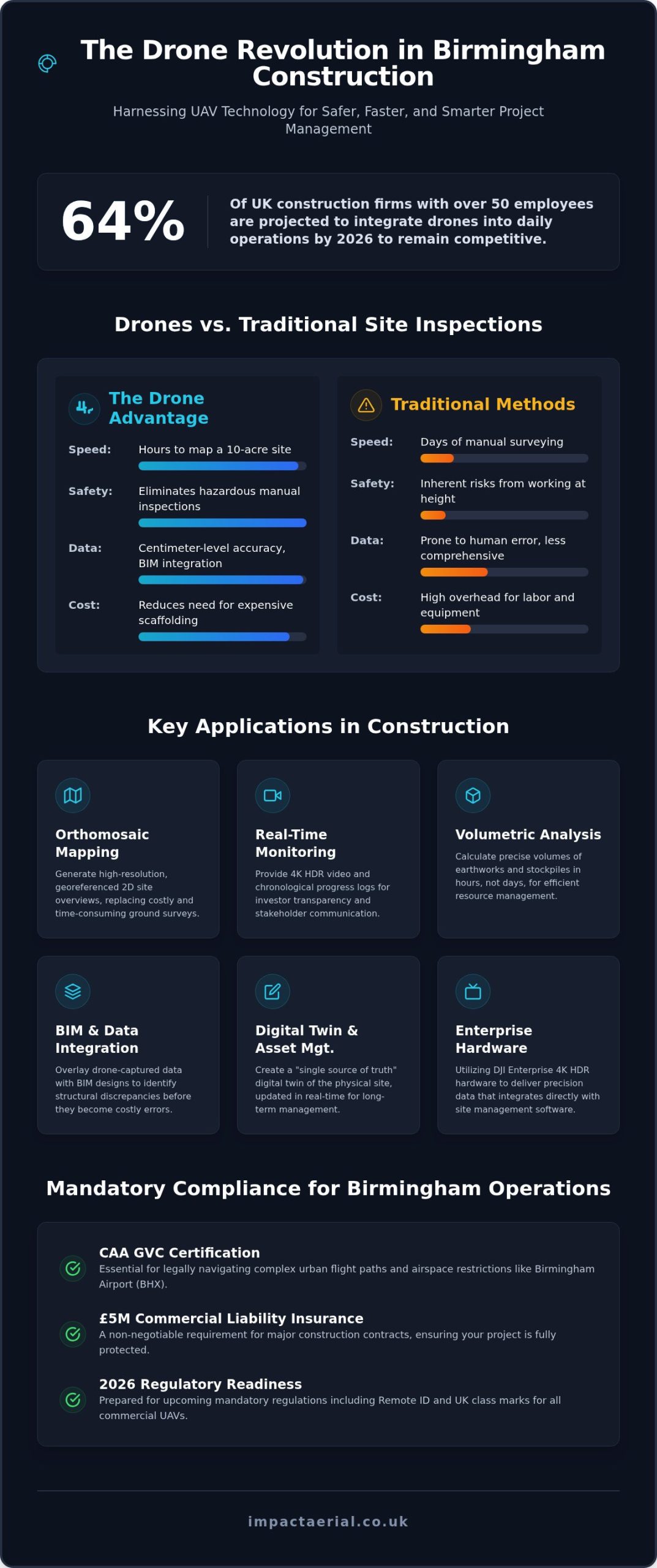
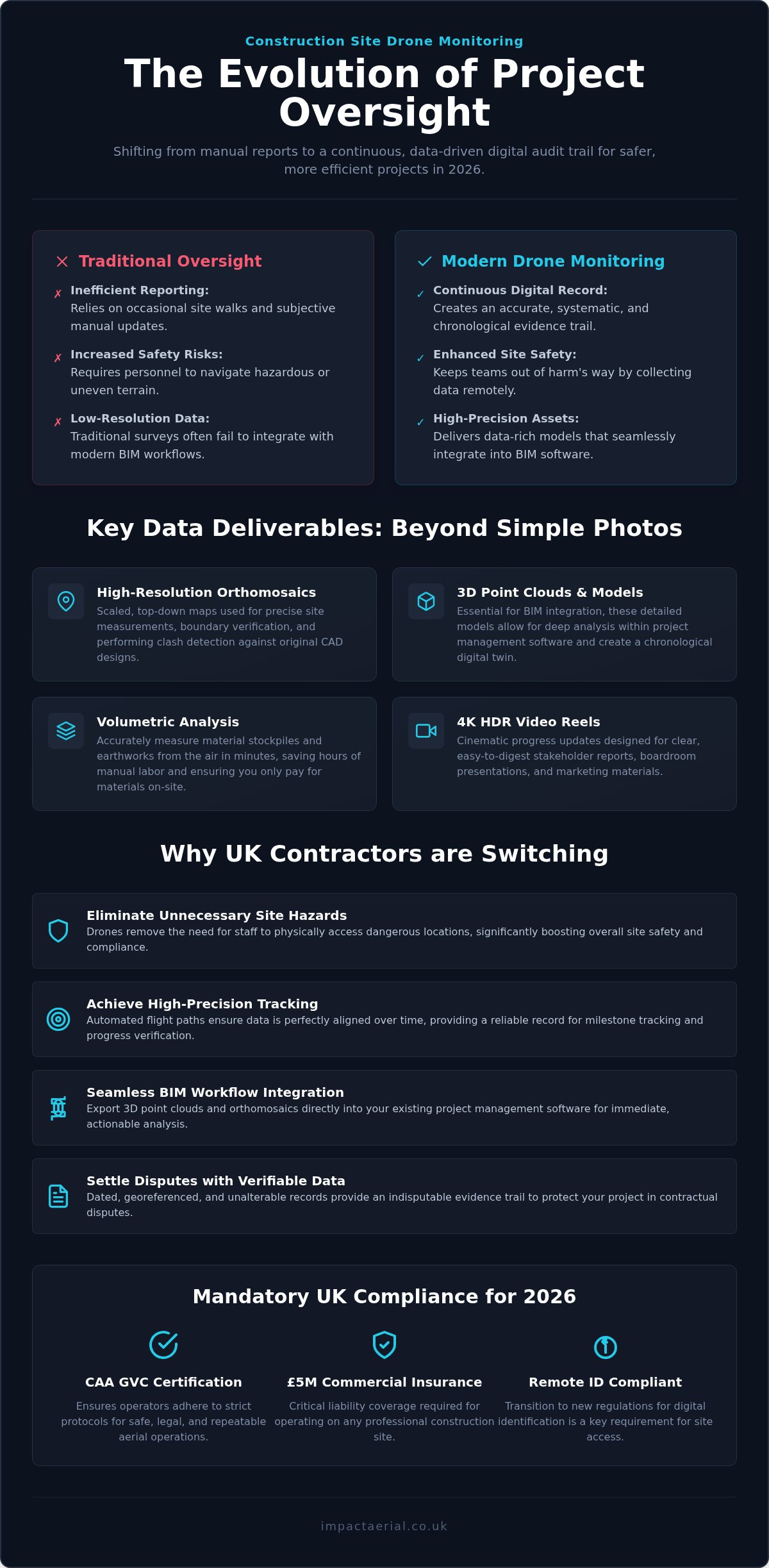
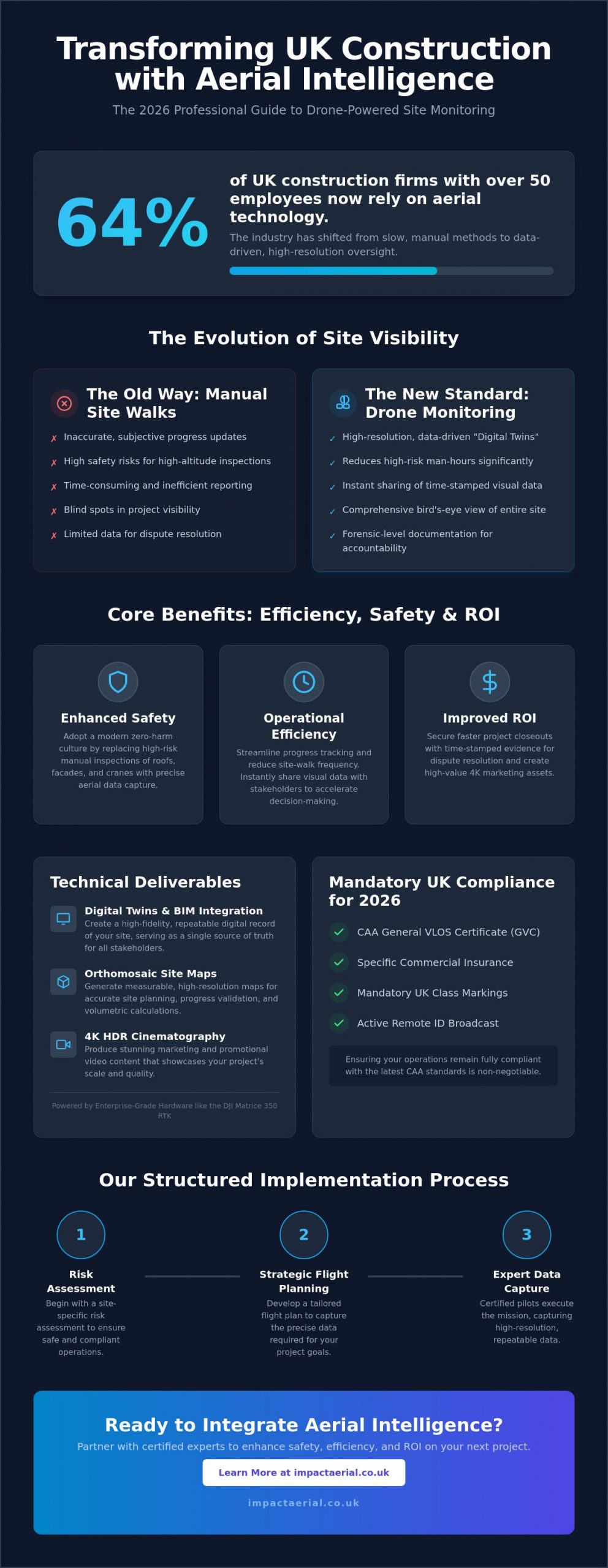
In the current market, your competitors are likely already utilizing drone survey technology to refine their bids and provide more accurate timelines. This shift is driven by the integration of aerial data into Building Information Modelling (BIM) workflows, allowing for a seamless flow of information from the site to the office. Sticking to manual methods creates a data silo that slows down collaboration. Drone adoption serves as a critical competitive advantage for UK construction firms by enabling real-time site oversight and reducing project timelines through automated data capture.

Identifying High-Impact Use Cases for Your Sector

Focusing on specific, high-impact applications helps in convincing management to adopt drone technology by showing immediate utility. Different sectors derive value in unique ways:

  • Construction: Use drones for consistent site monitoring and precise stockpile volume calculations to manage resources effectively.
  • Property: Deploy high-resolution inspections to identify structural issues without the need for plant hire; use cinematic footage for high-end marketing.
  • Solar: Conduct PV solar farm thermal surveys to identify failing cells and optimize the ROI of renewable assets.

By identifying these specific needs, you present a case built on tangible evidence rather than abstract technical potential. This methodical approach ensures the board sees drones as the professional tools they’ve become.

Addressing Management’s #1 Concern: Risk and Compliance

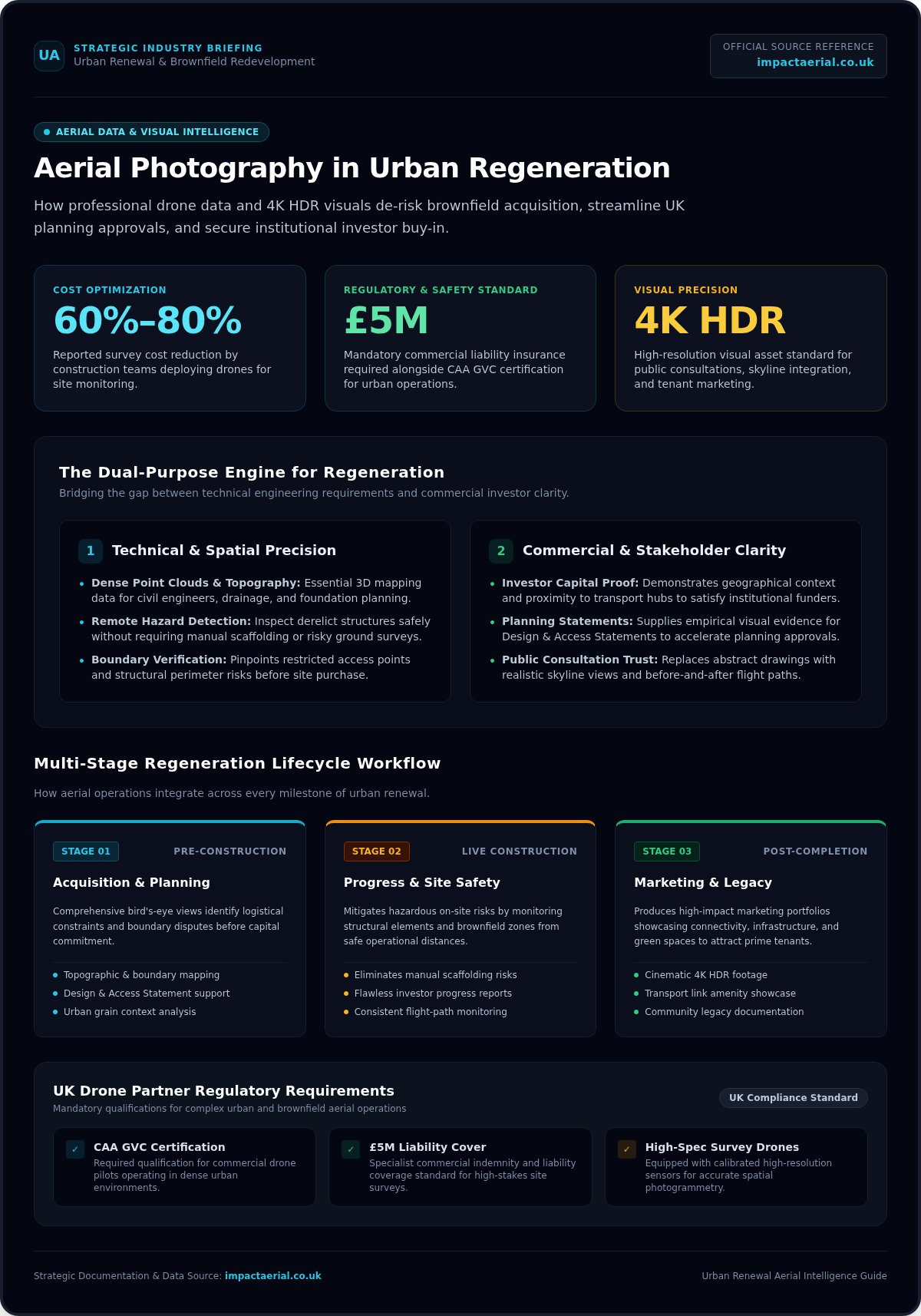
Management’s hesitation often stems from a fear of the unknown, specifically regarding legal liability and site safety. When convincing management to adopt drone technology, you must address these concerns with concrete facts about the UK regulatory framework. The Civil Aviation Authority (CAA) has moved beyond the old PfCO system to a more robust structure involving the General Visual Line of Sight Certificate (GVC) and the A2 Certificate of Competency (A2 CofC). For commercial operations in congested areas or complex airspace, a GVC is the gold standard. It demonstrates a pilot’s ability to operate under strict safety cases that protect your business from litigation.

Operating without these credentials isn’t just a minor oversight; it’s a significant legal risk. In February 2026, international regulatory bodies updated enforcement policies, with civil penalties for unauthorized operations reaching up to $75,000 per violation. While these specific figures stem from FAA drone regulations in the US, they signal a global trend toward stricter enforcement that the UK’s CAA mirrors. Professional drone services provide added peace of mind by carrying £5m in commercial liability insurance, ensuring your business is protected against any unforeseen incidents. If you’re looking for a compliant partner, a professional aerial consultation can help clarify your specific site requirements.

Data privacy is another critical factor that boards prioritize. Every flight must be legally sound and GDPR compliant. A professional partner ensures that all data collection, from photogrammetry to thermal imaging, respects privacy laws and site-specific restrictions. This methodical approach to compliance turns a perceived risk into a controlled, professional workflow.

Why CAA GVC Certification is Non-Negotiable

There’s a vast difference between a hobbyist and a professional drone license holder. Certified pilots are legal requirements for commercial work, not just a preference. These experts are trained to manage complex UK airspace, including Beyond Visual Line of Sight (BVLOS) operations and flights in congested urban environments like Birmingham. This technical proficiency ensures every mission is executed with precision while adhering to the latest safety protocols.

Reducing On-Site Accidents through Aerial Surveys

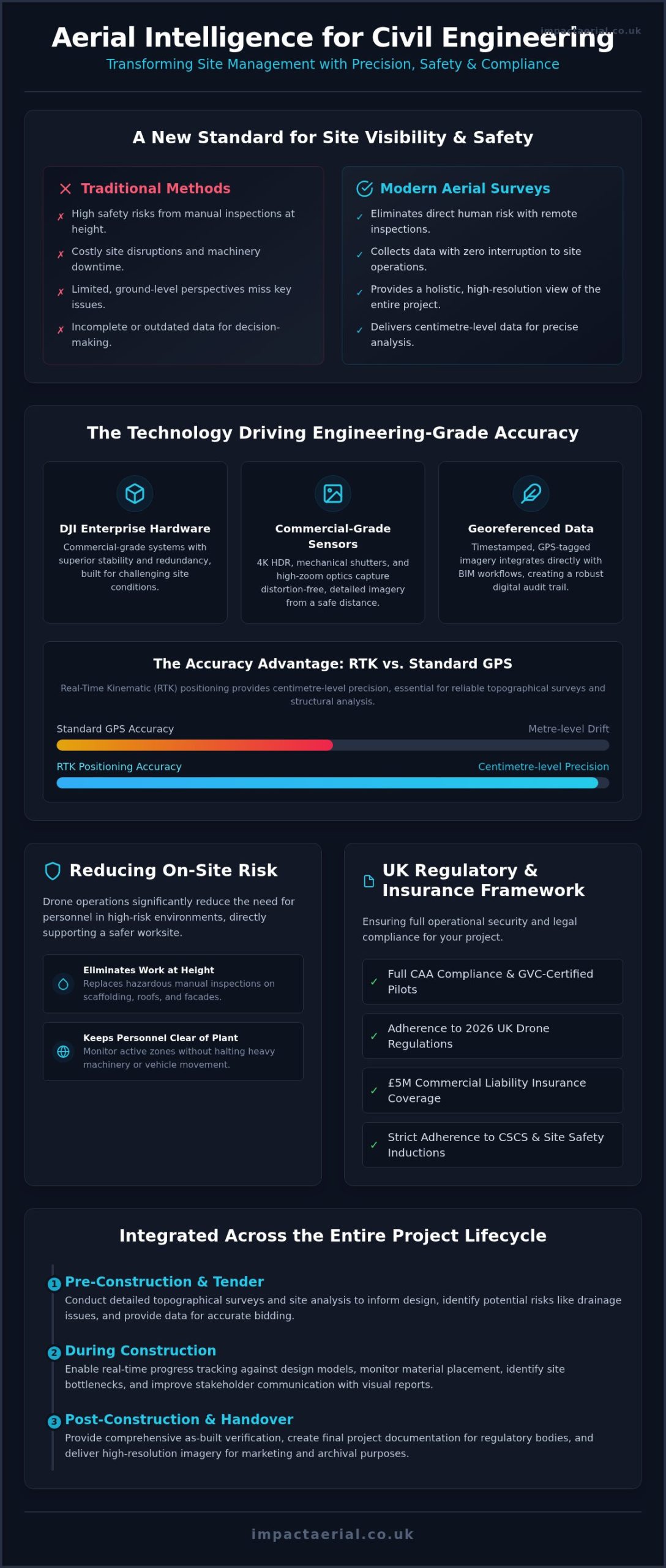
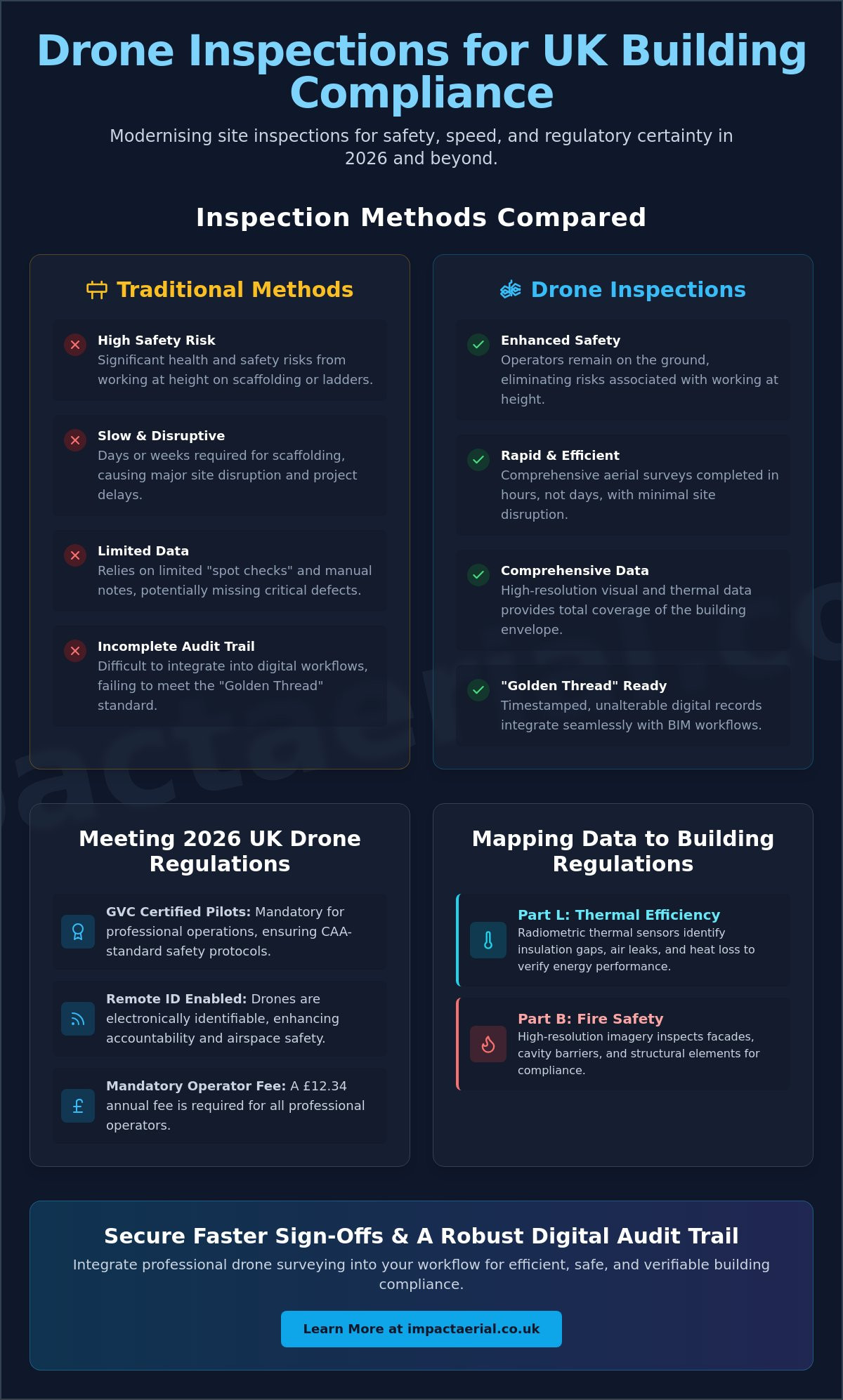
Safety is the most compelling argument for drone adoption. Manual roof inspections often require scaffolding, cherry pickers, or ladders, all of which increase the risk of falls from height. Drones replace these hazardous methods with high-resolution aerial sensors. By integrating drones into construction site monitoring, firms can eliminate 100% of the initial physical risk associated with height-based assessments. This proactive approach significantly improves safety protocols and reduces the likelihood of on-site accidents.

The ROI Analysis: Make vs. Buy (Professional Services)

Deciding between building an in-house flight department or outsourcing to a specialist is a critical crossroads in convincing management to adopt drone technology. While the idea of owning hardware is appealing, the financial reality of an internal program often involves significant hidden costs that can erode your projected ROI. Business leaders who successfully integrate this technology understand that the value lies in the data gathered, not the ownership of the aircraft. When focusing on the final deliverable, many firms find a more positive ROI from drones by partnering with established experts rather than managing the logistical burden of a private fleet.

The speed of delivery is another factor where professional services consistently outperform internal teams. A specialized provider arrives on-site with a refined workflow, whereas an internal pilot must balance drone operations with their primary job roles. This internal learning curve can delay critical site insights by weeks or even months. By contrast, a professional service offers a fixed-cost model with guaranteed post-production results, ensuring that the board sees high-quality data without the unpredictability of an experimental in-house project.

Hidden Costs of an Internal Drone Department

Initial capital expenditure (CAPEX) for commercial-grade hardware is substantial. In 2026, a high-spec inspection drone can cost between $10,000 and $90,000, and that doesn’t include specialized sensors like LiDAR or thermal cameras, which can add another $30,000 to the bill. Beyond the hardware, your business must account for:

  • Annual CAA GVC certification and pilot currency training.
  • Specialized commercial insurance and public liability coverage.
  • Software licenses for photogrammetry and data analysis.
  • The 35.53% CAGR of the market, which risks making your hardware obsolete within 24 months.

The Benefits of Outsourcing to Professional Drone Services

Hiring established Drone Services provides immediate access to high-end 4K HDR sensors and thermal imaging without the upfront CAPEX. You gain the flexibility to scale operations across multiple sites simultaneously, a task that would require a massive internal team to replicate. Hiring a professional service provider allows a firm to bypass the £90,000 capital investment required for top-tier inspection drones while ensuring immediate access to GVC-certified expertise. This “Drone-as-a-Service” model ensures that your business stays at the cutting edge of a niche but increasingly diverse market without the risk of equipment depreciation or regulatory non-compliance.

How to Build Your Pitch: 5 Steps to Convince Leadership

Securing board-level buy-in requires a shift from technical enthusiasm to strategic problem-solving. When convincing management to adopt drone technology, your pitch must be rooted in operational reality. You aren’t just asking for a new tool; you’re proposing a more efficient way to manage assets and mitigate risk. By following a structured five-step framework, you can transform a “niche” request into a critical business objective that aligns with the board’s focus on safety and ROI.

  1. Identify a Specific Bottleneck: Pinpoint a recurring delay, such as the three days typically required to coordinate scaffolding for a roof survey.
  2. Contrast the Workflows: Present a direct comparison showing how traditional manual methods take 48 hours of labor while a drone-assisted survey takes two hours.
  3. Lead with Compliance: Open the risk discussion by highlighting the “peace of mind” provided by CAA GVC certified pilots and £5m commercial liability insurance.
  4. Showcase High-Quality Visuals: Use 4K HDR examples to demonstrate how superior data leads to faster, more accurate maintenance decisions.
  5. Propose a Low-Risk Pilot: Suggest a single-site trial to prove the concept with minimal initial capital commitment.

Gathering Your Evidence

Success depends on the quality of your data. Start by auditing your current safety logs for near-misses related to working at height. These statistics provide a powerful emotional and financial hook. You should also look at marketing potential; using an aerial filming drone can produce breath-taking cinematic video that elevates your brand’s market position. This dual-purpose utility makes the investment even more attractive to stakeholders who prioritize both operations and growth.

Handling Common Management Objections

Expect pushback on cost and legality. Address “It’s too expensive” by showing that the cost of a professional service is significantly lower than the £90,000 required for top-tier hardware and internal training. If they ask “Is it legal?”, provide clear CAA documentation and explain how outsourcing to a technical consultant removes the regulatory burden from your firm. This methodical approach demonstrates that you’ve considered every angle of the operation. To get started with your pilot project data, you can book a professional drone consultation today.

Partnering for Success: Integrating Impact Aerial

Successfully convincing management to adopt drone technology often rests on the strength of your chosen implementation partner. Impact Aerial doesn’t just offer pilots; we act as technical consultants who integrate seamlessly into your existing workflows. Based in Birmingham and the West Midlands, our central location allows for rapid, UK-wide deployment to construction sites and commercial properties. This accessibility ensures that your firm can respond to site requirements with the agility that modern site management demands. We provide the expertise needed to navigate the niche but increasingly diverse market of aerial data collection.

Our approach centers on providing a “peace of mind” guarantee. This means every flight is conducted by a CAA GVC Certified professional who understands the nuances of the 2026 regulatory environment. We handle the complexities of risk assessments and airspace authorizations so your team can focus on the results. By choosing a specialist partner, you eliminate the need for the £90,000 capital investment in hardware and the ongoing burden of internal pilot training. We provide the latest 4K High Dynamic Range (HDR) DJI Enterprise commercial drones to ensure your data is of the highest possible quality.

From Raw Data to Actionable Insights

Management needs more than just raw video files; they require data that informs their next board report or engineering decision. We specialize in transforming raw aerial captures into actionable insights through professional post-production services. Whether you require precise photogrammetry for volume calculations or high-resolution imagery for Building Services inspections, our output is tailored to your specific software environment. We ensure drone data integrates directly into your existing project management tools, providing a unified view for both marketing teams and engineering departments. This methodical data-gathering process ensures that every stakeholder receives the specific information they need to advance the project.

Why Impact Aerial is the Trusted Choice

Our track record with UK property developers and construction leaders is built on a foundation of meticulous compliance and technical proficiency. We understand that reliability is a primary requirement for any board-level decision. By maintaining a fleet of top-quality drones and providing comprehensive data analysis, we eliminate the technical barriers that often stall drone adoption. Our commitment to industry standards is reinforced by our active affiliations with organizations like ARPAS and the Drone Safe Register, providing an external layer of validation for your business case. Contact Impact Aerial to start your pilot project today and see how professional aerial services can transform your operational efficiency.

Securing a Competitive Advantage Through Aerial Intelligence

The transition from manual site inspections to digital-first oversight is no longer a luxury for UK firms. By 2026, the global commercial drone market’s valuation of $28.87 billion proves that industry leaders have already embraced this shift. Convincing management to adopt drone technology requires a clear focus on the safety benefits of eliminating working-at-height risks and the financial logic of the “Drone-as-a-Service” model. You’ve seen how professional data collection reduces project timelines and removes the $90,000 capital expenditure barrier associated with top-tier hardware.

Partnering with a specialist provides the technical precision and regulatory compliance your board demands. Impact Aerial delivers added peace of mind through our CAA GVC Certified pilots and £5m commercial liability insurance. Our fleet of the latest DJI Enterprise 4K HDR drones ensures that your data is accurate, actionable, and legally sound. Take the first step toward transforming your operational efficiency by choosing a partner that prioritizes safety and quality.

Request a Professional Drone Service Quote from Impact Aerial Today and lead your firm into a more efficient, data-driven future.

Frequently Asked Questions

Is convincing management to adopt drone technology actually cost-effective?

Yes, adopting drone technology is highly cost-effective when you consider the reduction in manual labor and equipment hire. By utilizing a “Drone-as-a-Service” model, your firm avoids the significant capital investment required for high-end sensors and specialized training. This shift allows for more frequent site oversight without the recurring costs of scaffolding or heavy machinery, which often results in a faster project completion rate.

What are the biggest risks management worries about with drones?

The primary concerns for leadership are usually legal liability and operational safety. Management often fears the repercussions of unauthorized flights, especially following the February 2026 updates to global enforcement policies that increased penalties for non-compliance. Partnering with a certified specialist mitigates these risks by ensuring every operation follows strict CAA safety protocols and is backed by robust commercial insurance.

Do we need our own drone license if we hire a professional service?

No, your business doesn’t need an internal license when you hire a professional provider. The drone service company holds the necessary CAA GVC or A2 CofC certifications and takes full responsibility for the flight planning and legal compliance. This arrangement simplifies the process of convincing management to adopt drone technology because it removes the regulatory burden from your internal team.

How much liability insurance should a drone company have in the UK?

A professional drone operator in the UK should carry at least £5 million in commercial liability insurance. This level of coverage is the industry standard for commercial property and construction sites; it provides the necessary peace of mind for your board of directors. It ensures that your firm is fully protected against any unforeseen incidents during data-gathering missions.

Can drones really replace traditional surveying methods?

Drones don’t necessarily replace surveyors; instead, they act as a force multiplier for traditional teams. Aerial photogrammetry and LiDAR sensors can capture site data up to 50% faster than ground-based manual methods. This speed allows surveyors to focus on data analysis and decision-making rather than spending days on physical measurements in hazardous environments.

What kind of ROI can we expect from professional aerial filming?

Professional aerial filming delivers a measurable boost to marketing engagement and brand authority. Industry data from early 2026 suggests that high-quality cinematic video can increase click-through rates on commercial property listings by up to 30%. This visual impact helps secure investors and tenants more quickly, directly contributing to the project’s overall profitability.

How do we ensure drone data is GDPR compliant?

Professional operators ensure GDPR compliance by following strict data protection workflows during and after the flight. This includes blurring identifiable faces or vehicle registration marks in the post-production phase and storing all high-resolution files on secure, encrypted servers. These meticulous data-handling procedures ensure that your aerial surveys meet all UK privacy regulations.

What happens if the weather is bad on the day of the shoot?

Safety is the non-negotiable priority, so flights are postponed if wind speeds or precipitation exceed safe operating limits. Most professional service agreements include a “weather day” clause that allows for rescheduling at no additional cost to the client. This methodical approach ensures that the final 4K HDR deliverables aren’t compromised by poor environmental conditions.

Alternatives to Cherry Picker Inspections: Why Drones are the Future of Working at Height

Why are you still paying upwards of £600 per day to hire a machine that puts your staff at risk and limits your field of vision? For many UK site managers, the traditional approach to high-level surveys involves significant operational downtime and the inherent danger of manual visual checks. We agree that maintaining your assets is non-negotiable, yet the logistical burden of hiring Mobile Elevated Work Platforms (MEWPs) often outweighs the results. If you are looking for more efficient alternatives to cherry picker inspections, it is time to look towards the sky.

By reading this guide, you’ll discover how professional drone surveys provide a safer, faster, and more cost-effective solution for your business. We provide peace of mind by keeping your boots on the ground while our fleet of 4K DJI Enterprise drones captures every detail with precision. We will examine how switching to aerial data-gathering can reduce your inspection costs by up to 70% and ensure your operations remain fully CAA GVC Certified and compliant. From identifying structural defects to providing top-quality photogrammetry, we’ll show you why the future of working at height is remote.

Key Takeaways

  • Understand why professional drone surveys are becoming the leading alternatives to cherry picker inspections by eliminating high rental costs and complex site access logistics.
  • Discover how commercial-grade DJI Enterprise drones can transition from arrival to full data capture in under 15 minutes, significantly reducing project downtime.
  • Learn how to mitigate the inherent risks of working at height by keeping personnel safely on the ground while capturing high-resolution 4K HDR inspection data.
  • Identify the critical legal requirements for UK operations and why hiring a CAA GVC certified pilot is essential for regulatory compliance and insurance validity.
  • Explore how detailed post-production aerial reports provide building managers with the technical insights needed for informed maintenance and total peace of mind.

The Limitations of Traditional Cherry Picker Inspections

For decades, Mobile Elevated Work Platforms (MEWPs) have been the industry standard for commercial building maintenance and structural surveys. An Aerial work platform provides physical access to difficult areas, yet the reliance on these mechanical solutions is shifting as asset managers seek more efficient alternatives to cherry picker inspections. While effective for hands-on repairs, using heavy machinery for simple visual assessments introduces unnecessary complexity and operational friction to a project. The logistical burden of moving several tonnes of equipment often outweighs the benefit of the inspection itself.

Traditional methods require significant lead times and precise site coordination. Accessing a roof or a high-level facade isn’t just about the height; it’s about the ground conditions, weight bearing capacities, and the physical footprint of the machinery. When a surveyor uses a basket for manual visual checks, they’re limited by their own line of sight and the physical reach of the boom. This often results in incomplete data sets and missed defects that are only visible from specific, difficult angles.

To better understand the traditional process and its requirements, watch this helpful video:

The High Cost of Access Equipment Hire

Hiring a cherry picker involves far more than the daily rental rate. In the UK, a standard 20-metre truck-mounted platform can cost between £400 and £700 per day, but hidden expenses quickly inflate the budget. You must factor in delivery and collection fees, which often exceed £150, alongside the mandatory requirement for a qualified IPAF operator. If the inspection takes place on a public highway, local council permits can cost upwards of £100 per day and require 10 to 14 days of advance notice. These logistical hurdles often turn a simple “quick check” into a multi-day operation that disrupts site productivity and drains resources.

Safety Risks and Regulatory Burdens

Operating heavy machinery at height brings significant administrative and safety responsibilities. The Work at Height Regulations 2005 mandate that work should only be performed at height if there is no other viable alternative. The Health and Safety Executive (HSE) prioritises a safety hierarchy where “boots on the ground” is always preferred to minimise fall risks. Beyond the physical danger, companies must manage strict compliance with LOLER (Lifting Operations and Lifting Equipment Regulations) for the machinery. Even for hired equipment, the user must ensure PUWER (Provision and Use of Work Equipment Regulations) standards are met. Manual inspections also suffer from human error; a surveyor in a basket cannot capture the same level of granular, repeatable data that modern digital sensors provide. This makes the search for alternatives to cherry picker inspections a matter of both safety and data integrity.

Why Drones are the Leading Alternative for Working at Height

Commercial-grade DJI Enterprise drones have redefined the standards for industrial surveys across the West Midlands and the wider UK. Unlike traditional methods that require heavy plant hire and complex logistics, a CAA GVC certified pilot can arrive on-site and have a drone airborne in under 15 minutes. This rapid deployment makes drones the most efficient alternatives to cherry picker inspections for time-sensitive projects, especially when weather windows are narrow. The speed of data capture doesn’t just save time; it ensures that maintenance teams get actionable insights hours, or even days, faster than traditional methods allow.

Drones excel where traditional MEWPs (Mobile Elevated Work Platforms) fail. They navigate tight gaps between urban structures or hover over fragile roof surfaces where a cherry picker’s weight would cause significant structural damage. Safety is the primary driver for this shift. By keeping personnel firmly on the ground, operators align with OSHA guidelines on drone inspections which advocate for the use of unmanned systems in hazardous or inaccessible areas. Every flight creates a permanent digital record. High-resolution imagery and GPS-tagged data ensure a robust audit trail, providing 100% repeatable results for year-on-year comparisons that manual logbooks cannot match.

Superior Visual and Technical Data

Our fleet captures 4K HDR imagery, allowing surveyors to identify hairline cracks or minor defects in masonry from a safe distance. Integrated thermal sensors identify heat loss and moisture ingress in flat roofs that are often invisible to the naked eye. Photogrammetry is the process of creating 3D models from drone data. These technical outputs provide a level of precision that justifies the shift away from manual surveys. For clients requiring high-quality data for insurance or structural reports, professional drone services offer a depth of information that a visual check from a basket cannot provide.

Minimising Site Disruption

Traditional inspections often require cordoning off 20 or more car parking spaces or closing public pavements to accommodate heavy machinery. Drones operate within a much smaller footprint, usually requiring only a 5-metre exclusion zone for take-off and landing. The electric motors provide near-silent operation, which is vital for occupied residential blocks or quiet office environments in city centres. Switching to drones also reduces the carbon footprint of an inspection by eliminating the need for 5-tonne diesel-powered machinery on-site. This makes the process cleaner, quieter, and significantly less intrusive for building occupants and the local community.

Drones vs. Cherry Pickers: A Comparative Analysis

Traditional access methods like Mobile Elevated Work Platforms (MEWPs) involve significant logistical hurdles. For a standard 30-metre inspection, a cherry picker requires transport to the site, ground stabilization, and often local authority permits for pavement closures. This setup process can consume 3 to 4 hours before an inspector even reaches the roofline. By contrast, a CAA GVC certified pilot can deploy a commercial drone and begin capturing data in under 20 minutes. This rapid deployment makes UAV technology one of the leading alternatives to cherry picker inspections for both scheduled maintenance and emergency fault finding.

Safety and Risk Mitigation

The Health and Safety Executive (HSE) reported that falls from height accounted for 40 workplace fatalities in Great Britain during 2022/23. It remains the primary cause of workplace deaths in the UK. Transitioning to drone technology eliminates this risk by keeping all personnel safely on the ground. Insurance providers are increasingly favouring drone-based surveys because they drastically reduce the liability profile of a project. Impact Aerial operates with £5m commercial liability insurance for added peace of mind, ensuring every flight is backed by robust protection and professional accountability.

Efficiency and Scalability

Scalability is where drones provide a clear financial advantage over manual methods. A single pilot can complete high-resolution drone property surveys across an entire commercial estate in the time it takes to move and restabilise a single cherry picker. On active builds, construction site monitoring via drone doesn’t require shutting down heavy plant machinery or clearing ground-level exclusion zones. This allows the site to remain productive while the inspection is carried out. This streamlined workflow is a key reason why many UK firms are moving away from traditional access equipment.

Data longevity is another critical factor. While manual inspections often rely on handwritten notes and subjective observations, drones capture 4K HDR imagery and 45MP stills. This data is stored in secure cloud-based galleries, creating a permanent, timestamped digital record. Building managers can compare high-resolution imagery from 2024 with 2025 to track the exact rate of masonry degradation or guttering wear. This level of precision provides a data-driven foundation for long-term asset management that traditional alternatives to cherry picker inspections cannot replicate.

The transition from manual to digital also eliminates the inconsistencies of human memory. Instead of a technician describing a crack in a chimney stack, the drone provides a sub-centimetre resolution image that can be shared instantly with structural engineers. This digital-first approach ensures that every stakeholder has access to the same high-quality visual evidence, regardless of where they are located.

Transitioning to Drone-Based Inspections: Compliance & Safety

Adopting drones as alternatives to cherry picker inspections requires more than just purchasing hardware. The UK regulatory environment is strictly governed by the Civil Aviation Authority (CAA). Operating commercially without the correct permissions isn’t just risky; it’s illegal. For added peace of mind, every flight we conduct follows a rigorous pre-flight protocol. This includes site-specific risk assessments (RAMS), checking for restricted airspace, and obtaining necessary landowner permissions. Urban inspections add another layer of complexity. We manage data protection and GDPR considerations by ensuring that any identifiable human data is either avoided or redacted during the post-production phase. Professional operators must maintain a clear log of data handling to ensure compliance with the Data Protection Act 2018.

The Importance of CAA Certification

You’ll often see hobbyists with an A2 CofC, but for complex commercial building surveys, a GVC (General Visual Line of Sight Certificate) is the standard you should demand. The GVC is a more rigorous UK drone license that allows pilots to operate in more congested areas under specific operational authorisations. Impact Aerial maintains full compliance with the latest 2026 CAA regulations. This ensures that your project isn’t delayed by legal challenges or safety breaches. Professional certification is a non-negotiable requirement for any site manager or building owner looking to mitigate liability. It proves the pilot has undergone formal flight examinations and understands emergency procedures.

What to Look for in a Drone Service Provider

When evaluating alternatives to cherry picker inspections, vetting a professional drone service involves more than checking a price list. You need to verify that the provider uses enterprise-grade equipment. Consumer-level drones lack the sensor resolution and thermal capabilities required for high-accuracy defect detection. A professional fleet should include drones equipped with high-resolution 4K or 45MP sensors and radiometric thermal cameras. Check their post-production capabilities too. A stack of raw images is rarely useful for a facilities manager. You need a provider who delivers annotated high-resolution reports identifying specific defects rather than just a folder of photos.

  • Verification of a valid CAA Operational Authorisation for the specific mission profile.
  • Proof of specialist commercial liability insurance with a minimum £5 million cover.
  • Use of cloud-based platforms for easy data sharing and stakeholder collaboration.
  • The ability to provide photogrammetry models for precise, millimetre-accurate measurements.

If you’re ready to upgrade your surveying process, contact our specialist team to discuss your requirements.

Professional Drone Inspection Services with Impact Aerial

Impact Aerial delivers a comprehensive suite of professional drone services across Birmingham, the West Midlands, and the wider UK. We provide one of the most efficient alternatives to cherry picker inspections, allowing site managers to bypass the logistical headaches of hiring platform lifts or erecting complex scaffolding. Our end-to-end process is built on transparency. It starts with an initial consultation to define your survey goals, followed by meticulous flight planning and risk assessment. After the flight, we deliver detailed post-production reports that include high-resolution imagery and actionable data that engineers can use immediately.

Our specialist applications cover demanding sectors like renewable energy and commercial real estate. We conduct PV solar farm thermal surveys to detect hotspots or failing strings, ensuring maximum energy yield for plant operators. For commercial roof inspections, our drones capture every detail of large-scale industrial units, from guttering to HVAC systems, in a fraction of the time a manual team would require. For added peace of mind, every pilot is CAA GVC Certified and we carry £5 million in commercial liability insurance. We’ve established ourselves as a trusted specialist in this niche but increasingly diverse market through consistent reliability.

Our Technology and Expertise

Our fleet features the latest 4K High Dynamic Range (HDR) DJI Enterprise drones, designed for both stability and clarity. We bridge the gap between aerial filming drone aesthetics and technical survey precision. This means you receive breath-taking results that are also functionally useful for structural engineers and surveyors. The high-resolution sensors allow our team to zoom into specific bolts, cracks, or welds while maintaining crisp detail. It’s this commitment to quality that ensures our data-gathering meets the highest industry standards for 2025 and beyond.

Get a Quote for Your Next Inspection

Getting a quote for your project is straightforward and fast. Simply provide us with your site postcode and a brief description of the assets requiring inspection. We use advanced satellite mapping to assess the site remotely, allowing us to provide a transparent quote within 24 hours. Impact Aerial is the preferred partner for property professionals and developers who value safety and technical excellence. Contact Impact Aerial today for a safer alternative to cherry pickers and experience the future of working at height.

Future-Proof Your Asset Management Strategy

Adopting drone technology transforms how you manage high-level assets. You’ll reduce operational downtime and eliminate the physical risks associated with manual climbing or heavy machinery. These systems deliver 4K high-resolution data faster than traditional access platforms, providing a clearer picture of structural health. As businesses prioritise safety and efficiency, drones have become the leading alternatives to cherry picker inspections for forward-thinking firms.

Impact Aerial delivers expert survey solutions across Birmingham and the West Midlands. Our team consists of CAA GVC Certified pilots who operate under the latest UK aviation regulations. For added peace of mind, we maintain £5m commercial liability insurance, ensuring your project is protected from every angle. It’s time to swap expensive rentals for precision-engineered data gathering that keeps your team’s feet firmly on the ground.

Request a professional drone survey quote from Impact Aerial to start your transition to safer, more efficient aerial inspections.

Frequently Asked Questions

Are drones a legal alternative to cherry picker inspections in the UK?

Drones are a fully legal alternative to cherry picker inspections in the UK when operated by CAA GVC certified pilots. We operate strictly within the Civil Aviation Authority (CAA) framework and follow CAP 722 safety guidelines at all times. For added peace of mind, our professional services are backed by £5 million in commercial liability insurance, ensuring every flight meets the highest regulatory standards.

How much can I save by switching from a cherry picker to a drone survey?

Switching to drone surveys can reduce your inspection costs by 30% to 65% compared to traditional plant hire. You eliminate the £400 to £1,200 daily rental fees for a 20-metre cherry picker and the associated transport costs. Since a drone team typically completes a site survey in 90 minutes, you also avoid the expensive labour hours required for manual height work.

Can a drone inspect a roof as thoroughly as a person in a basket?

Modern drones equipped with 4K HDR sensors provide a more comprehensive view than a person standing in a mechanical basket. Our DJI Enterprise fleet captures high-resolution imagery and thermal data that detects moisture or heat loss invisible to the naked eye. We provide a 100% digital record of the entire roof surface, ensuring no tile or flashing is missed during the data-gathering process.

What happens if the weather is bad on the day of the drone inspection?

If wind speeds exceed 20mph or heavy rain occurs, we reschedule the flight to ensure the safety of the site and equipment. Our pilots monitor Met Office forecasts and specialized aviation apps 24 hours before deployment. This flexibility is a key benefit of alternatives to cherry picker inspections, as there are no wasted plant hire fees if the weather prevents a flight.

Do I need to notify my neighbours or local council before a drone inspection?

You typically don’t need council permission for drone flights on private property, but we manage all necessary notifications as part of our service. We adhere to the UK Data Protection Act and the UK GDPR to ensure privacy for neighbouring residents. If the site falls within a Flight Restricted Zone, we coordinate directly with Air Traffic Control to secure the required flight permits.

What kind of report will I receive after a drone-based inspection?

You receive a detailed technical report containing high-definition 4K images, 20-megapixel close-ups, and optional 3D photogrammetry models. We provide these assets via a secure cloud link within 48 hours of the site visit. This documentation allows your maintenance team to zoom in on specific defects, such as hairline cracks or loose mortar, with extreme precision from their desktop.

Is a drone survey suitable for listed buildings or sensitive sites?

Drones are the safest option for listed buildings because they require zero physical contact with the structure. Traditional access methods like scaffolding or cherry pickers risk damaging fragile stonework or historic lead roofing. Our non-intrusive approach is frequently preferred by conservation officers for monitoring Grade I and Grade II listed sites without the vibration or weight of heavy machinery.

How high can a drone fly for an industrial chimney or tower inspection?

We can fly drones up to 120 metres (400 feet) above ground level for industrial chimney or tower inspections under standard CAA permissions. If your structure exceeds this height, we can apply for specific Operating Safety Cases to fly higher. This capability allows us to inspect the tallest structures in the West Midlands without the logistical nightmare of high-reach mechanical platforms.

Drone Survey for Volume Calculations: The Complete Professional Guide

Research suggests that manual stockpile measurements often carry volume discrepancies as high as 20%, leading to significant financial friction during month-end audits. You already know that sending a surveyor to climb unstable material heaps isn’t just slow; it’s a liability risk that your insurance provider would rather you avoid. Relying on outdated methods instead of a professional drone survey for volume calculations creates a frustrating bottleneck that delays project timelines and leaves your data open to human error.

This guide demonstrates how professional aerial data gathering delivers sub-5% volumetric accuracy while completely removing personnel from hazardous zones. You’ll learn how to achieve high-precision 3D models for earthworks and transition to 24-hour reporting cycles for better site management. We’ll explore the technical workflow of photogrammetry and how working with CAA GVC certified pilots provides the meticulous compliance and peace of mind your site operations require for these complex technical tasks.

Key Takeaways

  • Learn how transitioning from manual measurement to aerial data acquisition eliminates safety risks while significantly reducing the time spent on-site.
  • Discover how a professional drone survey for volume calculations achieves sub-5% accuracy, meeting the rigorous standards required for financial audits and inventory reporting.
  • Understand the technical distinctions between photogrammetry and LiDAR to determine which high-resolution 3D modeling method best suits your specific site requirements.
  • Gain insights into monitoring earthworks progress and managing stockpile inventories with precision data that tracks real-time changes against original designs.
  • Identify the essential safety credentials and CAA GVC certifications necessary to ensure your aerial surveys are conducted with professional-grade compliance and liability insurance.

Understanding Drone Survey for Volume Calculations

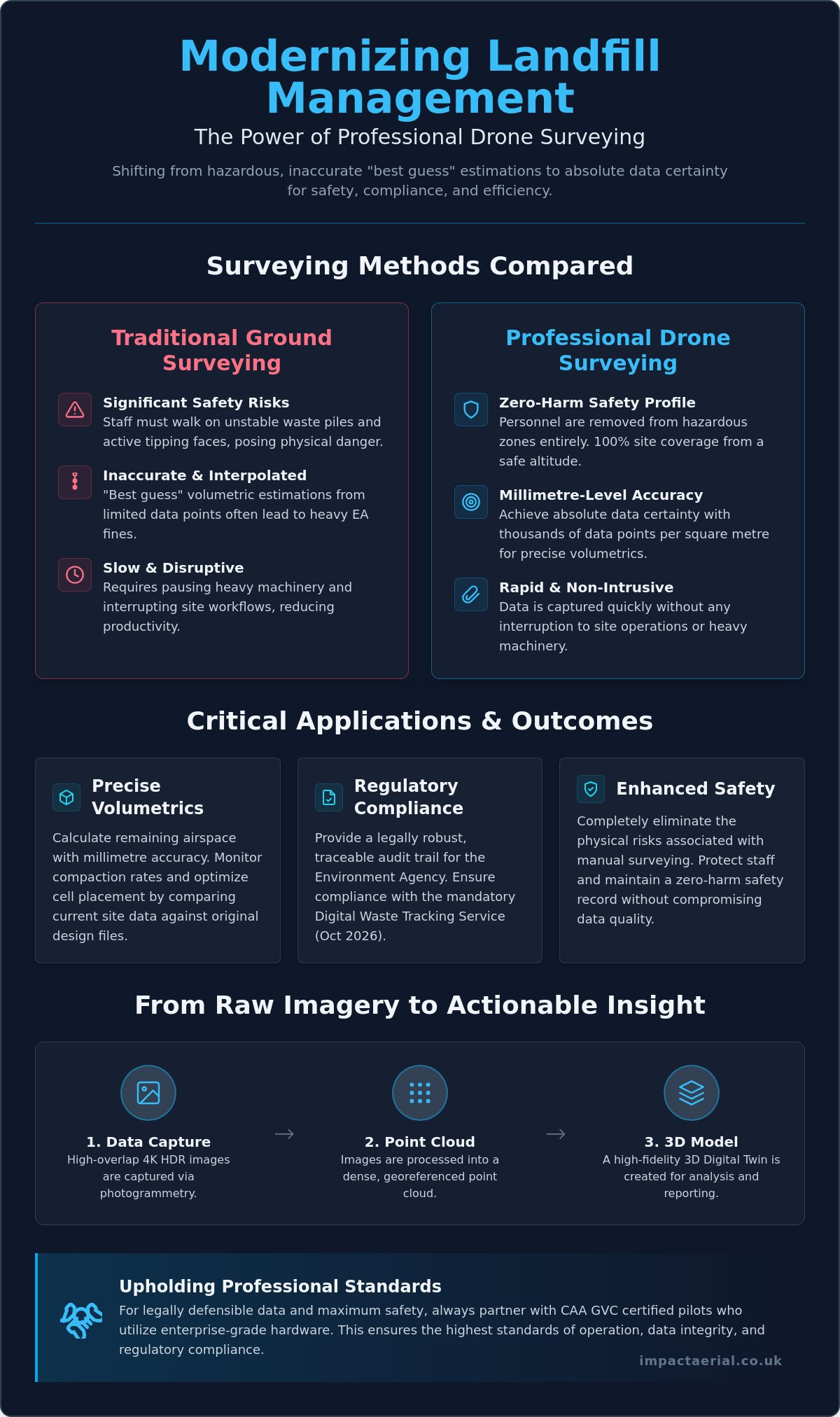
A drone survey for volume calculations involves deploying Unmanned Aerial Vehicles (UAVs) to capture thousands of high-resolution images across a site. These images are processed through photogrammetry to create a precise 3D digital twin. In the UK, this technology has replaced the outdated practice of “walking the pile,” where surveyors manually took measurements on unstable or shifting ground. It’s a fundamental shift from estimation to exact science.

For UK construction, mining, and waste management firms, accurate inventory is a legal and financial necessity. The Health and Safety Executive (HSE) reported 30 fatalities in the UK construction sector during 2021/22. Many of these incidents occurred due to falls or contact with moving vehicles. Aerial data acquisition removes personnel from these hazardous environments entirely. Our CAA GVC certified pilots provide this data without stopping site operations, offering a level of safety that manual methods can’t match.

Traditional vs Drone Volumetric Surveys

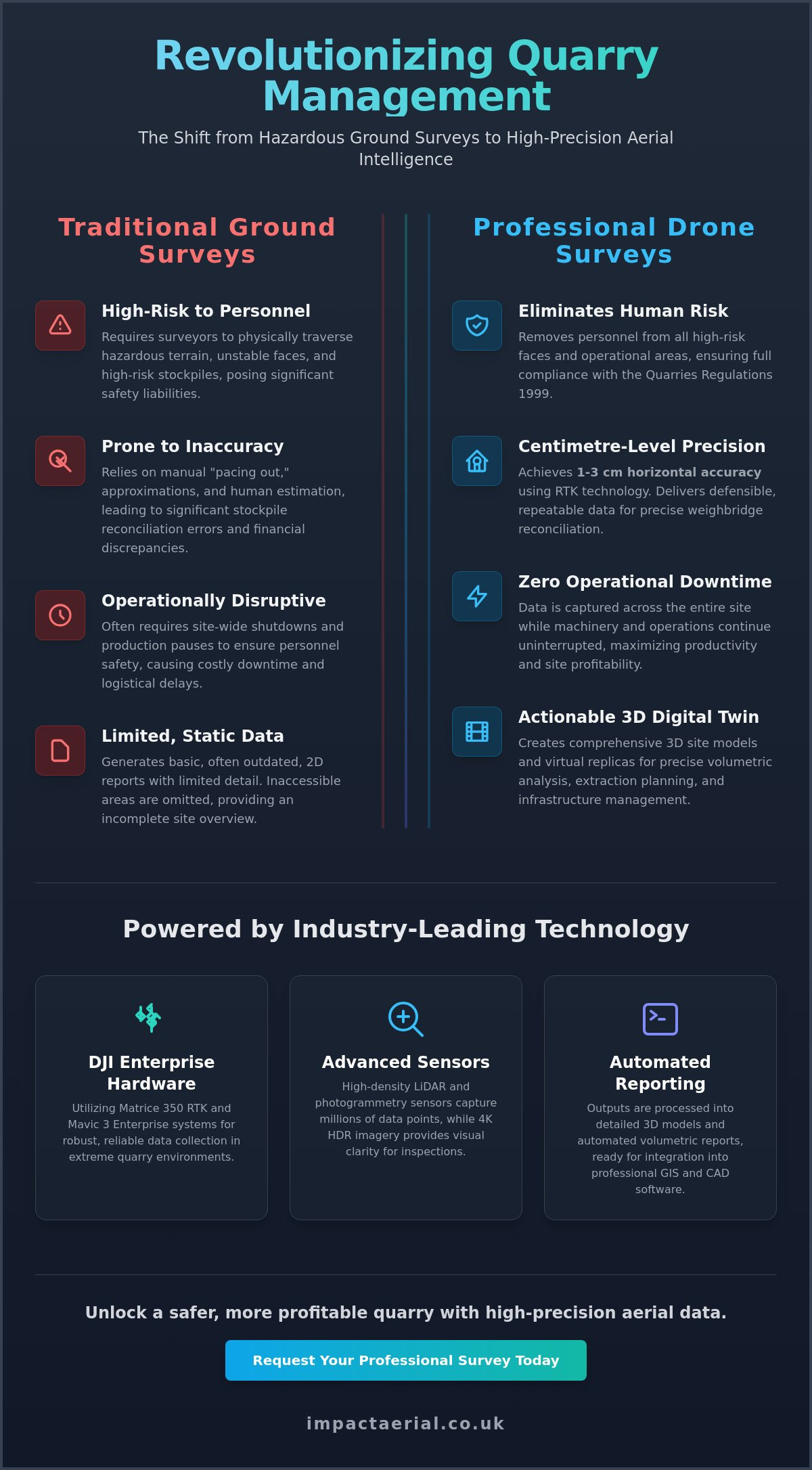
Manual surveys often take 6 to 8 hours to measure a large facility, yielding perhaps 50 to 100 individual GPS points. In contrast, a drone survey for volume calculations covers the same area in a 20-minute flight. This process generates a point cloud with millions of coordinates, providing a 99% accuracy level compared to traditional ground-based methods. Businesses moving from annual manual audits to monthly aerial checks typically see a 40% improvement in supply chain forecasting and waste reduction.

The Role of Digital Surface Models (DSM)

The Digital Surface Model (DSM) acts as the technical foundation for every calculation. It represents the top surface of all objects on site, including stockpiles and machinery. Software uses this data to establish a “base plane,” effectively drawing a floor beneath the material to calculate its true volume. High-resolution textures allow our team to distinguish between specific materials, such as Grade 6F2 crushed concrete and Type 1 sub-base. This ensures inventory reports are as precise as they are visually detailed.

Photogrammetry vs LiDAR: Choosing the Right Technology

Selecting the correct sensor technology is the most critical decision in a drone survey for volume calculations. Photogrammetry remains the industry standard for the majority of UK quarry and construction sites. This method relies on high-resolution cameras capturing hundreds of overlapping 2D images. Software then identifies millions of common “tie points” across these frames to triangulate a 3D point cloud. When flown at a height of 50 metres, a modern 45-megapixel sensor can achieve a Ground Sampling Distance (GSD) of 1.2cm, providing a level of detail that traditional ground-based GPS methods can’t match.

LiDAR (Light Detection and Ranging) operates on a different physical principle. Instead of passive light, the sensor emits up to 240,000 laser pulses per second. It measures the “Time of Flight” for each pulse to bounce back, creating a direct 3D measurement of the environment. While photogrammetry requires visual features to stitch images, LiDAR creates its own data points. This makes it a specialist tool for complex topographies where visual data alone fails to provide the required precision.

For 85% of UK stockpile measurements, high-resolution photogrammetry is the preferred choice. It’s significantly more cost-effective and provides a photorealistic “Digital Twin” that stakeholders can visually inspect. For projects requiring this level of technical precision, choosing an operator with CAA GVC certification ensures data is gathered safely and legally while maintaining high standards of accuracy.

When to Prioritise Drone Photogrammetry

Photogrammetry is the most efficient tool for open-air sites with clear visibility. It excels at measuring stockpiles of aggregate, soil, or coal where the material surface is clearly visible from above. Because the equipment is lighter and the processing more streamlined, it reduces operational costs by roughly 40% compared to LiDAR. The resulting 3D models are also visually intuitive, allowing site managers to identify specific materials or safety hazards directly from the map.

When LiDAR is Essential for Volumes

LiDAR becomes necessary when the ground is obscured. In the UK, this often involves measuring earthwork volumes on sites with dense vegetation or canopy cover. A laser pulse can find small gaps between leaves to hit the actual ground, a process known as “vegetation penetration.” It’s also vital for high-contrast environments or low-light conditions where traditional cameras struggle. If your drone survey for volume calculations involves “ground stripping” digital data from a wooded area, LiDAR is the only reliable solution.

Achieving Precision: RTK, GCPs, and Accuracy Standards

A common concern from site managers and financial controllers involves the reliability of aerial data for year-end audits. They often ask if a drone survey for volume calculations can truly stand up to the scrutiny of a balance sheet. The answer is yes. When executed by CAA GVC Certified professionals, drone-derived volumes achieve a 1% to 3% accuracy threshold. This directly rivals, and often exceeds, the results from traditional total stations. Ground-based surveyors might take 500 points across a stockpile; a drone captures 50,000 points per square metre, providing a far more granular digital twin.

Impact Aerial maintains this standard by strictly using DJI Enterprise hardware. Consumer-grade drones lack the mechanical shutters and high-performance sensors required for survey-grade work. A DJI Mavic 3 Enterprise, for example, uses a 20MP 4/3 CMOS sensor that captures data at 0.7-second intervals. This eliminates the “rolling shutter” distortion that causes measurement drift in cheaper models. It’s the difference between a professional audit and a rough estimate. We ensure that 1,000 cubic metres of aggregate is reported as 1,000 cubic metres, not 1,080.

RTK (Real-Time Kinematic) Explained

RTK technology acts as the foundation of high-accuracy mapping. Our drones communicate with a local base station or an NTRIP network to correct GPS data in real-time. This process provides horizontal accuracy within 1cm and vertical accuracy within 2cm. By georeferencing every image to a specific coordinate system, we remove the guesswork. It allows us to overlay surveys from January and June with perfect alignment. You don’t have to worry about shifting data when tracking monthly depletion rates.

The Importance of Ground Control Points (GCPs)

While RTK provides the positioning, Ground Control Points act as the physical anchor for the project. These are high-visibility markers placed across the site and measured with a GNSS rover. We typically deploy 5 to 8 GCPs per 10 hectares on active UK construction sites. This redundancy provides 100% peace of mind for audit-trail compliance. If a financial auditor questions the digital model, the GCPs serve as the verifiable ground truth. They prove the drone survey for volume calculations is accurate to the centimetre across the entire site area.

Practical Applications: Stockpiles, Earthworks, and Landfills

A professional drone survey for volume calculations transforms how site managers handle bulk material data. You don’t have to rely on manual estimations that often carry a 10% to 15% margin of error. Our aerial data-gathering techniques provide sub-5cm vertical accuracy, ensuring that financial reporting and operational planning are based on hard facts. It’s the most reliable way to maintain a clear overview of site assets without the safety risks associated with traditional ground-based surveying.

Quarry managers use these surveys for precise month-end stock reporting. Having an exact figure for extracted minerals or processed aggregates prevents discrepancies in the balance sheet. In landfill management, we measure remaining “void space” to assist with long-term capacity planning and regulatory compliance. Civil engineering projects, particularly road and rail embankments across the West Midlands, benefit from our ability to calculate exact material requirements. This precision prevents the costly over-ordering of fill materials and ensures project timelines remain intact.

Stockpile Volume Measurement and Monitoring

We automate the measurement of gravel, sand, coal, and recycled aggregates using advanced photogrammetry. Our process removes the safety risk of surveyors climbing unstable piles. Clients receive professional PDF reports featuring 3D visualisations that help non-technical stakeholders visualise the site. Regular aerial audits help firms reduce inventory “shrinkage” and accounting errors by approximately 4% compared to legacy measurement techniques.

Cut and Fill Analysis for Site Preparation

Comparing current ground levels against the proposed architectural CAD model is essential for site preparation. Our drone survey for volume calculations identifies the exact amount of soil that needs to be moved, exported, or imported. If a project manager miscalculates soil volume by even 500 cubic metres, it results in significant unbudgeted haulage expenses. Our data allows for the optimisation of on-site logistics, which has been shown to reduce machinery fuel consumption by 12% through more efficient route planning. For added peace of mind, our CAA GVC Certified pilots ensure all data is captured safely and in full compliance with UK aviation law.

Ready to improve your site accuracy? Contact our professional drone survey team to discuss your volume calculation requirements.

Partnering with Impact Aerial for Professional Surveys

Choosing a partner for a drone survey for volume calculations requires a focus on precision and legal compliance. Impact Aerial provides high-accuracy data-gathering services across Birmingham, the West Midlands, and the wider UK. We utilize DJI Enterprise technology, such as the Matrice 350 RTK equipped with high-resolution sensors, to deliver volumetric data that’s accurate to within 1-3cm. This level of detail is essential for construction managers and quarry operators who need to manage inventory without the 15% margin of error typical of manual measurement methods.

Safety isn’t just a buzzword for us; it’s our operational foundation. We maintain £5 million in commercial liability insurance and conduct rigorous site-specific risk assessments before every flight. Our pilots are CAA GVC certified, which is the current industry gold standard for commercial drone operations in the UK. This certification ensures we can operate in complex environments where uncertified hobbyists are legally barred from flying, providing the professional reliability your project demands.

The Impact Aerial Workflow

Our end-to-end service begins with a detailed consultation to understand your specific reporting needs. We follow a structured three-step process to ensure data integrity:

  • Pre-flight planning: We identify site-specific hazards, check local airspace restrictions via NATS, and establish ground control points (GCPs) if required for sub-centimeter precision.
  • On-site execution: Our pilots use automated flight paths to capture overlapping high-resolution imagery. This efficient data capture often takes less than 45 minutes for a standard 5-hectare site, causing zero downtime for your ground teams.
  • Data processing: We transform raw imagery into actionable 3D models and detailed volumetric reports using advanced photogrammetry software, delivering results in your preferred CAD or GIS format.

Compliance and Peace of Mind

Relying on in-house hobbyists or uncertified operators exposes your business to significant legal and financial risks. Professional drone services provide the technical expertise and the legal framework necessary to protect your project. By 2026, holding a GVC certification will be the absolute legal baseline for any drone operator conducting safety-critical volumetric measurements on UK construction sites. For added peace of mind, we provide full documentation for every flight, ensuring your site remains 100% compliant with UK aviation law. Our meticulous approach guarantees that your drone survey for volume calculations is both legally sound and mathematically precise.

Optimise Your Site Intelligence with Precision Data

Precision in earthworks and stockpile management isn’t just a goal; it’s a financial necessity. By leveraging RTK technology and high-resolution photogrammetry, site managers can reduce measurement errors to under 3cm. Choosing a professional drone survey for volume calculations ensures your project stays on schedule while eliminating the safety risks associated with manual ground-based measurements. Impact Aerial provides the technical expertise required for these high-stakes environments. Our team consists of CAA GVC Certified Pilots who operate a specialised DJI Enterprise fleet capable of capturing 4K HDR data. For added peace of mind, we maintain £5m commercial liability insurance, ensuring every operation meets the highest safety standards. Whether you’re managing a 50-hectare landfill or a complex construction site, our data-gathering processes provide the authoritative results your stakeholders demand. Don’t let outdated methods compromise your project’s bottom line. Take the next step toward total site transparency today.

Request a Professional Drone Survey Quote

Frequently Asked Questions

How accurate is a drone survey for volume calculations?

A professional drone survey for volume calculations typically achieves a relative accuracy of 1% to 3% compared to traditional ground-based methods. When we use Ground Control Points (GCPs) or RTK-enabled drones, we maintain a vertical accuracy between 3cm and 5cm across the entire site. These 2024 industry standards ensure that your stockpile measurements are precise enough for financial auditing and inventory management. You’ll receive data that’s far more granular than the 5-meter grid spacing used in older manual techniques.

What materials can be measured using drone photogrammetry?

Drones effectively measure any bulk material with a visible surface, including sand, gravel, crushed stone, and coal. Our photogrammetry software processes thousands of data points to calculate the volume of irregular piles that manual surveyors often miss. We regularly provide volume reports for construction firms handling 10,000 cubic meters of earthwork or more. However, drones can’t measure liquids in tanks or materials hidden under dense forest canopies where the ground isn’t visible from the air.

Do I need to stop site operations during a drone survey?

You don’t need to halt site operations while we conduct the aerial survey. Our CAA GVC certified pilots operate at a safe distance from your machinery and personnel, ensuring zero downtime for your project. A typical 10-acre site takes less than 30 minutes to capture, compared to the 4 to 6 hours required for a ground crew. This non-intrusive approach eliminates the safety risks associated with surveyors climbing over unstable stockpiles or walking near heavy plant equipment.

How long does it take to get the volumetric report after the flight?

You’ll receive your completed volumetric report within 24 to 48 hours of the flight completion. Processing time depends on the total data volume, but a standard 500-image set is typically ready for analysis the next business day. For urgent requirements, our team can provide preliminary results even faster. This rapid turnaround allows site managers to make data-driven decisions based on current inventory levels rather than waiting a week for traditional survey results to be processed.

Is a drone survey cheaper than traditional surveying methods?

Drone surveys are generally 30% to 50% more cost-effective than traditional total station or GNSS methods. You save money by reducing the man-hours spent on-site and eliminating the need for expensive safety scaffolding or site shutdowns. For a medium-sized quarry, switching to aerial data-gathering can save over £1,500 per survey cycle. These savings come without sacrificing quality; they provide high-resolution 3D models that offer much higher data density than manual point collection.

What is the difference between a DSM and a DTM in volume surveys?

A Digital Surface Model (DSM) captures every feature on the site, including vehicles, buildings, and vegetation. In contrast, a Digital Terrain Model (DTM) filters out these objects to show only the bare earth surface. For accurate volume calculations, we use the DTM to ensure that a parked excavator or a temporary shed doesn’t artificially inflate your stockpile figures. Our processing software uses 2023-standard algorithms to strip away non-terrain features with 98% accuracy.

What regulations must a drone pilot follow for UK construction site surveys?

All pilots must hold a valid CAA GVC (General Visual Line of Sight Certificate) and maintain £5 million in commercial liability insurance. We strictly follow the UK Open Category or Specific Category rules, ensuring every flight is logged and risk-assessed according to CAP 722 guidelines. For added peace of mind, our team coordinates with local Air Traffic Control if your site falls within a Flight Restriction Zone (FRZ). Safety and legal compliance are our primary operational priorities.

Can drones measure volumes in indoor warehouses or under cover?

We can measure indoor volumes using specialized Elios 3 drones or handheld SLAM Lidar scanners that don’t rely on GPS signals. These internal surveys are essential for warehouses storing salt, grain, or biomass where traditional aerial drones can’t operate. Our indoor systems provide a 0.1% volume accuracy in confined spaces, ensuring your indoor inventory is as well-managed as your outdoor stockpiles. We provide these niche services to help facilities maintain 100% visibility of their assets regardless of the environment.