Using Drone Data for Preventative Maintenance: A Strategic Guide for 2026

What if your next major structural repair bill wasn’t a surprise, but a calculated decision you made six months ago? Most facility managers in the United Kingdom spend over 70% of their maintenance budget on reactive “firefighting” rather than planned improvements. You likely already know the frustration of hiring expensive scaffolding or cherry-pickers, only to find that the suspected defect was a minor issue, or worse, that you missed a critical fault elsewhere. These traditional methods are slow, costly, and introduce unnecessary health and safety risks to your workforce.

By using drone data for preventative maintenance, you can transition from guesswork to a precision-led predictive strategy. High-fidelity aerial data provides the clarity needed to identify hairline fractures or moisture ingress long before they require a full site shutdown. This guide provides a strategic roadmap for 2026, showing you how to integrate CAA-compliant aerial surveys to reduce long-term repair costs by as much as 25% according to recent industry benchmarks. We will explore the technical workflow for turning raw 4K imagery into actionable maintenance schedules, ensuring your site stays safe and your budget stays under control.

Key Takeaways

  • Learn why transitioning from reactive “firefighting” to a predictive model is the most cost-effective strategy for asset management in 2026.
  • Discover how high-fidelity 4K HDR and thermal sensors identify invisible structural wear and overheating components before they lead to critical failure.
  • Identify high-ROI applications for using drone data for preventative maintenance within the UK solar and commercial property sectors.
  • Navigate essential UK compliance standards, including the necessity of CAA GVC certification and £5m commercial liability insurance for onsite operations.
  • Understand how professional aerial surveying provides the meticulous precision required to ensure long-term asset integrity and business peace of mind.

The Evolution of Maintenance: From Reactive Firefighting to Predictive Foresight

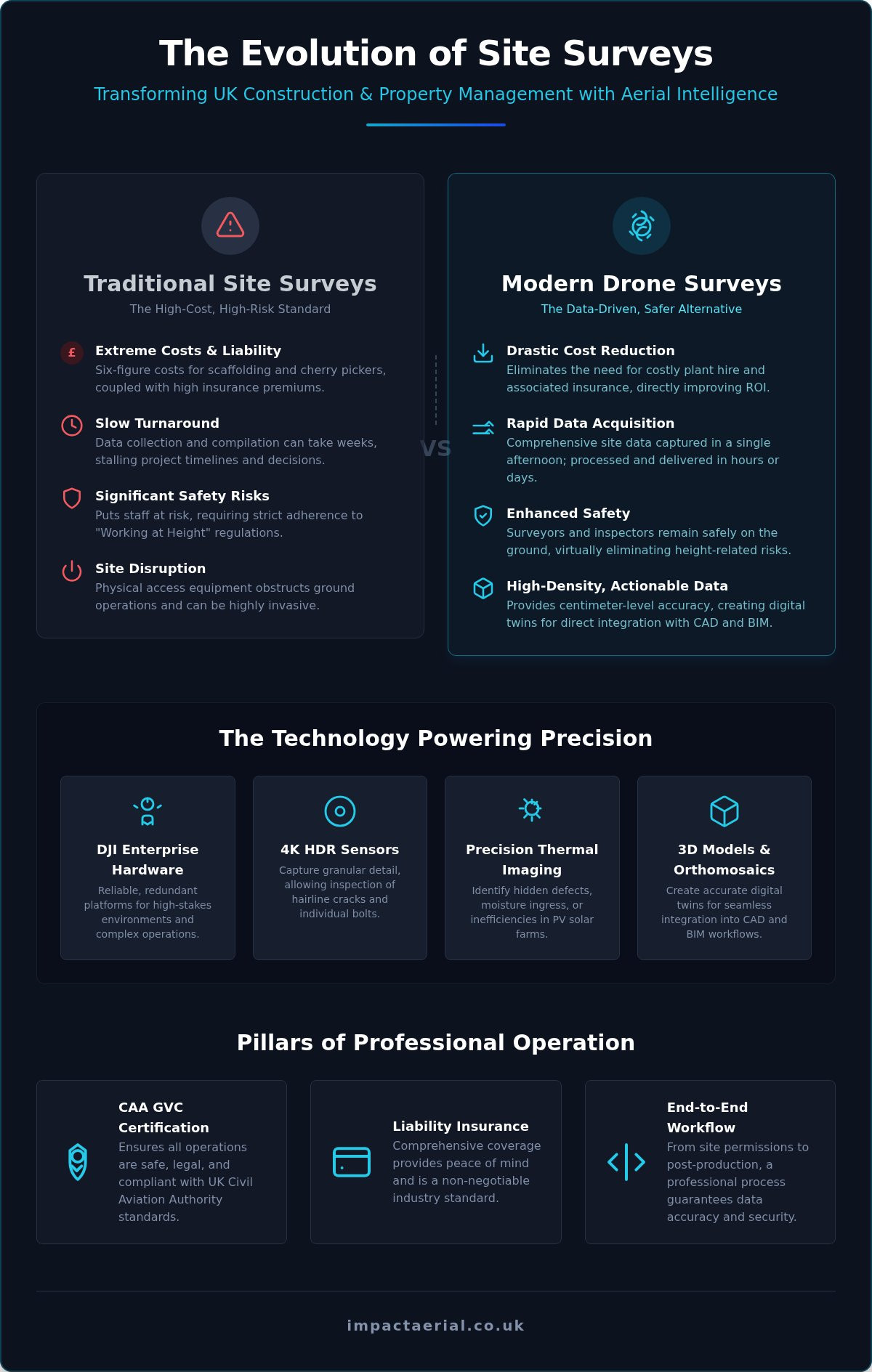
In 2026, waiting for an asset to fail isn’t just risky; it’s a financial liability that modern UK firms can’t afford. Traditional “firefighting” methods, where repairs only happen after a breakdown, represent the most expensive strategy for asset managers. Using drone data for preventative maintenance allows organisations to transition from reactive guessing to predictive knowing. By integrating high-resolution aerial sensors into the Industrial Internet of Things (IIoT), businesses create a live, responsive ecosystem of structural health. This intelligence acts as a sophisticated early warning system, identifying mechanical and structural weaknesses long before they threaten operational safety.

The following video demonstrates how automated drone systems identify network faults in real-time:

The High Cost of Reactive Maintenance

Emergency repairs often cost 3 to 4 times more than planned interventions. In the UK energy and infrastructure sectors, manual inspections frequently overlook early-stage corrosion or 1.5% deviations in thermal signatures that indicate failing components. These micro-faults eventually escalate into catastrophic failures that halt business continuity and trigger significant increases in insurance premiums. Relying on a technician with a ladder or scaffolding is no longer a viable safety standard. Manual methods are slow and often fail to capture the granular detail required for 2026 compliance standards. The hidden expenses of downtime, combined with the logistical nightmare of emergency parts procurement, make reactive maintenance a failing model for competitive enterprises.

Predictive Maintenance: A Data-First Approach

True predictive models rely on data consistency and precision. By conducting a regular drone survey, operators establish a high-resolution digital baseline for every asset. This allows engineers to track the rate of decay with millimetre accuracy over several months. If a crack in a concrete pylon grows by 3mm between January and July 2026, the software flags the anomaly immediately. Using drone data for preventative maintenance means you can repair a minor fault for £800 today, rather than facing a £60,000 structural replacement next year. This shift moves the industry away from “if it breaks, fix it” towards a meticulous “fix it because the data confirms it will fail.”

  • Digital Baselines: Creating 3D models to compare asset health over time.
  • Thermal Intelligence: Identifying heat leaks or electrical hotspots invisible to the human eye.
  • Risk Mitigation: Lowering insurance costs by proving a proactive inspection regime.
  • Operational Continuity: Scheduling repairs during planned shutdowns to avoid £10,000-per-hour downtime costs.

How Drones Capture High-Fidelity Maintenance Data

Drones provide a level of detail that traditional manual inspections simply cannot match. By using drone data for preventative maintenance, asset managers across the UK can identify structural issues before they escalate into expensive, unplanned downtime. This precision relies on a combination of high-resolution sensors and stable flight platforms that operate regardless of the asset’s height or complexity.

  • 4K HDR Sensors: Documenting surface corrosion, rust patterns, and mechanical wear.
  • Thermal Imaging: Detecting heat signatures from faulty electrical components or insulation leaks.
  • LiDAR: Generating millimetre-accurate 3D point clouds for structural deformation analysis.

Visual Inspection with 4K HDR Precision

Modern inspections rely on 4K High Dynamic Range (HDR) sensors to document surface-level wear with absolute clarity. These sensors capture the subtle textures of hairline cracks in concrete or loose components on a telecommunications mast from a safe distance. High-zoom capabilities are vital for inspecting high-voltage lines or tall chimneys where physical access is dangerous. 4K resolution allows for “digital zooming” during post-analysis, which enables technicians to crop into specific pixels to verify a defect without losing structural context.

Thermal and LiDAR: Beyond the Visible Spectrum

Preventative maintenance often involves spotting what the human eye misses. Thermal sensors identify “hot spots” in electrical substations or solar arrays, highlighting failing components before they combust. For structural health, LiDAR creates precise point clouds to monitor movement over time. This FHWA report on UAS for bridge inspection highlights how these digital models allow teams to measure structural deformation with extreme accuracy. Combining visual and thermal data provides a comprehensive view of asset health that traditional methods can’t replicate.

Achieving this level of accuracy requires commercial-grade DJI Enterprise drones. These platforms offer the flight stability and GPS precision needed to ensure data is repeatable and reliable for year-on-year comparisons. For added peace of mind, our professional aerial inspection services are delivered by CAA GVC Certified pilots who understand the technical requirements of high-stakes infrastructure. Using drone data for preventative maintenance ensures that every bolt, weld, and circuit is accounted for, providing a meticulous record of your asset’s condition.

Sector-Specific Applications: Where Drone Data Delivers Maximum ROI

Implementing a digital-first strategy isn’t just about adopting new tech; it’s about measurable returns. Across the UK, industries with high-value assets are using drone data for preventative maintenance to slash downtime. This approach is particularly vital in a niche but increasingly diverse market where traditional manual inspections often lead to safety risks and inflated costs. By moving from reactive repairs to data-led foresight, operators can protect their bottom line.

Maximising Yield with PV Solar Farm Thermal Surveys

Efficiency in renewable energy relies on the health of individual components. A single defective cell within a photovoltaic (PV) panel can cause a hotspot, which often degrades the performance of an entire string by up to 30%. Our CAA GVC Certified pilots use high-resolution thermal sensors to identify these anomalies instantly. While manual testing of a 50MW site could take a ground crew several weeks, a drone survey completes the task in a fraction of that time, often within two days. Integrating this thermal data into preventative maintenance programmes ensures that energy yield remains at peak capacity throughout the asset’s lifecycle.

Commercial Property and Construction Site Monitoring

For developers and landlords, water ingress is a primary cause of structural failure. Drones provide a high-definition view of flat roofs to detect standing water or membrane cracks before they manifest as internal leaks. Using drones for construction site monitoring allows project managers to track progress against BIM models and ensure safety compliance without the expense of scaffolding. This data-gathering provides high-quality visual evidence, which is essential when validating warranty claims or conducting pre-acquisition surveys. It offers stakeholders total peace of mind through documented precision.

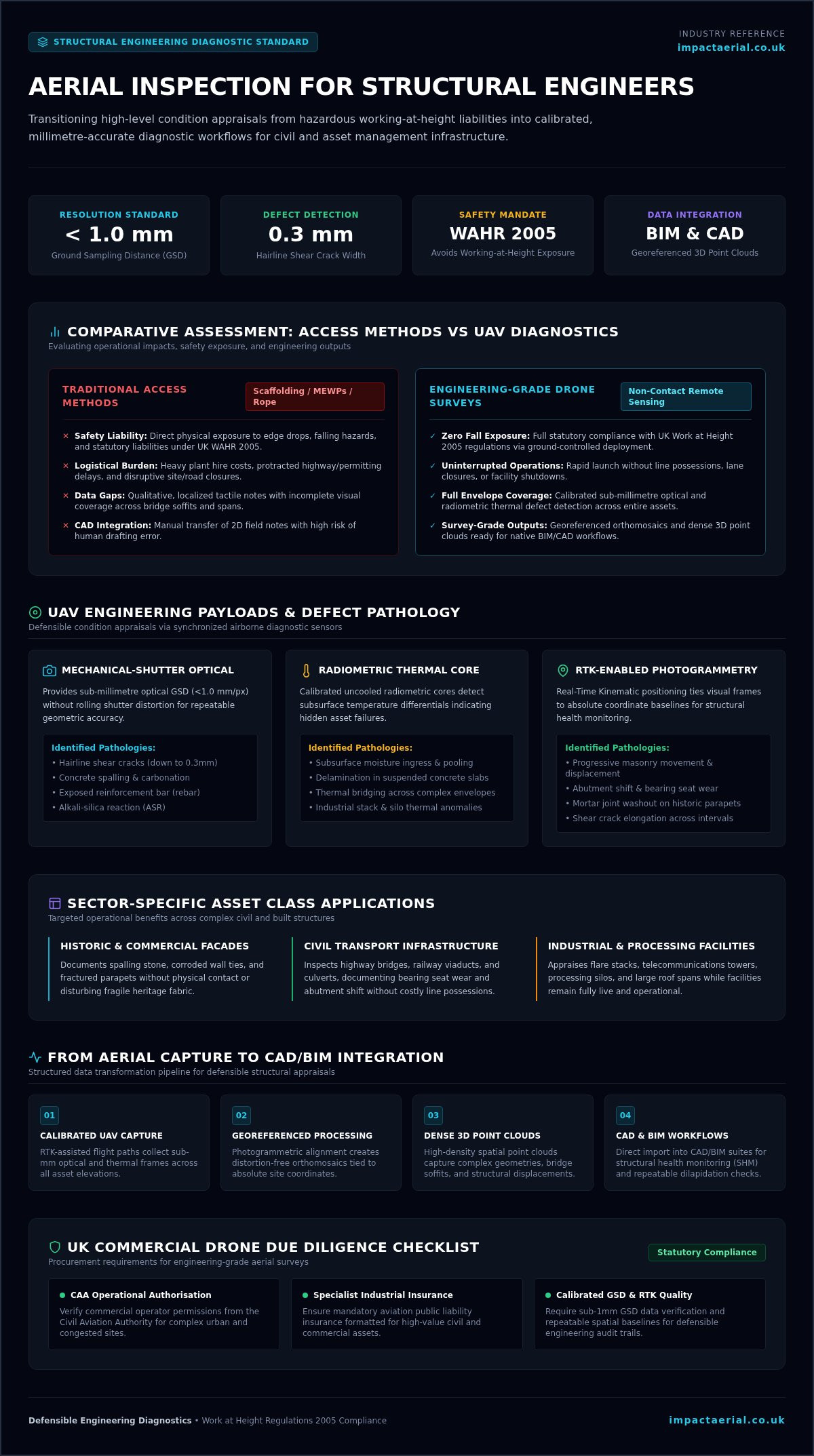
Critical infrastructure requires constant vigilance against environmental wear. Utilities and infrastructure operators benefit from inspecting power lines and bridges for signs of corrosion or sagging. A Caltrans research note on UAS inspections highlights how drones significantly improve safety when assessing rural communications towers. By keeping personnel on the ground, companies reduce their liability while gaining a more granular view of structural integrity. This extends to industrial chimneys and silos, where drones safely assess internal linings and external masonry in hazardous environments. They can identify cracks as small as 1mm without requiring human confined space entry, which is a major leap for safety and efficiency. Using drone data for preventative maintenance in these sectors ensures that minor structural issues are caught before they become catastrophic failures.

Implementing a Drone-Led Maintenance Strategy in the UK

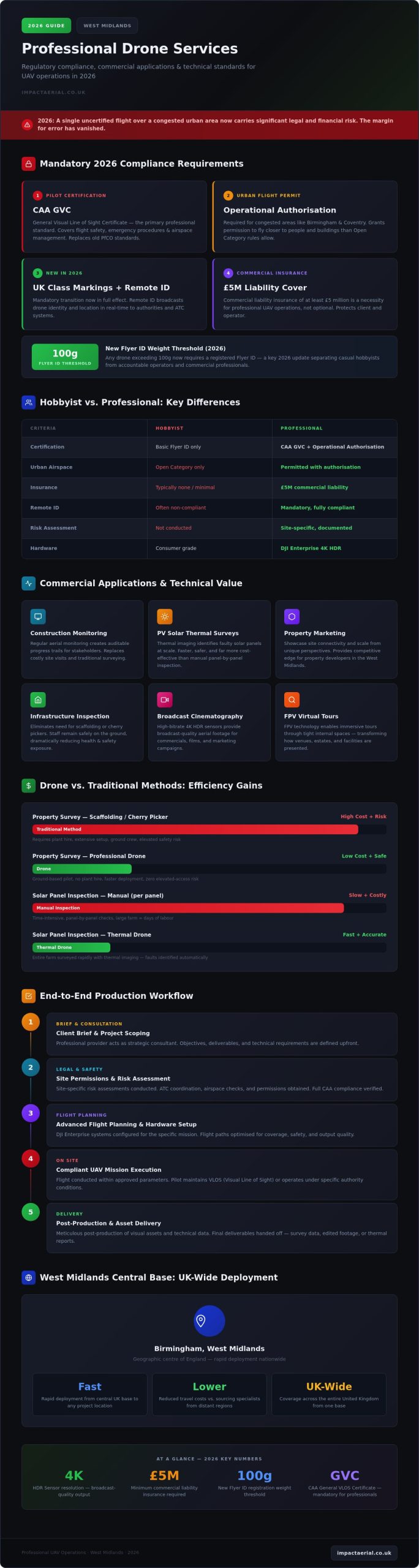
Adopting a drone-centric approach requires more than just hardware; it’s about building a compliant, data-driven workflow that satisfies both insurers and regulators. In the UK, this starts with strict adherence to Civil Aviation Authority (CAA) standards. Professional operators must hold a valid drone license and GVC (General Visual Line of Sight Certificate) to operate legally in commercial environments. For added peace of mind, we maintain £5m in commercial liability insurance. This level of cover is a non-negotiable baseline for Tier 1 contractors and facility managers who require protection against onsite operational risks.

Effective scheduling is the next pillar of a successful strategy. Using drone data for preventative maintenance works best when survey frequency reflects asset criticality. High-risk assets, such as aging roof structures or external HVAC systems, benefit from quarterly aerial inspections. More stable assets might only require annual checks. Integrating this data into your existing Building Management System (BMS) allows for a seamless transition from identifying a defect to generating a work order.

Compliance, Safety, and the CAA

The UK regulatory landscape has evolved significantly. The transition from the old PfCO (Permission for Commercial Operation) to the GVC represents a shift toward more rigorous safety assessments and standardized pilot competency. While “off-the-shelf” consumer drones are popular for hobbyists, they lack the high-resolution thermal sensors and 4K HDR capabilities required for professional data-gathering. Under UK law, a GVC-certified pilot is legally required to operate drones in congested areas to ensure the highest standards of public safety and operational discipline.

Bridging the Data Gap: From Pixels to Reports

Using drone data for preventative maintenance produces massive datasets, often exceeding 15GB per flight session. Managing this requires a robust strategy for cloud storage and local processing. Post-production is where raw pixels become actionable insights. Our technicians use specialized software to highlight structural defects, water ingress, or thermal anomalies, providing maintenance teams with clear, annotated reports. This prevents “data fatigue” by only showing your team what needs fixing.

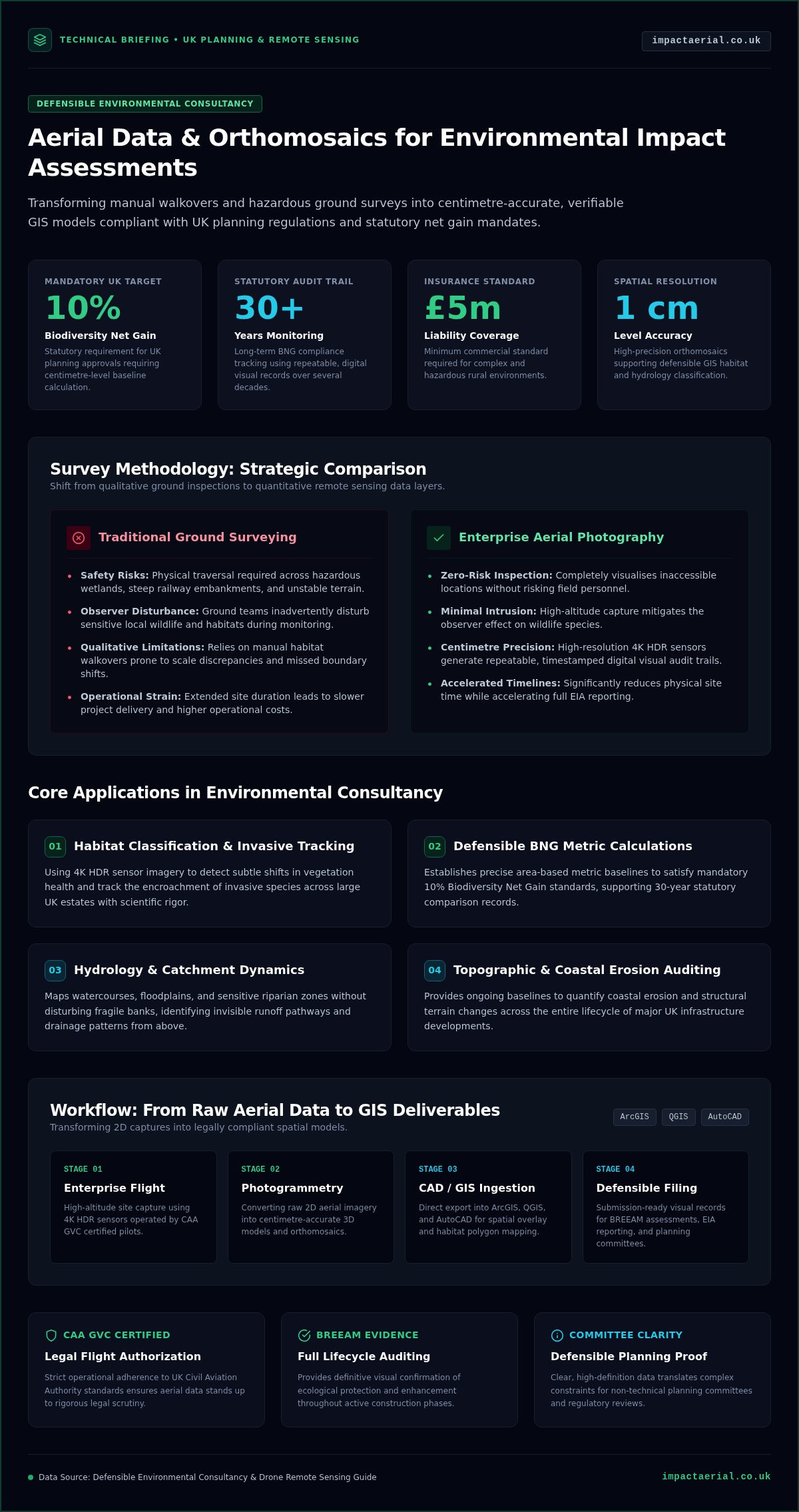
Data security and GDPR compliance are central to our operations. When filming commercial sites in the West Midlands or beyond, we ensure all imagery is captured and stored in accordance with UK privacy laws. Any incidental footage of the public or neighbouring properties is carefully managed to maintain total site integrity. This meticulous attention to detail ensures your maintenance strategy is as legally sound as it is technically advanced.

Ready to upgrade your asset management with professional aerial insights? Contact Impact Aerial today for a compliant, expert-led survey.

The Impact Aerial Advantage: Professional Data for Asset Integrity

Impact Aerial delivers meticulous data gathering through precision aerial surveying, specifically tailored for the West Midlands and the wider UK market. We don’t just capture images; we capture high-resolution datasets that form the backbone of your asset management strategy. For added peace of mind, our operations are backed by £5m commercial liability insurance and full CAA GVC certification. This ensures every flight meets the highest safety standards while protecting your business interests and reputation.

Our role extends far beyond the flight itself. We provide comprehensive post-production services that transform raw 4K HDR footage into actionable insights. Through advanced photogrammetry and 3D mapping, we deliver the technical clarity required for property, construction, and renewable energy sectors. This level of detail is essential when using drone data for preventative maintenance to identify microscopic fissures or thermal anomalies before they escalate into structural failures. Our customised solutions cater to the specific demands of UK infrastructure, ensuring your maintenance budget is spent where it’s needed most.

Expertise Grounded in Birmingham and the West Midlands

While our roots are firmly planted in Birmingham, our reach covers national infrastructure projects throughout the UK. We understand the “niche but increasingly diverse market” of drone technology, which allows us to act as a trusted specialist rather than a generalist provider. Our local knowledge of West Midlands topography and airspace regulations ensures efficient deployment; meanwhile, our technical expertise provides a sophisticated perspective on your maintenance strategy. We help clients move from reactive repairs to proactive cycles, often reducing manual inspection costs by 30% or more.

Get Started with a Professional Drone Survey

The process begins with a detailed consultation to define your specific data requirements and safety protocols. During a site visit, an Impact Aerial pilot conducts a thorough risk assessment before deploying our fleet of DJI Enterprise drones. You’ll receive a clear timeline for data delivery and a breakdown of the technical outputs. Using drone data for preventative maintenance reduces site downtime by up to 40% compared to traditional scaffolding or rope access methods. Contact Impact Aerial today for a professional maintenance survey quote to secure your assets for 2026 and beyond.

Securing Asset Longevity through Aerial Intelligence

The transition from reactive repairs to predictive foresight isn’t just a trend; it’s a strategic necessity for UK asset managers in 2026. By using drone data for preventative maintenance, organizations can identify structural anomalies before they escalate into costly failures. High-fidelity 4K HDR and thermal imaging provide a level of detail that traditional manual inspections can’t match. This data-driven approach ensures maintenance budgets are allocated with precision, protecting both your infrastructure and your bottom line.

Safety and compliance remain the cornerstones of any successful aerial operation. For added peace of mind, ensure your data collection is handled by specialists who understand the rigorous standards of the UK aviation landscape. Impact Aerial provides a meticulous service backed by CAA GVC Certified Pilots and £5m commercial liability insurance. Our expertise in thermal data collection and high-resolution imaging delivers the actionable insights required to maintain total asset integrity across your portfolio.

Don’t wait for a critical failure to take action. Book your professional drone maintenance survey with Impact Aerial today and gain the technical advantage your business deserves. It’s time to elevate your maintenance strategy with confidence.

Frequently Asked Questions

Is drone data accurate enough to replace manual structural inspections?

Yes, high-resolution drone data often exceeds manual accuracy by capturing sub-millimetre detail across 100% of a structure. Traditional manual checks might only sample 15% of a facade due to access constraints or safety risks. Our photogrammetry creates digital twins with 2mm spatial resolution, providing a comprehensive data set for engineers to review without the inherent dangers of working at height.

How often should we use drones for preventative maintenance on a commercial roof?

Commercial roofs require drone inspections at least twice per year, typically in autumn and spring. Using drone data for preventative maintenance allows you to identify blockages or membrane fatigue before winter storms cause catastrophic failure. Regular 6-month cycles ensure your 25-year warranty remains valid by providing documented evidence of proactive care and professional data-gathering.

Can drones detect internal leaks or just surface-level damage?

Drones detect internal leaks indirectly by identifying thermal anomalies and moisture trapped beneath the surface. While a visual camera sees surface cracks, a thermal sensor identifies temperature differentials that indicate water ingress. This method catches leaks 3 to 6 months before they manifest as visible drips inside the building, giving you the peace of mind that your assets are protected.

What UK regulations apply to using drones for industrial maintenance?

Operations must comply with CAA CAP 722 regulations, requiring pilots to hold a GVC (General Visual Line of Sight Certificate). Since January 2021, UK drone laws focus on the risk of the operation rather than the aircraft weight. We operate under a redundant safety framework and hold £10 million in commercial liability insurance to ensure every flight meets strict legal standards.

How much can drone data reduce our annual maintenance budget?

Using drone data for preventative maintenance can reduce annual facility costs by 25% to 40% according to industry benchmarks from 2023. By eliminating the need for scaffolding, which often accounts for 60% of a repair bill, companies save thousands on access alone. Early detection prevents minor £500 repairs from escalating into £50,000 emergency replacements or full roof failures.

Do I need to clear my site before a drone maintenance survey begins?

You don’t need to shut down operations, but we require a 30-metre safety exclusion zone directly beneath the flight path. Our team coordinates with your site manager to ensure personnel are briefed on the flight plan. This allows the business to remain 90% operational while we gather high-quality data, unlike traditional methods that require total site closure and heavy machinery.

What is the difference between a visual drone survey and a thermal drone survey?

A visual survey uses 4K HDR sensors to capture high-resolution imagery of physical defects like rust or loose bolts. Thermal surveys use infrared sensors to detect heat signatures and energy loss. Combining both provides a complete health profile, showing you exactly where heat is escaping or where insulation is failing across your entire estate for better energy efficiency.

How long does it take to receive the final maintenance report after the drone flight?

We deliver a comprehensive digital report within 48 to 72 hours of the flight completion. This includes processed orthomosaic maps and high-definition imagery categorized by severity for easy interpretation. For urgent structural concerns, we can provide raw data sets on the same day to ensure your maintenance team can act immediately on critical repairs and maintain site safety.

Alternatives to Cherry Picker Inspections: Why Drones are the Future of Working at Height

Why are you still paying upwards of £600 per day to hire a machine that puts your staff at risk and limits your field of vision? For many UK site managers, the traditional approach to high-level surveys involves significant operational downtime and the inherent danger of manual visual checks. We agree that maintaining your assets is non-negotiable, yet the logistical burden of hiring Mobile Elevated Work Platforms (MEWPs) often outweighs the results. If you are looking for more efficient alternatives to cherry picker inspections, it is time to look towards the sky.

By reading this guide, you’ll discover how professional drone surveys provide a safer, faster, and more cost-effective solution for your business. We provide peace of mind by keeping your boots on the ground while our fleet of 4K DJI Enterprise drones captures every detail with precision. We will examine how switching to aerial data-gathering can reduce your inspection costs by up to 70% and ensure your operations remain fully CAA GVC Certified and compliant. From identifying structural defects to providing top-quality photogrammetry, we’ll show you why the future of working at height is remote.

Key Takeaways

  • Understand why professional drone surveys are becoming the leading alternatives to cherry picker inspections by eliminating high rental costs and complex site access logistics.
  • Discover how commercial-grade DJI Enterprise drones can transition from arrival to full data capture in under 15 minutes, significantly reducing project downtime.
  • Learn how to mitigate the inherent risks of working at height by keeping personnel safely on the ground while capturing high-resolution 4K HDR inspection data.
  • Identify the critical legal requirements for UK operations and why hiring a CAA GVC certified pilot is essential for regulatory compliance and insurance validity.
  • Explore how detailed post-production aerial reports provide building managers with the technical insights needed for informed maintenance and total peace of mind.

The Limitations of Traditional Cherry Picker Inspections

For decades, Mobile Elevated Work Platforms (MEWPs) have been the industry standard for commercial building maintenance and structural surveys. An Aerial work platform provides physical access to difficult areas, yet the reliance on these mechanical solutions is shifting as asset managers seek more efficient alternatives to cherry picker inspections. While effective for hands-on repairs, using heavy machinery for simple visual assessments introduces unnecessary complexity and operational friction to a project. The logistical burden of moving several tonnes of equipment often outweighs the benefit of the inspection itself.

Traditional methods require significant lead times and precise site coordination. Accessing a roof or a high-level facade isn’t just about the height; it’s about the ground conditions, weight bearing capacities, and the physical footprint of the machinery. When a surveyor uses a basket for manual visual checks, they’re limited by their own line of sight and the physical reach of the boom. This often results in incomplete data sets and missed defects that are only visible from specific, difficult angles.

To better understand the traditional process and its requirements, watch this helpful video:

The High Cost of Access Equipment Hire

Hiring a cherry picker involves far more than the daily rental rate. In the UK, a standard 20-metre truck-mounted platform can cost between £400 and £700 per day, but hidden expenses quickly inflate the budget. You must factor in delivery and collection fees, which often exceed £150, alongside the mandatory requirement for a qualified IPAF operator. If the inspection takes place on a public highway, local council permits can cost upwards of £100 per day and require 10 to 14 days of advance notice. These logistical hurdles often turn a simple “quick check” into a multi-day operation that disrupts site productivity and drains resources.

Safety Risks and Regulatory Burdens

Operating heavy machinery at height brings significant administrative and safety responsibilities. The Work at Height Regulations 2005 mandate that work should only be performed at height if there is no other viable alternative. The Health and Safety Executive (HSE) prioritises a safety hierarchy where “boots on the ground” is always preferred to minimise fall risks. Beyond the physical danger, companies must manage strict compliance with LOLER (Lifting Operations and Lifting Equipment Regulations) for the machinery. Even for hired equipment, the user must ensure PUWER (Provision and Use of Work Equipment Regulations) standards are met. Manual inspections also suffer from human error; a surveyor in a basket cannot capture the same level of granular, repeatable data that modern digital sensors provide. This makes the search for alternatives to cherry picker inspections a matter of both safety and data integrity.

Why Drones are the Leading Alternative for Working at Height

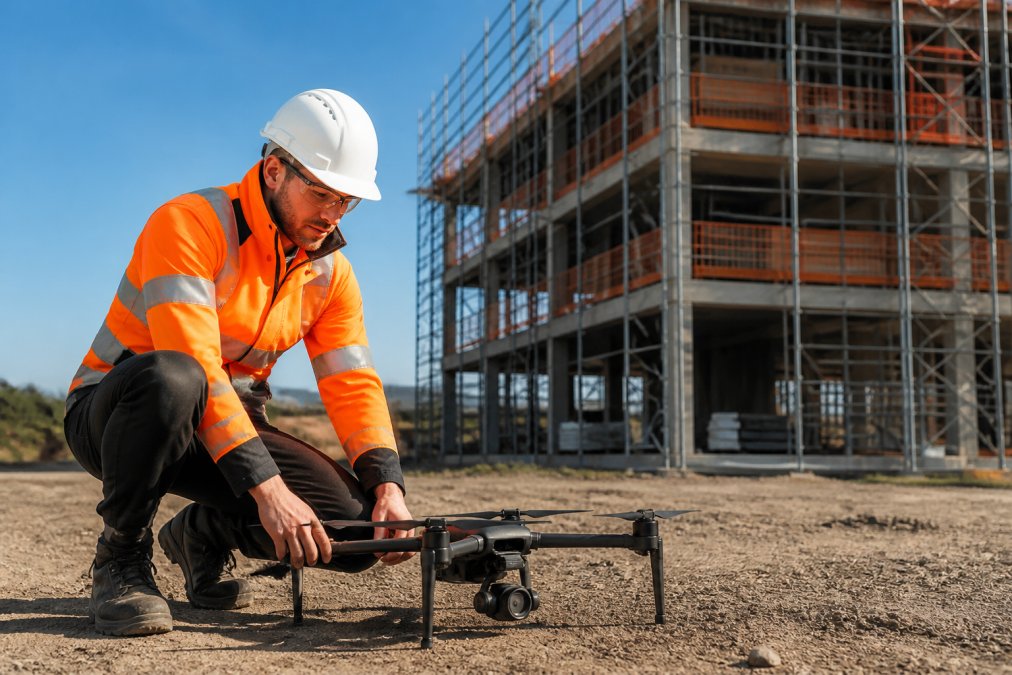
Commercial-grade DJI Enterprise drones have redefined the standards for industrial surveys across the West Midlands and the wider UK. Unlike traditional methods that require heavy plant hire and complex logistics, a CAA GVC certified pilot can arrive on-site and have a drone airborne in under 15 minutes. This rapid deployment makes drones the most efficient alternatives to cherry picker inspections for time-sensitive projects, especially when weather windows are narrow. The speed of data capture doesn’t just save time; it ensures that maintenance teams get actionable insights hours, or even days, faster than traditional methods allow.

Drones excel where traditional MEWPs (Mobile Elevated Work Platforms) fail. They navigate tight gaps between urban structures or hover over fragile roof surfaces where a cherry picker’s weight would cause significant structural damage. Safety is the primary driver for this shift. By keeping personnel firmly on the ground, operators align with OSHA guidelines on drone inspections which advocate for the use of unmanned systems in hazardous or inaccessible areas. Every flight creates a permanent digital record. High-resolution imagery and GPS-tagged data ensure a robust audit trail, providing 100% repeatable results for year-on-year comparisons that manual logbooks cannot match.

Superior Visual and Technical Data

Our fleet captures 4K HDR imagery, allowing surveyors to identify hairline cracks or minor defects in masonry from a safe distance. Integrated thermal sensors identify heat loss and moisture ingress in flat roofs that are often invisible to the naked eye. Photogrammetry is the process of creating 3D models from drone data. These technical outputs provide a level of precision that justifies the shift away from manual surveys. For clients requiring high-quality data for insurance or structural reports, professional drone services offer a depth of information that a visual check from a basket cannot provide.

Minimising Site Disruption

Traditional inspections often require cordoning off 20 or more car parking spaces or closing public pavements to accommodate heavy machinery. Drones operate within a much smaller footprint, usually requiring only a 5-metre exclusion zone for take-off and landing. The electric motors provide near-silent operation, which is vital for occupied residential blocks or quiet office environments in city centres. Switching to drones also reduces the carbon footprint of an inspection by eliminating the need for 5-tonne diesel-powered machinery on-site. This makes the process cleaner, quieter, and significantly less intrusive for building occupants and the local community.

Drones vs. Cherry Pickers: A Comparative Analysis

Traditional access methods like Mobile Elevated Work Platforms (MEWPs) involve significant logistical hurdles. For a standard 30-metre inspection, a cherry picker requires transport to the site, ground stabilization, and often local authority permits for pavement closures. This setup process can consume 3 to 4 hours before an inspector even reaches the roofline. By contrast, a CAA GVC certified pilot can deploy a commercial drone and begin capturing data in under 20 minutes. This rapid deployment makes UAV technology one of the leading alternatives to cherry picker inspections for both scheduled maintenance and emergency fault finding.

Safety and Risk Mitigation

The Health and Safety Executive (HSE) reported that falls from height accounted for 40 workplace fatalities in Great Britain during 2022/23. It remains the primary cause of workplace deaths in the UK. Transitioning to drone technology eliminates this risk by keeping all personnel safely on the ground. Insurance providers are increasingly favouring drone-based surveys because they drastically reduce the liability profile of a project. Impact Aerial operates with £5m commercial liability insurance for added peace of mind, ensuring every flight is backed by robust protection and professional accountability.

Efficiency and Scalability

Scalability is where drones provide a clear financial advantage over manual methods. A single pilot can complete high-resolution drone property surveys across an entire commercial estate in the time it takes to move and restabilise a single cherry picker. On active builds, construction site monitoring via drone doesn’t require shutting down heavy plant machinery or clearing ground-level exclusion zones. This allows the site to remain productive while the inspection is carried out. This streamlined workflow is a key reason why many UK firms are moving away from traditional access equipment.

Data longevity is another critical factor. While manual inspections often rely on handwritten notes and subjective observations, drones capture 4K HDR imagery and 45MP stills. This data is stored in secure cloud-based galleries, creating a permanent, timestamped digital record. Building managers can compare high-resolution imagery from 2024 with 2025 to track the exact rate of masonry degradation or guttering wear. This level of precision provides a data-driven foundation for long-term asset management that traditional alternatives to cherry picker inspections cannot replicate.

The transition from manual to digital also eliminates the inconsistencies of human memory. Instead of a technician describing a crack in a chimney stack, the drone provides a sub-centimetre resolution image that can be shared instantly with structural engineers. This digital-first approach ensures that every stakeholder has access to the same high-quality visual evidence, regardless of where they are located.

Transitioning to Drone-Based Inspections: Compliance & Safety

Adopting drones as alternatives to cherry picker inspections requires more than just purchasing hardware. The UK regulatory environment is strictly governed by the Civil Aviation Authority (CAA). Operating commercially without the correct permissions isn’t just risky; it’s illegal. For added peace of mind, every flight we conduct follows a rigorous pre-flight protocol. This includes site-specific risk assessments (RAMS), checking for restricted airspace, and obtaining necessary landowner permissions. Urban inspections add another layer of complexity. We manage data protection and GDPR considerations by ensuring that any identifiable human data is either avoided or redacted during the post-production phase. Professional operators must maintain a clear log of data handling to ensure compliance with the Data Protection Act 2018.

The Importance of CAA Certification

You’ll often see hobbyists with an A2 CofC, but for complex commercial building surveys, a GVC (General Visual Line of Sight Certificate) is the standard you should demand. The GVC is a more rigorous UK drone license that allows pilots to operate in more congested areas under specific operational authorisations. Impact Aerial maintains full compliance with the latest 2026 CAA regulations. This ensures that your project isn’t delayed by legal challenges or safety breaches. Professional certification is a non-negotiable requirement for any site manager or building owner looking to mitigate liability. It proves the pilot has undergone formal flight examinations and understands emergency procedures.

What to Look for in a Drone Service Provider

When evaluating alternatives to cherry picker inspections, vetting a professional drone service involves more than checking a price list. You need to verify that the provider uses enterprise-grade equipment. Consumer-level drones lack the sensor resolution and thermal capabilities required for high-accuracy defect detection. A professional fleet should include drones equipped with high-resolution 4K or 45MP sensors and radiometric thermal cameras. Check their post-production capabilities too. A stack of raw images is rarely useful for a facilities manager. You need a provider who delivers annotated high-resolution reports identifying specific defects rather than just a folder of photos.

  • Verification of a valid CAA Operational Authorisation for the specific mission profile.
  • Proof of specialist commercial liability insurance with a minimum £5 million cover.
  • Use of cloud-based platforms for easy data sharing and stakeholder collaboration.
  • The ability to provide photogrammetry models for precise, millimetre-accurate measurements.

If you’re ready to upgrade your surveying process, contact our specialist team to discuss your requirements.

Professional Drone Inspection Services with Impact Aerial

Impact Aerial delivers a comprehensive suite of professional drone services across Birmingham, the West Midlands, and the wider UK. We provide one of the most efficient alternatives to cherry picker inspections, allowing site managers to bypass the logistical headaches of hiring platform lifts or erecting complex scaffolding. Our end-to-end process is built on transparency. It starts with an initial consultation to define your survey goals, followed by meticulous flight planning and risk assessment. After the flight, we deliver detailed post-production reports that include high-resolution imagery and actionable data that engineers can use immediately.

Our specialist applications cover demanding sectors like renewable energy and commercial real estate. We conduct PV solar farm thermal surveys to detect hotspots or failing strings, ensuring maximum energy yield for plant operators. For commercial roof inspections, our drones capture every detail of large-scale industrial units, from guttering to HVAC systems, in a fraction of the time a manual team would require. For added peace of mind, every pilot is CAA GVC Certified and we carry £5 million in commercial liability insurance. We’ve established ourselves as a trusted specialist in this niche but increasingly diverse market through consistent reliability.

Our Technology and Expertise

Our fleet features the latest 4K High Dynamic Range (HDR) DJI Enterprise drones, designed for both stability and clarity. We bridge the gap between aerial filming drone aesthetics and technical survey precision. This means you receive breath-taking results that are also functionally useful for structural engineers and surveyors. The high-resolution sensors allow our team to zoom into specific bolts, cracks, or welds while maintaining crisp detail. It’s this commitment to quality that ensures our data-gathering meets the highest industry standards for 2025 and beyond.

Get a Quote for Your Next Inspection

Getting a quote for your project is straightforward and fast. Simply provide us with your site postcode and a brief description of the assets requiring inspection. We use advanced satellite mapping to assess the site remotely, allowing us to provide a transparent quote within 24 hours. Impact Aerial is the preferred partner for property professionals and developers who value safety and technical excellence. Contact Impact Aerial today for a safer alternative to cherry pickers and experience the future of working at height.

Future-Proof Your Asset Management Strategy

Adopting drone technology transforms how you manage high-level assets. You’ll reduce operational downtime and eliminate the physical risks associated with manual climbing or heavy machinery. These systems deliver 4K high-resolution data faster than traditional access platforms, providing a clearer picture of structural health. As businesses prioritise safety and efficiency, drones have become the leading alternatives to cherry picker inspections for forward-thinking firms.

Impact Aerial delivers expert survey solutions across Birmingham and the West Midlands. Our team consists of CAA GVC Certified pilots who operate under the latest UK aviation regulations. For added peace of mind, we maintain £5m commercial liability insurance, ensuring your project is protected from every angle. It’s time to swap expensive rentals for precision-engineered data gathering that keeps your team’s feet firmly on the ground.

Request a professional drone survey quote from Impact Aerial to start your transition to safer, more efficient aerial inspections.

Frequently Asked Questions

Are drones a legal alternative to cherry picker inspections in the UK?

Drones are a fully legal alternative to cherry picker inspections in the UK when operated by CAA GVC certified pilots. We operate strictly within the Civil Aviation Authority (CAA) framework and follow CAP 722 safety guidelines at all times. For added peace of mind, our professional services are backed by £5 million in commercial liability insurance, ensuring every flight meets the highest regulatory standards.

How much can I save by switching from a cherry picker to a drone survey?

Switching to drone surveys can reduce your inspection costs by 30% to 65% compared to traditional plant hire. You eliminate the £400 to £1,200 daily rental fees for a 20-metre cherry picker and the associated transport costs. Since a drone team typically completes a site survey in 90 minutes, you also avoid the expensive labour hours required for manual height work.

Can a drone inspect a roof as thoroughly as a person in a basket?

Modern drones equipped with 4K HDR sensors provide a more comprehensive view than a person standing in a mechanical basket. Our DJI Enterprise fleet captures high-resolution imagery and thermal data that detects moisture or heat loss invisible to the naked eye. We provide a 100% digital record of the entire roof surface, ensuring no tile or flashing is missed during the data-gathering process.

What happens if the weather is bad on the day of the drone inspection?

If wind speeds exceed 20mph or heavy rain occurs, we reschedule the flight to ensure the safety of the site and equipment. Our pilots monitor Met Office forecasts and specialized aviation apps 24 hours before deployment. This flexibility is a key benefit of alternatives to cherry picker inspections, as there are no wasted plant hire fees if the weather prevents a flight.

Do I need to notify my neighbours or local council before a drone inspection?

You typically don’t need council permission for drone flights on private property, but we manage all necessary notifications as part of our service. We adhere to the UK Data Protection Act and the UK GDPR to ensure privacy for neighbouring residents. If the site falls within a Flight Restricted Zone, we coordinate directly with Air Traffic Control to secure the required flight permits.

What kind of report will I receive after a drone-based inspection?

You receive a detailed technical report containing high-definition 4K images, 20-megapixel close-ups, and optional 3D photogrammetry models. We provide these assets via a secure cloud link within 48 hours of the site visit. This documentation allows your maintenance team to zoom in on specific defects, such as hairline cracks or loose mortar, with extreme precision from their desktop.

Is a drone survey suitable for listed buildings or sensitive sites?

Drones are the safest option for listed buildings because they require zero physical contact with the structure. Traditional access methods like scaffolding or cherry pickers risk damaging fragile stonework or historic lead roofing. Our non-intrusive approach is frequently preferred by conservation officers for monitoring Grade I and Grade II listed sites without the vibration or weight of heavy machinery.

How high can a drone fly for an industrial chimney or tower inspection?

We can fly drones up to 120 metres (400 feet) above ground level for industrial chimney or tower inspections under standard CAA permissions. If your structure exceeds this height, we can apply for specific Operating Safety Cases to fly higher. This capability allows us to inspect the tallest structures in the West Midlands without the logistical nightmare of high-reach mechanical platforms.

Thermal Leak Detection Drone Surveys: The Expert Guide to Aerial Thermography

According to the UK Green Building Council, heating and cooling account for nearly 40% of energy use in commercial spaces, yet a staggering amount of this investment literally evaporates through unidentified structural defects. You likely know that even a minor breach in a flat roof or a failing insulation seal leads to astronomical energy bills and long-term structural decay. It’s frustrating to pay upwards of £2,000 for scaffolding just to locate a problem that’s invisible to the naked eye. For added peace of mind, our CAA GVC Certified pilots use advanced thermal leak detection drone technology to pinpoint these issues without the need for manual inspections or site downtime.

In this expert guide, you’ll discover how professional thermal drone surveys identify hidden leaks, reduce maintenance costs, and provide actionable data for UK commercial assets. We’ll examine the precision of 4K High Dynamic Range thermography and how our detailed data-gathering satisfies strict insurance requirements. By the end, you’ll understand how to implement a zero-downtime inspection process that protects your building’s integrity while keeping your operational costs firmly under control.

Key Takeaways

  • Learn how high-resolution radiometric sensors detect “invisible” energy to pinpoint moisture entrapment and insulation failures in commercial roofs.
  • Discover how a professional thermal leak detection drone survey delivers a higher ROI by eliminating the need for expensive scaffolding and reducing inspection times.
  • Understand the critical role of “thermal windows” and diurnal shifts in ensuring data accuracy for complex industrial assets and solar farms.
  • See why using CAA GVC Certified pilots ensures your survey remains fully compliant with UK drone laws while providing essential “at-height” safety.
  • Gain peace of mind by learning how expert pre-flight planning and risk assessments are conducted for assets across Birmingham and the West Midlands.

What is a Thermal Leak Detection Drone and How Does it Work?

A thermal leak detection drone is a commercial-grade UAV integrated with high-resolution radiometric thermal sensors designed to visualise temperature variances across large structures. Unlike standard cameras that capture visible light, these sensors detect energy in the long-wave infrared spectrum. This allows Impact Aerial pilots to identify anomalies that are invisible to the naked eye, such as moisture trapped under roof membranes or heat escaping through failed insulation. To understand the core technology, we must look at What is Thermography?, which is the science of translating infrared energy into a visual map where every colour represents a specific thermal value.

To better understand this concept, watch this helpful video:

Professional surveys require more than just a heat-sensitive camera. We use radiometric sensors that record temperature data for every one of the 327,680 pixels in a standard 640×512 image. A basic heat map only shows relative differences, but radiometric data allows us to pinpoint the exact temperature of a specific spot to within 2 degrees Celsius. This precision is vital for commercial property managers who need to justify repair costs based on quantifiable data rather than visual guesswork. It’s the difference between seeing a “warm patch” and knowing a specific valve is operating at 75 degrees Celsius when it should be at 40.

Drones solve the massive scale issues associated with handheld thermal cameras. A technician on the ground might take 5 hours to inspect a 3,000 square metre warehouse roof using a handheld unit, often missing spots due to the shallow angle of view. Our DJI Enterprise drones cover that same area in a single 15-minute flight. By capturing data from a top-down nadir perspective, we eliminate the distortions caused by ground-level obstructions and provide a comprehensive orthomosaic map of the entire site.

Understanding Thermal Emissivity and Reflectivity

Different materials don’t radiate heat in the same way. A weathered concrete roof has high emissivity, while a new zinc or aluminium facade is highly reflective and can act like a thermal mirror, reflecting the cold sky. This often creates “false positives” where a surface looks like it’s leaking or freezing when it’s actually just reflecting its surroundings. Impact Aerial pilots use their CAA GVC training to adjust sensor parameters for these specific material properties in real-time. Emissivity is the measure of an object’s ability to emit infrared energy.

The Role of Dual-Sensor Payloads

Top-tier thermal leak detection drone operations rely on dual-sensor payloads, such as the DJI Zenmuse H20T. These systems carry a 4K visual camera and a thermal sensor simultaneously. Using a technique called MSX (Multi-Spectral Dynamic Imaging), the drone overlays high-contrast edges from the visual camera onto the thermal image. This adds structural detail, like bolts, seams, and lettering, to the heat map. It makes it significantly easier for maintenance teams to locate the exact position of a leak on a featureless flat roof. By using this DJI Enterprise hardware, we ensure that every thermal anomaly is backed by a high-resolution visual reference for 100% reporting accuracy.

Key Industrial Applications for Thermal Drone Surveys in the UK

The UK drone industry has evolved into a niche but increasingly diverse market where precision and safety are paramount. Deploying a professional thermal leak detection drone allows asset managers to move beyond reactive repairs into a regime of proactive maintenance. By using high-specification DJI Enterprise aircraft, we capture data that ground-based teams simply cannot access safely or efficiently. This technical approach is now standard practice for maintaining the integrity of large-scale infrastructure across the West Midlands and the wider UK.

Large-scale warehouses and distribution centres, particularly those exceeding 50,000 square feet, often suffer from thermal bridging. This occurs when heat bypasses insulation through structural components, leading to massive energy wastage. Mapping these air leaks provides a clear roadmap for remediation. Implementing these findings can reduce annual energy costs by 15% to 25% based on 2023 energy price benchmarks. Similarly, district heating networks in urban centres like Birmingham rely on sub-surface monitoring. Sub-surface leaks create distinct temperature anomalies in the soil that drones identify as “heat signatures” long before water reaches the surface. This prevents catastrophic pavement failures and avoids the £10,000+ costs associated with emergency utility excavations.

Roofing and Water Ingress Detection

Flat roofs on commercial properties are notoriously prone to moisture entrapment. Because water has a higher thermal mass than standard bitumen or single-ply membranes, it retains solar heat long after the sun sets. By deploying a thermal leak detection drone during the diurnal cooling period, our CAA GVC certified pilots pinpoint trapped moisture that stays invisible to the naked eye. This data is vital for BREEAM surveys and meets the rigorous standards required for commercial insurance compliance. It also identifies delamination, where layers of the roof membrane separate. Industry data suggests that delamination affects roughly 65% of UK commercial roofs over 15 years old. Technical research into aerial thermography techniques confirms that high-resolution thermal imaging is the only reliable method for detecting these subtle variances without invasive core sampling.

Solar Farm Thermal Surveys

For multi-megawatt PV installations, efficiency is the primary driver of ROI. Faulty cells or “hot spots” can reduce a farm’s total power output by as much as 30% if they aren’t replaced quickly. A ground team often takes three weeks to inspect a 100-acre site manually; our thermal drones complete the same task in a single day. This rapid data-gathering ensures asset managers have the information they need for targeted repairs without the high labour costs. For site managers looking to optimise their renewable assets, booking PV Solar Farm Thermal Surveys provides the granular detail needed to maintain peak performance. We provide high-quality reports that categorise faults by severity, giving you total peace of mind regarding your site’s operational health. If you’re managing a large portfolio, you might find that professional aerial inspections are the most cost-effective way to ensure long-term compliance and safety.

Drones vs. Traditional Leak Detection: A Comparison of ROI and Safety

Traditional leak detection often relies on manual labour and heavy machinery. For a standard 20,000 square foot industrial unit, erecting scaffolding or hiring a Mobile Elevated Working Platform (MEWP) can cost between £600 and £1,500 per day. These costs escalate quickly if the inspection takes several days. By contrast, a thermal leak detection drone can survey the same area in under 60 minutes. This speed doesn’t just save time; it slashes the capital expenditure required for basic maintenance assessments by approximately 70% in most commercial applications.

Safety is the most compelling argument for switching to aerial methods. Health and Safety Executive (HSE) data for 2023/24 shows that falls from height remain the single biggest cause of workplace fatalities in the UK. By keeping surveyors on the ground, firms eliminate the risks associated with fragile roof materials and inclement weather. While the U.S. Department of Energy explains thermography as a vital tool for identifying heat loss and air gaps, deploying this tech via drone provides a level of safety that manual inspections cannot match. Our CAA GVC certified pilots ensure every flight adheres to strict UK civil aviation regulations, providing professional results without the liability of “at-height” work.

Eliminating Business Downtime

Operational continuity is vital for any industrial site or retail park. Traditional inspections often require cordoning off car parks or shutting down loading bays to accommodate cherry pickers and safety zones. Drone surveys allow for “business as usual” because the flight path remains clear of ground-level operations. Drone surveys can be conducted without any physical contact with the asset. This non-contact approach is particularly beneficial for hazardous environments, such as chemical plants or high-voltage electrical substations, where physical proximity poses significant risks to personnel. We provide high-quality data-gathering without requiring a single minute of site closure.

Accuracy and Repeatability

Manual inspections are inherently subjective. A technician with a handheld thermal camera might miss small anomalies or fail to capture the full context of a leak. A thermal leak detection drone provides 100% site coverage, capturing thousands of data points in a single mission. We use high-resolution radiometric sensors that record the exact temperature of every pixel in the image. This data is far more robust than a simple visual report.

  • GPS-Tagged Imagery: Every thermal frame is embedded with precise coordinates. This allows our team to return to the exact same centimetre of space six months later to monitor if a leak has worsened.
  • Digital Twins: We can overlay thermal data onto 3D photogrammetry models. This gives stakeholders a clear, interactive map of their asset’s thermal health.
  • Objective Reporting: Move away from “best guesses” to digital reports that provide clear evidence for insurance claims or repair tenders.

The move from manual spot-checking to comprehensive UAV surveys represents a shift from reactive maintenance to proactive asset management. Instead of waiting for a ceiling to drip, facility managers can identify thinning insulation or moisture ingress months before it becomes a critical failure. This predictive capability is the ultimate return on investment, preventing emergency repair costs that often run into tens of thousands of pounds.

The Process: How We Organise a Professional Thermal Survey

Every successful thermal leak detection drone mission starts long before the propellers spin. For projects across Birmingham and the wider West Midlands, we begin with a rigorous pre-flight phase. This involves checking Restricted Area Zones (RAZs) and filing necessary notifications with the Civil Aviation Authority (CAA). Our GVC-certified pilots conduct a detailed site risk assessment to identify overhead hazards or privacy concerns, ensuring every flight remains 100% compliant with UK aviation law and our commercial liability insurance requirements.

Planning for the UK Climate

Thermal imaging relies on a specific “Delta T,” which is the temperature difference between the building’s interior and the outside air. We typically require a minimum differential of 10°C to produce high-contrast data. In the UK, this often means scheduling flights during “thermal windows” between 9:00 PM and 5:00 AM. During these hours, “solar loading” from the sun has dissipated, allowing trapped moisture within roof insulation to stand out clearly as it retains heat longer than dry materials.

  • Wind Speeds: We ground flights if gusts exceed 15mph to ensure sensor stability.
  • Precipitation: Surfaces must be dry; even light rain can mask thermal signatures through evaporative cooling.
  • Cloud Cover: Unlike traditional photography, 100% cloud cover is often ideal as it prevents “sky glow” reflections on metallic or glass surfaces.

Once on-site, we don’t rely on guesswork. We deploy enterprise-grade drones to fly methodical, automated grids with an 80% front and side overlap. This level of redundancy is vital. It ensures we capture every square inch of the structure from multiple angles, leaving no room for data gaps. For a standard 2,500 square metre warehouse roof, this process might generate 500 individual radiometric images, providing a comprehensive digital twin of the building’s thermal profile.

From Raw Data to Actionable Reports

The raw imagery captured by a thermal leak detection drone is just the beginning. We use specialist analytical software to process .R-JPEG files, which contain temperature data for every single pixel. This allows our technicians to retrospectively adjust emissivity settings and temperature scales to isolate specific defects. By integrating this data into our Drone Property Surveys, we provide a clear, visual map of your asset’s hidden issues.

We categorise every finding to help you manage your maintenance budget effectively. Critical defects indicate active leaks or safety risks that require immediate intervention. Major issues identify areas where the building envelope is failing and should be addressed within 90 days. Minor anomalies are flagged for monitoring during future inspections. This prioritised approach gives facilities managers the evidence they need to justify repair costs and prevent long-term structural rot.

Don’t let hidden leaks damage your property’s value and structural integrity. Book a professional thermal drone survey with our expert team to get the data you need for informed repairs.

Why Choose Impact Aerial for Your Thermal Leak Detection?

Impact Aerial operates at the intersection of technical precision and regulatory excellence. Based in Birmingham, we provide specialised aerial services across the West Midlands, from the industrial corridors of the Black Country to the commercial heart of the city. We don’t just fly drones; we provide actionable data that saves our clients thousands of pounds in unnecessary scaffolding and manual inspection costs. Our local knowledge of the region’s industrial architecture allows us to identify potential failure points before they become catastrophic expenses.

Our fleet consists of the latest DJI Enterprise hardware. These aircraft carry sensors with a 640×512 thermal resolution. This level of detail is critical for accuracy. Standard consumer drones often provide 160×120 resolution, which lacks the pixel density needed to pinpoint a 2mm crack in a steam pipe or a failing weld on a flat roof. By using a high-specification thermal leak detection drone, we ensure that every thermal anomaly is identified with surgical accuracy. We provide the clarity needed to make informed maintenance decisions without the guesswork.

A Safety-First Approach

Safety isn’t a checkbox for us. It’s our operational foundation. Every pilot at Impact Aerial is CAA GVC (General Visual Line of Sight Certificate) certified. This qualification is the gold standard for UK drone operations, allowing us to operate safely in complex, congested urban environments. We conduct a rigorous 5-step risk assessment before every take-off. This includes airspace checks, ground hazard identification, and real-time weather monitoring. Our affiliation with the Drone Safe Register and ARPAS-UK further validates our commitment to the highest industry standards. For added peace of mind, we carry £5m in commercial liability insurance, ensuring your assets and personnel are protected throughout the survey process.

Customised Solutions for Every Sector

We understand that a construction manager needs a different report than a corporate board member. Our data delivery is tailored to your specific requirements. For site engineers, we provide raw radiometric data and technical overlays that highlight precise temperature differentials. For stakeholders, we deliver breath-taking visual clarity that makes complex issues easy to understand at a glance. We bridge the gap between niche technical data and clear, high-quality business insights. Our reporting is designed to be shared across departments, ensuring everyone from the maintenance team to the CFO has the information they need.

Whether you are managing a 50,000 sq ft warehouse in Solihull or a heritage building in Coventry, our thermal leak detection drone services provide the precision you need. We’ve helped local firms reduce their inspection timelines by 80% compared to traditional manual methods. This efficiency doesn’t just save time; it reduces the carbon footprint of your maintenance operations by eliminating the need for heavy machinery and lifts.

Ready to secure your property and stop leaks in their tracks? Contact Impact Aerial for a professional thermal survey quote and see why we are the trusted choice for aerial inspections across the United Kingdom.

Secure Your Infrastructure with Precision Thermography

Traditional scaffolding or manual roof inspections often cost thousands in labour and equipment hire before a single leak is even identified. Switching to a thermal leak detection drone reduces these preliminary expenses by up to 70% while completely removing the safety risks associated with working at height. Our surveys provide high-resolution data that pinpoint heat loss or moisture ingress with sub-centimetre accuracy, allowing for surgical repairs rather than costly full-scale replacements.

Based in Birmingham, Impact Aerial serves the West Midlands and the wider UK with a focus on technical excellence and regulatory compliance. We operate as CAA GVC Certified pilots and maintain £5m commercial liability insurance to ensure every project meets the highest professional standards. You’ll receive a detailed thermal report that transforms complex aerial data into actionable insights for your maintenance team. It’s the most efficient way to protect your assets and improve energy efficiency across your entire property portfolio.

Book your professional thermal drone survey with Impact Aerial today and gain the clarity you need to manage your site effectively.

Frequently Asked Questions

Can a thermal drone find water leaks underground?

Thermal drones identify underground water leaks by detecting the specific temperature variances they create on the surface. While the sensor doesn’t see through soil, a thermal leak detection drone identifies where leaking fluid has changed the ground’s thermal mass or moisture levels. This is most effective when there’s a 5-degree temperature difference between the fluid and the surrounding earth. It allows us to pinpoint pipe bursts without invasive digging.

How much does a thermal drone survey cost in the UK?

A professional drone survey in the UK typically starts at £450 for a standard commercial roof. Larger industrial sites or complex infrastructure inspections often range from £900 to £1,600 per day. These figures include the pilot’s time, DJI Enterprise equipment hire, and the subsequent data analysis. For added peace of mind, our pricing includes £5 million in commercial liability insurance as standard for every project.

What weather conditions are needed for an accurate thermal survey?

Optimal results require dry conditions with wind speeds remaining below 18 mph and a total lack of precipitation. To find heat loss in buildings, we need a 10-degree Celsius differential between internal and external temperatures. We typically fly at dawn or dusk to avoid solar loading, which occurs when the sun heats surfaces and masks underlying anomalies. This ensures the 640×512 resolution data remains accurate and actionable.

Is it legal to fly a drone over my commercial property for an inspection?

It’s legal provided the operator holds the correct CAA GVC Certification and adheres to the UK Drone Code. We manage all necessary risk assessments and flight notifications required by the Civil Aviation Authority before arriving on-site. Our pilots are specifically trained to operate in congested areas, ensuring your 100% compliance with current aviation law. We provide all safety documentation before the flight to guarantee a professional service.

What is the difference between a standard drone and a thermal drone?

The primary difference lies in the sensor technology used to gather data during the flight. Standard drones use RGB sensors to capture visual light, whereas a thermal leak detection drone carries a radiometric microbolometer that measures infrared radiation. Our fleet uses dual-sensor payloads, allowing us to overlay thermal maps onto 4K visual images. This helps our team identify the exact tile or brick where a leak originates with millimetre precision.

Can thermal drones detect gas leaks or just heat changes?

Standard thermal sensors detect heat signatures rather than chemical compositions, though they can identify the cooling effect of escaping pressurised gas. While they’re excellent for finding hot water leaks, gas detection often requires specialised Optical Gas Imaging payloads. We use sensors capable of detecting temperature fluctuations as small as 0.05 degrees Celsius. This precision allows us to identify anomalies that are completely invisible to the naked eye or standard cameras.

How long does it take to receive the final thermographic report?

We deliver the finalised technical report within 72 hours of the site visit completion. This timeframe allows our specialists to process radiometric data and verify every thermal anomaly found during the flight. You’ll receive a detailed PDF report containing high-resolution imagery and GPS coordinates for every fault identified. We ensure the data is clear and actionable so your maintenance teams can start repairs immediately without further diagnostic delays.

Do I need to be on-site during the drone survey?

You don’t need to be present during the survey if we’ve arranged site access and permissions in advance. We perform a comprehensive pre-site assessment 48 hours before the flight to identify any hazards or restricted zones. Most of our commercial property clients prefer this remote approach because it doesn’t disrupt their daily operations or require staff downtime. We’ll send a digital confirmation once the data-gathering phase is complete.