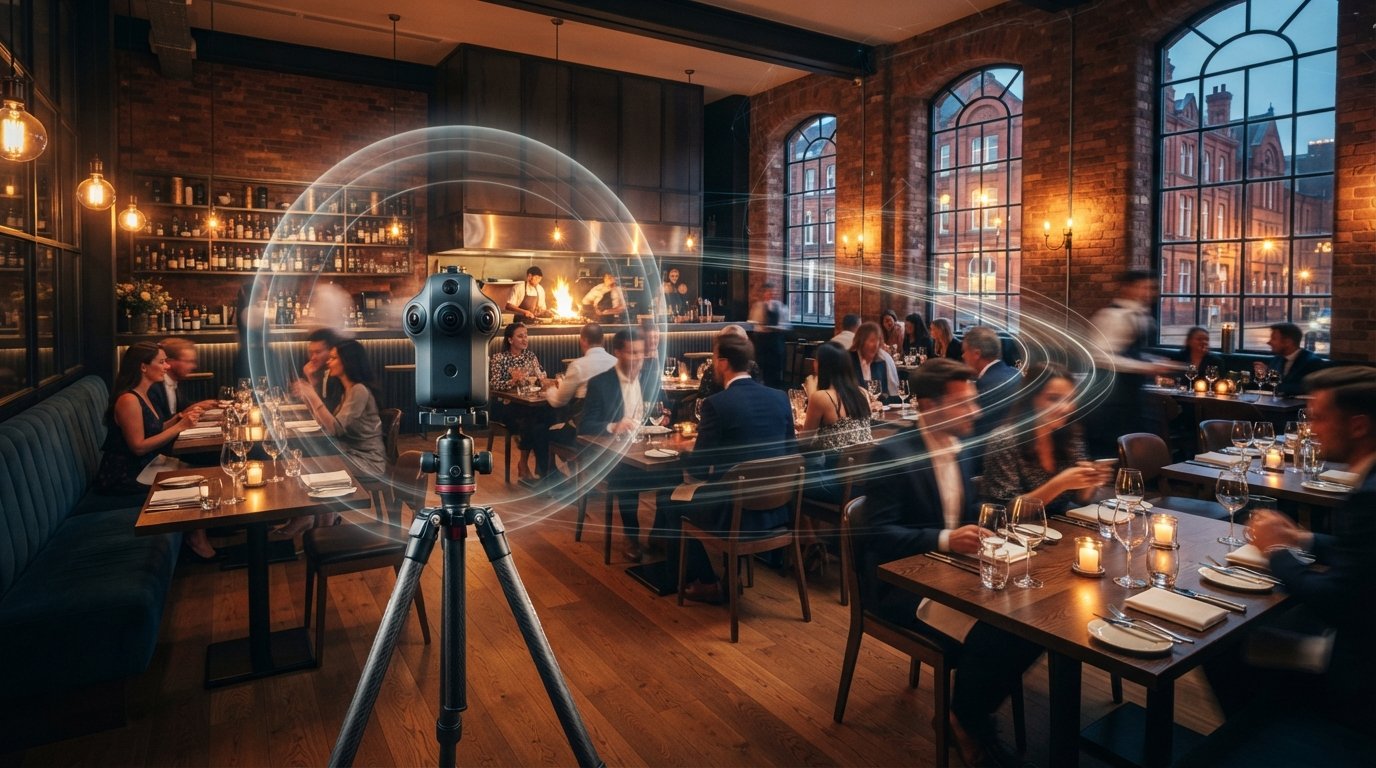
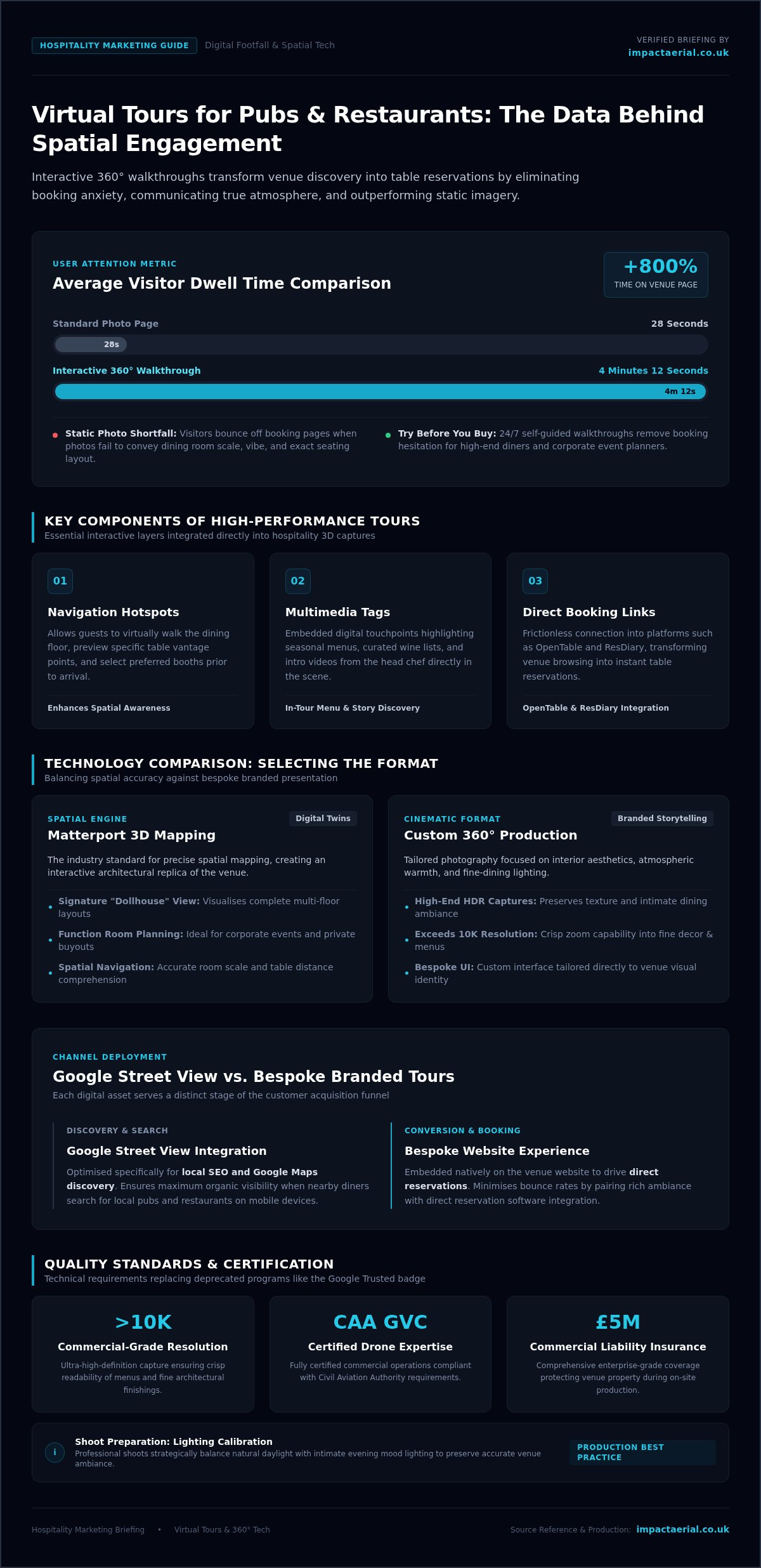
Did you know that website visitors spend an average of four minutes and 12 seconds exploring a venue with an interactive walkthrough, compared to just 28 seconds on a standard photo page? This 800% increase in dwell time represents a massive opportunity that many UK hospitality businesses are currently missing. You likely feel the frustration when static photos fail to capture the true vibe of your dining room or when potential guests bounce off your booking page because they can’t see the layout. A professional virtual tour for restaurants and pubs acts as a bridge between digital discovery and physical footfall, turning casual browsers into confirmed guests.
In this 2026 marketing guide, you’ll discover how interactive 360° technology can transform your venue’s online presence, increase direct bookings, and showcase your atmosphere to a global audience. We’ll examine the latest technical standards, from why the discontinued Google Trusted badge has been replaced by more robust certifications to how high-end HDR captures can solve the problem of static imagery. We will outline how to leverage professional digital assets, backed by CAA GVC certified expertise and £5m commercial liability insurance, to ensure your venue stands out on Google Maps and social media for years to come.
Key Takeaways
- Evaluate the technical advantages of Matterport’s 3D spatial mapping versus the high-end cinematic flexibility of custom 360° tours for your hospitality branding.
- Learn to distinguish between Google Street View for local SEO visibility and bespoke branded tours designed specifically to increase direct website reservations.
- Master the essential preparation techniques for a professional shoot, including lighting strategies that balance natural light with the intimate evening ambiance of your venue.
- Understand why a high-quality virtual tour for restaurants and pubs must be supported by CAA GVC certified pilots and comprehensive £5m commercial liability insurance.
- Discover the proven impact of interactive walkthroughs on customer engagement and how these digital assets can drastically reduce bounce rates on your booking pages.
What is a Virtual Tour for Restaurants and Pubs?
A virtual tour for restaurants and pubs is a sophisticated, interactive digital walkthrough that offers prospective guests a comprehensive view of your hospitality space. Unlike a standard 360-degree photograph, which remains a static point in space, a fully navigated 3D experience allows users to move through the venue as if they were physically present. It provides a seamless transition from the entrance to the bar area and eventually to specific dining tables, providing a level of spatial awareness that traditional photography cannot achieve.
To better understand how these immersive environments are captured and built, watch this helpful video:
By digitising your venue, you bridge the gap between online discovery and physical footfall. Static imagery often fails to capture the specific “vibe” or atmosphere that defines a gastropub or fine-dining establishment. A virtual tour communicates the scale of the room, the intimacy of the lighting, and the precise layout of the seating. These are critical factors for customers deciding where to spend their evening, especially when they are looking for a specific ambiance for a special occasion.
The Evolution of Hospitality Marketing in 2026
User expectations have shifted significantly as we move through 2026. Modern diners now prefer to “try before they buy” by exploring a venue’s interior before committing to a reservation. This transparency is vital for reducing “booking anxiety,” particularly for high-end diners or corporate event planners who need to verify table spacing and accessibility. Your virtual tour acts as a 24/7 open house that showcases your venue’s premium standards without requiring a physical site visit.
Key Components of a High-Quality Tour
To maintain a professional digital presence, the technical output must meet industry-leading standards. High-resolution imagery, often exceeding 10K, ensures that guests can zoom into menu details or appreciate the texture of your interior design. This level of precision requires commercial-grade hardware and meticulous post-production services to ensure the final asset is both reliable and visually striking.
- Navigation Hotspots: These allow guests to “walk” through the venue, selecting their preferred booth or viewing the vantage point from a specific table.
- Integrated Multimedia Tags: Interactive elements can be embedded directly into the tour, showcasing seasonal menus, wine lists, or introductory videos from the head chef.
- Booking Platform Integration: Modern tours link directly to platforms like OpenTable or ResDiary, allowing a guest to move from exploration to reservation in a single click.
When these assets are produced by experts and supported by £5m commercial liability insurance, they become a permanent, professional asset for your business. This technical approach ensures that your venue is represented with the accuracy and quality that discerning UK customers expect.
Comparing Virtual Tour Technologies: Matterport vs. Custom 360°
Selecting the right technology for a virtual tour for restaurants and pubs depends on the specific marketing objectives of the establishment. While some venues require high-precision spatial mapping for event planning, others prioritise a cinematic, branded experience that aligns with their interior design. The choice between Matterport and custom 360-degree photography involves balancing technical accuracy with visual storytelling. Each method offers distinct advantages for hospitality operators looking to digitise their physical assets.
Matterport: The Gold Standard for Layout
Matterport is the industry standard for creating “digital twins” of physical spaces. Its most recognisable feature is the “dollhouse” view. This allows users to see the entire venue as a 3D model, which is particularly beneficial for large, multi-floor pubs or restaurants with dedicated function rooms. For event planners organising wedding receptions or corporate hires, the spatial data provided by Matterport is invaluable for planning seating charts and equipment placement. However, Matterport operates within a closed ecosystem, which can limit bespoke branding and custom interface elements compared to bespoke options.
The Impact of Aerial Integration
A significant gap in standard hospitality marketing is the “arrival experience.” Most tours start at the front door, ignoring the geographic context of the venue. By integrating a drone-captured 360-degree panorama, establishments can showcase their beer gardens, outdoor terraces, and parking facilities from an elevated perspective. This provides essential context for guests arriving by car or those looking for specific outdoor amenities. High-quality drone photography is a prerequisite for this level of venue context, ensuring a seamless transition from the street to the table.
FPV drone footage further enhances this transition. It creates a single, cinematic movement that flies through the entrance and into the dining area. This approach provides a high-end feel that static 360 photos cannot match. When choosing a technology, consider how it affects loading speeds and mobile responsiveness. Custom 360 tours often allow for better optimisation of assets, ensuring that guests on mobile devices don’t experience lag when exploring a virtual tour for restaurants and pubs. This technical reliability is essential for maintaining engagement and preventing potential customers from bouncing off your booking page.
For venues looking to establish a professional digital presence, investing in a tailored virtual tour solution ensures that technical precision and brand identity are perfectly aligned. This methodical approach to technology selection guarantees a high-end output that remains a valuable digital asset for years.
Google Street View vs. Bespoke Branded Tours: Which Is Best?
Choosing between Google Street View and a bespoke branded tour is not a binary decision; it is about understanding the different stages of the customer journey. Google Street View is the premier tool for local discovery, while a bespoke tour serves as your primary conversion engine. For a virtual tour for restaurants and pubs to be effective, it must address both the “find” and “book” phases of the digital experience. A hybrid approach often yields the best results, ensuring your venue is visible in search results while providing a premium, branded environment on your own website.
Maximising Local SEO with Google Virtual Tours
Google Street View remains a critical component of local search strategy. By uploading high-quality 360-degree imagery to your Google Business Profile, you significantly increase your “quality score” in the eyes of search algorithms. This data-driven approach correlates directly with higher rankings in the Google Maps “3-pack,” which is the block of three local business listings that appear at the top of search results. The impact on physical footfall is immediate; data shows that 50% of Google Maps searches result in a physical visit within 24 hours. While Google retired its “Trusted Photographer” badge program in late 2024, professional operators now utilise authorised third-party APIs to ensure panoramas are correctly stitched and geolocated for maximum impact.
Bespoke Tours: Your Interactive Booking Engine
Once a guest moves from Google Maps to your official website, the focus shifts from discovery to conversion. Bespoke branded tours offer a level of functionality that Google Street View cannot match. These tours act as an interactive booking engine where the environment is fully controlled. You can customise the user interface to align with your restaurant’s specific colour palette and typography, maintaining brand consistency throughout the digital walkthrough. Unlike the generic Google interface, bespoke tours allow for “Book a Table” buttons to exist directly within the virtual environment.
- Interactive Hotspots: Use Mattertags or custom hotspots to link directly to seasonal menu PDFs, wine lists, or reservation forms.
- Sensory Enhancement: Integrate subtle background audio, such as ambient restaurant noise or acoustic music, to build a sensory connection with the viewer.
- Direct Integration: Seamlessly connect the tour to booking platforms like OpenTable or ResDiary, allowing guests to select a specific booth or area and reserve it instantly.
High-end venues often prefer this bespoke route because it allows for storytelling. You can embed chef interviews or “behind the scenes” video content into the tour, providing a layer of transparency that builds trust. When these assets are produced using commercial-grade hardware and supported by £5m commercial liability insurance, they provide a reliable, professional asset that protects your brand’s reputation while driving measurable increases in direct bookings.
Preparing Your Venue for a Professional 360° Shoot
Preparation is the most critical phase of creating a virtual tour for restaurants and pubs. Unlike traditional photography, where a photographer can hide equipment or clutter behind the lens, a 360-degree camera captures every angle simultaneously. This means there is no “off-camera” space. You essentially have one opportunity to capture the scene in its optimal state. Meticulous staging ensures that the final digital asset remains professional and relevant for several years, providing a high-quality perspective that builds immediate trust with potential guests.
Staging and Aesthetics
The primary objective during staging is the removal of visual clutter. Items that are functional during service, such as high chairs, POS terminals, cleaning equipment, or unsightly cables, must be cleared from the floor. These small details can break the immersion of a virtual walkthrough and detract from the premium feel of your establishment. You should also verify that every light bulb in the venue is functioning correctly and set to the precise dimming level that represents your evening or midday ambiance.
A common debate in hospitality marketing is the inclusion of staff or “ghost” figures. For maximum longevity, we typically recommend a clean, minimalist approach without people in the frame. Movement during a 360-degree rotation can cause technical blur artifacts or “ghosting” that requires extensive post-production to fix. If you choose to include staff, they must remain perfectly stationary during the capture process to ensure the high-resolution output remains sharp and professional.
Logistics and Timing
Timing is a technical necessity rather than a preference. Early morning shoots or sessions during “Golden Hour” are preferred because they allow for better control over natural light. We utilise multi-bracket HDR techniques to balance the bright light from windows with the intimate, moody interior of a pub. This prevents “blown-out” windows and ensures that guests can see both your interior design and your exterior views clearly.
Staff coordination is essential for maintaining a safe and efficient shooting environment. Every team member on-site must be briefed to ensure they don’t accidentally enter the frame during a rotation. When capturing the exterior of your venue, we adhere to strict safety protocols. This is particularly important when deploying professional drone services in the UK, where CAA GVC certified pilots must manage the flight path to avoid public interference. Our £5m commercial liability insurance provides the necessary reassurance that all operations are conducted with a safety-first approach.
To ensure your venue is captured with the precision and technical expertise it deserves, contact Impact Aerial for your virtual tour capture. Our methodical process guarantees a professional result that enhances your online presence and drives direct bookings.
Why Professional Certification Matters for Hospitality Shoots
Hiring a provider for a virtual tour for restaurants and pubs involves more than just selecting a creative partner; it’s a decision regarding legal compliance and risk management. Public-facing venues like gastropubs and high-end restaurants operate in high-traffic urban environments where safety is paramount. Utilizing unlicensed operators, particularly when capturing aerial context, exposes your business to significant regulatory and financial risks. A professional approach ensures that your digital assets are built on a foundation of technical competence and official certification.
Safety and Compliance in Public Spaces
A professional operator must demonstrate a deep understanding of current UK aviation regulations. This includes ensuring the pilot holds a valid drone license and CAA GVC certification for commercial operations. These credentials are not optional; they’re required for managing complex risk assessments when flying over urban restaurant terraces or busy high streets. We manage the technical transition between high-altitude aerial panoramas and ground-level 360-degree captures, ensuring a cohesive and legally compliant digital asset.
At Impact Aerial, we prioritise client security through strict adherence to safety protocols and the maintenance of £5m commercial liability insurance. This level of coverage is essential for protecting your business against unforeseen incidents during the data collection process. Furthermore, privacy and GDPR compliance are critical considerations for permanent virtual environments. Managing the “Right to be Forgotten” requires a methodical approach to post-production, including the blurring of identifiable faces or license plates if they inadvertently appear in the frame. This meticulous attention to detail ensures your tour remains a professional asset rather than a legal liability.
The Impact Aerial Advantage
The difference between a basic “tech demo” and a powerful marketing asset lies in the quality of post-production. Our bespoke editing process includes advanced colour grading designed to make food, beverages, and interiors look as appetising and inviting as possible. We don’t just deliver a file; we provide technical consultancy on how to embed the tour to ensure maximum website performance and mobile responsiveness. This ensures that your virtual tour for restaurants and pubs functions as a high-performing booking engine that doesn’t slow down your page load speeds.
This data-centric approach ensures your venue is represented with industry-leading quality. By combining technical precision with authoritative industry standards, we provide hospitality owners with the psychological comfort that their venue is in safe, expert hands. To elevate your venue’s online presence with a compliant, high-end digital twin, contact Impact Aerial to discuss your venue’s virtual tour project. Our team operates nationwide from our Birmingham base, providing the expertise required for professional results.
Future-Proofing Your Venue’s Digital Presence
Implementing a virtual tour for restaurants and pubs is no longer a luxury; it’s a strategic requirement for venues looking to thrive in the 2026 hospitality market. By bridging the gap between digital discovery and physical footfall, you reduce booking anxiety and provide guests with the transparency they demand. Whether you prioritise spatial precision or a bespoke branded interface, the goal remains the same: transforming casual website visitors into confirmed table reservations through immersive storytelling.
Ensuring your project is handled by specialists is critical for maintaining professional standards and legal compliance. Impact Aerial provides a methodical approach to venue digitisation, combining ground-level walkthroughs with advanced aerial filming drone technology for a complete arrival experience. With CAA GVC Certified Pilots and £5m Commercial Liability Insurance, we guarantee that your venue is in safe, expert hands throughout the capture process.
Don’t let static photography limit your venue’s potential. Request a bespoke Virtual Tour quote from Impact Aerial today and start showcasing your unique atmosphere to a global audience with the precision it deserves. It’s time to give your guests the immersive experience they’ve been looking for.
Frequently Asked Questions
How much does a virtual tour for a restaurant cost?
Total investment is determined by the square footage of your venue and the number of scan points required to create a seamless walkthrough. While basic setups cover the main dining floor, more comprehensive projects include private rooms, bars, and outdoor terraces. Professional post-production and the integration of interactive booking links also influence the final cost. Every project is unique, so a tailored consultation is necessary to define the technical scope for your specific venue.
How long does it take to film a 360° tour of a pub?
A typical capture session for a standard UK pub or restaurant usually takes between two and four hours. The duration depends heavily on the complexity of the layout and the level of staging required. We spend a significant portion of this time ensuring the lighting is balanced and the space is free from visual clutter. Larger venues with multiple floors or extensive outdoor seating areas naturally require more time to ensure every angle is perfectly captured.
Will the virtual tour work on my customers’ mobile phones?
Yes, every virtual tour for restaurants and pubs we create is fully responsive and optimised for mobile devices. Most users now explore hospitality venues on their smartphones before making a booking. Our tours use HTML5 technology to ensure smooth navigation across iOS and Android platforms without requiring additional apps. This mobile-first approach is essential for maintaining high engagement rates and ensuring your interactive booking engine is accessible to all potential guests.
Do I need to close my restaurant during the virtual tour shoot?
You don’t necessarily need to close for the entire day, but we strongly recommend filming while the venue is empty of patrons. Shooting during off-hours or before opening prevents privacy complications and ensures compliance with UK GDPR regarding the capture of identifiable faces. It also allows our team to move equipment freely without disrupting your service. An empty venue ensures that every 360-degree rotation is clear and free from motion blur artifacts.
Can I update the tour if I change my menu or interior decor?
Updating your virtual tour is a straightforward process that doesn’t always require a full reshoot. If you update your seasonal menu or wine list, we can simply edit the interactive multimedia tags within the existing environment. For significant changes to interior decor or structural layouts, we can reshoot specific rooms or areas and stitch them into the original tour. This modular approach ensures your digital asset remains an accurate representation of your establishment.
How do I add the virtual tour to my Google Business Profile?
Adding your 360-degree imagery to your Google Business Profile is managed through authorised third-party APIs or the Google Street View Studio. While the official Trusted Photographer badge was discontinued on December 31, 2024, we still use professional tools to upload and geolocate your panoramas. This process ensures your venue appears in the See Inside section of Google Maps, which is a proven method for increasing local search visibility and driving physical footfall.
What is the difference between a virtual tour and a promotional video?
A promotional video is a linear, passive experience where the viewer follows a set path. In contrast, a virtual tour for restaurants and pubs is an interactive, non-linear environment that gives the user total control over their movement. Guests can pause to inspect a specific table, view the bar from different angles, or click on menu hotspots. While videos are excellent for social media storytelling, virtual tours are superior tools for spatial awareness and direct booking conversion.
Do I need a special plugin to show the tour on my website?
No special plugins are required to host a professional virtual tour on your website. We provide a simple iframe embed code that works similarly to a YouTube video. This code is compatible with all major website builders and content management systems, including WordPress and Squarespace. Because the tour is hosted on secure, high-speed servers, it doesn’t slow down your website’s performance or require your customers to download any external software to view it.
 2 Norton Drive, Wythall, Birmingham, B47 6HH Company registration number: 11138586. VAT Number: 366 9068 55