
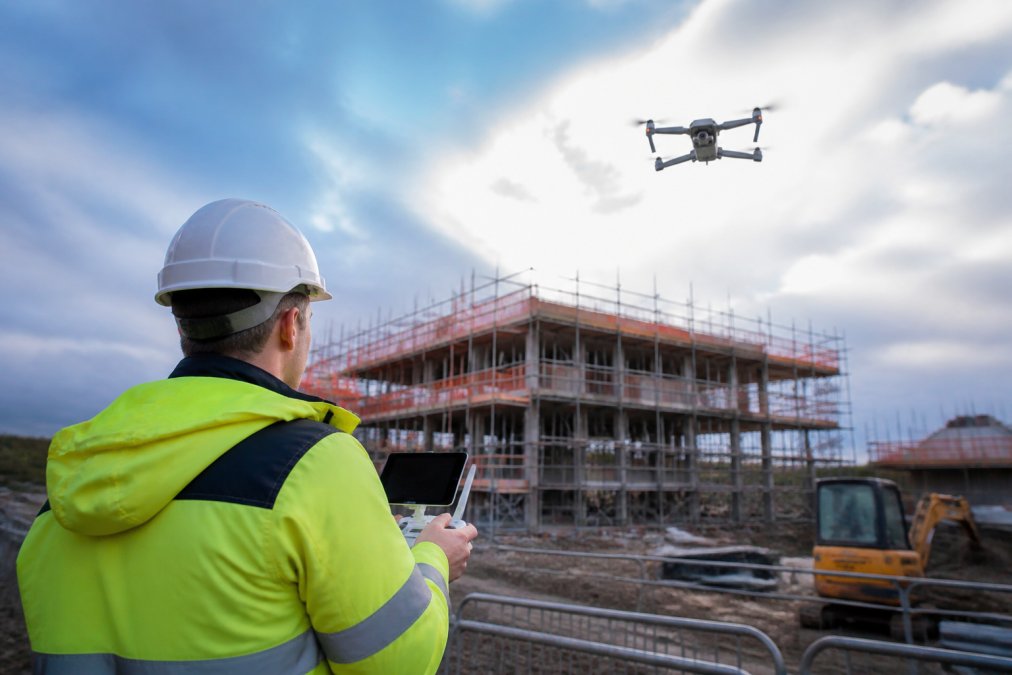
Table of Contents
- Who Can Legally Fly a Drone Inspection on a Construction Site?
- CAA Drone Regulations UK: What Construction Projects Must Follow
- How a Drone Survey Risk Assessment Protects Your Site
- Commercial Drone Insurance Requirements for Construction Work
- Drone Inspection Safety on Live Sites: Practical Controls
- Common Compliance Mistakes and How to Avoid Them
- Conclusion
- Frequently Asked Questions
Last Updated: 10 September 2026
Who Can Legally Fly a Drone Inspection on a Construction Site?
A drone inspection safety regulations for construction framework begins with one non-negotiable fact: only a remote pilot holding a valid General Visual Line of Sight Certificate (GVC) and current Civil Aviation Authority (CAA) authorisation may legally fly a commercial inspection on a live site. This guide from Impact Aerial breaks down exactly what project managers, developers and facility managers must verify before any drone leaves the ground.
The stakes are higher than most site teams realise. According to the UAV Tech Report 2026, 85% of industrial inspections now use drones with dual-sensor payloads, and the market is projected to reach $18.94 billion. Yet the same research identifies significant regulatory and structural barriers to adoption, particularly around compliance and certification. Get the paperwork wrong and you are not just risking a fine; you are risking delays, invalidated insurance and a regulator investigation.
Below, we cover the certification categories, airspace rules, risk assessment requirements and insurance standards that govern every commercial flight over a construction site.
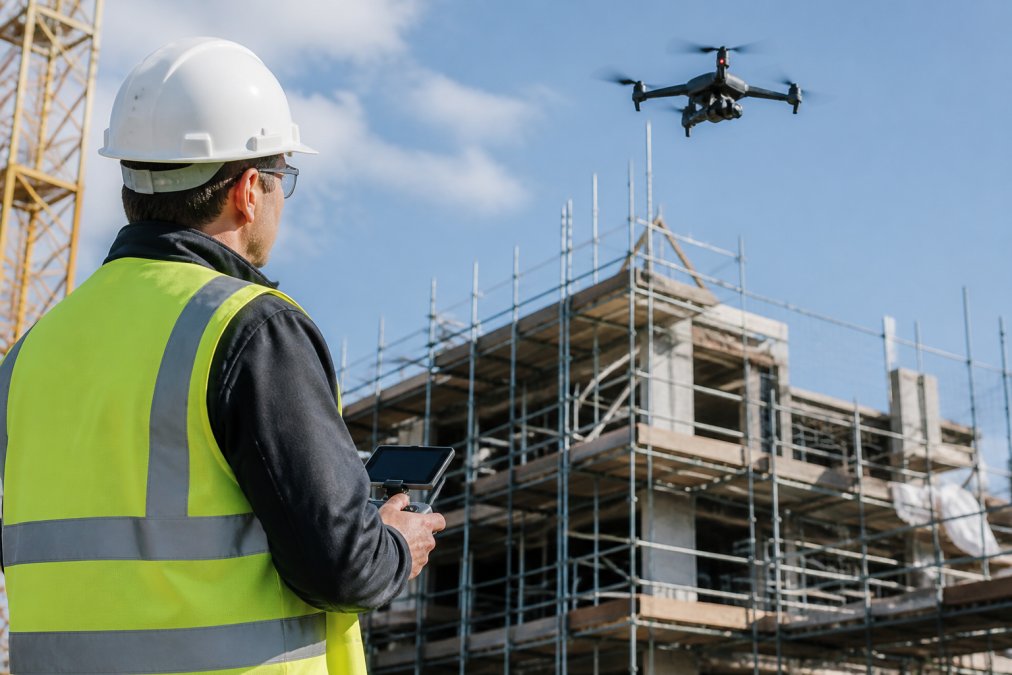
CAA Drone Regulations UK: What Construction Projects Must Follow
CAA drone regulations UK classify every commercial flight into one of three categories, and the category determines what certification, permissions and separation distances apply. Construction inspection work almost always falls into the Specific or Certified category because sites sit near people, structures and controlled airspace.
Open, Specific and Certified Categories Explained
The Open Category covers low-risk flights with drones under 25kg, flown below 120m and away from crowds. Most construction work cannot operate here because active sites have workers, plant and public interfaces.
The Specific Category applies when you need to fly closer to people, beyond visual line of sight, or over congested areas. This requires an Operational Authorisation from the CAA and a documented risk assessment.
The Certified Category covers the highest-risk operations, including flight over assemblies of people or beyond 120m. It demands full certification comparable to manned aviation.
For most construction inspections, the Specific Category is the realistic baseline. As Impact Aerial’s 2026 compliance guidance confirms, every operator must hold a valid GVC and provide proof of current CAA authorisation before mobilising to site.
Airspace, NOTAMs and Site Restrictions
Construction sites frequently sit inside controlled airspace, near airports or within temporary flight restriction zones. Before any flight, the operator must check for active NOTAMs (Notices to Airmen) and confirm whether an airspace authorisation is required.
A common mistake is assuming a site is clear because it is not near an airport. Temporary restrictions appear for events, emergency operations and military activity with little notice. The pilot, not the site manager, carries the legal duty to check.
Flying without a current airspace check invalidates your Operational Authorisation. The consequence is not just a fine; it is that any incident during that flight falls outside your insurance cover, leaving the liability with the site operator.
How a Drone Survey Risk Assessment Protects Your Site
A drone survey risk assessment is a site-specific document that identifies every hazard a flight could create or encounter, and states the control measures that reduce each one to an acceptable level. It is a legal requirement for Specific Category operations and the single most important piece of paperwork protecting your project.
What a Site-Specific Risk Assessment Should Cover
The assessment must be written for the actual site, not copied from a template. It should address:
- Ground hazards: live plant movements, crane operations, pedestrian routes and exclusion zones
- Air hazards: nearby structures, power lines, other aircraft and airspace restrictions
- Weather limits: maximum wind speed, minimum visibility and precipitation thresholds
- Emergency procedures: loss of control, fly-away, battery failure and forced landing
- Site-specific controls: marshals, barriers, timing windows and communication protocols
The MDPI study on UAV safety in construction found that UAVs are effectively used for safety inspection, monitoring and control throughout the construction phase, but only where risk assessment is properly integrated into site planning.
Ask to see the risk assessment before the pilot arrives on site, not on the day. A genuine site-specific document will reference your site layout, your crane positions and your exclusion zones. A generic template that could apply to any site is a red flag.
Commercial Drone Insurance Requirements for Construction Work
Commercial drone insurance requirements for construction work go beyond the minimum legal cover. EC Regulation 785/2004 sets the mandatory third-party liability floor for commercial drone operations, but a construction client should demand far more. drone roof inspection benefits.
The legal minimum is rarely enough for a live construction site. A single incident involving a crane, a worker or third-party property can generate claims far above the statutory floor. This is why serious operators carry commercial liability cover in the millions.
At Impact Aerial, every operation is backed by £5m commercial liability insurance, and our pilots hold current CAA GVC certification. That combination is what protects a project manager if something goes wrong: the liability sits with the insured operator, not the site.
| Cover Element | Legal Minimum | Recommended for Construction |
|---|---|---|
| Third-party liability | Statutory floor | £5m+ commercial cover |
| Pilot certification | GVC required | GVC + current CAA authorisation |
| Risk assessment | Specific Category only | Every flight, site-specific |
| Airspace clearance | Operator duty | Documented before mobilisation |
Never accept a drone operator’s word on insurance. Ask for the certificate, check the cover amount and confirm the policy covers commercial construction inspection, not just recreational flight.
Drone Inspection Safety on Live Sites: Practical Controls
Drone inspection safety on live sites depends on controls that are agreed before the flight and enforced during it. The technology is reliable; the risk sits in the interface between the aircraft and an active, changing site.
The practical controls that matter most:
- Exclusion zone: a marked ground area beneath the flight path with no unauthorised access
- Marshals: a trained spotter maintaining visual line of sight and communicating with the pilot
- Timing windows: flights scheduled around crane lifts, deliveries and shift changes
- Communication: radio contact between pilot, marshal and site management
- Weather monitoring: continuous checks against the limits set in the risk assessment
According to SOCOTEC’s 2026 guidance, high-risk or ageing buildings over 20 years old should receive annual drone inspections. On live sites, that cadence only works when the controls above are routine rather than exceptional.
Common Compliance Mistakes and How to Avoid Them
Compliance failures on construction drone work cluster around a handful of recurring errors. Each one is avoidable with basic verification.
The most frequent mistake is accepting a pilot’s certification at face value without checking the CAA record. A GVC can lapse, and an Operational Authorisation can be suspended. The second is treating the risk assessment as a formality, producing a document that bears no relation to the actual site. The third is underestimating airspace: assuming a site is clear without checking NOTAMs. The fourth is insurance that looks adequate until you read the exclusions, which often rule out commercial construction work.
The Nature study on drone adoption barriers identified these structural and regulatory barriers as the main obstacles to wider drone use in sustainable construction, even where the safety benefits are well documented.
The most expensive mistake is a fly-away over a live site with inadequate insurance. The claim lands on the site operator, not just the pilot, and the project stops while it is resolved.
Conclusion
Running drone inspections on a construction site means managing certification, airspace, risk assessment and insurance as a single compliance package. Get any one of those wrong and the whole operation is exposed.
Impact Aerial handles that package for you. Our pilots are fully trained CAA GVC operators, every flight is covered by £5m commercial liability insurance, and we fly a fleet of 4K HDR DJI Enterprise drones with dual-sensor payloads for accurate data collection. We have over 20 years of experience in aerial operations and strict adherence to industry safety rules.
Get started with Impact Aerial and put your site inspections in the hands of a team that treats compliance as the foundation, not an afterthought.
Frequently Asked Questions
What are the CAA regulations for drone inspections on construction sites?
Commercial drone inspections fall under CAA rules, and operators must hold a valid General Visual Line of Sight Certificate (GVC) with proof of current CAA authorisation. Flights must stay within visual line of sight, respect airspace restrictions and avoid congested areas unless specific permissions apply. For construction sites, operators also need a site-specific risk assessment, landowner permission and, where relevant, co-ordination with air traffic control. The CAA sets the framework, but the site manager and operator share responsibility for safe execution.
Do I need a specific permit to fly a drone for building inspections?
It depends on the operation category. Most standard construction inspections sit in the Specific category and require an operational authorisation from the CAA, which the operator obtains rather than the client. If the flight is within Open category limits, no permit is needed, but the pilot must still hold the correct competency certificate. For flights near airports, prisons or restricted airspace, additional permission is required. Always ask your drone provider for evidence of their current CAA authorisation before work begins.
What is the difference between the Open and Specific category for drone operations?
The Open category covers low-risk flights with strict limits on drone weight, distance from people and altitude, and needs no prior authorisation. The Specific category applies when the operation goes beyond those limits, such as flying close to structures, over people or in controlled airspace, and requires an operational authorisation from the CAA. Most commercial construction inspections sit in the Specific category because of proximity to buildings, workers and the public. This is why a GVC-certified pilot and a documented risk assessment matter.
Are there insurance requirements for commercial drone inspections?
Commercial drone operations in the UK require at least £1 million in third-party liability cover under EC Regulation 785/2004, though many construction clients and main contractors insist on £5 million or more. Impact Aerial carries £5 million commercial liability insurance, which covers the operator during the flight. Check the policy covers commercial inspection work, not just recreational flying, and confirm the certificate is current. Site owners should also verify how liability is split between the operator and the client in the contract.
How do I ensure site safety during an aerial drone survey?
Start with a drone survey risk assessment that identifies overhead hazards, crane positions, exclusion zones and pedestrian routes. Brief the site team before the flight, cordon off the take-off and landing area, and schedule flights around peak activity where possible. The pilot should maintain visual line of sight at all times and use a spotter on busy sites. Document the flight plan, emergency procedures and communication channels, then debrief afterwards so any issues feed into the next survey.
What qualifications do drone pilots need for construction inspections?
Pilots flying commercial construction inspections should hold a GVC (General Visual Line of Sight Certificate) issued after a CAA-approved course and flight assessment. The GVC replaced the older PfCO and is the recognised standard for Specific category work. Beyond certification, look for experience with the asset type, such as roofs, facades or solar arrays, and familiarity with construction site protocols. Impact Aerial’s pilots are fully trained and CAA GVC certified, with over 20 years of aerial production experience behind them.
 2 Norton Drive, Wythall, Birmingham, B47 6HH Company registration number: 11138586. VAT Number: 366 9068 55


