

Last Updated: 4 November 2026
Quick Summary
How often you should get a roof drone survey depends on the roof’s age, material, exposure and history. Modern sheltered pitched roofs suit surveys every three to five years, older roofs every two years, flat roofs annually, and exposed or coastal sites every one to two years.
- Flat roofs with membrane or felt coverings justify an annual drone survey, ideally in early autumn.
- Coastal and exposed sites, or roofs above three storeys, should be surveyed every one to two years.
- Book an extra survey after storms, hail, or any new damp patch on a ceiling.
- A drone survey shows the roof surface only, so it does not replace a professional inspection.
Table of Contents
- What a Roof Drone Survey Is and What It Can Assess
- Routine Visual Checks, Professional Inspections and Drone Surveys Compared
- How Often Should You Get Your Roof Inspected by Type, Age and Exposure
- When a Drone Roof Survey for Landlords Makes Sense
- Roof Inspection After a Storm: When to Book an Extra Survey
- What Drone Survey Cost Depends On and How to Get a Quote
- Booking Your Next Roof Drone Survey With Impact Aerial
- Frequently Asked Questions
Most property owners have a rough idea that roofs need checking, but few know how often a roof drone survey is actually worth paying for. Impact Aerial works with property owners and commercial clients, and the honest answer is that the interval depends on the roof, its age and the conditions it faces. The interval depends on the roof, its age and the conditions it faces, so this guide offers a practical framework rather than a fixed figure.
What a Roof Drone Survey Is and What It Can Assess
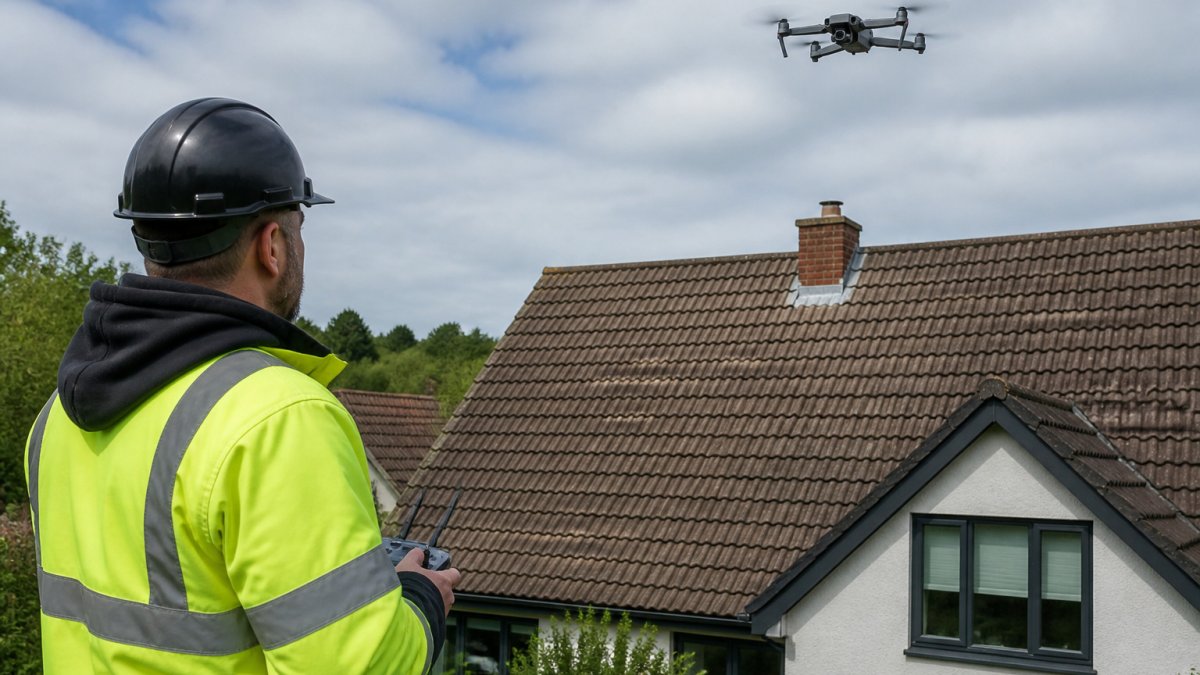
A roof drone survey is an aerial inspection in which a licensed operator flies a drone over the roof to capture high-resolution photographs and video.
A drone survey is best understood as a visual snapshot. It can reveal cracked or missing tiles, damaged flashings, ponding on flat roofs and debris build-up. It cannot see inside the structure, and it does not replace an attic check or a hands-on look at the roof surface.
Routine Visual Checks, Professional Inspections and Drone Surveys Compared
Roof checks come in three forms, and they are often confused.
- Routine visual checks are simple walk-arounds from the ground or from inside the building. Anyone can do them, and they catch obvious problems like sagging, staining or gutters full of debris.
- Professional inspections are carried out by a qualified roofer or surveyor who can access the roof safely and examine it closely.
- Drone surveys sit between the two. They give a detailed aerial record without anyone working at height, but they do not reach everything a walked inspection can.
A drone-only inspection is a survey, not a full inspection. A walked-only check can miss what sits underneath the covering, and an attic-only check can miss problems on the roof surface. To see how thermal imaging reveals roof problems that visual checks miss, read our guide to aerial infrared surveys.
How Often Should You Get Your Roof Inspected by Type, Age and Exposure
The useful question is not ‘how often should I book a drone survey?’ in isolation, but ‘how often does this particular roof need eyes on it, and which kind of eyes?’ The schedule below separates routine visual checks, professional inspections and drone surveys into three different cadences.
A practical frequency schedule
Use this as a starting framework, then shorten the interval wherever the roof has a history of problems.
| Roof type and situation | Routine visual check | Professional inspection | Drone survey |
|---|---|---|---|
| Modern pitched roof, tile or slate, under 15 years old, sheltered site | Every 6 months | Every 5 years | Every 3-5 years, or after severe weather |
| Older pitched roof, 15-40 years, or any age with previous repairs | Every 3-6 months | Every 2-3 years | Every 2 years, or annually if repairs are ongoing |
| Flat roof, any age, with membrane, felt or single-ply covering | Every 3 months, especially before and after winter | Annually | Annually, ideally in early autumn before the wet season |
| Exposed or coastal site, or roof above three storeys | Every 3 months | Every 2 years | Every 1-2 years |
| Listed, thatched or non-standard roof | Every 3 months | Annually, by a specialist | As advised by the specialist; drone imagery supports but does not replace the specialist’s close inspection |
| Commercial or multi-building estate | Monthly walk-round by facilities staff | Annually, plus after any incident | Annually, plus after storms or before lease events |
Why these intervals, and where the rules of thumb come from
Neither figure is a legal requirement, and neither is specific to drone surveys, they describe roof inspection generally. A drone survey is one method of carrying out that inspection, not a separate obligation with its own statutory timetable.
The factors that should shorten your interval
- Age and remaining life. A roof covering past two-thirds of its expected service life warrants a shorter cycle.
- Material. Concrete tiles and slate tolerate frost and wind differently from felt or single-ply membranes. Flat membranes are more vulnerable to ponding, UV degradation and seam failure, so they justify annual attention.
- Exposure. Coastal salt spray, prevailing wind-driven rain and sites with little shelter all accelerate wear. A roof that faces the prevailing weather takes more punishment than a sheltered one of the same age.
- Pitch and complexity. Valleys, parapets, dormers and multiple roof planes create more junctions where flashings fail. Complex roofs deserve a shorter cycle than a simple gable.
- History. Any roof that has leaked, been patched or had a partial re-cover should move to the shorter interval until it has gone several years without a recurrence.
How to combine the three inspection types
The most cost-effective pattern for most owners is a yearly ground-level visual check carried out by whoever manages the building, a professional inspection at the interval in the table, and a drone survey slotted in between or immediately after any event that could have caused damage.
Watch out: treating a drone survey as a substitute for a professional inspection can leave hidden defects, saturated insulation, failed sarking felt or corroded fixings under the covering, undetected, because the drone only sees the surface. Because surface images cannot rule out defects beneath the covering, pair drone surveys with hands-on checks and consider how an annual commercial inspection fits into the maintenance plan.
When a Drone Roof Survey for Landlords Makes Sense
Landlords face a specific problem: they need evidence of condition without repeatedly sending contractors up ladders or onto scaffolding. A drone survey provides a dated visual record that can support maintenance decisions and tenancy handovers.
It makes most sense when a roof is hard to access safely, when a tenant reports a problem, or before and after major works. For a sense of how aerial inspections are scoped for insurers and asset owners, see aerial inspection for commercial insurers.
Roof Inspection After a Storm: When to Book an Extra Survey
Severe weather is the most common reason to bring a survey forward, and it is also the point where owners most often get the sequence wrong. The useful question is not simply whether to book, but what to do with the findings once you have them.
When a storm justifies an extra survey
Book an additional drone survey after any of the following:
- Wind speeds at or above the level that typically lifts ridge tiles and flashings. As a rule of thumb, sustained gusts strong enough to bring down branches or wheelie bins are strong enough to have disturbed roof coverings, even where nothing is visible from the ground.
- Hail. Hail can crack tiles, bruise flat membranes and dent metal flashings without leaving obvious debris.
- Driving rain followed by interior staining. Any new damp patch on a ceiling or upper wall is a signal to survey before the next rain event, not after.
- Visible change from the ground. Missing, slipped or displaced tiles, sagging ridge lines, debris in valleys or gutters, or a changed roofline all justify a survey.
- An insurance claim or a dispute with a neighbour or contractor. A dated aerial record taken soon after the event is far more useful than one taken weeks later.
What to do after the survey identifies a defect
A drone survey is only useful if it feeds a decision. A practical sequence is:
- Triage by water ingress risk. Anything that has opened a path for water, displaced flashings, cracked tiles over a habitable space, ponding on a flat roof, is urgent. Cosmetic issues such as moss or faded paint are not.
- Get a roofer’s assessment before authorising repairs. The drone imagery shows what is visible; a roofer needs to confirm the cause and the extent, and to check what the images cannot show. Ask for the assessment in writing.
- Document everything. Keep the dated survey images, the roofer’s report, quotes and invoices together. If you are claiming on buildings insurance, most insurers will ask for evidence of the pre-loss condition and the date damage was discovered.
- Check your policy terms before commissioning work. Most buildings policies require you to mitigate further damage and to notify the insurer promptly; carrying out temporary repairs to prevent water ingress is usually expected, but permanent repairs before the insurer has assessed the claim can complicate matters.
- Re-survey after the repair. A short follow-up flight confirms the repair has been completed properly and gives you a new baseline for the next interval.
How this fits the wider schedule
A post-storm survey does not reset the routine interval in the frequency table above, it sits on top of it. To see how a drone dilapidation survey documents building damage and condition, read our professional’s guide.
Watch out: booking a survey weeks after the event, or repairing before the insurer has seen the evidence, can weaken an otherwise valid claim, capture the condition as soon as it is safe to fly, and keep the record intact.
What Drone Survey Cost Depends On and How to Get a Quote
We do not publish fixed prices in this guide because costs depend on the size of the roof, the number of sites, the level of detail required, the access arrangements and the delivery timescale.
To get an accurate figure, tell us the property type, the roof’s approximate size and age, the reason for the survey and any deadline. We will then confirm scope and cost in writing before any work begins.
Booking Your Next Roof Drone Survey With Impact Aerial
If you want a clear answer for your own roof, start with the condition you are trying to understand: routine peace of mind, a landlord record, or a check after weather damage. To understand the full inspection process before you get in touch, read the complete guide to aerial inspections.
Our team has over 20 years of experience in aerial photography, videography and media production, and every flight follows strict safety rules and CAA requirements. Contact Impact Aerial to arrange your roof drone survey and receive a written quote.
Frequently Asked Questions
How often should a roof be inspected?
Most roofs benefit from a visual check at least once a year, ideally in spring after winter weather, and a more thorough professional inspection every few years depending on age and material. Flat roofs, roofs exposed to coastal winds, and older roofs usually need checking more often. A drone survey is useful for reviewing hard-to-reach areas and recording condition, but it does not replace a walked or attic inspection. Keep dated records so you can compare condition over time. Book an extra inspection after any significant storm.
Is an annual roof drone survey necessary?
Not for every property. An annual drone survey makes most sense for large commercial roofs, buildings with complex geometry, or roofs where defects have been found previously. For a typical domestic or small let property, a yearly visual check combined with a drone survey every few years may be enough. The right interval depends on roof age, covering type and exposure. A qualified surveyor can advise based on the condition of your specific roof and any warranty requirements.
When should you book a drone roof survey after severe weather?
Arrange a survey as soon as practical after high winds, heavy hail, or prolonged storms, particularly if you have seen displaced tiles, debris, or water ingress. Early inspection helps you record evidence for insurance claims and prevents small defects becoming leaks. Survey quickly after the event, and keep photographs of any visible damage taken from the ground before the inspection. Check your insurance policy for any time limits on reporting storm damage.
How long does a drone roof survey take?
Survey duration depends on roof size, complexity and weather conditions. Survey duration depends on the job, so Impact Aerial can confirm likely timings for your site when you request a quote. Wind, rain and poor light affect both flight time and image quality, so the survey may need rescheduling. Impact Aerial can confirm likely timings for your site when you request a quote.

 2 Norton Drive, Wythall, Birmingham, B47 6HH Company registration number: 11138586. VAT Number: 366 9068 55


