
Last Updated: November 2, 2026
Quick Summary
Drone video increases social media engagement by showing places from an elevated perspective that ground-level shots cannot match, which stops scrolling and earns reactions. Likes follow an immediate visual payoff, comments follow footage that raises a question or shows change over time, and shares follow clips that give viewers location context worth passing on.
- Keep feed clips to 15 to 30 seconds and story-led pieces to 60 to 90 seconds.
- Front-load your most striking frame in the first two seconds of every clip.
- Shoot with headroom for a 9:16 crop if you need vertical short-form edits.
- Test one variable at a time, such as opening frame or length, and log results.
- Track watch time, engagement rate and click-through rate, using UTM-tagged links.
Table of Contents
- Why Drone Video Commands Attention in Crowded Social Feeds
- How Drone Video Increases Likes, Comments and Shares
- Drone Video Content Ideas That Tell a Larger Visual Story
- The Best Length for Social Media Videos Made with Drones
- Social Media Metrics for Video: What to Track and How to Attribute Results
- Platform-Specific Guidance: Matching Drone Footage to Each Channel
- A/B Testing and Creative Optimisation for Aerial Posts
- Planning Your Next Aerial Shoot with Impact Aerial
- Frequently Asked Questions
Why Drone Video Commands Attention in Crowded Social Feeds
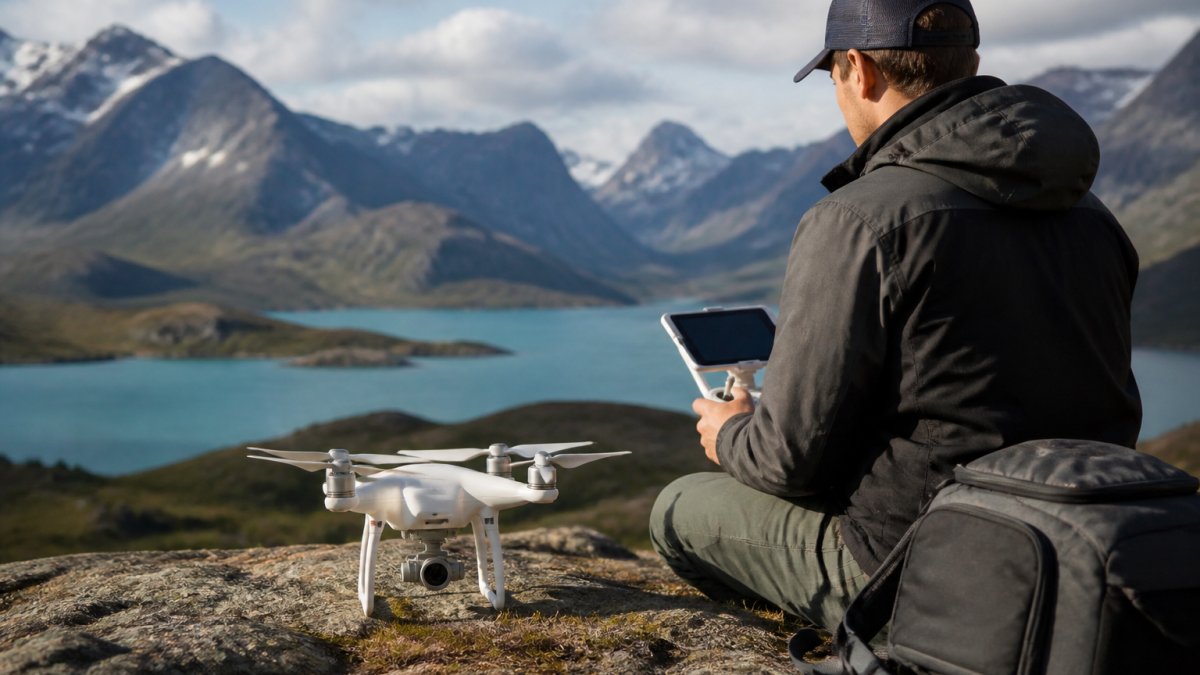
Drone video is aerial footage filmed from an unmanned aircraft and used to show a place, building or landscape from above. That elevated viewpoint is why it stops thumbs.
At Impact Aerial, we film commercial sites and property, and the pattern is consistent. Ground-level shots compete with millions of similar images. A sweeping view from 100 metres up does not.
The evidence base is thinner than most agencies admit. One marketing article claims aerial posts see an 80% higher click-through rate, but no methodology is published alongside it (Impact Aerial analysis of aerial videography engagement).
How Aerial Perspectives Create Visual Novelty
Familiarity is the enemy of attention. Your audience has seen your building from street level a hundred times, but not the full site layout, surrounding context and roofline in one continuous move.
Aerial perspective changes three things at once:
- Height shows patterns invisible from the ground
- Movement adds cinematic motion that static images lack
- Context reveals where a site sits within its surroundings
That combination is hard to replicate with any other camera, which is why drone filming works for both a property listing and a construction progress update.
How Drone Video Increases Likes, Comments and Shares
Drone video increases engagement by giving people something worth reacting to, but the mechanism is specific: likes, comments and shares are three different behaviours, and aerial footage triggers each for a different reason. For the evidence behind these claims, read how aerial videography increases engagement.
Likes are a low-effort acknowledgement. They follow when a clip delivers an immediate visual payoff in the first second or two.
Comments are a conversation trigger. They follow when footage raises a question, shows something the viewer recognises, or invites comparison.
Shares are a social currency decision. People share aerial footage when it makes them look informed, local or discerning to their own audience.
A study examining whether drone video ads draw favourable viewer responses noted that evidence in this area was particularly limited (research on drone video ad responses). That gap matters.
Showing Scale, Location and Context from Above
Scale is the quiet advantage. A solar array photographed from ground level looks like a fence line; from 80 metres it looks like what it is: an investment.
Location context does similar work for property. A buyer scanning social feeds cannot picture how a development sits relative to transport links or neighbouring land; one aerial pass solves that in three seconds.
Here is what tends to work in practice:
- Open on a wide establishing shot, then cut to a closer detail, the wide shot sets context, the detail rewards the viewer for staying
- Keep the horizon level so the scale reads correctly
- Show a recognisable landmark for orientation, but avoid framing that makes it the subject unless that is the point
- Include one human-scale reference, a vehicle, a person or a doorway, so the viewer can mentally measure the site
- Hold the widest shot for at least two seconds before moving, or the viewer will not have time to read the scale
Watch out: flying too low to “fill the frame” often removes the very context that makes aerial footage shareable.
Drone Video Content Ideas That Tell a Larger Visual Story
The best aerial clips are not one-off spectacles. They are chapters. A single drone shot impresses; a series of linked shots builds a narrative that keeps people coming back to your feed. For a fuller guide to aerial marketing video and brand storytelling, see our dedicated resource.
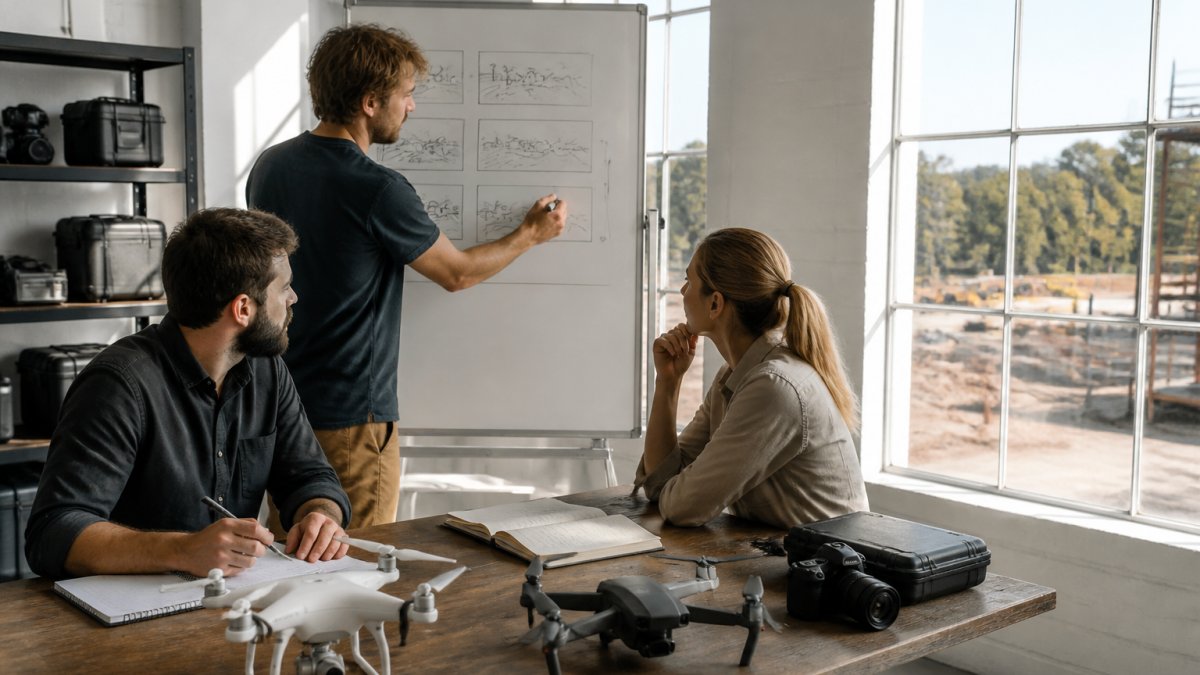
Practical ideas that work for commercial accounts:
- Progress series – the same flight path filmed monthly on a construction site
- Reveal shots – start tight on a detail, pull back to expose the full site
- Site walkthroughs – a continuous move from entrance to roofline
- Seasonal comparisons – identical framing across the year
- Behind-the-scenes – the crew, the kit, the setup
The Best Length for Social Media Videos Made with Drones
The best length for a drone clip on social media is 15 to 30 seconds for feed posts and 60 to 90 seconds for a story-led piece. Once a clip earns its extra seconds, keep its framing and detail as deliberate as the stills, using social media photography tips to make every view feel composed.
Wyzowl’s 2026 video marketing research surveyed 266 respondents in late 2025, and it remains one of the more transparent sample sizes published in this space (Wyzowl video marketing statistics). The takeaway for aerial work is simple: front-load the best shot.
Our rule of thumb:
- First 2 seconds: the most striking frame you have
- Next 10 seconds: the reveal or the movement
- Final 3 seconds: brand and a clear call to action
Turning raw footage into a tight edit is its own craft. See our professional aerial video editing services to learn how raw drone footage becomes polished, high-impact content.
Social Media Metrics for Video: What to Track and How to Attribute Results
Track three things: watch time, engagement rate and click-through rate. Watch time tells you whether the opening shot held attention, engagement rate whether the clip was worth reacting to, and click-through rate whether it drove action.
Attribution is where most teams give up. A drone clip rarely converts on its own. Our strategic guide to optimising marketing with aerial content covers measurement and attribution in more depth.
A practical attribution setup:
- Use UTM-tagged links in every bio and caption
- Compare enquiry volume in the weeks a clip runs against the weeks it does not
- Ask new leads how they found you, and log the answers
- Keep a simple spreadsheet mapping post dates to enquiry dates
General video marketing returns are not guaranteed. One 2026 roundup reports 82% of video marketers saying video gives a good return, down from 93% the year before (Digital Applied video marketing statistics).
Platform-Specific Guidance: Matching Drone Footage to Each Channel
Each platform rewards a different cut of the same footage.
Plan the shoot around the most demanding format first.
Instagram feed and Stories. Feed posts tolerate a squarer or 4:5 crop and a slightly slower pace than Reels, and they suit a single strong hero frame with a short caption. Stories suit a sequence of two or three short clips that build a mini-narrative, approach, reveal, detail, with a clear call to action on the final frame.
LinkedIn. The audience is professional and the context commercial, so lead with the business outcome rather than the spectacle.
YouTube (standard and Shorts). Standard YouTube rewards a landscape 16:9 frame, a longer duration and a strong thumbnail, because the platform is built around search and suggested viewing. Shorts follow the vertical short-form rules above. For standard uploads, the first 30 seconds should establish the location and the reason to keep watching.
What to adjust per channel:
- Aspect ratio, vertical 9:16 for short-form, 4:5 or 1:1 for feed, 16:9 for web and YouTube
- Pacing, faster cuts on discovery feeds, longer holds on owned pages and LinkedIn
- Captions, burn in subtitles for muted viewing, and check place names manually
- First frame, design it as a thumbnail, not an afterthought
- Duration, 15 to 30 seconds for discovery, 30 to 60 seconds for LinkedIn, longer for owned web
- Call to action, explicit on short-form and Stories, softer and contextual on LinkedIn and web
Accessibility belongs here too. Captions and sufficient contrast help viewers watching in noisy or bright environments and widen your reach at no extra cost.
Watch out: repurposing a landscape edit by cropping the centre out of it usually destroys the composition and cuts off the subject.
A/B Testing and Creative Optimisation for Aerial Posts
Test one variable at a time, or you learn nothing. The variables worth testing on aerial content are the opening frame, clip length, caption style and call to action.
A simple testing sequence:
| Test | Variable | What to Compare | What to Watch |
|---|---|---|---|
| 1 | Opening frame | Wide establishing shot vs close detail | Watch time |
| 2 | Length | 15 seconds vs 30 seconds | Completion rate |
| 3 | Caption style | Descriptive vs question-led | Comments |
| 4 | Call to action | Soft vs direct | Click-through rate |
Run one test per fortnight. Log the results. After two months you will have a clear picture of what your audience responds to, which beats any generic benchmark.
Watch out: testing two variables at once is the most common mistake here. If you change both the opening frame and the length, you cannot tell which one moved the numbers.
Planning Your Next Aerial Shoot with Impact Aerial
Good aerial content starts with a shot list, not a camera. Decide what story you are telling, which platforms it is for, and what the first frame needs to be.
A few practical points before you book. Commercial drone filming in the UK is regulated by the Civil Aviation Authority, and operators need the right permissions for the site and airspace.
If you want to see how a professional shoot is scoped and delivered, get in touch with Impact Aerial. You can also read our guide to professional aerial video production to understand how to commission a shoot.
Frequently Asked Questions
How does drone video increase social media engagement?
Drone video gives viewers a perspective they cannot get from the ground, which makes a post stand out in a crowded feed. The novelty of an aerial shot encourages people to stop scrolling, watch longer and share the post with others. Higher watch time and more shares feed the platform algorithms, which then show the post to more people. The result is more likes, comments and click-throughs, though the size of the lift depends on your content, audience and how well the footage matches the platform.
What drone video content ideas work best for social media?
Short reveal shots that pull back to show a full site or property work well, as do fly-throughs that move from a wide view to a specific detail. Progress updates on construction projects, before-and-after comparisons and behind-the-scenes clips of the shoot itself all give viewers a reason to engage. Pair each clip with a clear call to action, such as asking viewers to guess the location or comment on the design, to turn passive viewing into audience interaction.
What is the best length for social media videos made with a drone?
Most platforms reward short, punchy clips. A 15 to 30 second edit suits feed-based posts on Instagram, TikTok and Facebook, while 30 to 60 seconds works for stories that need a bit more context. Longer edits of one to three minutes can perform well on YouTube and LinkedIn when the footage tells a complete story. Test two lengths of the same footage and compare watch time and completion rate before settling on a default.
Which social media metrics for video should I track on drone posts?
Start with watch time and completion rate, because they show whether the footage holds attention. Then look at engagement rate, which combines likes, comments and shares against reach. For business outcomes, track click-through rate to landing pages, website traffic from social referrals and enquiries or leads. Use UTM-tagged links so you can attribute enquiries to specific posts, and compare aerial posts against ground-level posts over the same period to see the real difference.
The gap between a clip that gets scrolled past and one that gets shared usually comes down to planning, not luck. Impact Aerial brings over 20 years of aerial media experience, CAA GVC certified pilots and full post-production editing to every shoot. Get started with Impact Aerial and turn your site into content people actually stop for.

 2 Norton Drive, Wythall, Birmingham, B47 6HH Company registration number: 11138586. VAT Number: 366 9068 55


