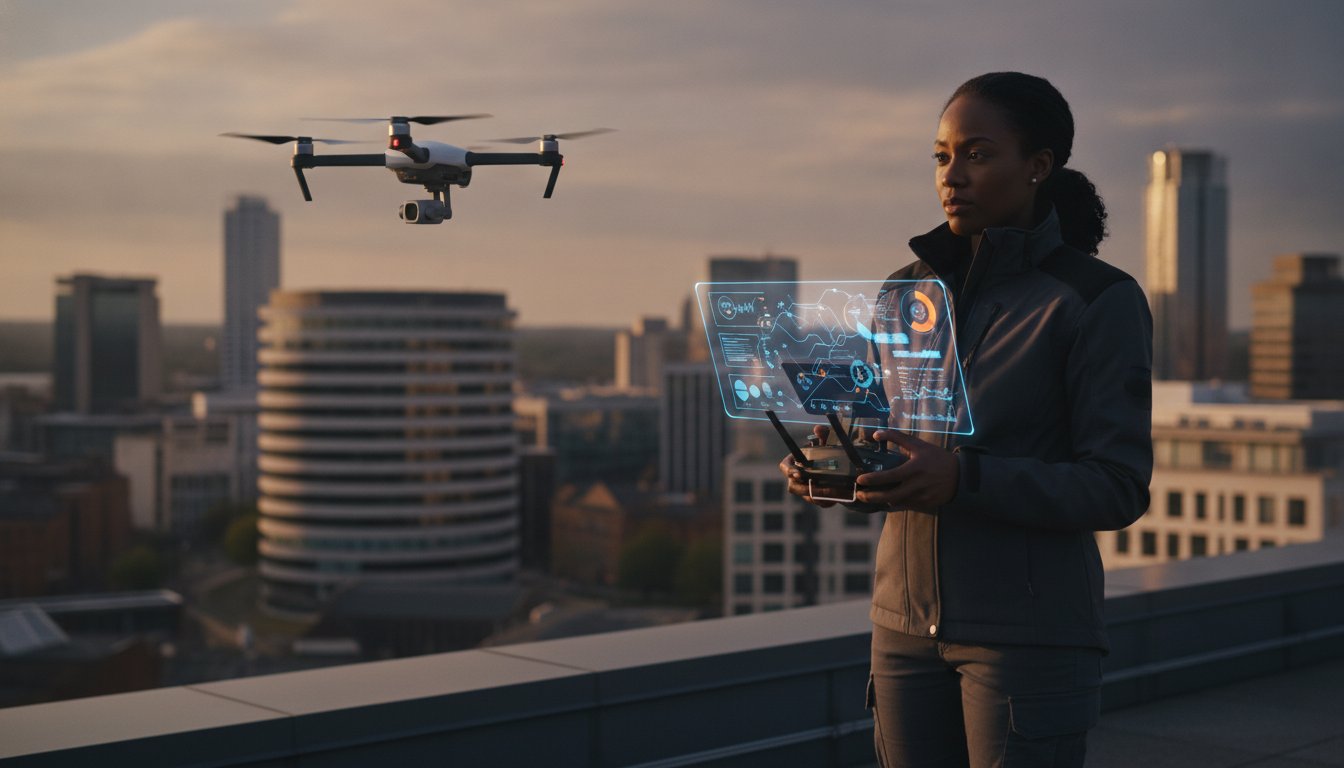
What if the breathtaking drone shot you just posted is actually doing more harm than good to your brand’s bottom line? In 2026, simply capturing a bird’s-eye view isn’t enough to stand out in a rapidly expanding UK content marketing market. True success comes from optimising marketing with aerial content by shifting from spectacle to strategy. While many businesses worry about the new 100g registration threshold or the mandatory Remote ID requirements that took effect this January, the real risk lies in failing to turn high-end production into measurable ROI.
It’s understandable to feel hesitant about the high costs of professional videography or the intricacies of CAA compliance. You want a competitive edge in visual storytelling without the legal headaches or the uncertainty of how these visuals fit into your existing sales funnels. You’ll learn how to transform breathtaking drone visuals into a high-converting marketing engine that builds trust and delivers measurable ROI. We’ll explore how to integrate 4K HDR visuals into your digital platforms, navigate the latest 2026 regulations with confidence, and build brand authority through meticulous production standards.
Key Takeaways
- Understand why high-authority aerial perspectives trigger psychological trust signals and how they’ve evolved into essential storytelling tools for 2026.
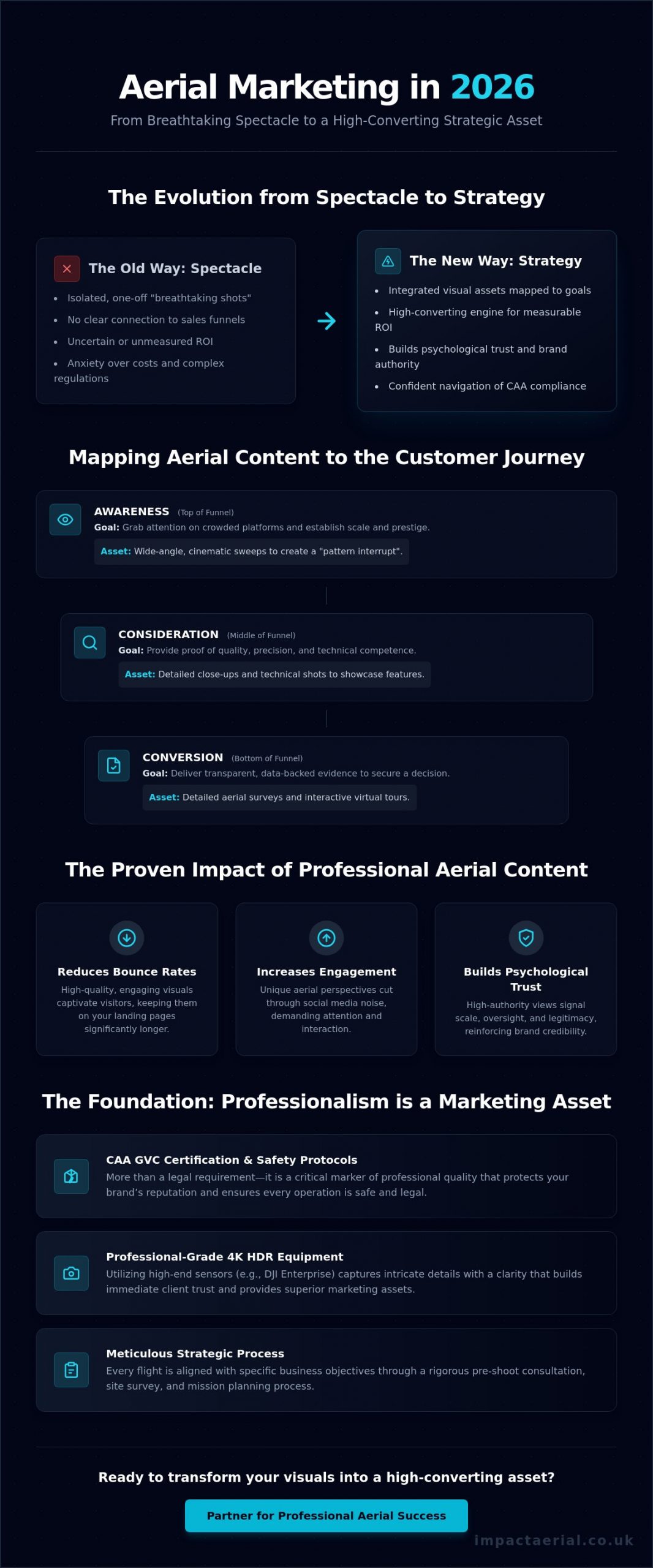
- Discover the strategic framework for optimising marketing with aerial content by mapping visual assets to specific stages of the customer journey, from initial awareness to final conversion.
- Learn how professional aerial filming and photography can reduce bounce rates on landing pages and significantly increase engagement metrics compared to traditional ground-level media.
- Recognise why CAA GVC certification and rigorous safety protocols are more than just legal requirements; they’re critical markers of professional quality that protect your brand’s reputation.
- Master the pre-shoot consultation and site survey process to ensure every flight is meticulously aligned with your specific business objectives and technical requirements.
The Evolution of Aerial Content in Modern Marketing
The concept of The Evolution of Aerial Content has moved far beyond the novelty of simply having a drone in the sky. In 2026, savvy UK brands are focused on optimising marketing with aerial content by treating every flight as a strategic asset rather than a one-off visual. This shift involves moving away from isolated clips and toward integrated storytelling that reinforces brand authority. When a viewer sees a high-altitude perspective, their brain subconsciously registers a sense of scale and legitimacy that ground-level filming struggles to replicate. It’s a powerful psychological trigger that signals a company’s oversight and professional reach.
To better understand the power of this visual medium, watch this helpful video:
Achieving this level of influence requires professional-grade equipment and a clear understanding of the marketing funnel. There’s a vast gap between basic consumer footage and the 4K HDR output produced by DJI Enterprise hardware. High-end sensors capture the intricate details of a construction site or the sprawling layout of a commercial property with a clarity that builds immediate trust. This technical precision serves every stage of the journey. At the Top of the Funnel, cinematic sweeps grab attention on crowded digital platforms. At the Bottom of the Funnel, detailed aerial surveys provide the transparent, data-backed evidence that converts a lead into a client.
Why Static Images No Longer Suffice
The decline of stock photography in professional UK marketing is a reality brands can’t ignore. Audiences have developed a blindness to staged office scenes and repetitive ground-level imagery. Unique aerial perspectives offer a necessary pattern-interrupt in busy social feeds, demanding engagement through a viewpoint that feels both exclusive and grand. This psychological impact elevates a brand’s perceived value. It demonstrates a commitment to high-end production and meticulous detail that standard photography simply can’t match.
The Shift to Data-Driven Visuals
Modern marketing demands more than just beauty; it requires proof. Using aerial content for construction site monitoring or PV solar farm thermal surveys turns a marketing asset into a technical record of competence. This transparency is a powerful tool for building trust with stakeholders who value precision over promises. It’s a sophisticated method of optimising marketing with aerial content by showing, not just telling, the scale and health of your operations. Aerial marketing is the fusion of cinematic art and technical precision.
Strategic Integration: Beyond the “Breathtaking Shot”
Effective marketing in 2026 requires more than just a visually pleasing clip. It demands a structured approach to optimising marketing with aerial content by mapping every frame to the customer journey. At the awareness stage, wide-angle cinematic sweeps establish the scale and prestige of a project. As the lead moves toward consideration, the focus shifts to technical precision, using detailed close-ups to provide proof of quality. Every flight must adhere to the UK Civil Aviation Authority Drone Code, ensuring that these high-value assets are captured legally and safely, protecting your brand’s reputation from the outset.
The transition from raw footage to a high-converting asset happens in the edit suite. Post-production is where marketing optimisation truly takes shape, as professional editors refine 4K HDR data into a cohesive narrative. This process includes the development of interactive virtual tour creation, which allows potential clients to explore a site from their own devices. This level of transparency is a powerful trust-builder. It’s often the deciding factor for stakeholders who require data-backed evidence before committing to a contract. If you’re ready to elevate your visual strategy, consider how professional aerial filming can bridge the gap between interest and investment.
Hero Content for Websites and Landing Pages
The first three seconds of a homepage video are critical for SEO and user retention. High-impact aerial footage serves as the ultimate “Hero” content, providing immediate location context that reduces bounce rates. When optimising marketing with aerial content for the web, technical balance is key. We use 4K HDR output to maintain visual authority while meticulously optimising file sizes. This ensures your site remains fast and responsive, which is a core requirement for both search engine rankings and a smooth user experience.
Social Media Mini-Series and Teasers
Social media platforms demand a diversified content strategy. We deliver aerial assets in both horizontal formats for LinkedIn and vertical orientations for Instagram Reels. Loopable drone shots are particularly effective as high-engagement backgrounds for text-heavy announcements. Don’t overlook the power of “behind the scenes” footage. Showing the meticulous pre-flight checks and the sophisticated hardware involved in a shoot humanises your brand. It demonstrates a commitment to professional standards and technical excellence that resonates with a modern, discerning audience.
Maximising ROI Across UK Digital Channels
Measuring the success of a visual campaign requires more than just counting likes or views. In 2026, the real value lies in how these assets influence conversion rates and shorten sales cycles. While 87% of marketers report that video marketing has helped them increase website traffic, integrating professional drone photography provides a distinct engagement boost that standard ground-level videography lacks. This “Trust Dividend” is a direct result of high production value. It suggests a level of investment and professionalism that reassures potential clients they’re dealing with a meticulous industry leader.
Optimising marketing with aerial content involves tracking specific Key Performance Indicators (KPIs) across different digital platforms. For instance, click-through rates (CTR) on property listings see a significant uplift when aerial perspectives are included. The ability to see a property’s exact position relative to local amenities or transport links removes a layer of uncertainty for the buyer. This transparency isn’t just a visual perk; it’s a critical data point that accelerates the decision-making process. By providing a comprehensive view, you’re effectively answering a lead’s most pressing questions before they’ve even asked them.
Sector-Specific ROI: Property and Real Estate
The “Location Context” factor remains a primary driver for ROI in the UK property market. Buyers often pay a premium when they can clearly visualise the boundaries and surroundings of a site. By integrating high-resolution aerial shots into real estate photography packages, agents can create a more immersive experience. Immersive FPV drone fly-throughs are particularly effective here. They allow a viewer to travel from the street level, through the front door, and out over the garden in one seamless motion. This drastically reduces time-on-market by pre-qualifying leads who have already “experienced” the layout virtually.
B2B Marketing for Construction and Industry
In technical sectors, aerial assets serve a dual purpose as both operational tools and high-end marketing collateral. Regular construction site monitoring provides a transparent record of project progress that can be shared with stakeholders to build confidence. This data-centric approach is vital for optimising marketing with aerial content in B2B environments. Showcasing technical competence through thermal imaging or precision survey data proves your brand operates with meticulous accuracy. Long-term brand storytelling also benefits from time-lapse aerial footage. It captures the entire lifecycle of a project in a way that ground-based cameras cannot match, demonstrating your capacity and reliability to future clients.
The Compliance Advantage: Why Safety is a Marketing Asset
Choosing a drone operator based solely on the lowest price is a strategic error that can result in significant brand damage. In 2026, the traceability of aerial operations is absolute due to the mandatory Remote ID requirements for all UK-class drones. If a business uses footage captured by a non-compliant pilot, they aren’t just saving money; they’re inheriting a legal liability. Optimising marketing with aerial content requires a foundation of total legality. When a brand presents professional visuals, the audience assumes the operation was conducted safely. If that trust is broken by a regulatory investigation or a safety incident, the marketing value of the content evaporates instantly, replaced by a public relations crisis.
Professionalism in this industry is defined by more than just a sharp eye for a cinematic sweep. It’s built on a framework of risk mitigation and official certification. High-tier B2B pitches, particularly in the construction and public sectors, now demand proof of £5 million commercial liability insurance as a standard entry requirement. This coverage isn’t just a safety net; it’s a powerful trust signal. It tells your clients that you’ve partnered with a meticulous specialist who understands the gravity of industrial operations. By prioritising compliance, you transform a technical necessity into a hallmark of your brand’s commitment to excellence.
Understanding UK Drone Regulations in 2026
The regulatory landscape has become more complex with the introduction of UK-specific drone classifications from UK0 to UK6. Any commercial project now requires a pilot who understands these nuances, including the lowered registration threshold of 100g for Flyer IDs. Securing a professional UK drone license is no longer optional for serious marketing endeavours. A GVC certification guarantees operational safety by proving the pilot has undergone rigorous theoretical and practical assessments audited by the CAA. This ensures that every flight, regardless of the environment, is backed by a comprehensive risk assessment and a legal flight plan.
Transparency as a Trust Signal
Integrating your safety credentials directly into your marketing collateral is a sophisticated way of optimising marketing with aerial content. It addresses the “Peace of Mind” factor that corporate and public sector clients prioritise. When you’re transparent about how you manage public privacy concerns and adhere to strict flight restriction zones, you build a layer of brand authority that competitors often overlook. This meticulousness reassures stakeholders that their project is in expert hands. To ensure your next project meets these rigorous standards and protects your brand’s reputation, explore our fully compliant aerial filming services.
Implementation: Partnering for Professional Aerial Success
Successful implementation begins long before the aircraft enters the sky. To achieve the best results when optimising marketing with aerial content, you must align your technical requirements with your specific business goals. A meticulous pre-shoot consultation is the foundation of this process. It allows for a detailed site survey where we evaluate environmental factors and lighting conditions to ensure the highest quality 4K HDR output. This stage isn’t just about aesthetics; it’s a critical safety step where we finalise CAA-compliant flight plans and risk assessments tailored to your specific location. Identifying potential hazards early ensures the shoot proceeds without technical or legal interruptions.
The technical journey continues into post-production. Raw footage, while impressive, requires professional refinement to become a high-converting branded asset. Our process involves precise colour grading and format optimisation, ensuring that the final media is perfectly suited for its intended platform. Whether you’re creating a cinematic hero video for a website or a technical time-lapse for a construction report, this stage is vital for optimising marketing with aerial content. The transition from raw data to a polished marketing tool is what defines professional success. This structured approach ensures that every frame serves a purpose in your wider marketing funnel and delivers the authority your brand deserves.
The Impact Aerial Workflow
Our methodical workflow is designed to provide total reassurance and high-tier results. We follow a clear, three-stage process for every project to maintain our meticulous standards:
- Pre-Flight Strategy: Initial consultation to define objectives, followed by rigorous site surveys and comprehensive airspace checks.
- Precision Execution: On-site filming using advanced DJI Enterprise hardware, managed by GVC-certified pilots with a focus on safety and precision.
- Post-Production Excellence: Professional editing and colour correction to ensure branded assets are ready for immediate deployment.
Selecting the Right Aerial Partner
Choosing a partner requires more than just looking at a portfolio. You need a specialist who understands the logistical nuances of your specific region. For businesses in Birmingham and the West Midlands, local knowledge of regional Flight Restriction Zones (FRZs) and urban flight challenges is essential for maintaining strict compliance. When evaluating a provider, ensure they meet the professional standards of industry leaders. Check for valid GVC certifications, comprehensive insurance coverage, and a proven track record of drone services in your sector. If you’re ready to start your next project, enquire about our professional aerial filming and photography services to ensure your brand’s vision is captured with technical precision and total legal compliance.
Elevating Your Brand Strategy for 2026 and Beyond
The shift toward optimising marketing with aerial content represents a fundamental change in how UK businesses communicate scale and authority. By moving beyond the simple spectacle of a drone shot and integrating data-driven visuals into your full marketing funnel, you create a transparent and high-converting experience for your audience. We’ve explored how professional standards and CAA compliance act as powerful trust signals, protecting your brand while delivering measurable results across digital platforms. This strategic approach ensures that every flight contributes directly to your bottom line.
Success in this specialized field requires a partner who combines cinematic vision with technical precision. Our team of CAA GVC Certified Pilots utilizes DJI Enterprise 4K HDR Technology to capture every detail with meticulous accuracy. Backed by £5m Commercial Liability Insurance, we provide the psychological comfort and professional reliability your corporate or industrial projects demand. It’s time to move past generic imagery and embrace a sophisticated visual narrative that sets your brand apart.
Ready to transform your visual storytelling into a strategic engine for growth? Request a bespoke quote for your aerial marketing project today. We look forward to helping you reach new heights with absolute precision and safety.
Frequently Asked Questions
How does aerial content improve my website’s SEO?
Aerial content improves SEO by increasing dwell time and reducing bounce rates. Search engines prioritize high-quality video content that provides a comprehensive user experience. By including unique perspectives, you’re optimising marketing with aerial content through improved engagement signals. This rich media demonstrates authority and keeps visitors on your page longer, which is a key ranking factor for modern algorithms.
Is drone footage legal for commercial marketing in the UK?
Drone footage is legal for commercial marketing in the UK provided the operator adheres to Civil Aviation Authority (CAA) regulations. As of January 2026, this includes having a valid Flyer ID for drones over 100g and an Operator ID. Professional pilots must also ensure their aircraft is equipped with Remote ID and comply with the specific UK class markings required for legal operation in various environments.
What is the difference between 4K and 4K HDR drone video for marketing?
The primary difference lies in the dynamic range and colour accuracy. Standard 4K provides high resolution, but 4K HDR (High Dynamic Range) captures significantly more detail in the brightest highlights and deepest shadows. This results in a more lifelike, professional image that doesn’t suffer from “blown out” skies or murky foregrounds. For high-end marketing, HDR is the standard for maintaining visual authority and quality.
Can aerial content be used for social media marketing like Instagram Reels?
Yes, aerial content is highly effective for short-form vertical platforms like Instagram Reels and TikTok. We capture footage specifically for these formats or crop high-resolution 4K horizontal shots in post-production. These unique, high-altitude perspectives create an immediate pattern-interrupt in social feeds, which is essential for optimising marketing with aerial content on mobile-first platforms where engagement is won in the first second.
How much does professional drone filming cost for a marketing campaign?
The cost of professional drone filming varies based on project complexity, location, and the required technical output. Factors such as the need for specialized sensors like thermal cameras or the intensity of post-production editing will influence the final investment. We provide bespoke quotes that reflect the specific operational risks and hardware requirements of your campaign to ensure a high-quality, compliant result that protects your brand.
Do I need special insurance if I hire a drone pilot for my business?
You don’t need to provide insurance yourself, but you must verify that your chosen pilot holds valid commercial liability insurance. Under UK law, commercial drone operators must have insurance that is compliant with EC 785/2004. We maintain £5 million in commercial liability coverage to provide total peace of mind and satisfy the rigorous risk management requirements of corporate and public sector clients across the UK.
What industries benefit most from aerial marketing content?
While many sectors benefit, the construction, commercial property, and renewable energy industries see the highest impact. These sectors rely on showing scale, progress, and technical health. For example, PV solar farm thermal surveys and construction site monitoring provide both marketing value and critical operational data. Any business that manages large physical assets or sprawling locations will find significant value in these specialized perspectives.
How long does it take to produce a professional drone marketing video?
A standard drone marketing project typically takes between three to seven working days from the initial flight to final delivery. This timeline includes a day for site surveys and flight planning, the filming day itself, and several days for meticulous post-production. Complex projects involving virtual tour creation or extensive colour grading may require additional time to ensure the final assets meet our high-tier quality and technical standards.
 2 Norton Drive, Wythall, Birmingham, B47 6HH Company registration number: 11138586. VAT Number: 366 9068 55