
Last Updated: October 27, 2026
Quick Summary
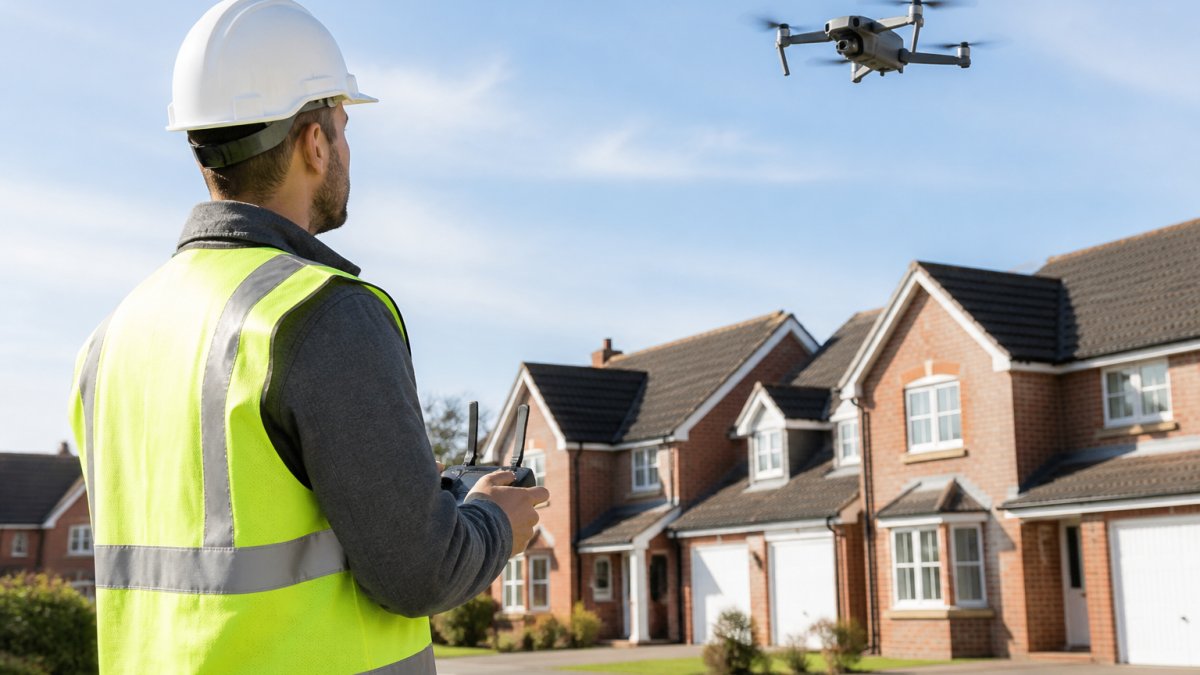
Best practices for drone safety in residential zones centre on a documented pre-flight checklist covering airspace, weather, equipment and site conditions, plus a written risk assessment for each site. Keep the drone in direct visual line of sight at all times, as CAA guidance requires, and plan flight paths to avoid private windows and gardens.
- Run the same pre-flight checks in the same order every time so nothing is skipped under time pressure.
- Structure each risk assessment around hazard, who is at risk, existing control and residual risk rating.
- Flying over private property does not need the landowner’s permission, but privacy and nuisance still require care.
- Ask for the insurance certificate and confirm aerial work is listed as a covered activity.
- Keep transit legs short and high, and avoid loitering over any single property to limit noise complaints.
Table of Contents
- Why Residential Drone Flights Carry Higher Risk
- The Pre-Flight Drone Safety Checklist Every Operator Should Run
- Building a Drone Risk Assessment Template for Built-Up Areas
- Drone Flying Over Private Property UK: What the Rules Actually Require
- Drone Operator Insurance UK: What Clients Should Verify Before Booking
- Managing Privacy, Noise and Resident Contact on the Day
- Booking a CAA-Certified Operator for Your Residential Site
- Frequently Asked Questions
Why Residential Drone Flights Carry Higher Risk
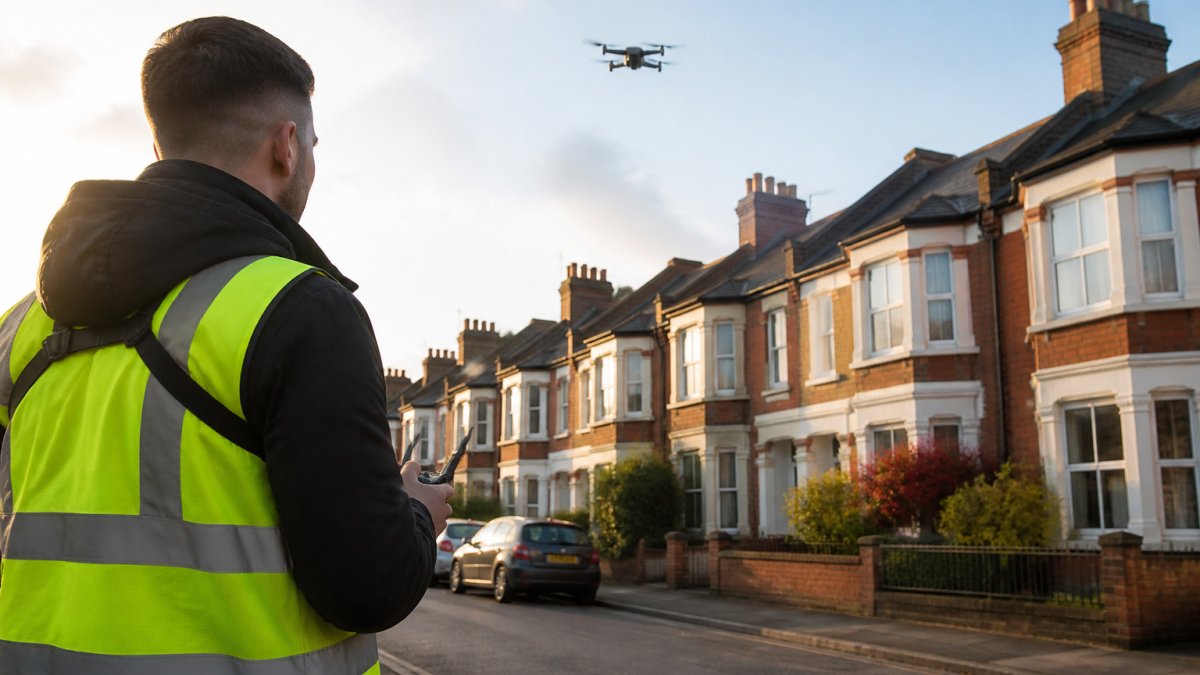
Residential zones compress the margin for error in ways open farmland never does. Gardens, parked cars, overhead cabling, children and pets sit within metres of the flight path, and a single control error can put a drone through a window rather than into an empty field. This is why best practices for drone safety in residential zones start with acknowledging that the environment itself raises the stakes, not with the drone.
The core tension is straightforward. Built-up areas concentrate people and property below the aircraft, while radio interference from domestic wi-fi and reduced GPS accuracy between buildings makes the aircraft harder to control precisely. At Impact Aerial, we plan residential work around that reality: shorter flight legs, tighter geofencing, and a pilot who keeps the drone in direct visual line of sight at all times, as the UK Civil Aviation Authority guidance for drone operators requires.
Risk also rises because residential flights often happen close to people who have not consented to being filmed. A commercial flight over a building site is one thing; a flight over a row of occupied houses is another. The operator carries responsibility for both the aircraft and the privacy of everyone beneath it.
The Pre-Flight Drone Safety Checklist Every Operator Should Run
A drone safety checklist is the documented sequence a pilot completes before every flight, covering airspace, weather, equipment and site conditions. The point is consistency: the same checks in the same order, every time, so nothing is skipped under time pressure.
A practical residential checklist looks like this:
- Confirm the site sits outside restricted airspace and any airport flight restriction zone
- Check wind speed and gusts against the aircraft’s rated limits
- Verify GPS lock and compass calibration before take-off
- Inspect propellers, battery charge and firmware status
- Walk the flight area for overhead cables, trees and pedestrian routes
- Confirm public liability insurance is current and the certificate is on hand
- Note the nearest emergency landing zone away from people and property
- Brief any site contact on the flight plan and timings
Readers preparing a residential site for an upcoming survey can follow our practical guidance on how to prepare a site for a drone survey before the pilot arrives.
Rigorous adherence to these technical protocols ensures that every flight remains within legal boundaries, a standard that necessitates verifying pilot experience before any craft takes to the air.
Here is the documented sequence a pilot should complete before every residential flight.
| Check | What to confirm |
|---|---|
| Airspace | Site outside restricted airspace and airport flight restriction zones |
| Weather | Wind speed and gusts within the aircraft’s rated limits |
| Navigation | GPS lock and compass calibration verified before take-off |
| Equipment | Propellers, battery charge and firmware status inspected |
| Site walk | Overhead cables, trees and pedestrian routes checked |
| Insurance | Public liability cover current, certificate on hand |
| Emergency landing | Nearest landing zone away from people and property noted |
| Site briefing | Site contact briefed on flight plan and timings |
Building a Drone Risk Assessment Template for Built-Up Areas
A drone risk assessment template is a written record that identifies each hazard on a specific site, rates its likelihood and impact, and states the control that reduces it. In built-up areas the template matters more than in open country because the hazards are closer together and change faster.
Structure the template around four columns: hazard, who or what is at risk, existing control, and residual risk rating. Typical residential entries include members of the public walking into the flight area, signal loss between buildings, and property damage from an unplanned landing. Each entry needs a named control, not a vague promise to “be careful.”
The Health and Safety Executive’s risk assessment guidance sets out the five-step approach most operators adapt: identify hazards, decide who might be harmed, evaluate the risks, record findings, and review. A template that follows that structure stands up to scrutiny if a client’s own health and safety team asks to see it.
Drone Flying Over Private Property UK: What the Rules Actually Require
Flying a drone over private property in the UK does not require the landowner’s permission for the flight itself, because the CAA regulates the airspace rather than the land beneath it. What does require care is everything else: privacy, nuisance, and any commercial use of the footage.
The rules that matter in practice are the CAA’s operating conditions, which cover maximum altitude, distance from people and built-up areas, and the requirement to keep the aircraft in visual line of sight. Commercial operators must also hold a valid operational authorisation and fly within its terms. For clients, the practical takeaway is to ask an operator which authorisation they hold and what it permits.
Privacy is the separate issue. Filming a private garden or through a window can breach data protection and harassment rules even where the flight is legal. A reputable operator plans flight paths to avoid capturing private spaces and will discuss the footage’s intended use before flying.
Drone Operator Insurance UK: What Clients Should Verify Before Booking
Drone operator insurance in the UK is not a single product. Commercial operators typically carry public liability cover, and clients should confirm the policy is current, names the operator, and covers commercial drone work specifically rather than hobby flying.
Ask for the certificate, not a verbal assurance. Check three things: the level of cover, the policy expiry date, and whether aerial work is listed as a covered activity. Impact Aerial carries £5m commercial liability insurance. Our guide to hiring an insured drone operator safely covers the full verification process in more detail.
Watch out: a certificate showing cover for “model aircraft” or recreational use does not protect a commercial client if something goes wrong on site.
Managing Privacy, Noise and Resident Contact on the Day
Residential work succeeds or fails on how the operator handles the people living underneath the flight path. A short conversation before take-off prevents most complaints: explain what is being filmed, how long it will take, and why the drone is there.
Noise is the most common friction point. Modern enterprise drones are quieter than older models, but hovering directly over gardens still draws attention. Keep transit legs short and high, and avoid loitering over any single property. Where a flight is likely to affect neighbours, a letter or door knock in advance is worth the ten minutes it takes.
Privacy controls belong in the flight plan, not in an afterthought. Set the camera to avoid private windows and gardens, and agree with the client how footage of incidental passers-by will be handled. If residents raise concerns on the day, pause the flight and address them directly. A grounded drone for five minutes costs nothing; a complaint to the regulator costs considerably more.
Booking a CAA-Certified Operator for Your Residential Site
The fastest way to reduce residential drone risk is to book an operator who can evidence certification, insurance and a documented safety process before the first flight. CAA GVC certification, a current operational authorisation and public liability cover are the three documents to request.
Impact Aerial holds CAA GVC certification, operates a fleet of 4K HDR DJI Enterprise drones, and brings over 20 years of aerial photography and production experience to every residential project. We carry £5m commercial liability insurance.
If you are weighing up which team to appoint, our guide on choosing the right drone filming team sets out the questions worth asking before you commit. For a strategic view of how drone work reduces risk across a business, see our guide on reducing workplace risk with drones.
Frequently Asked Questions
What safety checks should a drone operator complete before flying near homes?
A thorough pre-flight routine covers the aircraft, the airspace and the ground. Check propellers, battery charge and firmware, confirm the drone is registered and the pilot holds a valid flyer ID, review the local airspace for restrictions, and walk the take-off area for overhead cables, trees and pedestrians. Confirm wind speed is within the aircraft’s limits and set a geofence around the flight boundary. Log the check on a drone safety checklist so there is a written record if anything is questioned later.
Can a drone fly over private property in the UK?
There is no blanket law banning overflight of private land, but drone flying over private property UK operators must treat carefully. The CAA requires flights to stay within visual line of sight and away from people and property not under the pilot’s control. Flying close to or directly over homes without a clear operational reason invites complaints and potential nuisance claims. Professional operators plan routes to avoid residential gardens and keep a safe horizontal distance wherever the brief allows.
Do I need permission from a landowner to take off or land a drone?
Yes. Take-off and landing are controlled activities on the ground, so you need the landowner’s permission to use their land as a launch or recovery point. This applies to driveways, car parks, fields and rooftops alike. For commercial work, get that permission in writing and keep it with the flight documentation. If the site is a construction compound, confirm who controls access and whether the principal contractor has any additional site rules.
How can drone operators protect residents’ privacy during a flight?
Plan the flight path to avoid looking into windows, gardens or private outdoor spaces, and set camera angles and gimbal limits so the lens stays on the subject property. Brief the client that footage of identifiable individuals should not be published without consent. Where a flight must pass near homes, a short letter or door knock explaining the purpose and timing reduces complaints. Under UK GDPR, any footage capturing identifiable people is personal data, so store and delete it responsibly.
What should a client check before hiring a drone operator for work near homes?
Ask for the operator’s CAA flyer ID and operator ID, evidence of commercial drone operator insurance UK cover, and a sample drone risk assessment template they use on similar sites. Confirm the pilot holds a General Visual Line of Sight Certificate if the brief involves flying close to people or in congested areas. Check whether they carry public liability cover of at least £5m and ask to see recent work on comparable residential or construction sites.
How can you reduce noise and disturbance during a residential drone flight?
Choose quieter aircraft where the brief allows, fly at the highest altitude that still delivers the required footage, and keep transit legs short rather than hovering over gardens. Schedule flights for mid-morning or early afternoon on weekdays, avoiding early mornings, evenings and weekends when residents are most likely to be home. Warn neighbours in advance where the flight will be noticeable, and keep the drone moving rather than holding a fixed hover over one property.
Residential drone work leaves no room for an operator who treats safety as paperwork. If you need aerial photography, survey data or inspection footage over occupied property, get it from a team that plans every flight around a documented risk assessment and carries the insurance to back it. Get started with Impact Aerial and book a CAA-certified pilot who will arrive with certification, cover and a checklist already in hand.

 2 Norton Drive, Wythall, Birmingham, B47 6HH Company registration number: 11138586. VAT Number: 366 9068 55


