
Last Updated: November 16, 2026
Quick Summary
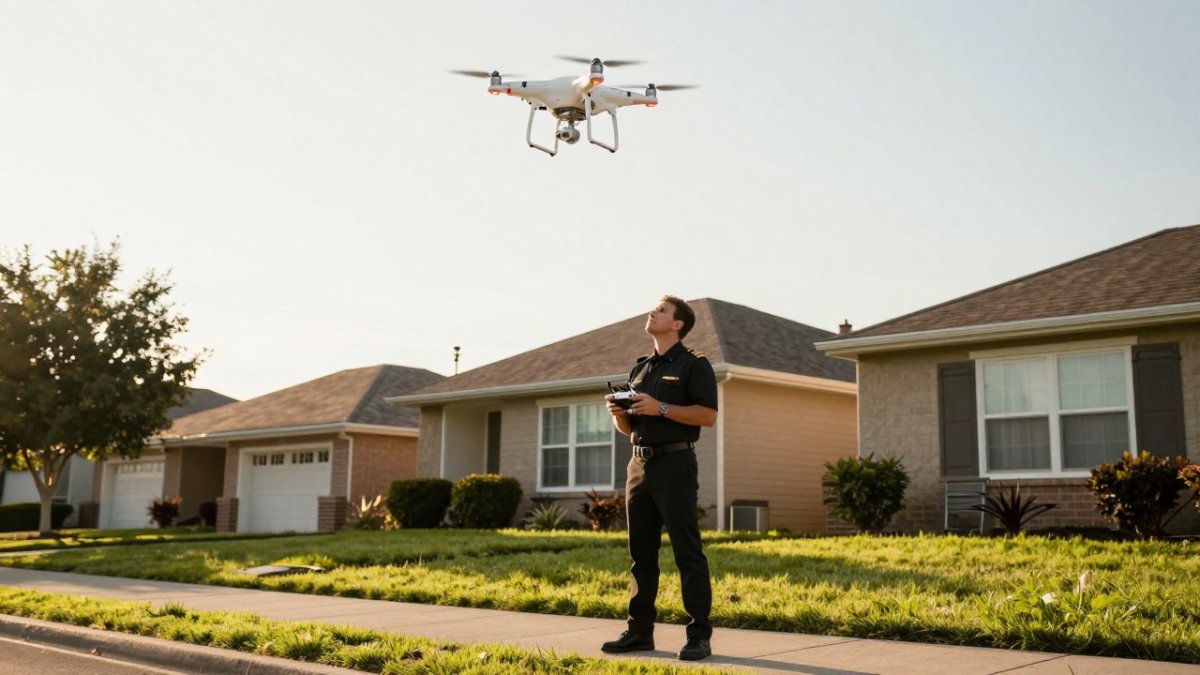
Flying drones over residential property is legal in most cases if you follow Civil Aviation Authority rules: stay below 120m, keep at least 50m from people and 150m from built-up areas, and maintain visual line of sight. You do not need the homeowner’s permission to fly over their property in uncontrolled airspace, but you do need landowner permission to take off or land on their land.
- The maximum permitted height is 120m above the surface.
- Keep at least 50m horizontally from people and 150m from built-up areas.
- A Flyer ID and Operator ID are required for most drones, including camera models.
- Never force a drone down or damage it, as interference can be a criminal offence.
- Report dangerous or privacy-invasive flights to the Civil Aviation Authority, or police on 101 for suspected crimes.
Table of Contents
- What the Law Says About Flying Drones Over Residential Property
- CAA Drone Rules Near Houses: Distance Limits and Height Caps
- Drone Operator Permission for Residential Property: When You Need It
- Drone Filming Over Residential Property: Privacy and Data Protection
- Drone Flying Over My House: What Can I Do?
- Do’s and Don’ts for Commercial Drone Operators
- Commissioning a Compliant Drone Operator for Your Site
- Frequently Asked Questions
What the Law Says About Flying Drones Over Residential Property
According to Civil Aviation Authority drone regulations, flying drones over residential property is legal provided operators adhere to the Open category requirements. The airspace above a house is not private property, but pilots must maintain a duty of care to protect the safety of those on the ground. Impact Aerial provides this guidance to help operators understand their legal obligations regarding distance, privacy, and data protection.
CAA Drone Rules Near Houses: Distance Limits and Height Caps
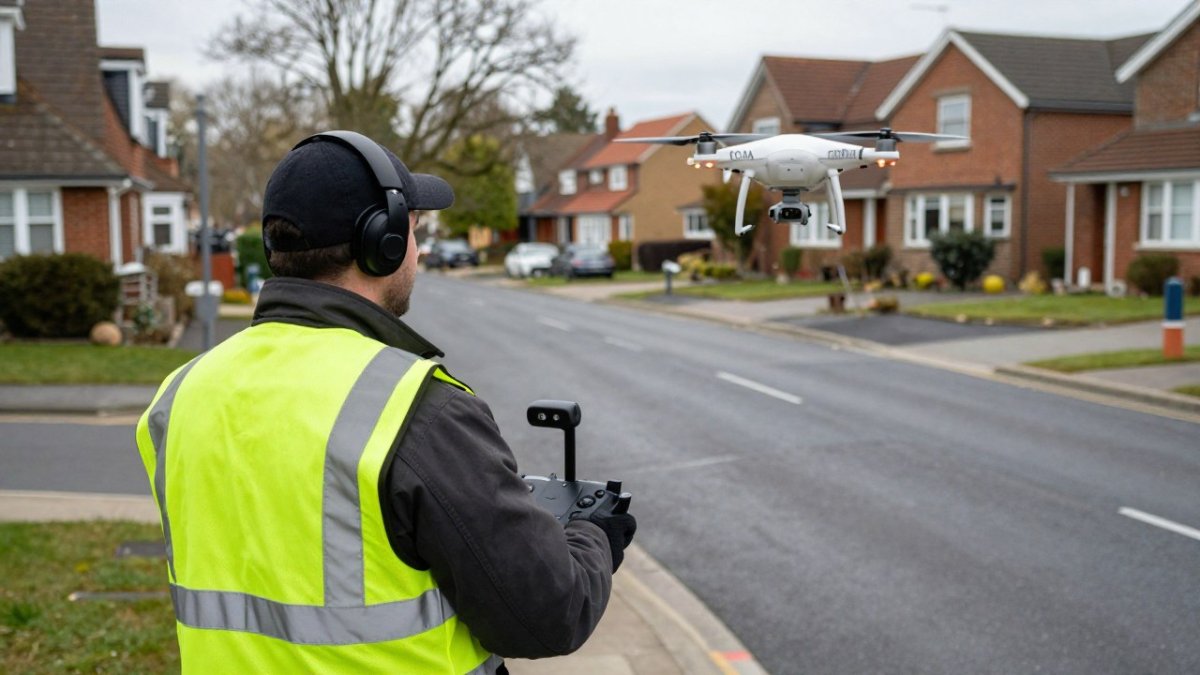
Compliance with Civil Aviation Authority regulations requires adherence to specific spatial limits. The following parameters apply to most recreational and commercial flights:
- Maximum height: 120m above the surface.
- Horizontal distance from people: at least 50m.
- Distance from residential, recreational, commercial and industrial areas: at least 150m.
- Visual line of sight: the drone must remain visible to the pilot at all times.
- Registration: A Flyer ID and Operator ID are mandatory for most camera-equipped drones.
Operators should consult the CAA Drone and Model Aircraft Code regularly, as subcategory definitions and weight thresholds are subject to periodic review.
CAA drone distance and height limits near houses
Drone Operator Permission for Residential Property: When You Need It
While overflight of residential property is permitted in uncontrolled airspace, the right to take off and land is governed by the landowner.
- Take-off and Landing: You must obtain explicit permission from the landowner before using private land for take-off or landing.
- Overflight: No permission is required to fly over a property, provided the flight remains within the 120m height limit and maintains safe distances from people and structures.
- Restricted Airspace: Flights near airports or sensitive sites may require specific authorisation via the CAA Airspace Restrictions portal.
Drone Filming Over Residential Property: Privacy and Data Protection
Capturing footage of residential property involves processing personal data, which brings the flight under the scope of the UK General Data Protection Regulation (UK GDPR). The Information Commissioner’s Office guidance on drones specifies that operators must ensure their data collection is necessary and proportionate.
Practical steps for operators include:
- Minimising the capture of identifiable individuals or private interiors.
- Using cameras only for the intended purpose.
- Deleting unnecessary footage promptly.
Drone Flying Over My House: What Can I Do?
If a drone is observed over your property, remember that overflight is not inherently illegal. If the pilot is operating within Civil Aviation Authority guidelines, they are not committing a regulatory breach. If you suspect a violation, follow this process:
- Document the incident: Record the time, duration, and any identifying features of the drone or pilot.
- Avoid interference: Do not attempt to ground or damage the drone, as this is a criminal offence.
- Assess the flight: If the drone is hovering at a safe height and distance, it is likely compliant.
- Communication: If the pilot is visible and it is safe to do so, a polite conversation can often resolve misunderstandings.
- Reporting: Report persistent or dangerous behaviour to the Civil Aviation Authority. If you suspect criminal activity, such as harassment or voyeurism, contact the police on 101.
Do’s and Don’ts for Commercial Drone Operators
| Do | Don’t |
|---|---|
| Maintain a valid Flyer ID and Operator ID | Fly without proper registration |
| Adhere to the 50m and 150m separation rules | Compromise safety for a specific shot |
| Secure landowner permission for take-off | Assume access is granted without consent |
| Communicate privacy policies to clients | Intentionally film into private windows |
| Ensure constant visual line of sight | Fly in restricted areas without clearance |
Commissioning a Compliant Drone Operator for Your Site
When hiring professional services, verify that the operator holds the necessary CAA GVC certification and maintains adequate commercial liability insurance. Impact Aerial provides professional aerial services for construction and development projects, ensuring all flights are conducted within regulatory frameworks.
For further guidance on selecting a professional service, ensure you review the operator’s safety logs and insurance documentation before any work commences.
Adhering to Civil Aviation Authority regulations ensures that aerial operations remain safe and legal. By following these guidelines, you can mitigate the risk of regulatory fines and privacy disputes. Impact Aerial assists with the planning and execution of compliant aerial filming projects, focusing on safety and data protection standards.
Frequently Asked Questions
Can you legally fly a drone over someone else’s house?
Yes, provided the flight complies with Civil Aviation Authority regulations regarding height, distance, and privacy. The airspace is not private property, but operators must avoid nuisance or privacy breaches.
Do you need the homeowner’s permission to fly a drone over their property?
No, you do not need permission for overflight in uncontrolled airspace. However, you must obtain permission from the landowner to take off or land on their property.
What are the CAA drone rules near houses for distances and height?
Operators must stay below 120m and maintain at least 50m from people and 150m from built-up areas, depending on the drone’s weight and category.
What should I do if a drone is flying over my house?
Document the flight and, if you suspect a violation of privacy or safety, report it to the Civil Aviation Authority or the police on 101. Avoid interfering with the drone directly.

 2 Norton Drive, Wythall, Birmingham, B47 6HH Company registration number: 11138586. VAT Number: 366 9068 55


