
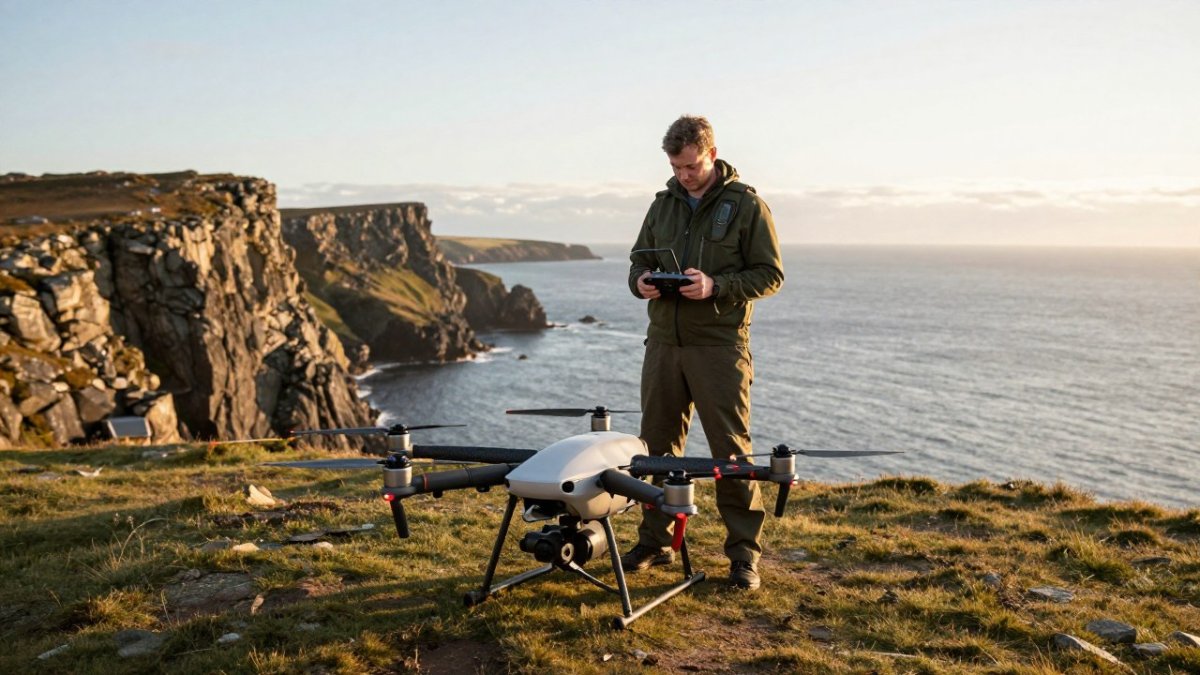
Quick Summary
Commercial drone video production costs vary widely across the UK, because the final price combines the flight day, pilot time, travel, editing and usage rights. Most buyers compare only the day rate, so request a written quote based on your brief to see the full drone video production total.
- Impact Aerial’s operators are fully trained, CAA GVC licenced, and the business carries £5m commercial liability insurance.
- Location, travel distance, number of sites and shot complexity all move the final quote more than people expect.
- Editing is often left out of early budgets, so confirm post-production scope and deliverables in writing.
- Confirm usage rights in writing: channels, territory, duration and whether exclusivity is required.
- Ask how weather rescheduling is handled, including whether travel is charged twice and how much notice is needed.
Table of Contents
- What Commercial Drone Video Production Actually Costs
- Drone Operator Day Rate: What You Are Paying For
- Factors That Change the Final Quote
- Commercial Drone Photography Prices Compared With Video
- Drone Video Editing Costs and Post-Production
- Usage Rights, Revisions and Contingency Planning
- Drone Filming Quote Checklist Before You Book
- Frequently Asked Questions
What Commercial Drone Video Production Actually Costs
Commercial drone video production sits in a wide price band, and the spread is the first thing to understand. The cost of a simple single-site shoot and of a multi-location brand film can differ considerably once editing, licensing and revisions are included. Pricing depends on the scope of each project, so ask for a written quote based on your brief.
Think of the final invoice as several separate costs added together: the flight day, the pilot’s time, travel, editing, and any usage rights. Most buyers only compare the day rate, which is why quotes look inconsistent. Two providers can quote the same flight day and produce very different final totals once post-production is added.
Drone Operator Day Rate: What You Are Paying For
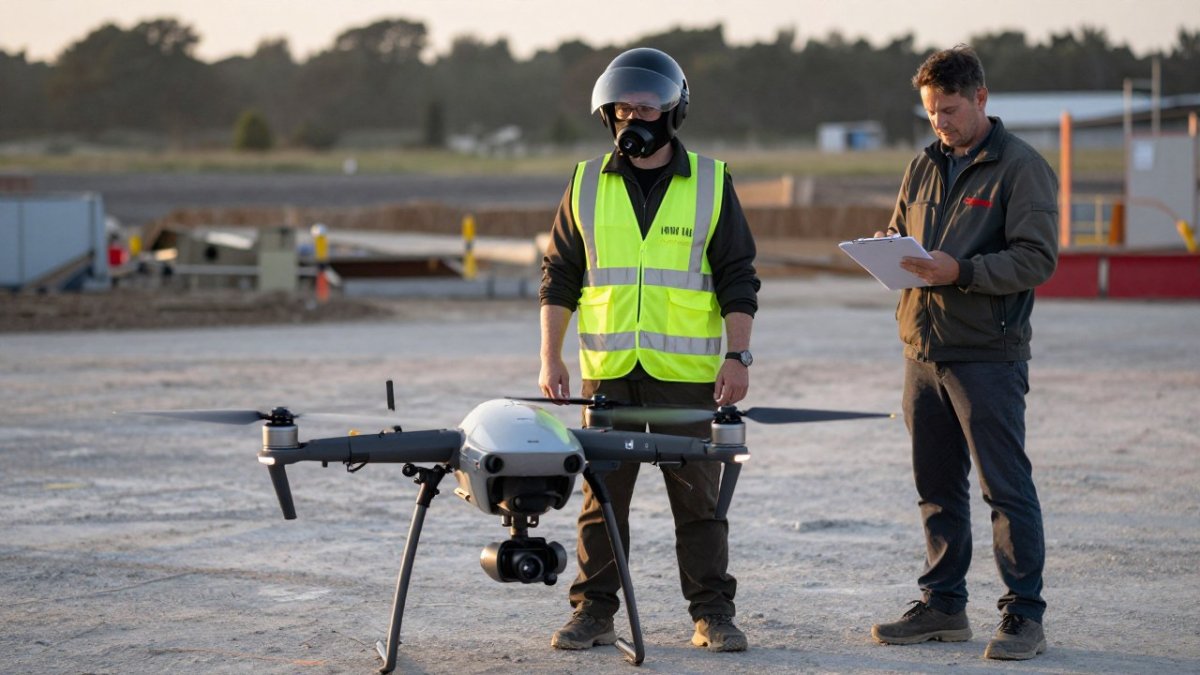
The day rate covers more than time in the air. Impact Aerial’s operators are fully trained and CAA GVC licenced, and the business carries £5m commercial liability insurance.
Ask what a quoted day includes, such as the flight time on site, travel and any data handling, and request a written breakdown.
Full pricing details for Impact Aerial depend on the scope of your project. You can see the full scope of a professional drone filming service to compare what is included before you request a quote.
Factors That Change the Final Quote
Several variables move the price more than people expect. Location and travel distance add cost, especially for sites outside the operator’s usual area. The number of locations matters because each move takes setup and flight time. Shot complexity also matters: a simple overhead pass costs less than a choreographed sequence with multiple camera moves.
Airspace restrictions can add planning time. Weather is another factor. Wind and rain can push a shoot back, so ask how rescheduling is handled and whether it is included.
Commercial Drone Photography Prices Compared With Video
Photography and video are often bought together, but they require different amounts of flight time and editing, so the scope of each differs. The UK drone photography price breakdown sets out the costs side by side for a direct comparison.
If you only need stills for a property listing, photography may cover the brief. If you need motion for a campaign or a construction progress film, video is the right product. Our guide to commercial drone photography and what the photo side involves explains where the two services overlap.
Many clients ask for both. Requesting them in a single quote usually gives a clearer total than booking separately.
Drone Video Editing Costs and Post-Production
Editing is a cost that is often left out of early budgets, so it is worth confirming its scope in writing. Raw drone footage is rarely usable as delivered: it needs trimming, stabilisation, colour correction and grading, and usually captions, titles or a music bed. A short promotional edit takes far fewer hours than a longer piece with narration, sound design and multiple cut-downs.
A useful way to scope post-production is to price it by deliverable rather than by the hour. Ask the operator to list each finished item and the work behind it:
- Master film, the primary edit at the agreed length and aspect ratio, colour graded and audio mixed.
- Cut-downs, shorter versions for social channels, often 30, 15 and 6 seconds, each needing its own trim and caption pass.
- Aspect ratios, a 16:9 master plus 9:16 and 1:1 versions for different placements; each reframe is additional editing time.
- Captions and titles, burned-in or supplied as a separate file, with a stated number of name and date changes.
- Music licensing, a library track cleared for the intended channels, or a commissioned score at extra cost.
- Raw footage, whether the unedited clips are handed over, and in what format.
- Revision rounds, how many are included and what counts as a revision rather than a new request.
Agree in advance whether a change of music, a re-edit to a different length or a new aspect ratio counts as a revision or as new scope. Watch out: a quote that says “edit included” without defining the master length, the number of cut-downs and the revision limit can mean anything from a rough cut to a finished film, and the difference is usually settled in extra invoices.
Ask whether editing is quoted separately or bundled into the flight day, and put the editing line in writing. Professional aerial video editing services show the typical post-production scope, and comparing that scope against the quote is the quickest way to see what is genuinely included.
The table below sets out the post-production deliverables the article says to price, so each line can be checked against a quote.
| Deliverable | What it covers | Scope to confirm |
|---|---|---|
| Master film | Primary edit, colour graded, audio mixed | Agreed length and aspect ratio |
| Cut-downs | Shorter versions for social channels | Often 30, 15 and 6 seconds |
| Aspect ratios | 16:9 master plus 9:16 and 1:1 | Each reframe is extra editing time |
| Captions and titles | Burned-in or supplied as a separate file | Stated number of name and date changes |
| Music licensing | Library track or commissioned score | Cleared for intended channels |
| Raw footage | Unedited clips | Whether handed over, and format |
| Revision rounds | Changes after the first edit | Number included and what counts |
Usage Rights, Revisions and Contingency Planning
Usage rights decide how long and where you can use the footage, and they are one of the few line items that can change a quote without changing a single frame of video. The channels, territory and duration covered by a usage licence affect its cost. Before you approve a budget, confirm four things in writing: the channels (website, social, paid media, broadcast, internal), the territory, the duration of the licence, and whether exclusivity is required so the operator will not supply similar footage to a competitor.
Ask whether the rights are included in the quoted total or charged separately, and whether renewal after the term is priced now or later. Watch out: footage licensed for organic social only can become a compliance problem the moment it is pushed into a paid campaign, so match the licence to the channels you actually plan to use, not the ones you are using on day one.
Revision limits matter as much as rights. Agree on the number of revision rounds, what counts as a revision versus a new request, and whether changes to music, length or aspect ratio are in scope. Build a contingency into the budget for weather, a rescheduled flight or a reshoot. A common mistake is treating the first quoted date as fixed, then paying again when conditions change. Ask how rescheduling is handled: whether a weather cancellation is rebooked at no extra flight cost, whether travel is charged twice, and how much notice is needed to move a date without penalty.
Risk and operational planning belong in the same conversation. Sites near airports or controlled airspace need extra planning and permissions, and site access, safety briefings and marshalling can add time on the day. Ask what is included and what would trigger a variation. Putting rights, revisions and rescheduling terms in the same written schedule as the price is the simplest way to compare quotes like for like and to avoid the extras that appear after the flight is flown.
Drone Filming Quote Checklist Before You Book
Use this list to compare quotes like for like:
- Day rate or half-day and full-day rates stated clearly
- Travel and call-out fees itemised
- Flight hours included, with any overage rate
- Pilot licence and insurance cover confirmed
- Airspace permissions and risk assessment included
- Editing scope, colour grading and music licensing listed
- Number of revision rounds agreed
- Usage rights, territory and duration specified
- Rescheduling policy for weather or access problems
If a quote leaves several of these blank, ask for them in writing before you commit. You can request a quote from Impact Aerial and receive a breakdown tailored to your project.
Frequently Asked Questions
How much does commercial drone video production cost?
Costs depend on the length of the shoot, the number of locations, the editing required and the usage rights you need. Impact Aerial does not publish a standard price list, so pricing is confirmed on a per-project basis. Contact Impact Aerial directly for a quote based on your brief, your site and the deliverables you need, and ask for the cost breakdown so you can see how each element is priced.
What is usually included in a drone video production quote?
A complete quote typically covers pilot time, site preparation and flight planning, the flight itself, data handling, editing and colour grading, and the final file formats. It should also state any travel costs, the number of revisions included and the licence to use the footage. Ask for each of these items to be listed separately so you can compare quotes on a like-for-like basis.
Does editing increase the cost of drone video production?
Yes. Basic trimming and colour correction usually cost far less than motion graphics, captions, music licensing and multi-format cutdowns for social media. If your campaign needs several versions of the same film, ask whether those are included in the quote or charged separately, and agree the number of revisions before filming starts.
Do commercial drone filming projects need permissions or additional planning?
Most commercial drone work in the UK must be flown under Civil Aviation Authority rules, and sites may need permission from the landowner or site manager. Impact Aerial is CAA GVC certified and carries £5m commercial liability insurance. Planning, risk assessment and any airspace checks are part of the job, so ask how they are scoped and billed in your quote.

 2 Norton Drive, Wythall, Birmingham, B47 6HH Company registration number: 11138586. VAT Number: 366 9068 55


