
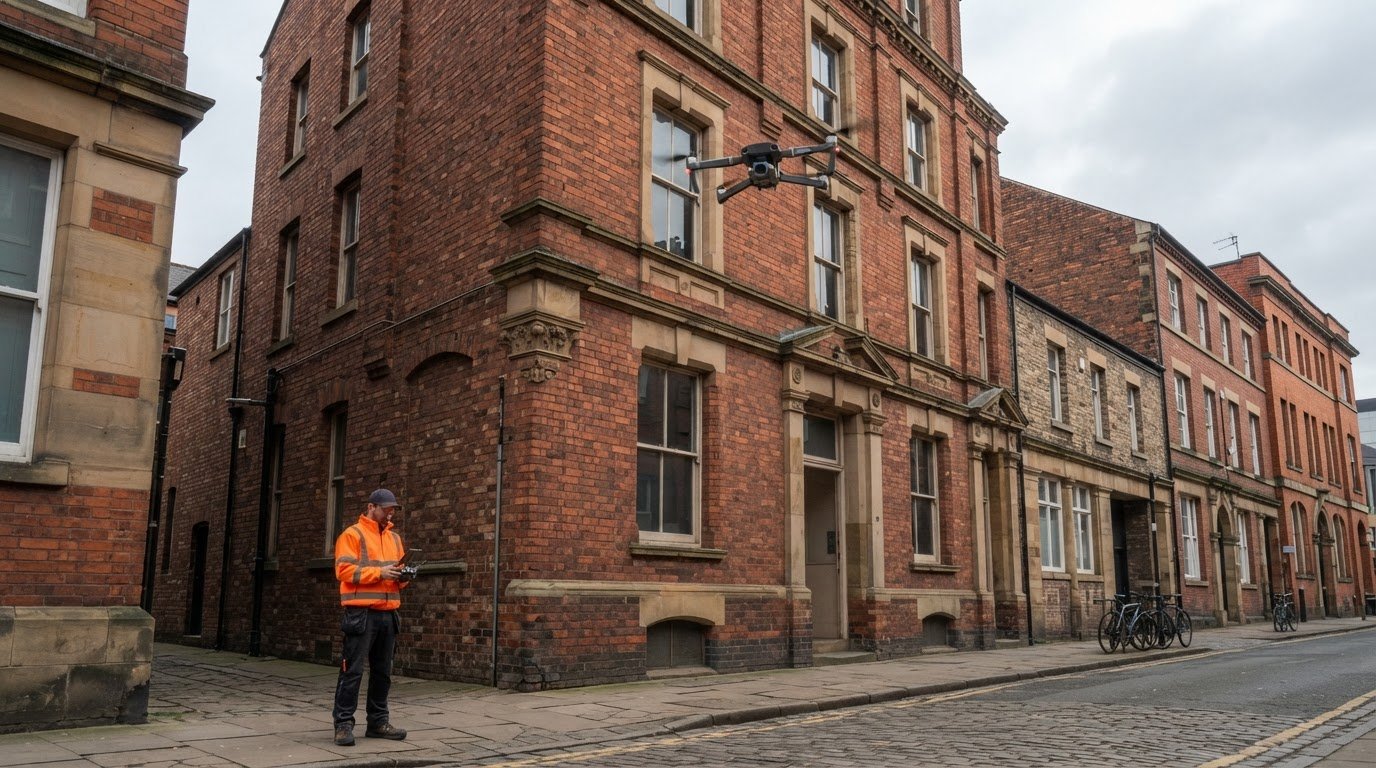
For short, targeted façade inspections, rope access can cost less than scaffolding because it avoids extensive temporary works. The cost of alternatives to rope access inspections depends on the task: scaffolding can suit prolonged work that needs a fixed platform, while drones can be a practical option for visual surveys without putting people at height.
The fastest way to reach a building is not always the lowest-cost option. Height, façade geometry, ground access and the level of detail required all affect the choice and the total cost.
This comparison covers rope access, scaffolding, MEWPs, drones and phased inspections. It explains when each method is useful, where its limitations matter and how to match access to the inspection, rather than paying for equipment or access the task does not require.
Key Takeaways
- Compare access methods by the whole job, including setup, duration and the work each method makes possible.
- Use building height, façade shape and ground access to narrow down practical options before planning an inspection.
- Choose drones for visual survey data where suitable, and reserve physical access for tasks that need close contact or hands-on work.
- A phased approach can help target access resources to the areas and tasks that need them most.
Is rope access really cheaper than scaffolding?
In the UK, alternatives to rope access inspections include scaffolding, mobile elevating work platforms (MEWPs), cherry pickers and drones. Some alternatives cost less for brief visual checks, but a fair comparison also considers site access, inspection scope and whether workers need physical contact with the structure.
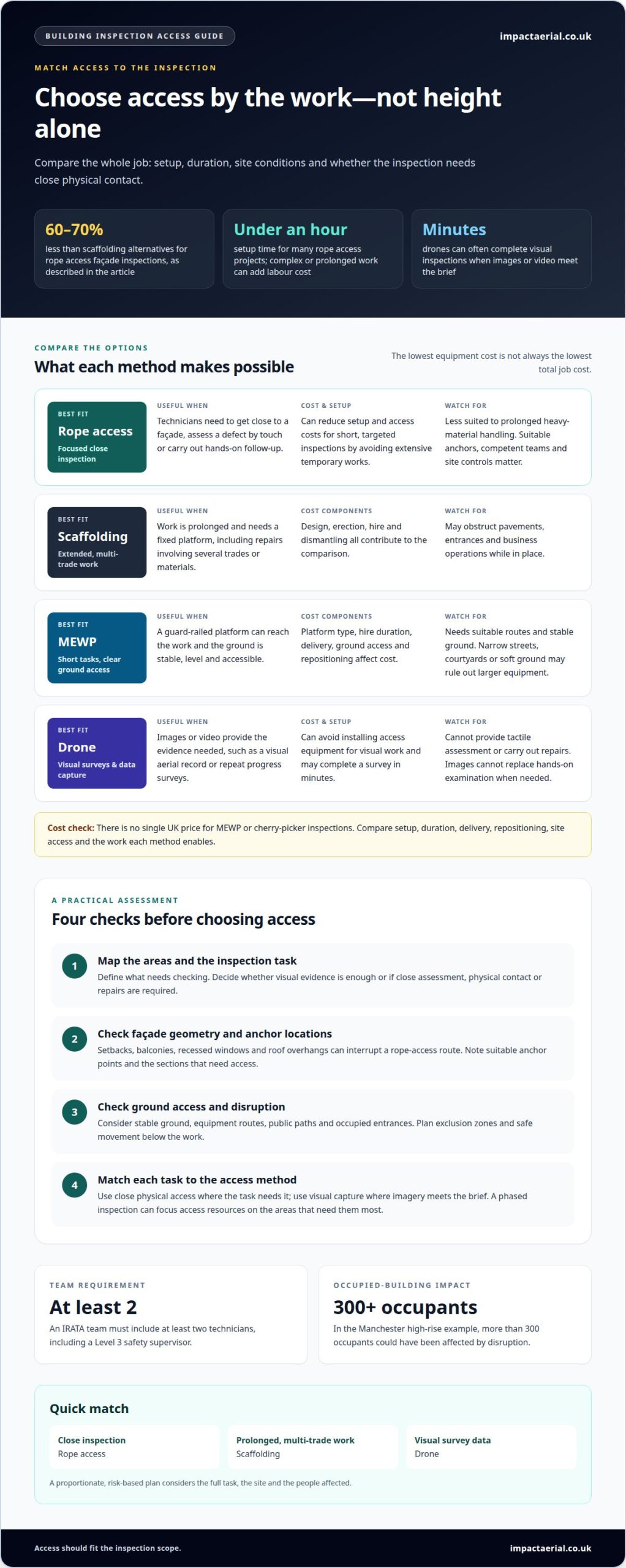
Rope access can cost less for short, targeted inspections because it avoids extensive temporary works. Rope access façade inspections are described as typically costing 60-70% less than scaffolding alternatives. Project duration and required access affect the comparison.
Rope access can also be more cost-effective than MEWPs on taller buildings, particularly where ground access is restricted. Safety depends on suitable anchors, competent teams and site controls. An IRATA team must include at least two technicians, including a Level 3 safety supervisor.
There is no single UK price for MEWP or cherry-picker inspections. Costs depend on platform type, hire duration, delivery, ground access and repositioning. Whether an alternative to rope access costs less overall depends on the inspection scope and how long the equipment is needed.
| Option | Typical use | Cost considerations | Key limitation |
|---|---|---|---|
| Rope access | Targeted inspections | Can reduce setup and access costs | Less suited to prolonged heavy-material handling |
| Scaffolding | Long-duration, multi-trade work | Design, erection, hire and dismantling | May disrupt pavements and entrances |
| MEWP or cherry picker | Short tasks with suitable ground access | Delivery, hire and positioning | Needs suitable routes and stable ground |
| Drone | Visual surveys and data capture | Can avoid installing access equipment | Cannot provide hands-on inspection |
Scaffolding provides a fixed platform for extended repairs; MEWPs offer a guard-railed platform but depend on suitable ground conditions. Drones capture visual data without placing inspectors at height, but cannot assess defects by touch. The Health and Safety Executive supports proportionate, risk-based planning for work at height. Choose rope access for focused close inspection, scaffolding for prolonged multi-trade work, and a MEWP where ground access is clear.
Building height, geometry and ground access
Height matters, but façade shape and access points matter too. On a tall, flat elevation, technicians may move between suitable anchor points to inspect defined sections. Setbacks, projecting balconies, recessed windows and roof overhangs can interrupt that route. A MEWP may reach a lower elevation efficiently, provided the ground is stable, level and accessible. Narrow streets, internal courtyards or soft ground can rule out large access equipment.
Ground-level disruption also affects occupied buildings. Scaffolding can obstruct entrances, pavements and business operations for the time it remains in place. In the Manchester high-rise example, more than 300 occupants could have been affected by disruption. Rope access can reduce the footprint at ground level when only selected areas need inspection, helping keep public routes and building entrances clearer. The access plan should identify exclusion zones and how people will move safely below the work.
Heritage buildings often have complex elevations and sensitive surroundings. Close visual inspection can help identify cracked masonry, deteriorating mortar, loose stone or failed sealant without placing a large temporary structure against the façade. Rope access technicians can also inspect parapets, copings, roof edges and rainwater goods. Cleaning is a separate task: inspection findings can record soiling or visible defects, but cleaning alone cannot establish whether a component is secure or needs repair.
For maintenance, match access to the work rather than the building’s height alone. A focused inspection may need close visual assessment and photographs; replacing cladding across a broad elevation may need a continuous platform for materials and several trades. A practical assessment starts by mapping the areas to inspect, noting anchor locations, checking ground access and identifying public routes or occupied entrances. Then match each task to the access method. For a visual aerial record of commercial premises, drone commercial property surveys can help document external elevations without installing ground-based access equipment.
Rope Access vs Drone Inspections: Which Is Right for Your Business?
For a building inspection, the choice depends on whether you need visual evidence, close physical assessment or repairs. Compare access time, equipment, team requirements and the work each method can complete.
Rope Access Inspection Costs
Rope access suits inspections that need technicians close to a façade, especially when physical contact helps assess a defect. Setup takes under an hour for many projects, but complex or prolonged work can increase labour costs. Drones can often complete visual inspections in minutes, making them more efficient when images or video meet the inspection brief. They cannot provide tactile assessment or carry out repairs.
Choose rope access for building maintenance when close inspection or hands-on follow-up is part of the task. Choose drone capture when you need visual surveying and data collection.
Upfront and Overall Access Costs
Rope access needs limited temporary infrastructure, while scaffolding involves design, erection, hire and dismantling. MEWPs also add equipment delivery and positioning to the comparison. A drone inspection avoids installing these access systems for visual work, but its images cannot replace hands-on examination when surface condition needs direct assessment.
Compare the whole job, not just mobilisation. Include setup, inspection duration, repositioning, ground access and whether findings lead to physical maintenance. On a construction site, repeat drone surveys can record visible progress; a close-up defect check may call for rope access instead.
Team Size and Supervision Costs
An IRATA rope access team must include at least two technicians, one of whom is a Level 3 rope access safety supervisor. That team structure supports planning and supervision, but labour remains a factor, especially on complex or extended projects. Drone inspections remove the need for personnel to work at height during visual data capture, changing the staffing and access requirements.
Safety planning matters for every method. Match the team and equipment to the inspection scope, then compare the evidence each can provide. Use drones for broad visual coverage and rope access when close contact or remedial work is required.
Start with the inspection objective, then assess access time, team needs and follow-up work. This comparison helps identify an efficient method for the building and task.
Drone inspections as an alternative to rope access
For visual inspections, drones can collect images and video without putting personnel at height. They can be a cost-effective option for surveys and repeat inspections, particularly when documenting visible conditions across a building or site. The right access method still depends on what the findings need to establish.
A drone can capture high-resolution views of elevations that are difficult to inspect from the ground. The images help teams record visible defects and compare areas over time. However, visual data cannot provide tactile feedback or complete repairs. If a project needs someone to test a component by touch, replace failed sealant or carry out masonry work, trained rope access technicians may be needed after the survey.
Some complex structures suit a combined approach. A drone can provide an initial visual assessment and help identify areas needing closer attention. Rope access can then provide physical inspection or remedial work at selected locations. This can avoid installing temporary access across an entire façade when only specific areas need follow-up. Drones can also inspect places that are too fragile or unsafe for people to access directly.
Safety planning applies to every method. The UK Health and Safety Executive supports proportionate, risk-based planning for work at height and consideration of safer, more efficient alternatives where reasonably practicable. A drone removes the need for inspectors to work at height during visual capture, but the inspection still needs a defined scope, a suitable operating plan and a clear record of what the images cover. Rope access remains relevant when physical contact or access inside structures is required.
For a building maintenance project, begin by listing the questions the inspection must answer. If the goal is visual surveying and data collection, plan a drone survey as the first assessment. If defects require hands-on investigation, combine aerial evidence with a specialist access method. That staged solution links the evidence gathered to the work actually required.
Impact Aerial: Aerial Filming and Photography
Impact Aerial provides Aerial Filming and Photography for projects that need clear aerial visuals, alongside drone surveys for commercial properties. These services can document visible building conditions and provide a useful visual record when close-up physical inspection is not required.
For an external property survey, Drone Commercial Property Surveys can capture imagery for review and help identify areas needing closer attention. Construction Site Monitoring can also provide aerial records of site progress. Drone imagery supports visual assessment, but does not replace hands-on inspection or repair when physical contact is required.
Impact Aerial’s commercial drones use 4K HDR cameras, operated by CAA GVC certified pilots. To discuss aerial services for your property or project, visit impactaerial.co.uk.
Turn inspection findings into a clear next step
Before planning an inspection, define how you will use the findings. A maintenance team may need images to prioritise closer checks, while a project manager may need a consistent visual record for reporting. That purpose helps determine whether aerial evidence is sufficient or physical access must follow.
When comparing the cost of alternatives to rope access inspections, keep the intended outcome at the centre of the decision. The most useful method gathers evidence suited to the task without adding access arrangements the work does not require. For projects needing aerial visuals, Impact Aerial also provides Aerial Filming and Photography and PV Solar Farm Thermal Surveys.
Discuss your inspection objectives and the type of visual information you need with Impact Aerial. A well-defined brief gives your team a practical starting point for planning the next stage.
Frequently Asked Questions
Which method is best?
The right method answers the inspection brief and provides usable evidence. For example, a drone can document visible roof conditions, while a closer assessment may be needed to investigate a suspected defect physically. Images cannot establish every material condition. Define what the inspection must determine, what evidence is required and whether follow-up work involves physical contact.
Which option should you choose?
Choose a method to suit the inspection and site. A drone suits visual records of roofs or façades; rope access suits close examination when physical contact is needed. Scaffolding may be practical for extended work involving several trades. If a project needs both broad imagery and hands-on checks, plan those stages separately and match each to its access requirements.
How much do rope access inspections cost in the UK?
There is no single UK price for every rope access inspection. Costs reflect the building layout, inspection area, access complexity, team time and any maintenance included. Alternatives to rope access inspections cost more or less depending on scope and equipment. A focused check of one elevation differs from a survey covering several elevations with follow-up visits.
What is the cost of scaffold access for inspections in the UK?
Scaffold access costs depend on the structure and how long the scaffold must remain in place. Design, erection, hire, dismantling, site access and arrangements for public space can all affect the total. Whether alternatives to rope access cost less overall depends on duration and scope. A fixed platform can suit prolonged projects involving several trades.
How do drone inspections compare with rope access for cost and accuracy?
Drone inspections can reduce access requirements for visual surveys, while rope access enables close physical examination. Drone imagery can record visible features across difficult-to-reach elevations, but cannot test whether a component moves or assess its condition by touch. The right method depends on the inspection question: image-based review documents visible conditions, while physical verification requires suitable close access.
What factors affect the cost of alternative inspection methods?
Costs depend on the structure’s size and complexity, the areas to inspect, site access, equipment setup and time on site. Required outputs matter too: visual records, close defect assessments and maintenance involve different work. Repositioning, weather delays and repeat visits may affect the programme. Define the scope and deliverables first so comparisons reflect the same inspection requirements.
 2 Norton Drive, Wythall, Birmingham, B47 6HH Company registration number: 11138586. VAT Number: 366 9068 55


