
A construction marketing video doesn’t have to wait until a building is complete. Construction marketing video production in the UK can cover project progress, time-lapse sequences, completed-site showcases and short updates that explain the work behind a project. The right format depends on what you want viewers to understand.
It makes sense to want polished footage without disrupting a live site. This article explains how construction marketing video production in the UK can capture different project stages, how filming can be planned around active work, and what helps a finished film communicate clearly. It also looks at ways to use the footage, from project presentations to your website and social channels.
Key Takeaways
- Choose a video format that fits the project stage, from progress footage and time-lapse to a finished-site showcase.
- Filming on a working site can be planned around site activity, access and the views the final film needs to capture.
- Match each edit to its destination, such as a project page, social post or campaign, so the footage serves a clear purpose.
- Explore how aerial filming, construction site monitoring and post-production can support a consistent visual record of your project.
Can you film on active construction sites?
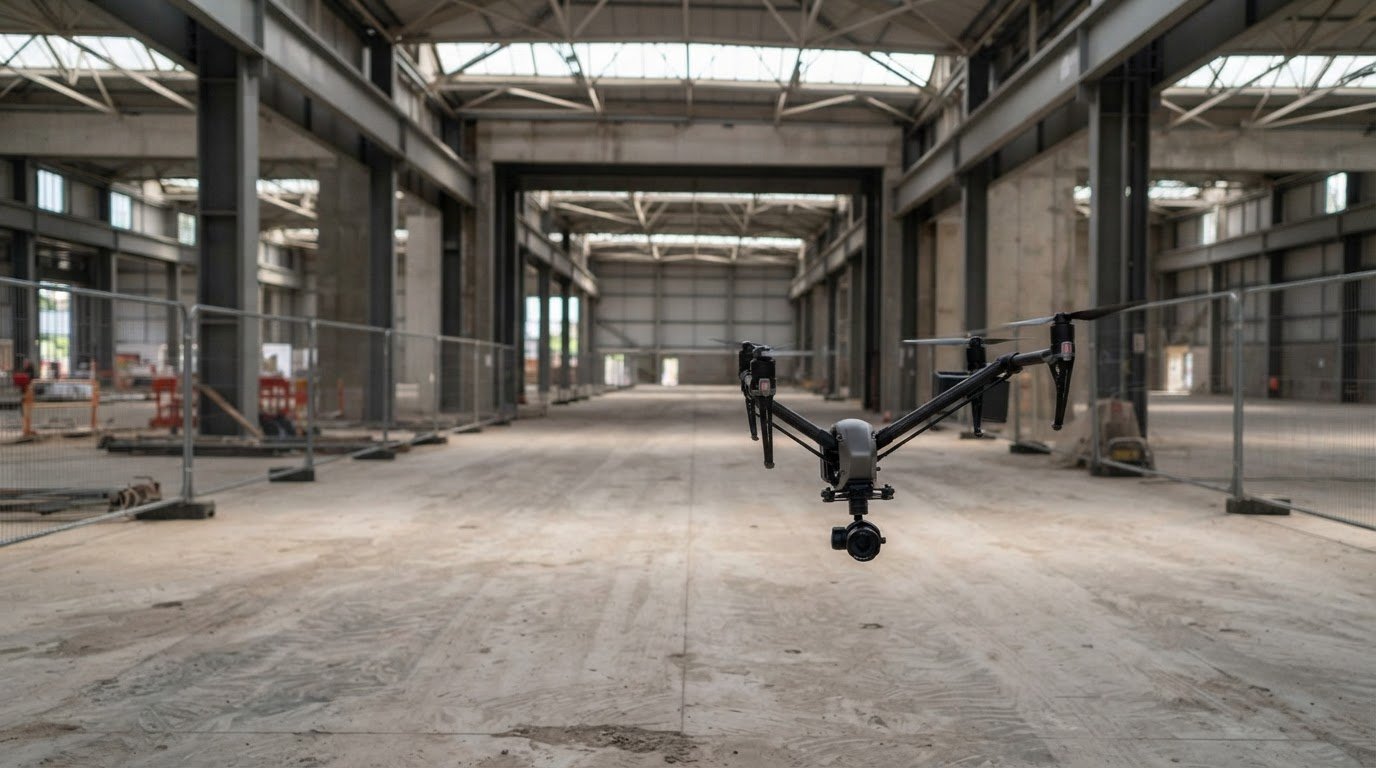
Yes. Drone filming can capture site-wide progress while work continues, provided the flight and camera plan suits site operations. Before filming, the team coordinates with site management, agrees access and working areas, and identifies the views to capture. Aerial photography can show the full footprint, while closer footage can focus on a crane installation or completed façade. Planned shots help stakeholders understand the project at each stage.
The right package depends on the material and finished film you need. Animation can explain a design or process that cameras cannot show; site filming records work and milestones; and interviews add first-hand perspectives. A package can combine these elements, but each serves a different purpose. Set out the audience, key message and intended use in the production brief so filming and editing contribute to one coherent video.
On an active UK site, filming plans need to account for access, moving machinery, changing work zones and site-specific safety arrangements. The team agrees locations and timing with site management, then adapts the shot list if activity changes. For drone operations, pilots plan flights around people, structures and equipment, taking the site environment into account.
To protect privacy, plan shots to avoid identifiable workers, visitors, badges, screens and sensitive site information unless their inclusion has been agreed. If interviews or recognisable people are part of the film, arrange consent and clarify how the footage will be used, stored and shared. Reviewing footage before publication can identify faces, vehicle registrations or documents to remove or obscure. Account for UK GDPR considerations in the production plan, not as an afterthought during editing.
When choosing a construction video specialist, assess relevant site footage, aerial image quality, safety planning and post-production capability. Ask how the team coordinates with site management, adapts to changing conditions and shapes footage for its audience. A useful portfolio should offer more than dramatic drone views: look for clear project context, considered filming and edits that explain progress. Confirm that the proposed deliverables meet stakeholders’ needs, from a concise update to a full project film.
Filming on active sites and in working environments
Construction video production can combine scheduled site filming, time-lapse and milestone footage. In the UK, the process includes planning, capture, editing and final production, shaped around the project’s audience and intended use.
A visual record can show potential clients how a project develops, not just how it looks when finished. The filming schedule and format depend on site activity, project duration and the stages worth showcasing.
Planning, Filming and Final Production
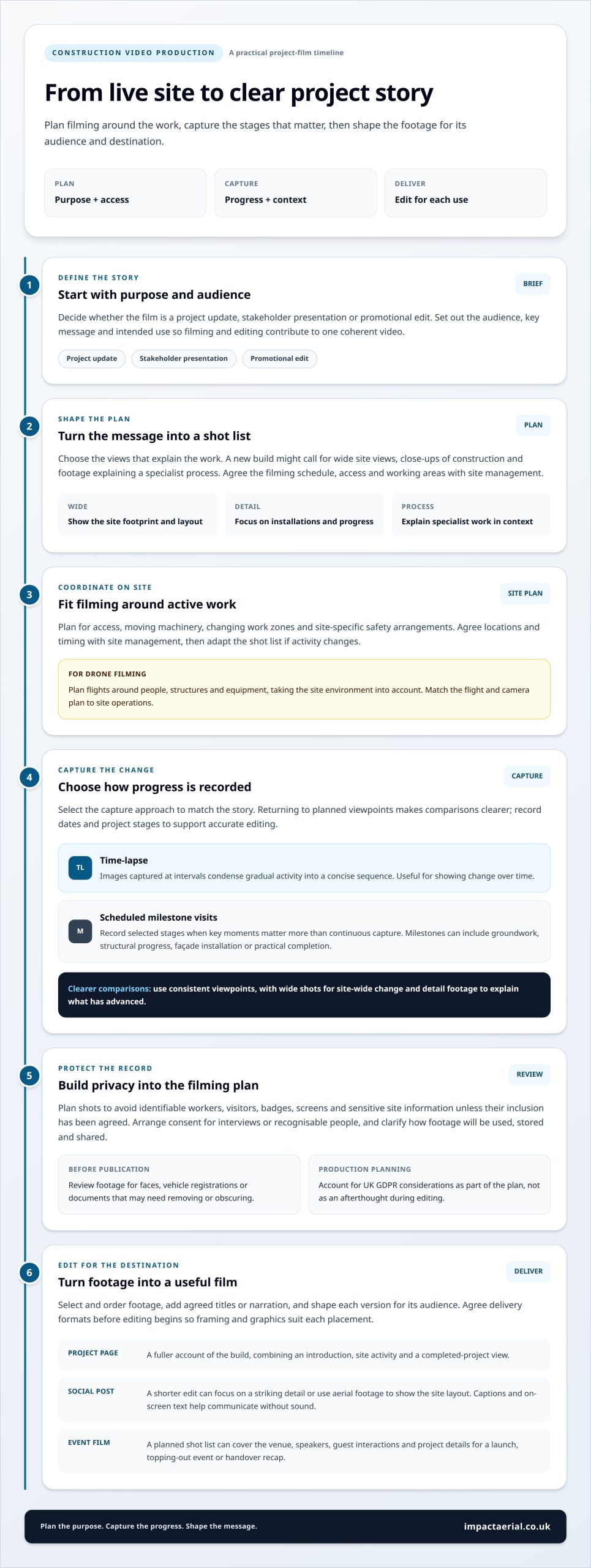
Start planning with the film’s purpose: a project update, stakeholder presentation or promotional edit. Turn that purpose into a shot list, filming schedule and clear production brief. For example, a new build might need wide site views, close-ups of construction and footage explaining a specialist process.
On filming days, the crew coordinates access and capture around site operations. Editing selects and orders footage, adds agreed titles or narration, and shapes the film for its intended audience. Review the deliverables and editing stages in advance so the plan covers both the captured material and the finished communication piece.
Progress and Milestone Footage
Milestone filming records specific changes, such as groundwork, structural progress, façade installation or practical completion. Returning to planned viewpoints makes comparisons clearer: a wide shot can show changes across the site, while detail footage explains what has advanced. Use a consistent shot list for each visit, and record dates and project stages to support accurate editing.
Time-lapse offers a different perspective. Depending on project duration, it can capture images at intervals and condense gradual activity into a concise sequence. Scheduled filming is suitable when key moments matter more than continuous capture. A series of visits, for example, can document the transition from an empty site to a completed building, helping stakeholders follow progress and potential clients understand the work involved.
Choose the approach by matching capture frequency to the story: time-lapse shows change over time, while milestone footage explains selected stages in context. Together, they can create a visual record that remains useful beyond the final edit. For developers and project teams seeking comprehensive visual tracking, providers like skyviewmediaco.com focus specifically on construction progress documentation to keep all stakeholders aligned.
Using video across websites, social media and campaigns
One construction film can support several communications, but each placement has a different purpose. A project page can give potential clients a fuller account of the build, while a LinkedIn post can highlight a milestone. Before editing, match each version to its channel, audience and next step, such as viewing a case study or enquiring about a project.
For multi-platform use, select and shape footage for each destination. A website edit might combine an introduction, site activity and a completed-project view. A shorter social media version could focus on a striking detail, such as a structural installation, or use aerial footage to show the site layout. Captions and on-screen text help communicate the message when viewers watch without sound.
Event coverage can document a project launch, topping-out event or handover. A planned shot list helps capture the venue, speakers, guest interactions and project details, rather than relying on a single wide shot. The footage can become an event recap, with selected clips supporting follow-up posts and campaigns. For interviews, clear questions help keep each contribution relevant to the event’s purpose.
Agree on delivery formats before editing begins. Name the website placement, social channels, event use and required versions in the production brief, so framing and graphics suit their destinations. A wide project overview and a vertically framed social clip, for example, may need different edits despite using footage from the same session. Planning this way helps prevent a final film that works in one setting but feels awkward elsewhere.
Organise finished files by project, channel and intended use, with clear filenames for each edit. Keep a master version alongside approved social cuts, captions and stills selected from the footage. This helps marketing teams document progress, prepare future posts and reuse relevant material in later campaigns. Aerial filming and photography can add useful context when the site’s scale or layout is central to the message.
Construction marketing and promotional videos
A construction promotional video should give viewers a reason to understand the project, not just show attractive images. Begin with one audience and message: a developer may want to demonstrate delivery capability, while a potential client may need to understand a complex build. A focused film can combine site footage, interviews and concise explanations. A completed-project video, for example, can show the finished structure and explain the specialist work behind a visible detail.
Build the story around the project’s strongest evidence. A contractor could document a technical process, explain how a design challenge was addressed or showcase progress from early works to completion. Include details that support the message, such as the project’s purpose, notable construction stages and contributors. For construction marketing video production in the UK, define the audience, project story and intended use before filming starts.
Measure return on investment by setting a campaign objective before production, then comparing relevant outcomes with distribution and production costs. Integrating video assets into a broader evidence-led marketing strategy UK helps ensure campaigns target measurable business objectives. For lead generation, track qualified enquiries and conversions associated with the campaign; for awareness, review viewing and engagement data alongside audience reach. Views alone do not establish commercial return. A film supporting a project presentation may influence a decision without generating a direct website enquiry, so match measurement to its intended role.
Professional production supports this process by capturing useful evidence and shaping it into a focused film. Post-production can create a main project video alongside shorter edits for specific audiences or campaign placements. Keep the message and call to action aligned so potential clients understand the project and what to do next. A clear construction marketing video production UK plan also helps teams assess whether the finished film communicates the project accurately.
For a construction film built around project evidence and a clear marketing purpose, discuss your video project.
Impact Aerial: Construction Site Monitoring
Impact Aerial supports construction teams that need visual records of site activity or project progress. Construction Site Monitoring provides aerial views to help stakeholders review how a site develops, while Aerial Filming and Photography can capture footage for project communications. These services suit teams planning progress updates, documenting key stages or creating promotional material from a completed project.
Post-Production Services can shape captured footage into an edit for its intended audience, such as a project overview or concise stakeholder update. For solar developments, PV Solar Farm Thermal Surveys address a separate inspection need. The right service depends on whether you need ongoing monitoring, marketing footage or a finished film from existing material.
Contact Impact Aerial to discuss construction filming or site monitoring for your project.
Turn your project story into a clear next step
Before production begins, decide what viewers should understand or do after watching. This gives the film a practical purpose, whether it supports a project presentation, introduces your team’s work or documents a development for future communications. A focused brief keeps filming and editing aligned with that purpose.
For construction marketing video production in the UK, match the footage to your project and intended audience. Impact Aerial offers Aerial Filming and Photography, as well as PV Solar Farm Thermal Surveys and Drone Commercial Property Surveys for relevant site needs. These services address different requirements, from capturing project visuals to surveying commercial property or solar assets.
Share the project context, the key message and where you plan to use the finished video. That gives the production conversation a useful starting point, without committing to a format before the objective is clear. Contact Impact Aerial about your video to discuss the right approach for your construction project. A considered brief can help turn site activity into communication your audience can use.
Frequently Asked Questions
What types of video can you create?
Construction videos can include aerial project footage, progress documentation, time-lapse sequences and promotional edits. The format depends on the story: a site overview can introduce a development, while a focused edit can explain a construction stage. A contractor might use a progress film for stakeholder updates, then adapt selected footage into a project showcase. Aerial filming and photography can also provide material for future communications.
How much does video production cost?
The price depends on the project scope and is provided after a quote request. A single filming session with one final edit differs from work requiring several visits, extensive post-production or multiple versions. Clarify the audience, intended use, site locations and deliverables in the brief. This allows the quote to reflect the production requirements rather than an unsuitable general estimate.
WHY WORK WITH A CONSTRUCTION VIDEO SPECIALIST?
A construction specialist can make technical work understandable without losing important project context. The team can plan footage around the build sequence, identify useful visual evidence and shape the story for its audience. A film for prospective clients, for example, may need to explain a contractor’s role, while an internal update may focus on progress and coordination. This understanding helps keep the finished video relevant and accurate.
How much does construction video production cost in the UK?
UK project costs depend on scope, locations, filming requirements and the number of finished edits. UK Construction Marketing notes that a straightforward half-day video shoot may cost differently from a multi-location project producing several videos. For a useful quote, define the intended film, where it will be used and the footage or edits required. The price is then provided after a quote request.
What types of marketing videos work best for UK construction companies?
The most useful format depends on the company’s communication goal. A project showcase can demonstrate completed work, a progress film can keep stakeholders informed, and a concise promotional edit can introduce capabilities to prospective clients. Time-lapse can show change across a development, while interviews add individual perspectives. Choose the format by asking what viewers need to understand or do after watching.
How does a professional plan and produce a construction marketing video step by step?
Impact Aerial follows a defined workflow: Consultation, Site Survey, Safety Assessment, Flight, Post-Production, Presentation, Handover & Sign-Off. Consultation establishes the project’s purpose and intended audience. Site assessment and safety planning inform the filming approach; post-production shapes the captured footage into the agreed deliverable. Presentation and handover complete the process, providing finished material for the team’s planned communications.
 2 Norton Drive, Wythall, Birmingham, B47 6HH Company registration number: 11138586. VAT Number: 366 9068 55


