
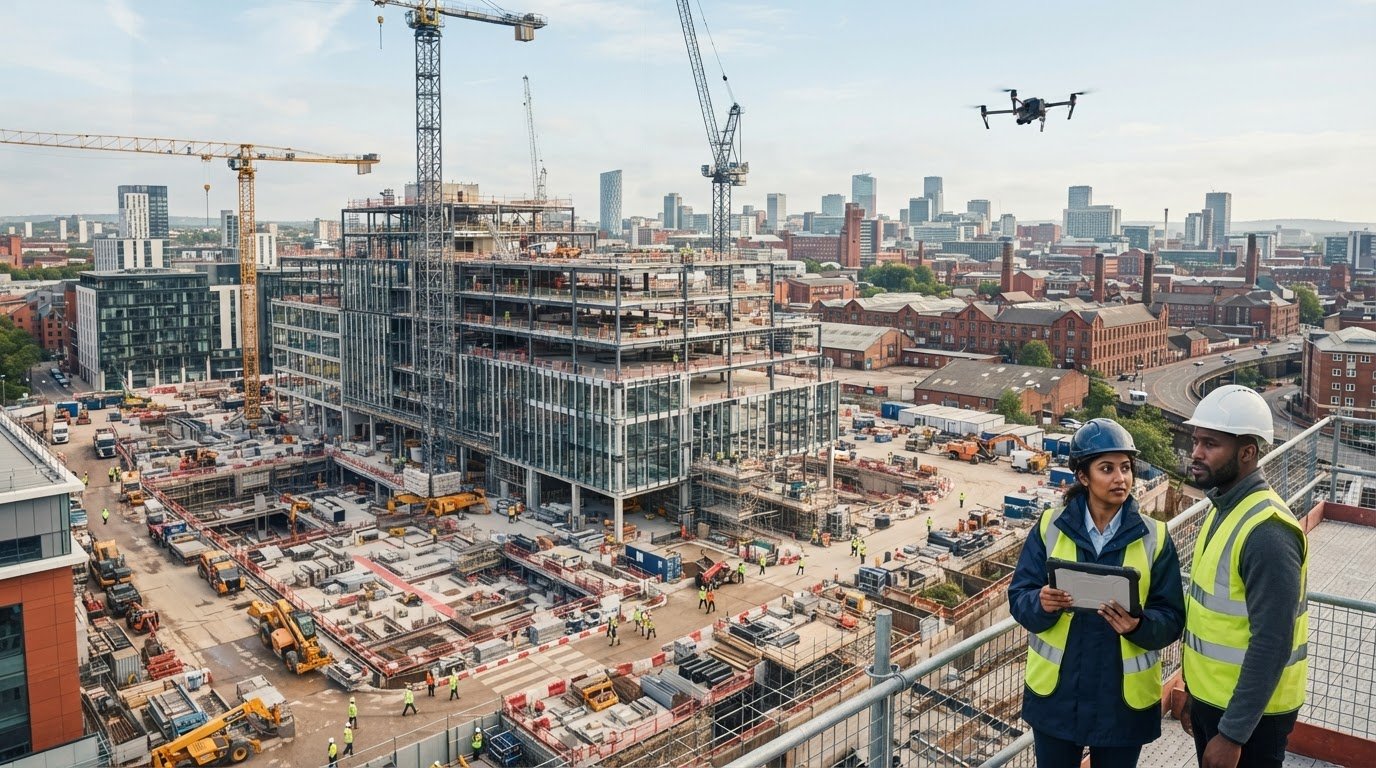
A construction site can be a powerful marketing asset before the work is complete. Drone video for construction marketing shows a project’s scale, on-site activity and progress from above, offering prospective clients a clearer view than ground-level images alone. Footage of completed work can also showcase projects on a company website, social media or in print.
That visual record has practical value beyond promotion. Regular aerial updates can help communicate progress to building owners who aren’t local, while carefully planned flights can capture areas that are difficult to reach on foot. The strongest results come from matching the footage to a clear purpose, whether that’s a project update, a portfolio film or a record of a key construction stage.
This article explains how construction businesses use drone imagery in marketing, what to consider when planning progress documentation, and how aerial capture can support work in hard-to-reach areas. It also covers the factors that influence pricing, including the project, filming requirements and post-production, so you can understand what to plan for before commissioning a shoot.
Key Takeaways
- Plan each flight around a defined use, such as a campaign film, a progress record or imagery for a proposal, so the footage serves a clear purpose.
- Choose framing and edits for the intended channel: website and social media content can tell a different story from images prepared for print.
- Set a consistent capture schedule to make changes across the build easier to compare; imagery can also support mapping and 3D models.
- Pricing depends on the project scope, capture requirements, site conditions and post-production rather than a single standard rate.
- Use aerial capture to document hard-to-reach areas and reduce the need for scaffolding, while planning each flight around site safety.
How do construction companies use drone photography and video for construction marketing?
Construction companies use aerial photography and video to show project scale, site activity and completed work from above. A well-planned drone video for construction marketing can turn that visual record into campaign material, website content and social posts.
To see a construction flight in practice, watch this demonstration of progress monitoring and aerial capture:
Production for Property and Construction Firms
Property and architectural firms can use aerial footage to present a building’s setting, layout and relationship to its surroundings. Construction businesses can show the progression from active work to a finished project, giving prospective clients a clearer view of the design and delivery.
For each project, identify the intended audience and the most useful visual evidence. A developer’s campaign might focus on the completed exterior, while a contractor’s portfolio could highlight site complexity and the finished result. Aerial views can show context that ground-level photographs may miss.
Planning and Producing Project Videos
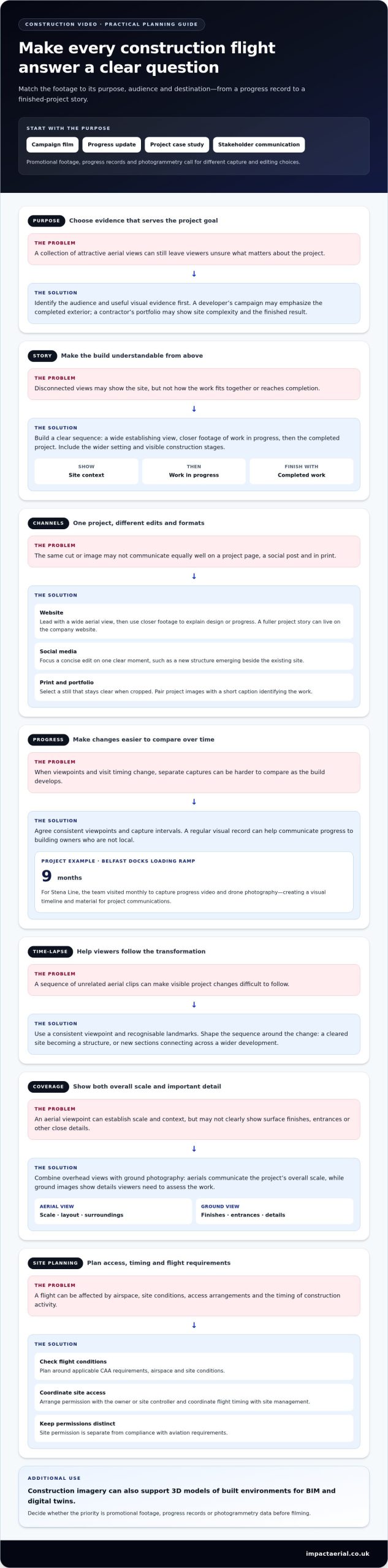
Start with the purpose: a brand campaign, progress update, project case study or stakeholder communication. Then choose the structures, site activity and viewpoints that support it. A useful edit may combine wide establishing shots, closer views of work in progress and clear footage of the completed project.
Construction-site filming in the UK must be planned around applicable CAA requirements, airspace and site conditions. Arrange access and permission with the owner or site controller, and coordinate flight timing with site management. Site permission is separate from compliance with aviation requirements.
A marketing video should make the project understandable, not simply collect attractive views. Include the wider setting, visible construction stages and finished work, then organise the footage into a clear story. Choose framing and edits for the intended channel, such as a website, social media page or print campaign.
For recurring documentation, agree consistent viewpoints and capture intervals so that separate visits can be compared. The Belfast Docks loading-ramp project for Stena Line took 9 months, with the team visiting monthly to capture progress video and drone photography. This approach can create a visual timeline as well as reusable material for project communications.
Construction imagery can also support 3D models of built environments for BIM and digital twins. Decide whether the priority is promotional footage, progress records or photogrammetry data before filming, because each purpose calls for different capture and editing choices.
Using drone footage on websites, social media and print materials
Construction companies can adapt aerial footage for websites, social media, portfolios and print advertising. The right format depends on the audience and the project details each channel needs to convey.
Footage for Digital and Print Materials
On a project page, lead with a wide aerial view, then use closer footage to explain the building’s design or progress. A social post can focus on one clear moment, such as a new structure emerging beside the existing site. For print, choose a still image that remains clear when cropped and placed beside project details.
Build a portfolio around specific examples rather than a reel of disconnected views. Pair aerial photography of each project with a short caption identifying the work, then use a fuller edit on the company website. This gives prospective clients a quick overview and a way to explore more context.
Construction Time-Lapse Footage
Time-lapse footage compresses visible project changes into a sequence. It can show a cleared site becoming a structure or record how new sections connect across a wider development. Plan the sequence around a consistent viewpoint and recognisable landmarks, so viewers can follow the transformation rather than watch unrelated aerial clips.
Before publishing, choose the stages that tell the clearest story. A project portfolio might use an opening site view, a transition through construction and a finished-project image. A shorter social media edit can highlight one visible change, while the website can host a fuller account of the build.
Brand Storytelling with Drone Footage
Aerial footage can make a company’s approach visible through the projects it presents. For example, a contractor could connect an establishing view of a site with footage of specialist work and the completed structure. That sequence links the result to the scale and character of the construction project.
Keep the story specific to the intended viewer. A building owner may value context and visible progress, while a prospective client may want evidence of the finished work. Clear captions, project descriptions and a consistent visual style help connect the footage with the company’s wider portfolio.
Ground photography still has an important role. It can show surface finishes, entrances and details that an aerial viewpoint may not make clear. Combine ground images with an overhead view to present both the project’s overall scale and the details a viewer needs to assess the work.
Prepare each version for its destination: use a concise edit for a social post, a wider project story for the website, and selected stills for print. Check crops, captions and project names before publishing, especially when one edit is reused across several channels. For support shaping construction imagery for different formats, explore construction footage for campaigns.
Construction progress monitoring and documentation
Regular aerial capture creates a visual record that teams can compare throughout a build. Construction companies can use the same imagery for progress updates, project records and marketing.
Imagery for Progress Marketing
Progress images help stakeholders understand what has changed since the previous update. A contractor can select clear views of completed sections, active work and the wider site, then use them in customer communications or internal updates.
When a building is being prepared for lease, imagery can help showcase its development to prospective tenants. Choose frames that explain the building’s scale and visible progress, rather than relying on dramatic angles that obscure important context.
Development Progress Imagery
For meaningful comparisons, plan repeat captures from consistent viewpoints and include recognisable site features. A tower crane, access road or building edge can act as a visual reference, making changes easier to follow across visits.
Many construction contractors schedule drone flights monthly for progress updates. High-resolution still images and video can document the site, while photogrammetry data supports mapping and progress tracking. The capture plan depends on whether the priority is a visual update, a measured map or both.
Construction Progress Records
Organise each visit’s images by capture date, location and project stage. This gives site teams a useful record for internal updates and customer communications, rather than a collection of files without context. Add captions identifying visible areas and changes.
Some construction events, including demolition and bridge segment laying, offer a one-shot opportunity to capture a key moment. Plan those flights around the activity, site access and intended output, then retain selected footage with the project record.
Progress monitoring can also create source material for digital models. Construction-site imagery can support 3D models of built environments in BIM and digital twins. Where mapping is required, photogrammetry capture needs to be planned for that purpose, rather than treated as a by-product of promotional filming.
Time-lapse cameras and drone visits serve different documentation needs. A fixed camera can show continuous change from one viewpoint, while aerial visits provide broader views of the site and its surroundings. Combining the two can help explain both the day-to-day sequence and the overall development.
Keep the record useful after construction moves on. Reuse suitable imagery for project updates, internal communication, security purposes and digital models. A consistent archive also helps the team select accurate material later, whether preparing a stakeholder summary or showcasing a completed building to prospective tenants.
Drone photography and video pricing
The cost of a construction drone shoot depends on its scope, deliverables and site conditions. A short aerial photography session for one completed building requires a different plan from a progress film covering several stages. Pricing depends on the case and is given after a quote request; the main factors include flight requirements, travel, editing and the intended outputs.
Start by defining what the footage needs to achieve. A portfolio project may need selected stills and a concise film, while a stakeholder update may need repeat visits and consistent viewpoints. A mapping brief requires different capture planning from a brand campaign. Clear objectives help identify essential work and align the scope with the intended result.
Capture time is one planning factor, but it isn’t the only one. Site size, access, surrounding activity and the number of viewpoints affect the flight plan. A compact site with one clear structure may need less coverage than a large development with several zones. Professional drone operations also require safe coordination around the working site.
- Capture scope: One visit differs from repeat visits scheduled monthly for progress updates.
- Deliverables: Still photography, edited video, raw footage and photogrammetry each require different work.
- Post-production: Selecting clips, editing a project story, adding captions and preparing channel-specific versions affect the editing brief.
- Site logistics: Travel, access arrangements, active work and the required viewpoints shape the practical plan.
Editing requirements can change the overall workload. A simple sequence of site views differs from a film built around project milestones, captions and stakeholder messages. If the footage needs versions for a website, social media and print, specify those uses early. Each format may require separate framing, cuts or still-image selection.
For repeat monitoring, define the capture interval and required views before the first visit. Monthly imagery from consistent positions can form a comparable record, while a one-off marketing shoot may focus on a finished structure. The schedule affects flight planning and editing, especially when several project stages need to appear together in one film.
To help define the scope, provide the site location, intended purpose, required outputs and any planned repeat capture. Include whether you need aerial stills, a finished video, mapping data or a combination. A clear brief makes it easier to align capture and post-production with the deliverables, rather than comparing projects with different requirements.
Capturing hard-to-reach or unsafe areas
A drone can capture imagery of hazardous or difficult-to-access construction areas without placing personnel in those locations. Examples include elevated roof sections, tall structures and areas where scaffolding might otherwise be needed for a visual overview.
That doesn’t remove the need for site safety planning. Before a flight, identify the area to capture, nearby workers, moving plant, overhead obstacles and a safe launch position. Coordinate timing with site management, and pause capture if site activity changes the planned operating area.
Safety and privacy planning centres on controlling the aircraft around people and structures and limiting unnecessary recording. Keep the camera focused on the construction task, avoid unnecessary images of neighbouring properties or identifiable people, and set clear access controls for stored footage. Use a service with suitable liability cover for the work.
Capturing a roof edge, façade or elevated installation can help a project team review visible conditions from the ground. A planned aerial view can also reduce the need for scaffolding used solely to obtain imagery. It doesn’t replace physical inspection where close contact or specialist testing is required.
- Define the target: Mark the structure, face or access route that needs imagery.
- Check the operating area: Note workers, cranes, cables and temporary structures before flight.
- Agree site coordination: Set a flight window with the people managing activity below.
- Limit recording: Frame the intended area and avoid unrelated people or properties.
- Plan the output: Decide whether the team needs overview footage, still images or a documented visual record.
A high façade, bridge underside or rooftop plant area each calls for a different capture angle. Choose a viewpoint that shows the relevant feature clearly without bringing the aircraft closer than the task requires. For repeat reviews, retain matching views so the team can compare visible changes between visits.
Privacy planning matters on busy sites. A frame that includes a neighbouring home, passing pedestrians or workers’ faces can record more than the project needs. Tight framing, careful timing and controlled distribution help keep footage focused on construction activity.
Insurance is another operational consideration. Cover should suit the aerial work and site environment, including risks associated with operating near buildings, workers and equipment. A documented flight plan, site coordination and defined footage purpose help clarify the intended operation.
For aerial capture planned around construction access and site conditions, arrange a construction site flight.
Where scaffolding would otherwise be used solely to provide a visual overview, drone imagery can offer an alternative. Flight planning still needs to account for site conditions.
Impact Aerial: Aerial Filming and Photography
Impact Aerial provides aerial filming and photography for construction marketing, project updates and visual records.
For a construction campaign, Impact Aerial can capture site activity, project scale and completed work for use across marketing channels. Construction Site Monitoring supports teams seeking repeat aerial records, while Aerial Filming and Photography is suited to planned promotional content. Post-production can shape captured material into finished video and photography.
Share the project’s purpose, site conditions and intended outputs when planning a shoot. This helps align the capture with your needs, whether the priority is a portfolio film, progress documentation or views of hard-to-reach areas. Contact Impact Aerial to discuss aerial filming and photography for your construction project.
Plan the next useful view of your project
Before commissioning a shoot, decide what you want the imagery to help people understand. A new development may need a clear visual case study, while an active site may need a structured record for project communications. That purpose guides the viewpoints, capture schedule and finished formats, helping your drone video for construction marketing stay relevant beyond its first publication.
Impact Aerial’s Aerial Filming and Photography can create visual material for construction projects. Its wider work also includes PV Solar Farm Thermal Surveys and Drone Commercial Property Surveys, which serve different aerial imaging needs. Choose the service according to the task: promotional footage, property survey imagery or thermal assessment each calls for a distinct brief.
Set out your project goals, site context and intended use for the footage, then discuss a practical capture plan with the team. Contact Impact Aerial about your project to explore the next step and turn your site into a clear, useful visual record.
Frequently Asked Questions
What are the Benefits of Drone Filming for Marketing?
Drone filming gives construction marketing a viewpoint that ground-level content can’t provide. It can show how a project fits its surroundings, how different areas connect and how site access shapes the work. For example, a project case study can pair an overhead view of the site layout with closer details and a concise explanation of the completed work. This helps prospective clients understand the project’s context as well as its appearance.
How can drone video be used to market construction projects?
Use drone video to build a project story around a client’s priorities. A developer presenting a phased scheme could show the overall layout, then focus on a completed phase and its relationship to the next. Add concise captions to identify the work and explain its relevance. This makes footage useful in a proposal or project presentation, where viewers may need context before discussing design, delivery or the next phase.
What are the benefits of drone footage for construction company marketing?
Drone footage can help a construction company present visual evidence of the type and scale of work it undertakes. A portfolio entry, for example, can connect a completed structure with site constraints or surrounding infrastructure visible from above. This gives potential clients a more informative project reference than a finished-building image alone. Select examples that reflect the work the company wants to attract, and explain its role clearly in each case study.
How much does professional drone video cost in the UK?
Professional drone video pricing depends on the project and is given after a quote request. Cost factors include the site, capture requirements, travel, repeat visits, editing and the final formats needed. A single promotional film has a different scope from a project record requiring multiple visits or specialist data capture. For a useful quote, describe the intended audience, site context and deliverables, such as edited footage, stills or versions for different channels.
 2 Norton Drive, Wythall, Birmingham, B47 6HH Company registration number: 11138586. VAT Number: 366 9068 55


