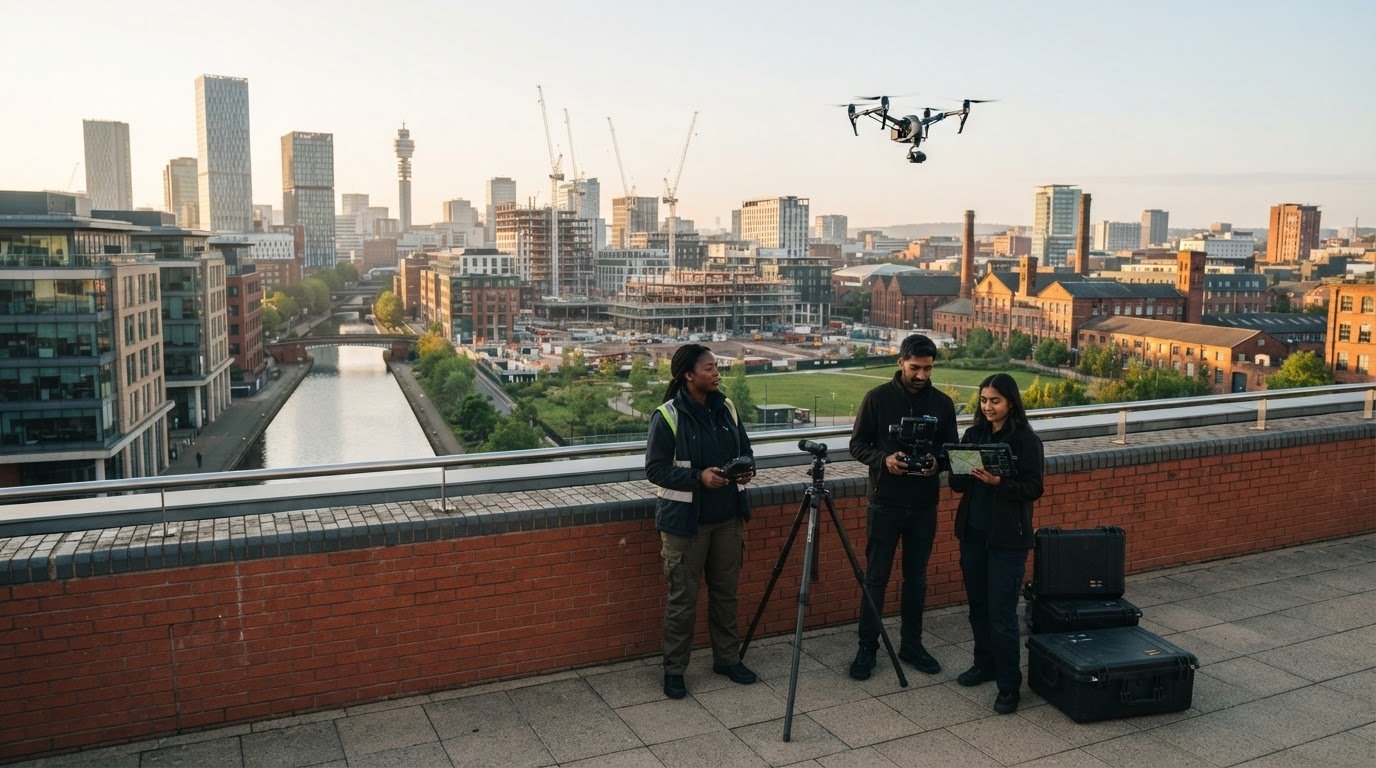
The most impressive aerial shot can still be the wrong choice for a corporate video. Effective corporate drone video production supports the message instead of distracting from it, and the right team needs to offer more than footage from the air. Permissions, site access, weather and safety planning can all affect what’s achievable on shoot day, so compare providers on their planning as well as their visuals.
This UK buyer’s guide explains how to compare providers on creative fit, technical capability and operational readiness before commissioning a shoot. You’ll learn what to ask about the brief, flight planning and relevant CAA credentials, and how to distinguish a drone operator from a team that can manage filming through editing and post-production. You’ll also find practical ways to assess whether aerial footage serves your business objective, identify risks to discuss in advance and create a clear process from consultation to final delivery.
Key Takeaways
- Assess whether aerial footage will help show a site, communicate scale or support a campaign, rather than simply add spectacle.
- Understand the steps from brief and feasibility checks through filming, review, editing and delivery. Prepare the details your provider will need.
- Compare corporate drone video production providers on creative approach, service scope, credentials, insurance and post-production capability.
- Use a focused brief to clarify your objective, audience, locations, stakeholders and intended channels before requesting proposals.
- Consider how coordinated project management can support delivery. Impact Aerial is based in Birmingham and the West Midlands and serves projects across the UK.
What corporate drone video production can add to a business film
Corporate drone video production is aerial filming planned around a business communication objective. The camera’s height or movement isn’t the objective in itself. A useful shot might show how a facility sits within its surroundings, clarify the scale of a construction project, introduce a location before an interview or provide a distinctive view for a campaign.
Start with what viewers need to understand, then choose aerial coverage that helps communicate it. A site overview can clarify layout, while a wide establishing shot can orient viewers before ground-level footage or an interview. A dramatic pass with no connection to the message may look polished but add little to the film. Ask the provider to explain the purpose of each priority shot.
For a practical introduction to drone filming and composition, watch this video:
When aerial footage supports a corporate objective
Name your audience and the action you want them to take, such as understanding a development’s footprint, recognising a site’s setting or engaging with a campaign. Then decide which view would help them. A site overview may suit a project update where layout matters, while an establishing shot can place an interview in context. Ask the provider to link each planned shot to a purpose and intended use, rather than relying on a general promise of attractive footage.
This discussion also supports practical planning. Site access, surroundings and applicable requirements can affect what can be filmed. For general background, see this overview of UK drone regulations, then discuss the specific arrangements for your proposed shoot with the provider.
Standalone drone footage or a complete corporate film?
Standalone aerial footage may suit a business that already has an editor or production team. If that’s your plan, agree the required shots, footage format, handover method and other delivery specifications in advance. Don’t assume that filming automatically includes editing or a finished film.
If you need the concept, filming and editing coordinated, ask whether the provider can manage the wider production. Aerial footage can contribute to a corporate film, but it isn’t automatically a substitute for one. Specify whether you need selected clips or an edited film, where the footage will appear and what brand requirements the final delivery must meet. A clear scope helps the provider recommend relevant coverage instead of adding aerial shots for novelty.
How corporate drone video production moves from brief to edited footage
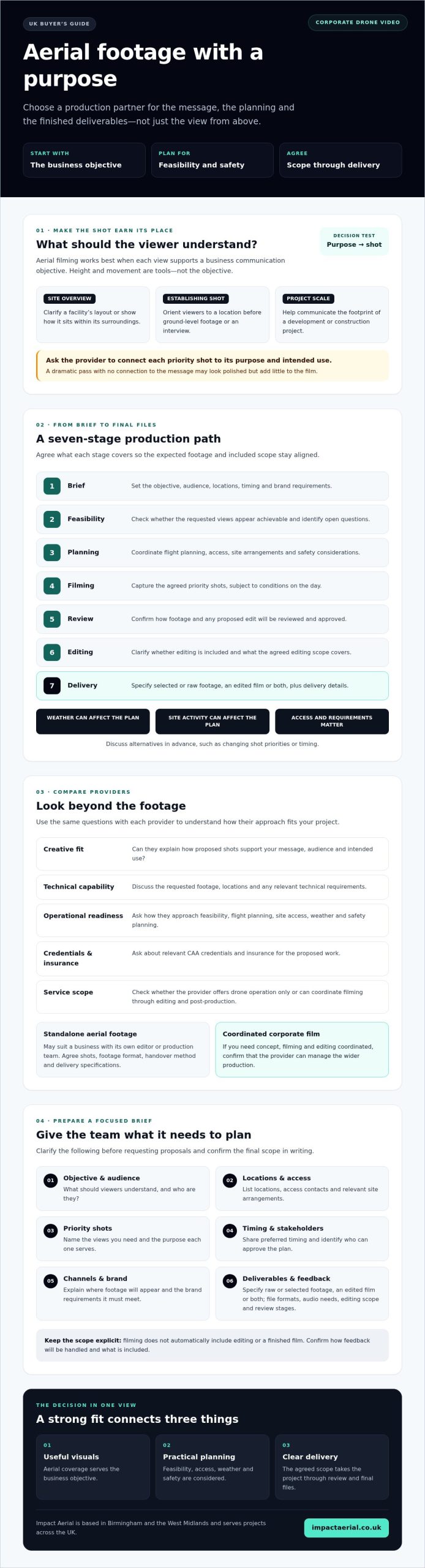
A clear workflow connects the business objective to the final files. Corporate drone video production typically moves through seven stages: brief, feasibility, planning, filming, review, editing and delivery. Agree what each stage covers so there’s no gap between the footage you expect and what the provider has included in the scope.
Share the project objective, intended viewers, locations, access contacts, preferred timing and brand requirements at the outset. The provider can then assess whether the requested shots appear feasible and identify questions about site access, location constraints or operational requirements. Weather and activity on site can affect the plan. Discuss alternatives, such as changing shot priorities or timing, instead of assuming every planned view will be possible on the day.
What to agree before the filming day
Before filming, confirm the key message, distribution channels and action you want viewers to take. List the locations and priority shots, identify who can arrange access and name the person responsible for approving the plan. This gives the production team a practical route from the creative brief to site arrangements.
Put the expected deliverables in writing. Specify whether you need raw or selected footage, an edited film or both. Note preferred file formats, editing scope, audio needs, brand requirements and how feedback will be handled. Clarify how many review stages are included in the agreed scope, rather than assuming every provider follows the same process.
What happens during filming and post-production
On the day, the team should check the agreed location and coordinate with your site contact before filming begins. A safety-led plan helps determine which shots are appropriate in the conditions and how filming can work around site activity. If access, weather or another constraint changes what’s practical, the team can discuss priorities with the client contact.
After filming, selected aerial shots can be combined with ground footage, interviews or graphics when these are part of the agreed project. During review, provide consolidated feedback from the relevant stakeholders to keep revisions focused on the brief. Before work begins, confirm the final formats, delivery method, editing scope and review arrangements. These details depend on the project agreement and shouldn’t be assumed.
Impact Aerial manages projects from consultation through editing and post-production. If you’re preparing a brief, you can discuss your corporate filming brief and clarify the footage and delivery scope you need.
How to compare corporate drone video production providers
Compare providers against the same criteria, not just their most impressive showreel or drone specifications. A capable pilot may deliver well-framed aerial footage, while a wider production team may also plan the story, coordinate filming and manage editing. Decide which level of service your brief needs, then ask each provider for clear evidence of their approach and deliverables.
Use this framework to compare proposals consistently:
| Area | What to ask | What to assess |
|---|---|---|
| Creative approach | How will the proposed shots support our message and audience? | Look for a clear link between shot choices and the business objective, not aerial spectacle for its own sake. |
| Service scope | Who handles planning, filming, editing and project communication? | Check whether the proposal covers standalone footage or a wider film, and what work is excluded. |
| Credentials and operations | What current pilot qualifications and operational documents are relevant to this project? | Ask how the provider will assess the proposed location and confirm any applicable permissions and requirements. |
| Insurance | Can you confirm your current cover and provide the relevant details? | Check that the documentation and cover are appropriate for your project requirements. |
| Delivery | What files, edits and review arrangements are included? | Compare formats, editing scope, feedback process and suitability for your intended channels and future reuse. |
Which credentials and safety questions should a buyer ask?
Request evidence of current pilot qualifications and ask what operational documentation will inform the proposed work. Confirm insurance details rather than relying on a general claim. Location-specific permissions and requirements can affect whether planned filming is feasible, so ask who will check them and how any constraints will be communicated. Verify current UK CAA requirements for the specific operation before filming. Credentials support due diligence, but don’t assume they guarantee approval for a particular flight.
How to assess creative and delivery fit
Review examples for deliberate framing, controlled movement and consistency, then consider whether the style suits your audience. Ask who develops the shot plan, operates the drone, edits the footage and manages communication. Equipment specifications matter only when they suit the requested shots and final outputs. A camera feature alone doesn’t establish creative or production fit.
Aerial footage adds value when it makes a business message easier to understand, such as by showing a site’s layout or giving viewers useful context. If a proposal focuses on dramatic movement without explaining its purpose, ask how those shots serve the brief. Compare the deliverables with where the film will appear, whether accessibility elements such as captions are required and whether you need files for later reuse.
What to include in a corporate drone video production brief
A clear brief helps a production provider connect your business objective with suitable footage, practical planning and final deliverables. It also gives stakeholders a shared reference when comparing proposals. Use this checklist to prepare the essentials, and flag anything you’re unsure about for discussion.
- Objective and audience: What should the film communicate, who needs to see it and what should viewers do next?
- Locations and access: List each site, a named access contact, access arrangements and any timing or operating-hour limits.
- Site activity and constraints: Note active work, people or vehicle movements, sensitive areas, known location concerns and other filming restrictions.
- Stakeholders: Identify who will coordinate on site, provide approvals and consolidate feedback.
- Creative direction: Share brand guidance, reference films, key messages and any required call to action.
- Shot priorities: Separate must-have aerial shots from optional ideas. Include any interviews, voice-over, music or ground-camera footage the project may need.
- Use and delivery: Specify intended channels, required formats, editing scope, review process and whether you may reuse the footage later.
The creative information your production team needs
Give the provider enough context to make creative choices with purpose. A site overview intended to explain a location may need different coverage from a short campaign film designed to introduce a project. Reference films can communicate pace and style, but explain which elements matter so they aren’t treated as instructions to copy. Clear priorities help the team distinguish essential shots from ideas that could be adjusted if conditions change.
The practical information that prevents avoidable delays
Name the site contact and clarify who handles access and stakeholder approvals. Share timing restrictions, active-site considerations and known location concerns early so feasibility and planning can account for them. Review current UK drone filming guidance and CAA information relevant to the proposed work, then ask the provider how location-specific requirements will be checked. A guide provides context, but doesn’t confirm that a particular flight is suitable or approved.
Before commissioning, make sure the brief describes the finished output as well as the filming. State whether you need footage for an existing editor or an edited film, for example, and explain how it will be used. These details help providers propose a scope that matches your needs rather than leaving key decisions until after filming.
Ready to turn your requirements into a production brief? Discuss your aerial filming brief with Impact Aerial.
Why consider Impact Aerial for corporate drone video production
Choosing a provider means looking beyond the aircraft and camera. Impact Aerial is based in Birmingham and the West Midlands, with aerial filming and photography available for projects across the UK. Its project management covers the process from initial consultation through editing and post-production. This may suit businesses looking for one coordinated point of contact for aerial footage and its final delivery.
A UK production partner with technical and operational credentials
Impact Aerial uses CAA GVC-certified pilots, commercial-grade drones with 4K HDR cameras and £5m commercial liability insurance. These details can support your supplier checks, but they don’t guarantee approval for a particular flight or location. Ask to review current qualification and insurance documentation, and discuss project-specific requirements before filming is agreed.
Equipment should fit the brief. A 4K HDR camera may be relevant to the intended footage and output, but the provider should confirm that the proposed setup suits your shots, location and delivery needs. Compare the provider’s aerial filming and post-production scope with the other professional drone services relevant to your project, rather than treating technical specifications as the whole evaluation.
Agree the next steps for your corporate video
For an initial consultation, prepare the details that will help the team assess your project: the business objective, audience, locations, preferred timing, access arrangements and requested deliverables. Include brand requirements and explain whether you need standalone aerial footage or editing and post-production too. This gives both sides a practical starting point for discussing scope.
Project feasibility depends on the specific location and requirements. Discuss site access, known constraints and the proposed filming plan before confirming the work. Impact Aerial can then consider how its aerial filming and post-production capabilities align with the brief. Any flight requirements should be assessed for the individual project.
To discuss your requirements, discuss your corporate drone video project with Impact Aerial.
Make your next filming brief count
Strong corporate drone video production starts with a business objective, not a shot list. Define what your audience needs to understand, then compare providers on creative fit, project scope, operational planning and deliverables. A clear brief covering locations, access, timing, stakeholders and intended use gives the production team a practical basis for assessing the work.
Impact Aerial is based in Birmingham and the West Midlands and serves projects across the UK, with project management from initial consultation through post-production. The company uses CAA GVC-certified pilots and holds £5m commercial liability insurance. Ask to confirm current qualification and insurance documentation, and discuss the requirements of your specific project before filming is agreed.
Share your objectives, locations, access details and requested deliverables to explore whether the service fits your needs. Discuss your corporate drone video project with Impact Aerial and take the next step with a clear, considered brief.
Frequently Asked Questions
What is corporate drone video production?
Corporate drone video production is planned aerial filming designed to support a business communication objective. It can show a site’s layout, illustrate the scale of a project, introduce a location or contribute footage to a campaign. The aerial shots may be delivered as standalone footage for an existing production team or edited into a wider film. Define the audience, message and intended use in the brief before shot planning begins.
How do I choose a corporate drone video production company?
Compare providers on creative fit, service scope, operational readiness and delivery. Review relevant footage for framing, movement and suitability for your audience, then ask who handles planning, filming, editing and communication. Request details of current pilot qualifications, relevant operational documentation and insurance, and clarify who checks project-specific requirements. Confirm the deliverables, formats and review process in writing. A strong proposal should explain how planned shots serve your business message.
Do I need a CAA-qualified drone pilot for corporate filming in the UK?
Requirements depend on the proposed operation, location and applicable UK Civil Aviation Authority rules, so there isn’t one qualification answer for every shoot. Ask the provider which current pilot qualifications and operational documents are relevant to your specific filming plan, and how location requirements will be checked. A qualification alone doesn’t guarantee permission or approval for a particular flight. Confirm current requirements and any project-specific permissions before filming is agreed.
Can drone footage be used in a corporate video without other filming?
Yes, if aerial footage alone meets the communication objective and your chosen format. It can work for a site overview or a visual introduction, for example, but it may not provide the interviews, detail or context needed for every corporate film. Decide whether you need standalone clips for an existing editor or a finished, edited film. Confirm the provider’s scope and deliverables rather than assuming aerial filming includes a complete production.
What should I include in a corporate drone video brief?
Include the business objective, intended audience, key message, locations and distribution channels. Name the site contact and explain access arrangements, timing restrictions, active-site considerations and known location concerns. Share brand guidance, reference films, must-have shots, optional ideas and any interview or ground-footage requirements. Also specify editing scope, preferred file formats, review responsibilities and intended reuse. These details help the provider assess feasibility and propose relevant deliverables.
How much does corporate drone video production cost?
There isn’t one standard price for corporate drone video production. A quote will depend on the project scope, including the locations and filming time involved, operational requirements, equipment suitability and whether editing or broader post-production is needed. Request an itemised proposal that explains what’s included, what’s excluded and how additional requirements would be handled. This makes it easier to compare providers on deliverables and production scope, not just the headline figure.
How long does a corporate drone video project take?
Project timing varies with the brief, site access, feasibility checks, filming requirements and editing scope. Weather or site activity may also affect the filming plan, while review and approval arrangements influence final delivery. Ask the provider to outline the stages from initial consultation and planning through filming, review, editing and delivery, with expected timings for your specific project. Share any fixed campaign or publication dates early so they can be considered during planning.
 2 Norton Drive, Wythall, Birmingham, B47 6HH Company registration number: 11138586. VAT Number: 366 9068 55