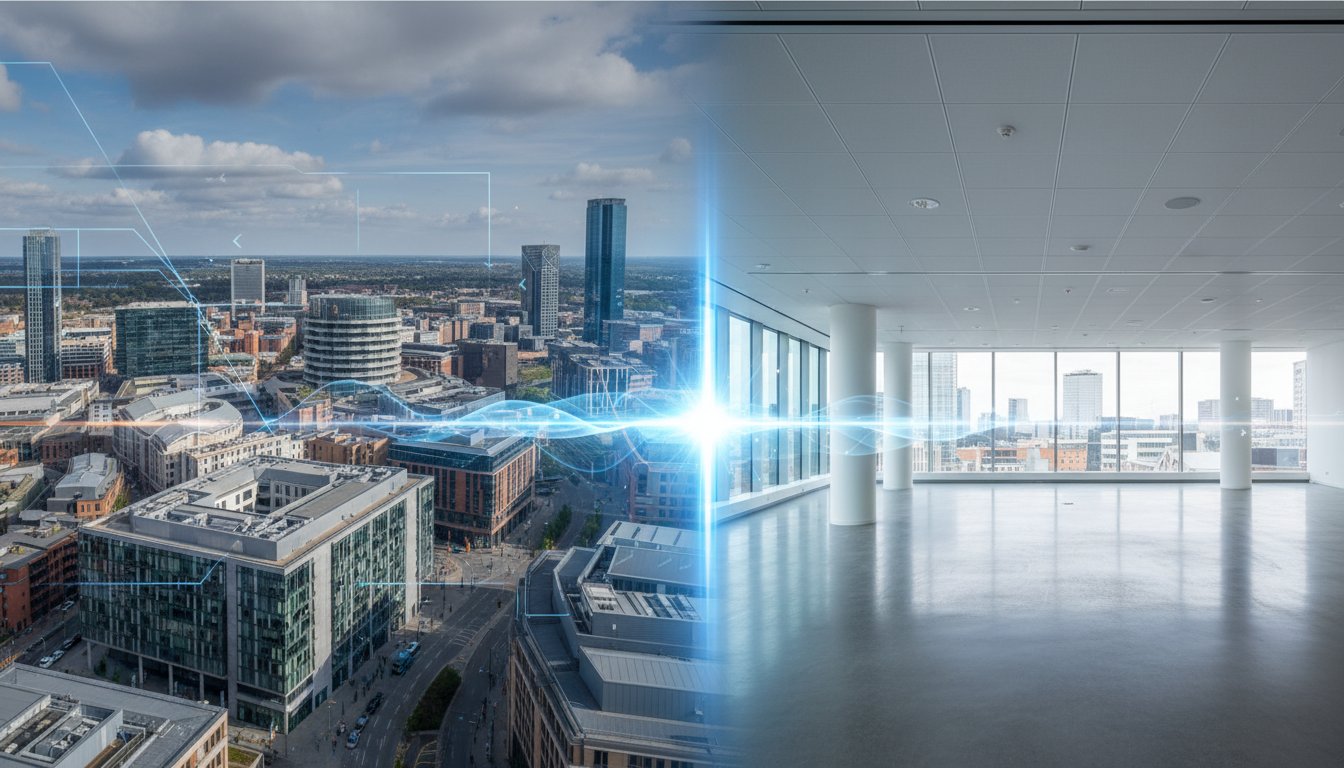
Did you know that properties featuring immersive digital twins sell for up to 9% more and close 31% faster than those relying on static imagery? In a competitive 2026 market, the frustration of hosting unqualified leads or absorbing the high cost of physical viewings is a constant drain on development margins. You likely recognize that digital-first marketing is no longer optional, yet you need hard data to justify the spend. Understanding the roi of virtual tours for property sales involves more than just counting clicks; it’s about the “Aerial-to-Interior” continuity that qualifies a buyer before they ever set foot on-site.
This guide provides the measurable financial framework you need to calculate the exact return on investment for your next listing. We’ll examine why 75% of potential buyers now prioritize virtual tours in their decision-making process and how drone-integrated tours significantly reduce time-on-market. You’ll gain a clear breakdown of professional scanning costs, FAA Part 107 compliance requirements, and the specific metrics that drive higher final sale prices through deeper emotional engagement.
Key Takeaways
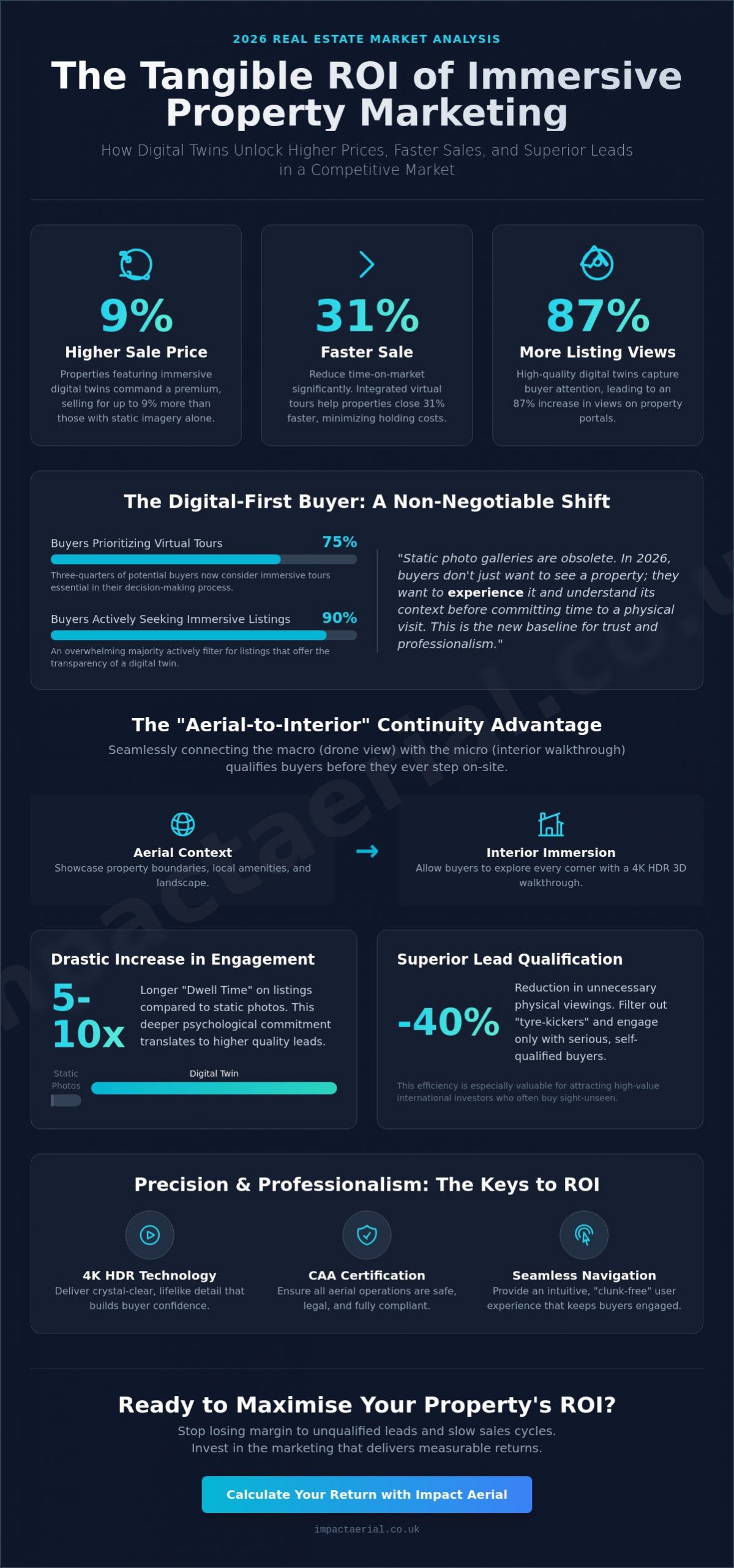
- Learn why 75% of buyers now consider immersive content essential and how this shift dictates market competitiveness in 2026.
- Analyze the data behind the roi of virtual tours for property sales, including how high-quality digital twins increase listing views by 87%.
- Discover how “Aerial-to-Interior” continuity qualifies leads by providing critical context on local amenities and property boundaries.
- Follow a structured framework to calculate your financial return by quantifying direct savings on physical viewings and marketing spend.
- Understand why professional 4K HDR technology and CAA certification are vital for ensuring the precision required for a positive ROI.
The Digital-First Property Market: Why Virtual Tours are Non-Negotiable in 2026
By 2026, the real estate market has moved past the era where basic photo galleries suffice. A modern virtual tour is no longer just a series of stitched photos; it’s a sophisticated “digital twin” that integrates high-resolution 3D walkthroughs with expansive aerial context. For property professionals, understanding the roi of virtual tours for property sales in this modern context is essential for survival. Research indicates that 90% of buyers now actively prioritize listings that offer this level of immersion, seeing it as a baseline for transparency and professionalism. They don’t just want to see the property; they want to understand how it sits within its environment.
To see how these digital walkthroughs function in a real-world sales environment and provide the clarity buyers demand, watch this breakdown:
This technology has evolved from a marketing novelty into a critical tool for calculating the roi of virtual tours for property sales. Developers can now set an immediate hook using professional drone photography to capture the surrounding landscape before transitioning the viewer into the interior space. This seamless continuity builds a narrative that static images simply can’t achieve. If you are still asking what is a virtual tour, the answer in 2026 is that it’s your most powerful lead-qualification asset.
The Death of the Static Listing
Relying on 2D photos alone is a high-risk strategy. Data shows that listings without immersive content suffer from significantly higher bounce rates on property portals. This is largely due to “spatial presence,” a psychological state where the buyer feels they’ve physically entered the property. Without this, trust is harder to establish. Virtual tours effectively eliminate “viewing fatigue” by allowing serious buyers to explore every corner of a floor plan at their own pace. This ensures that when they do request a physical visit, their intent is already high.
Lead Qualification at Scale
One of the most immediate financial benefits is the ability to filter out “tyre-kickers” early in the sales funnel. Digital walkthroughs allow prospects to self-qualify, which has been shown to reduce unnecessary physical viewings by up to 40% in some commercial developments. This efficiency is particularly valuable for attracting international investors. These high-value clients often buy sight-unseen, relying entirely on the precision of a digital twin to make multi-million pound decisions. By providing technical accuracy, you’re providing the data-driven confidence required for a swift transaction.
Measuring the Tangible ROI: Engagement, Sales Velocity, and Lead Quality
Calculating the roi of virtual tours for property sales involves analyzing three distinct performance indicators: dwell time, transaction speed, and lead conversion. By 2026, buyers have become accustomed to high-fidelity digital twins. They no longer accept low-resolution or “clunky” navigation. When a listing provides a seamless 3D experience, the data shows a significant surge in engagement. Specifically, listings with professional 3D tours retain visitors for 5 to 10 times longer than those with static images. This extended “time-on-page” isn’t just a vanity metric. It represents a deeper psychological commitment to the property.
Sales velocity is the second pillar of a successful return. Research from early 2026 confirms that properties utilizing immersive tours sell up to 31% faster. This reduction in “Days on Market” (DOM) is critical for commercial developers. It minimizes interest payments on construction loans and frees up capital for the next project. When a property moves quickly, it maintains its “premium” status. It avoids the price-drop cycle that often plagues listings that sit idle for too long. If you want to see how these timelines can be compressed for your own listings, you might explore our technical post-production services to ensure your assets are optimized for speed.
Hard Data: What the Numbers Say
The conversion gap between static and immersive listings is widening. High-intent buyers are significantly more likely to click on a listing that features a virtual walkthrough. Lead Quality is the ratio of digital views to physical offers. By using a virtual tour as a primary filter, you ensure that every physical viewing is conducted by someone who has already “vetted” the layout. This efficiency allows agents to focus their energy on closing rather than basic site tours. The cost of a professional scan is often recovered by the time saved in just three avoided physical viewings with unqualified prospects.
Soft ROI: Brand Authority and Trust
Beyond the immediate sale, there’s a “Transparency Bonus” that builds long-term brand equity. Showing every corner of a development demonstrates a lack of hidden flaws. It positions your firm as a market leader that values data-driven honesty. Utilizing professional drone services to provide the initial aerial context further reinforces this image of professionalism. These assets don’t just sell one unit; they sell the credibility of your entire brand. This multiplier effect ensures that the content you create for one portal can be repurposed across social media and email campaigns with identical high-performance results.
The Aerial Advantage: Why Drone-Integrated Tours Maximise Value
A virtual tour that stops at the front door is a half-finished story. In the 2026 property market, buyers demand a comprehensive understanding of a property’s ecosystem before they commit to a physical viewing. If you only provide an internal walkthrough, you leave the most critical question unanswered: what does the surrounding environment look like? The roi of virtual tours for property sales increases significantly when you bridge the gap between the interior layout and the external context. By integrating high-resolution aerial views, you provide the “spatial logic” that static floor plans or isolated 3D scans cannot convey.
The initial hook is often emotional, driven by the cinematic “wow factor” of a 4K HDR drone approach shot. This isn’t just about aesthetics; it’s about establishing the lifestyle and location value immediately. Utilizing a professional aerial filming drone allows you to showcase local amenities, transport links, and neighborhood density in a single, fluid motion. When this footage is embedded directly into the virtual tour interface, the viewer experiences a seamless transition from a bird’s-eye view to a kitchen-counter perspective. This continuity builds a level of trust that directly influences the final sale price.
From Micro to Macro: The Full Property Story
For large-scale developments or rural estates, the aerial perspective is a logistical necessity. Drones enable the creation of “Digital Twin” site surveys long before construction is finalized, allowing investors to visualize the finished project in situ. This data-gathering capability assists in commercial property valuations by providing an objective view of land boundaries and surrounding acreage—details that are crucial for high-net-worth clients who may require helipad space or proximity to private hangars when using FlyEliteJets. Whether it’s highlighting the exact perimeter of a 50-acre estate or showing the proximity of a commercial unit to a major motorway, the aerial context provides the technical clarity that serious investors require to move forward.
Technical Synergy: Drones and 3D Scanning
The most effective roi of virtual tours for property sales comes from the technical synergy between photogrammetry and internal scanning. Photogrammetry uses overlapping aerial images to create accurate 3D models of entire estates, which can then be linked to internal walkthroughs. By incorporating data from a survey drone, you provide a layer of precision that reassures buyers about the structural and environmental integrity of the site. This level of detail, captured in 4K HDR, signals a premium project and justifies a higher asking price. It transforms a simple marketing asset into a comprehensive technical dossier that streamlines the entire due diligence process.
Calculating Your Return: A Framework for Property Professionals
Calculating the roi of virtual tours for property sales requires you to look beyond the initial production cost. A comprehensive framework accounts for three specific layers of financial impact. First, identify your direct operational savings. By reducing physical viewings by approximately 40%, you save on agent travel, site staffing, and high-end print brochures that often become obsolete before a sale is finalized. Second, quantify your marketing efficiency. In 2026, social media algorithms prioritize immersive 3D content, leading to a significantly lower Cost Per Lead (CPL) compared to static ad sets.
The third and most impactful layer is “Velocity Value.” This metric represents the financial gain of closing a transaction sooner. If a virtual tour helps you secure a buyer 21 days earlier than average, you’ve effectively reduced three weeks of holding costs, interest payments, and council tax. To simplify this, we use the 2026 ROI Formula: (Sale Premium + Operational Savings) / Production Investment. This calculation provides a clear percentage that justifies the use of professional digital assets to stakeholders and investors alike.
A Practical Example: Commercial vs Residential
Scalability is a key factor, as the roi of virtual tours for property sales often increases alongside property value. For a £500,000 residential listing, a 9% price premium adds £45,000 in value. For a £5 million commercial development, that same 9% represents a £450,000 gain. While the production cost for the commercial tour might be higher due to the complexity of the site, the percentage return on investment is significantly greater. It’s vital to remember that the production cost is a one-time fee for a perpetual asset that works 24/7 across every digital platform.
Hidden ROI: Risk Mitigation
There’s a secondary layer of return found in legal and operational security. High-fidelity 3D scans and aerial data act as a definitive “Visual Record” for insurance purposes or potential dispute resolution. Ensuring your provider holds a valid drone license is non-negotiable for compliance and liability protection. This meticulous approach reduces the risk of “misrepresentation” claims, as the buyer has been provided with a technically accurate digital twin of the property. For added peace of mind regarding your next project, you can contact our technical consultants for a bespoke quote.
Maximising ROI with Impact Aerial: Professionalism and Peace of Mind
Attempting a “DIY” approach with consumer-grade 360 cameras often leads to a negative return. A grainy, poorly lit 3D scan does more than just fail to impress; it actively damages buyer trust. Securing a positive roi of virtual tours for property sales requires a level of technical precision that off-the-shelf equipment cannot provide. Impact Aerial utilizes the latest 4K, High Dynamic Range (HDR) DJI Enterprise commercial drones and professional-grade scanning hardware to ensure every pixel serves a purpose. These tools capture the fine details that high-net-worth investors look for, from the texture of premium finishes to the structural integrity of a commercial facade.
Our meticulous approach extends beyond the camera lens. Every aerial operation is conducted by CAA GVC Certified pilots who possess a deep understanding of current UK flight regulations. This compliance isn’t just about safety; it’s about protecting your project from legal complications and fines. For added peace of mind, we provide £5 million in commercial liability insurance as standard. This level of officialdom signals to your stakeholders that you aren’t just hiring a creative agency, but a technical consultancy that values industry standards and operational security.
Post-Production Excellence
The raw data is only the beginning. Our post-production services transform standard scans into high-performance marketing assets. We focus on increasing the emotional resonance of each tour through professional color grading and lighting optimization. By adding interactive hotspots, we allow you to highlight technical property features that aren’t visible to the naked eye. This includes calling out underfloor heating systems, solar panel specifications, or high-spec insulation. We ensure every tour is fully optimized for a seamless experience across mobile devices, desktops, and VR headsets.
Your Next Steps to Enhanced Property ROI
Achieving the best roi of virtual tours for property sales starts with matching the right technology to your specific asset type. A residential listing may benefit most from a cinematic walkthrough, while a large-scale commercial asset requires the precision of a vetted drone survey to provide a technical baseline for valuation. Our team works directly with you to identify the most effective visualization strategy for your development, ensuring the final product aligns with your financial objectives.
We invite you to contact Impact Aerial today for a bespoke property visualisation quote. Let us help you set a new standard for your listings and secure the measurable financial returns your project deserves.
Future-Proofing Your Property Marketing Strategy
The transition to immersive property technology is no longer a trend; it’s a fundamental shift in how high-value assets are traded. By integrating 3D walkthroughs with cinematic aerial context, you address the 90% of buyers who now prioritize listings with digital twins. This approach doesn’t just improve engagement; it provides a measurable roi of virtual tours for property sales through a 31% reduction in time-on-market and a potential 9% price premium. Relying on verified data and technical precision ensures that your marketing spend translates directly into operational efficiency and faster capital recycling.
Impact Aerial provides the expert oversight needed to execute these complex visual projects safely and effectively. Our fleet of 4K HDR DJI Enterprise drones is operated by CAA GVC Certified pilots, ensuring full regulatory compliance for every flight. For added peace of mind, we maintain £5 million in commercial liability insurance as standard. This commitment to professional standards ensures your property is showcased with the highest level of detail and technical accuracy.
Maximise your property’s ROI; book a professional virtual tour consultation with Impact Aerial today and set a new standard for your next listing.
Frequently Asked Questions
What is the average cost of a professional virtual tour in the UK?
Industry data from early 2026 indicates that professional scanning for standard commercial properties typically ranges from £400 to £1,600. For large-scale venues or complex industrial sites, costs can range from £1,600 to over £4,000. These figures reflect the technical precision required for a positive roi of virtual tours for property sales. The investment is usually recovered through reduced marketing spend and faster transaction speeds.
How much faster do properties sell with a 3D virtual tour?
Research confirms that properties featuring immersive tours sell up to 31% faster than those relying on static imagery. This increased velocity is driven by the fact that 75% of buyers now prioritize listings with virtual content. By providing a digital twin, you compress the decision-making timeline for high-intent prospects. This efficiency minimizes holding costs and interest payments for developers and commercial owners.
Do I need a virtual tour for lower-priced properties, or is it only for luxury homes?
Virtual tours provide significant value for properties at all price points by reducing the operational overhead of physical viewings. Even for lower-priced listings, the ability to filter out unqualified leads saves hours of agent time and travel expenses. Data shows that high-quality professional photos and tours can increase the final sale price per square foot by up to 47% regardless of the initial valuation.
Can virtual tours be integrated with Rightmove and Zoopla?
Virtual tours integrate seamlessly with major UK portals like Rightmove and Zoopla through dedicated media fields. These platforms prioritize listings with immersive content, ensuring they’re prominently displayed to millions of monthly visitors. Listings that include a 3D walkthrough typically receive 87% more views than standard listings. This increased visibility is a core component of achieving a high roi of virtual tours for property sales.
What is the difference between a 360 tour and a 3D digital twin?
A 360 tour consists of stitched panoramic images, while a 3D digital twin utilizes spatial data to create a technically accurate model. Digital twins allow for precise measurements and a “dollhouse” perspective that reveals the property’s entire layout. This depth is essential for commercial assets where structural context and technical specifications are priorities for investors and surveyors. It moves the asset from a simple visual aid to a data-rich tool.
How do drone shots improve the ROI of an internal virtual tour?
Aerial shots provide the macro context that internal tours cannot offer alone, such as land boundaries and proximity to transport links. This “Aerial-to-Interior” continuity builds buyer trust by showing the property’s exact position within its environment. For international investors, this external context is often the deciding factor in making an offer sight-unseen. It qualifies the lead more effectively than interior walkthroughs could do in isolation.
Is it worth creating virtual tours for commercial property or just residential?
Commercial assets often realize a higher roi of virtual tours for property sales because the financial stakes and holding costs are greater. For a £5 million development, a small percentage increase in the final sale price represents a significant capital gain. Additionally, virtual tours serve as a permanent technical record for insurance purposes and due diligence. This reduces the risk of misrepresentation claims during complex commercial transactions.
What happens if the weather is bad for the drone filming portion of the tour?
We prioritize safety and CAA compliance; therefore, we don’t fly in adverse weather conditions like heavy rain or high winds. If the forecast is unsuitable, we reschedule the aerial portion for the next clear window at no additional cost to the client. This ensures we maintain the high-quality 4K HDR results required for professional marketing. Our pilots always monitor weather data to provide added peace of mind during the planning phase.
 2 Norton Drive, Wythall, Birmingham, B47 6HH Company registration number: 11138586. VAT Number: 366 9068 55