
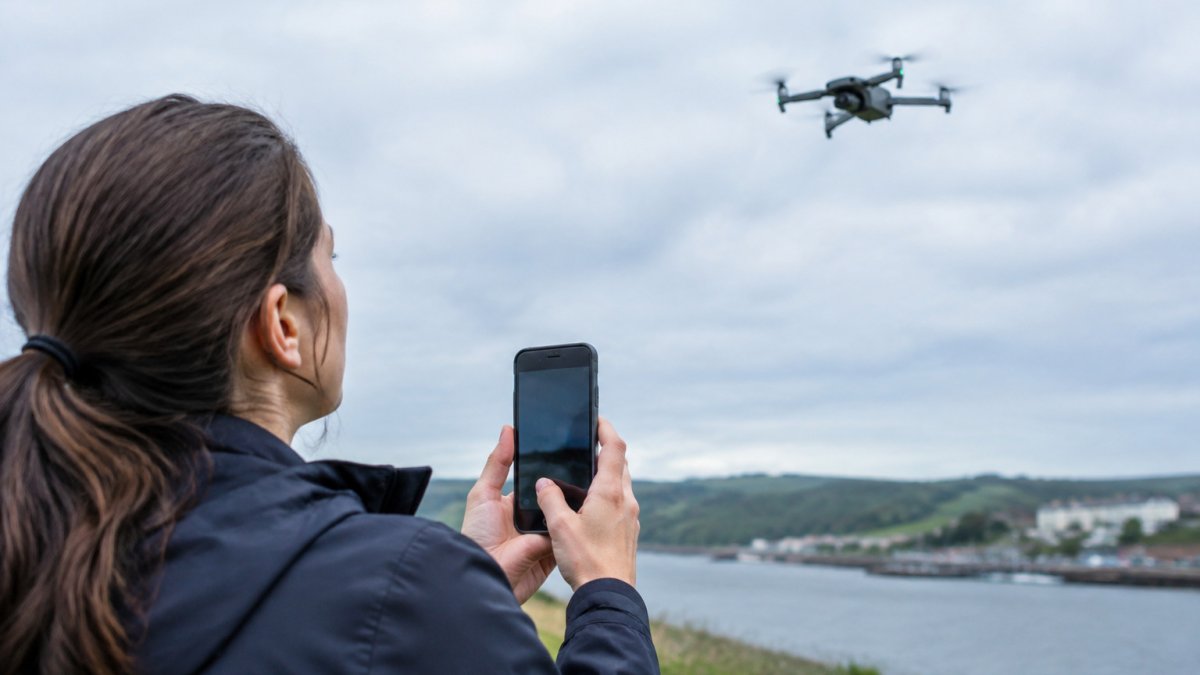
Quick Summary
To report illegal drone flights in the UK, call 999 if someone is in immediate danger or a crime is in progress, and 101 for suspicious or non-urgent concerns. Serious aviation safety incidents should go to the Civil Aviation Authority. Choose the route that matches the risk level.
- Call 999 only where there is immediate danger, a threat of violence, or a crime in progress.
- Use 101 or your local police online form for suspicious, unsafe or possibly unlawful flights, and ask for a reference number.
- Report serious aviation safety incidents and near misses to the Civil Aviation Authority, checking its current form first.
- Record the date, time, exact location, drone description and what it did before you report.
- Do not report one incident to every organisation at once; start with the route matching the risk level.
Table of Contents
- Deciding Whether a Drone Flight Is Illegal or Just Unwelcome
- Choosing the Right Reporting Route: A Decision Tree
- When to Call 999 and When to Call 101
- Reporting a Potential Breach of Aviation Law to the CAA
- Drone Flying Over My House: What to Do Step by Step
- Evidence to Gather Before You Report Illegal Drone Use
- What Happens After You Report a Drone Flight
- Booking Professional Aerial Work You Can Trust
- Frequently Asked Questions
Deciding Whether a Drone Flight Is Illegal or Just Unwelcome
Not every drone over your head is breaking the law. Many flights are legal, even if they feel intrusive. Knowing the difference helps you choose the right response.
A drone flight becomes a concern when it breaks flying rules, puts people at risk, or involves criminal activity, and that is the point at which you should report illegal drone use. Flying over private land without permission may be a privacy issue rather than a crime, depending on what is recorded.
Unlawful flying versus a privacy or nuisance concern
Unlawful flying usually includes:
- Flying in restricted or prohibited airspace, such as near an airport
- Flying above or close to crowds without authorisation
- Flying at night without the required permissions
- Using a drone to film in a way that threatens someone’s safety
- Flying a drone to cause harm, damage or distress
A privacy or nuisance concern usually includes:
- A drone hovering near a window or back garden
- Recording footage of your home without consent
- Repeated flights that cause stress but break no clear flying rule
Document what you see before deciding. The category shapes which route to take.
Choosing the Right Reporting Route: A Decision Tree
Most people lose time because they are not sure which organisation should receive the report. Use this sequence to route it correctly the first time.
Step 1, Is anyone in immediate danger, or is a crime in progress?
Call 999. This covers a drone being flown at people, a drone interfering with an emergency response, a drone used to threaten or intimidate, or any situation where someone could be hurt now. Give the operator the location, what the drone is doing and where it is flying.
Step 2, Is the flight suspicious, unsafe or believed to be unlawful, but not an emergency?
Call 101 or use your local police force’s online reporting form. Police handle suspected offences such as flying in restricted airspace, flying close to crowds, or using a drone to commit a crime. Ask for a reference number so you can add evidence later.
Step 3, Is this a serious aviation safety incident or near miss?
Report it to the Civil Aviation Authority (CAA). The CAA regulates drone flying and wants to hear about airprox events, drones flown near airports or airfields, and flights that may have breached aviation rules. Use the CAA’s website to find the current reporting form before you submit.
Step 4, Is it a privacy or nuisance concern with no clear safety risk?
Start with 101 for advice, and keep a written log. If the issue is repeated intrusion over private property, your local council’s environmental health or community safety team may also be able to advise, though councils do not enforce aviation law.
Step 5, Do you need to report without giving your name?
Crimestoppers accepts anonymous reports about crime, including suspected criminal drone use. It is not an emergency route and should not be used where someone is at risk.
A common pattern is for a single incident to need more than one route: a call to 999 for the immediate risk, followed by a 101 report and a CAA submission once the situation is calm. Keep the reference numbers together.
Watch out: do not report the same incident to every organisation at once. Start with the route that matches the risk level, then add the others if the incident warrants it.
The article sets out which organisation to contact depending on how urgent and serious the flight is. The table below summarises the routes.
| Situation | Route | Key point |
|---|---|---|
| Immediate danger or crime in progress | 999 | Give location, what the drone is doing and where it is flying |
| Suspicious, unsafe or possibly unlawful, not an emergency | 101 or local police online form | Ask for a reference number |
| Serious aviation safety incident or near miss | Civil Aviation Authority (CAA) | Check the current reporting form first |
| Privacy or nuisance concern, no clear safety risk | 101 for advice, plus a written log | Councils do not enforce aviation law |
| Wish to report without giving your name | Crimestoppers | Not for situations where someone is at risk |
When to Call 999 and When to Call 101
Call 999 only when there is an immediate risk. That includes a drone threatening someone’s life, a threat of violence, or a crime in progress.
Call 101 for non-urgent reports. This covers suspicious flights, possible illegal flying or privacy concerns that need a police response.
Keep the call short. Give the location, time, what the drone did and whether anyone was at risk.
Reporting a Potential Breach of Aviation Law to the CAA
The CAA handles aviation safety and drone regulation in the UK. Report a potential breach of aviation law there when a flight may have broken UK rules.
Include these details in your report:
- The date, time and exact location of the flight
- A description of the drone and the operator, if visible
- What the drone was doing and why you think it broke the rules
- Any photos or video you safely captured
The CAA publishes guidance on concerns about drone safety, privacy and illegal flying. Check its website for the latest reporting options before you submit.
Drone Flying Over My House: What to Do Step by Step
If a drone is flying over your home, follow these steps:
- Stay calm and stay inside if needed. Do not confront the operator.
- Note the time, location and direction the drone came from.
- Record video safely from inside your home, if you can do so without risk.
- Call 101 to report suspicious or illegal flying, or 999 if there is immediate danger.
- Report to the CAA if you believe aviation rules were broken.
- Keep a log of every incident, including dates and times.
A written log helps police and the CAA see patterns, especially for repeat flights.
Evidence to Gather Before You Report Illegal Drone Use
A report is only as useful as the detail behind it. Work through this checklist from a safe position, ideally indoors or behind cover, and stop if collecting any item would put you at risk.
The basics
- Date and time of the flight, to the nearest minute if you can
- Duration, how long the drone was overhead or in view
- Exact location, including street name, postcode and a nearby landmark
- Direction of travel, where it came from and where it went
The drone
- Size and type, small hobby drone, larger commercial model, or fixed-wing
- Colour and any markings, including registration labels if visible
- Payload or attachments, such as a camera or spraying equipment
The operator
- Description of anyone seen holding a controller or watching the drone
- Vehicle details if someone nearby appears to be operating it, including make, colour and partial registration
- Whether the operator was in sight of the drone, this matters for line-of-sight rules
Supporting evidence
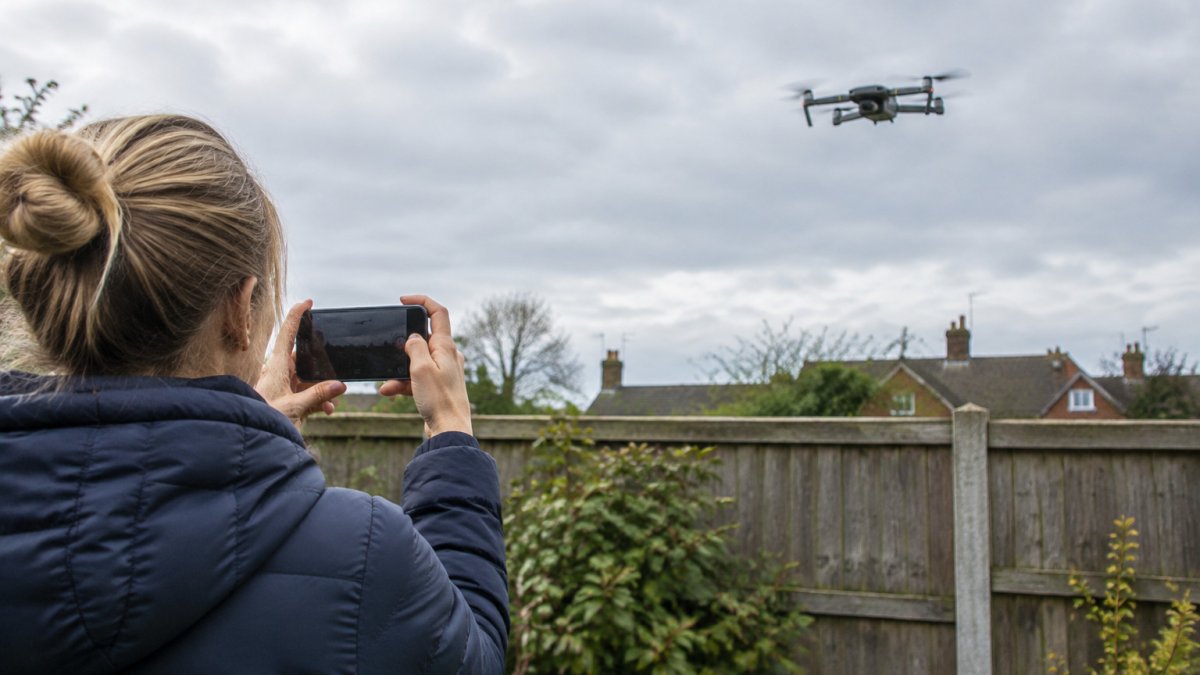
- Photos or video taken safely, ideally showing the drone against a recognisable background
- Witness details, such as neighbours who saw the same flight
- A written log of repeat incidents, with dates and times, which helps police and the CAA see a pattern
What not to do
Do not approach the operator, follow the drone, climb onto roofs, or attempt to interfere with the drone itself. Do not post footage publicly before reporting, as it can complicate an investigation.
How the evidence is used
Police and the CAA assess reports against evidence thresholds. A clear time, location and description is often enough to link a report to other intelligence, even if no single report leads to enforcement. Keep your reference number and add new evidence to the same report rather than starting a fresh one.
!A person indoors photographing a small drone through a window, with a notebook showing time and location details beside them
Watch out: a video that only shows a dot in the sky is rarely useful on its own. Aim to capture the drone, the background and, if possible, the operator in the same frame.
What Happens After You Report a Drone Flight
After you report, police or the CAA will assess the information you provided. They decide whether the flight needs investigation, advice or no further action.
Possible outcomes include:
- A police officer contacting you for more details
- Advice on how to prevent future flights
- Action against the operator, if an offence is confirmed
- No action, if the flight was lawful
Response times vary. Not every report leads to an investigation, so keep your records in case the problem continues.
Booking Professional Aerial Work You Can Trust
If you need drones used legitimately for your own projects, choose a qualified operator. At Impact Aerial, our pilots are fully trained and hold CAA GVC certification. We fly DJI Enterprise commercial drones and carry £5m commercial liability insurance.
Our services suit property marketing, construction monitoring and roof or gutter inspections. Hire a professional drone photographer in the UK can explain how to choose a licensed operator for your project. Book a professional drone survey in Manchester to see how a certified operator plans and safely carries out aerial work. Our team at Impact Aerial can explain how the process works before you commit. Read the UK buyer’s guide to professional drone services to compare the options available to you. Contact us to discuss your project. If you are weighing up costs, this guide to comparing outsourced and in-house drone inspection costs sets out the trade-offs.
Frequently Asked Questions
How do I report an illegal drone flight?
Contact your local police on 101 for most suspicious or illegal drone flights, and call 999 if someone is in immediate danger or threatened with violence. Give the location, date, time, and a description of the drone and operator where you can. Serious aviation safety concerns can also be reported to the Civil Aviation Authority. Keep your notes factual and avoid confronting the pilot yourself, as this can put you at risk.
Can I report a drone for invading my privacy?
Yes. If a drone is repeatedly filming into your home or garden, you can report it to your local police on 101. Privacy and nuisance concerns are different from unlawful flying, so explain clearly what the drone is doing and where it is positioned. Recording dates, times and what the footage appears to capture will help the police assess the complaint and decide what action is appropriate.
What should I do if a drone is flying over my house?
First, stay calm and check whether there is any immediate threat. If you feel unsafe, call 999. Otherwise, note the time, the drone’s behaviour, and any sign of the operator, then report it to the police on 101. Avoid trying to shoot down, grab or interfere with the drone, as this can be dangerous and may itself be unlawful.
Should I call the police about an illegal drone flight?
In most cases, yes. Local police are the usual first point of contact for suspicious or illegal drone flights, using the non-emergency number 101. Use 999 only where there is immediate danger to life or a threat of violence. The police can decide whether to involve the Civil Aviation Authority, so you do not need to make that judgement yourself.

 2 Norton Drive, Wythall, Birmingham, B47 6HH Company registration number: 11138586. VAT Number: 366 9068 55


