
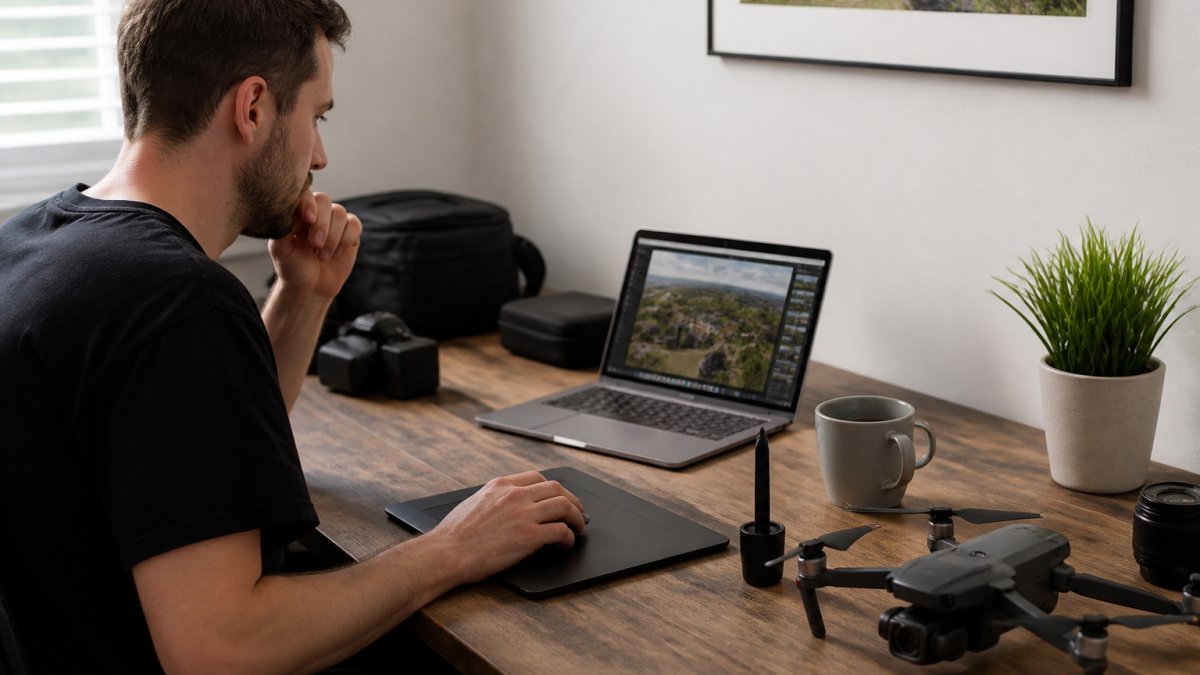
Last Updated: 24 October 2026
Quick Summary
How long does a drone virtual tour take to build depends on complexity. A simple 360-degree tour can be ready within hours, whilst a detailed 3D digital twin for a larger property may take several days, including editing and post-production work.
- A standard drone orbit flight takes 3 to 6 minutes and produces enough footage for a shareable full exterior 3D model
- Processing transforms raw footage into a usable virtual tour, typically taking 1 to 3 days depending on project complexity
- A typical aerial shoot session lasts 2 to 4 hours on site, though actual flying time is much shorter
- Custom editing and interactive features add 1 to 5 days to the overall timeline
- Pre-production planning typically takes 1 to 3 days and includes securing permissions and preparing the site
Table of Contents
- Understanding the drone virtual tour timeline
- What you’ll need before the shoot
- The aerial flight stage: drone 360 virtual tour capture
- Drone virtual tour processing time: from footage to finished tour
- Drone virtual tour turnaround time: what affects your delivery date
- The aerial virtual tour production process in detail
- Planning your drone virtual tour project with Impact Aerial
- Frequently Asked Questions
Understanding the drone virtual tour timeline
How long does a drone virtual tour take to build? The answer depends on what you’re creating. A simple 360-degree tour can be ready within hours. A detailed 3D digital twin for a larger property may take several days, including editing and post-production work.
The timeline breaks down into four main stages: pre-production planning, the aerial flight itself, processing the footage, and final delivery. Each stage has its own duration. Understanding these phases helps you plan your project and set realistic expectations with your team.
We’ve guided many clients through this process. The variables that affect your timeline include property size, complexity, weather conditions, and how much post-production editing you need. A straightforward exterior capture on a clear day moves faster than a complex multi-property project requiring detailed interior integrations.
What you’ll need before the shoot
Before your drone takes flight, preparation work is essential. This phase typically takes 1-3 days depending on your project scope.
Your first step is securing the right permissions. In the UK, drone operations are regulated by the Civil Aviation Authority (CAA) (Drones). You’ll need to understand airspace restrictions, obtain necessary permits, and ensure compliance with local regulations. The CAA’s drone operator guidance outlines the specific rules for commercial drone operations. Professional operators like Impact Aerial handle these compliance requirements, but it’s worth understanding what’s involved.
You’ll also need to prepare the site or property itself:
- Clear obstacles and hazards from flight paths
- Identify optimal camera angles and shot sequences
- Brief your team on safety protocols and timing
- Arrange site access and coordinate with property managers
- Check weather forecasts for suitable flying conditions
For more detailed guidance on UK regulatory requirements, explore how to get a drone filming permit in the UK to understand the full process before your shoot date.
Property owners should also prepare any specific areas they want highlighted. Marking these zones in advance saves time during the flight and ensures you capture exactly what matters most.
The aerial flight stage: drone 360 virtual tour capture
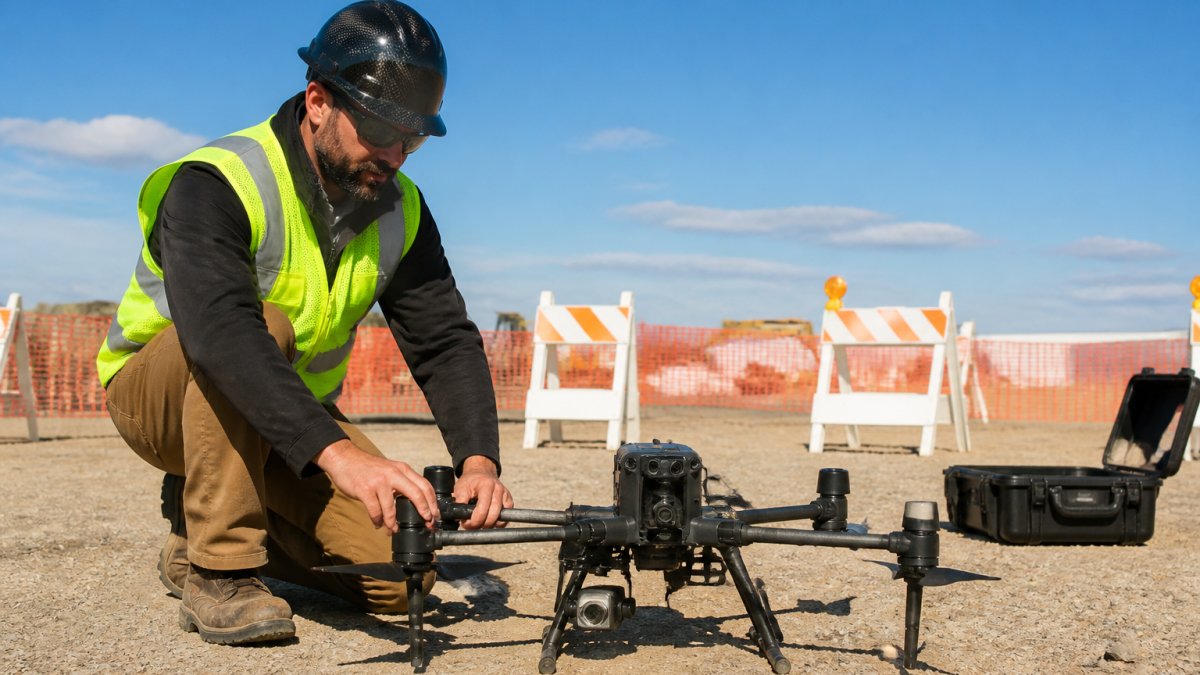
The actual flight is where your drone virtual tour takes shape. A standard drone orbit flight takes 3 to 6 minutes and produces enough footage to generate a shareable full exterior 3D model.
This stage includes several components. The pilot flies the drone in carefully planned patterns around your property or site. Multiple passes capture the structure from different angles and heights. The drone’s camera records high-resolution video or still frames depending on your tour type.
Weather plays a critical role here. Clear skies and calm winds speed up the process. Rain, high winds, or poor visibility can delay or postpone flights entirely. Most operators build in buffer days when scheduling shoots.
The flight itself is quick, but the setup takes longer. The pilot must:
- Perform pre-flight safety checks
- Position equipment and establish safe zones
- Coordinate with site personnel
- Adjust flight paths based on real-time conditions
- Capture multiple passes for comprehensive coverage
A typical aerial shoot session lasts 2 to 4 hours on site, though the actual flying time is much shorter. Most of this time goes to safety checks, positioning, and ensuring every angle is captured correctly.
Drone virtual tour processing time: from footage to finished tour
Processing transforms raw footage into a usable virtual tour. This stage typically takes 1 to 3 days depending on project complexity.
Raw footage needs several processing steps. First, the footage is imported and organised. The team then stitches multiple video frames or still images together to create a seamless 360-degree view. Colour correction and exposure balancing happen next to ensure consistent quality across all angles.
For 3D virtual tours, additional work includes depth mapping and model generation. Software analytically evaluates the footage to create a three-dimensional representation of the property. This process is more intensive than simple 360-degree stitching.
Basic editing and enhancement follows:
- Removing unwanted objects or temporary fixtures
- Adjusting brightness and contrast
- Adding sharpness and clarity
- Stabilising footage if needed
- Optimising file sizes for web delivery
The processing timeline depends on your tour’s complexity. A straightforward exterior tour processes faster than a multi-level property with interior spaces. Higher resolution output also takes longer to render and process.
Drone virtual tour turnaround time: what affects your delivery date
Several factors influence your overall drone virtual tour turnaround time from booking to final delivery.
Project scope is the biggest variable. A single property exterior tour completes faster than a large commercial complex with multiple buildings and interior spaces. Each additional location or feature adds processing time.
Weather conditions can extend timelines significantly. If your shoot date brings rain or high winds, rescheduling becomes necessary. Professional operators build in contingency days for weather delays.
Post-production complexity matters too. A basic tour with minimal editing delivers quicker. Tours requiring custom branding, interactive elements, or detailed annotations take longer. If you want specific features like hotspots, information overlays, or navigation menus, that development adds 2 to 5 days.
Your approval process also affects delivery. Multiple review rounds and revision requests extend the timeline. Clear communication about expectations upfront helps avoid delays.
File delivery format influences final processing. Standard web-optimised tours deliver faster than versions requiring special software or platform integration.
Rush options exist but require clear priorities about which elements matter most.
The aerial virtual tour production process in detail
Understanding the complete workflow helps you appreciate why each stage takes time.
Pre-production (1-3 days): Your team defines goals, secures permissions, and prepares the site. This groundwork is crucial. Skipping steps here creates problems later.
Flight day (2-4 hours on site): The pilot arrives, conducts safety checks, and executes the flight plan. Most of this time involves preparation rather than actual flying.
Footage transfer and backup (a few hours): Raw files are transferred from the drone to secure storage. Backup copies are created immediately to protect against data loss.
Initial processing (1-2 days): Software stitches footage together and creates the basic 360-degree or 3D model. This step is largely automated but requires monitoring.
Colour correction and enhancement (1 day): A technician reviews the footage and makes adjustments for consistency and quality.
Custom editing and features (1-5 days): If your tour requires interactive elements, annotations, or special effects, this phase adds time.
Quality assurance testing (1 day): The tour is tested across devices and browsers to ensure smooth playback and proper functionality.
Final delivery and deployment (1 day): Files are optimised for your chosen platform and delivered to you.
Expedited projects can compress this timeline, but quality may suffer if rushed unnecessarily.
The complete drone virtual tour workflow breaks down into distinct stages, each with its own typical duration.
| Stage | Duration | Key activity |
|---|---|---|
| Pre-production | 1-3 days | Define goals, secure permissions, prepare site |
| Flight day | 2-4 hours on site | Safety checks, execute flight plan |
| Footage transfer and backup | A few hours | Transfer files to secure storage |
| Initial processing | 1-2 days | Stitch footage, create 360° or 3D model |
| Colour correction and enhancement | 1 day | Adjust for consistency and quality |
| Custom editing and features | 1-5 days | Add interactive elements and annotations |
| Quality assurance testing | 1 day | Test across devices and browsers |
| Final delivery and deployment | 1 day | Optimise and deliver to platform |
Planning your drone virtual tour project with Impact Aerial
Booking your drone virtual tour project requires clear communication about your timeline and expectations.
Start by defining your project goals. Are you creating a marketing asset for property listings? Do you need data for site monitoring or inspections? Is this for architectural documentation or promotional content? Your purpose shapes the approach and timeline.
Next, discuss your deadline. Be realistic about what’s achievable. Rushing a complex project often costs more and delivers lower quality results. Building in buffer time protects against weather delays and unexpected complications.
Provide detailed information about your site or property:
- Total area and dimensions
- Number of buildings or structures
- Interior access requirements
- Specific angles or features to highlight
- Any restricted areas or safety concerns
- Nearby obstacles or airspace restrictions
Clear site access is essential. Ensure the location is accessible on your scheduled date and that necessary permissions are in place.
For commercial properties and complex projects, explore virtual tour for commercial property to see how detailed aerial tours support your marketing and operational needs.
Weather contingency planning matters too. Have a backup date in mind. Most operators require this flexibility, especially for outdoor shoots.
Impact Aerial brings over 20 years of aerial photography and videography experience to every project. Our fully trained and licensed CAA GVC pilots understand the regulatory landscape and execute shoots safely and efficiently. We maintain £5m commercial liability insurance, giving you peace of mind that your project is handled by professionals who take safety and compliance seriously.
Frequently Asked Questions
How long does it take to create a drone virtual tour?
A basic drone virtual tour typically takes 1-3 days from initial flight to final delivery, depending on property size and complexity. Simple 360-degree tours can be produced within hours, whilst detailed 3D digital twins for larger properties may take several days, including editing. The actual flight itself usually runs 3-6 minutes for a standard orbit, but the full process includes site preparation, editing, and quality checks before handover.
What affects the turnaround time for a drone virtual tour?
Several factors influence drone virtual tour turnaround time: site size and complexity, weather conditions, number of editing passes required, post-production detail level, and scheduling availability. Weather delays are common; poor visibility or strong winds can postpone flights, adding days to your timeline.
Can a drone virtual tour be completed in one day?
Yes, but with limitations. A single-day drone virtual tour is possible for small, simple properties with minimal editing requirements. The flight itself takes only 3-6 minutes, and basic processing can happen the same day. However, comprehensive tours with detailed 3D models, colour correction, or interactive features typically require at least 2-3 days. One-day delivery is best suited to straightforward site documentation rather than high-end marketing tours.
What should I prepare before a drone virtual tour shoot?
Prepare your site by clearing obstacles, ensuring safe landing zones, and confirming CAA flight permissions are in place. Identify the key angles and areas you want captured. Inform staff about the flight schedule to avoid disruptions. Provide site access details and any specific safety requirements. Weather forecasting is crucial; plan shoots on clear, calm days to avoid delays. Discuss your timeline expectations with your aerial provider upfront so they can allocate resources accordingly.
Your drone virtual tour timeline depends on what you’re building and how detailed it needs to be. A basic 360-degree tour can be ready within days. Complex 3D models with custom features take longer. By understanding each production phase and planning accordingly, you’ll set realistic expectations and get the results your project deserves. Contact Impact Aerial to discuss your specific timeline and learn how we can deliver your virtual tour on schedule.

 2 Norton Drive, Wythall, Birmingham, B47 6HH Company registration number: 11138586. VAT Number: 366 9068 55


