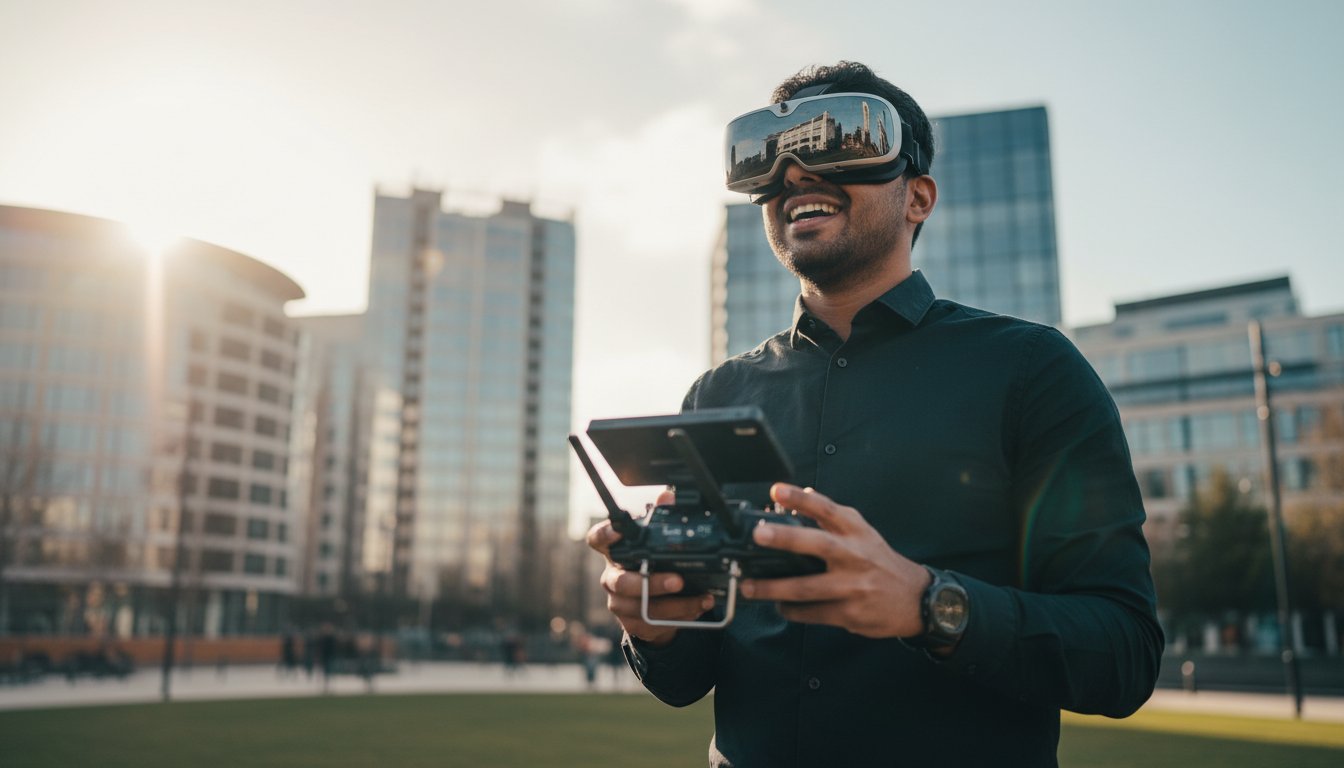
Have you seen those incredible, fast-paced videos that swoop and dive like a bird of prey? This is the world of First-Person-View (FPV) drone flying, a discipline that’s rapidly changing aerial cinematography. Yet, for those looking to get started with FPV in UK airspace, the landscape can seem complex. You might be confused by the technical jargon, unsure of the difference between high-speed racing and professional cinematic drones, and rightly concerned about navigating the strict regulations set by the Civil Aviation Authority (CAA).
This comprehensive guide is designed to provide clarity and confidence. We will demystify FPV flying, breaking down exactly what it is and the essential equipment involved. You will gain a clear understanding of the crucial UK laws you must follow to operate safely and legally, giving you peace of mind. Furthermore, we’ll explore how professional, CAA GVC Certified operators are harnessing this technology to create breathtaking videos for businesses, and outline the first steps you can take to begin your own FPV journey correctly and responsibly.
What is FPV and How Does it Differ from Standard Drones?
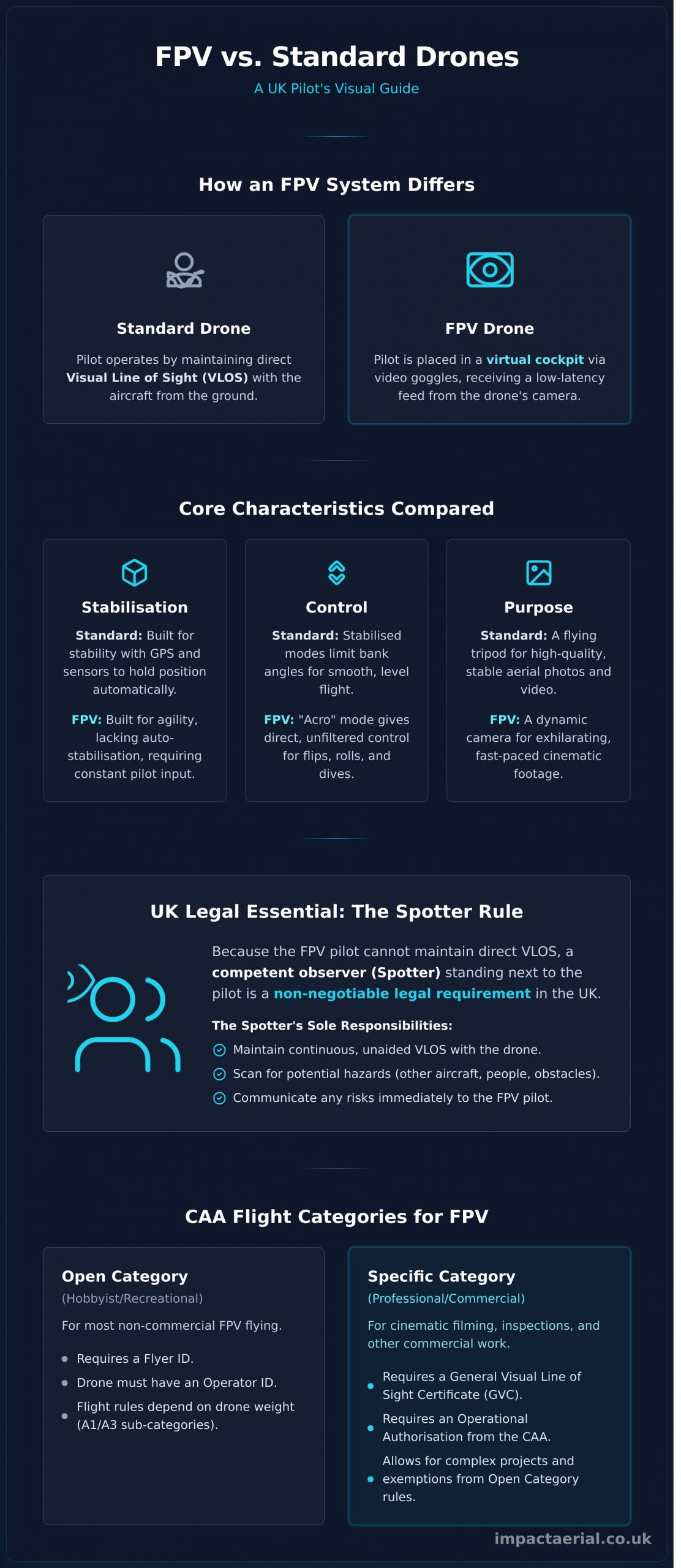
In the professional drone industry, FPV, or First-Person View, represents the most immersive and dynamic method of piloting an unmanned aerial vehicle (UAV). Unlike standard drones where the pilot observes the aircraft from the ground, FPV places the pilot directly in a virtual cockpit. This is achieved through a specialised system comprising a camera on the drone, a high-speed video transmitter, and a pair of video goggles worn by the operator. The result is a real-time video feed that provides a true sense of flight, speed, and orientation. For a detailed technical breakdown of what is FPV and its underlying technology, Wikipedia offers a comprehensive overview.
To better understand this concept and its specific considerations for UK pilots, the following video provides expert guidance:
The FPV Experience: Goggles On
Wearing the FPV goggles provides a pilot with an unparalleled sense of presence and control. The key to this experience is the low-latency video transmission; the delay between the drone’s camera and the pilot’s goggles is mere milliseconds. This instantaneous feedback is critical for navigating complex environments at speed, avoiding obstacles, and executing precise, acrobatic manoeuvres that would be impossible with a standard video feed. This level of control is a primary reason why the commercial use of fpv in uk is rapidly growing for applications like dynamic property tours and action sports filming.
Standard Drones (e.g., DJI Mavic) vs. FPV Drones
While both are powerful tools, their design philosophies and operational characteristics are fundamentally different. Understanding these distinctions is crucial for selecting the right equipment for a commercial project.
- Stabilisation: Standard commercial drones, such as those in the DJI Mavic or Enterprise series, are built for stability. They use GPS and an array of sensors to hold a fixed position automatically and avoid obstacles. FPV drones, by contrast, are designed for agility and lack these stabilising features, requiring constant pilot input to stay airborne.
- Control: Most FPV drones are flown in “Acro” (Acrobatic) mode, which gives the pilot direct, unfiltered control over the aircraft’s pitch, roll, and yaw. This allows for flips, rolls, and dives. Standard drones operate in stabilised modes, where the flight controller limits bank angles and assists the pilot to ensure smooth, level flight.
- Purpose: A standard drone is a flying tripod, perfect for capturing high-quality, stable aerial photographs and video. An FPV drone is a high-speed, dynamic camera platform, designed to create exhilarating, fast-paced footage that follows a subject through complex flight paths.
FPV Drone Rules in the UK: Flying Legally and Safely
Flying an FPV drone is an exhilarating experience, but it is governed by the same robust legal framework as any other unmanned aircraft. Before launching, it’s essential to understand that all standard regulations, as outlined in the CAA’s Drone and Model Aircraft Code, still apply. These foundational UK FPV drone laws ensure that operations are conducted with the highest regard for public safety. However, the unique nature of FPV flight introduces one critical, non-negotiable requirement: the use of a competent observer, or ‘spotter’.
The ‘Spotter’ Rule Explained
Because the FPV pilot’s view is limited to the camera feed, they cannot maintain direct, unaided visual line of sight (VLOS) with the aircraft. This is a core tenet of UK drone safety. To fly legally, the pilot must be accompanied by a spotter standing next to them. The spotter’s sole responsibilities are to:
- Maintain continuous, unaided VLOS with the drone at all times.
- Scan the surrounding airspace and environment for potential hazards, such as other aircraft, people, or obstacles.
- Communicate any risks clearly and immediately to the FPV pilot.
Operating an FPV drone without a spotter is illegal in almost all circumstances and compromises the safety of the entire operation.
FPV Flying in the CAA’s Open Category
Most hobbyist and recreational FPV flying in the UK falls within the CAA’s Open Category. All pilots must have a Flyer ID and the drone must be labelled with an Operator ID. The specific sub-category (primarily A1 or A3 for FPV) dictates where you can fly, determined by the drone’s weight and class. For example, flying a heavier, non-compliant drone means you must remain far from uninvolved people. Organisations like the British Model Flying Association (BMFA) or FPV UK offer invaluable guidance, community support, and liability insurance for members operating in this category.
Commercial FPV Operations
For professional applications, such as cinematic filming or complex inspections, pilots must operate within the Specific Category. This requires a higher level of training and certification, culminating in the General Visual Line of Sight Certificate (GVC). A GVC allows a professional operator to apply to the CAA for an Operational Authorisation, which grants specific exemptions and permissions not available in the Open Category-essential for complex commercial projects. This ensures your project is not only visually stunning but also fully compliant and insured. For professional results with guaranteed peace of mind, trust a CAA GVC Certified pilot for your project.
The Two Worlds of FPV: Hobby vs. Professional Cinematic Use
While the underlying technology is similar, the application of First Person View (FPV) flying diverges into two distinct disciplines: the high-octane world of hobbyist racing and freestyle, and the meticulous, high-stakes domain of professional cinematic production. Understanding this distinction is crucial for any business considering FPV services, as the equipment, pilot skillset, and final output are fundamentally different. Both represent the peak of drone control, but they serve entirely separate objectives.
FPV for Hobbyists: Racing and Freestyle
The roots of modern FPV are firmly planted in the hobbyist community. Drone racing involves navigating custom-built, lightweight quadcopters through complex courses at speeds exceeding 100mph. Freestyle, by contrast, is an aerial art form, focusing on acrobatic manoeuvres and creative expression. This strong community, often supported by organisations like the FPV UK drone association, fosters innovation and pushes the boundaries of what these aircraft can do. The focus here is on raw performance, agility, and pilot reflexes.
Cinematic FPV: The Professional Application
In the commercial world, the agility of FPV has been harnessed to create smooth, dynamic, and immersive video content that is impossible to capture with conventional stabilised drones. The skillset shifts from pure speed to absolute precision and fluid control. Pilots must fly with a cinematographer’s eye, executing complex, pre-planned flight paths to produce breath-taking results. The equipment is also specialised; instead of lightweight racers, professionals use more powerful drones engineered to carry high-quality cameras like the GoPro HERO series or even compact cinema cameras.
A key innovation in commercial FPV in UK operations is the ‘cinewhoop’-a smaller, ducted drone designed for enhanced safety. These are ideal for flying indoors and in close proximity to subjects, enabling incredible one-take property tours and dynamic shots around people or valuable assets. The value for businesses is clear: FPV provides a unique and highly engaging perspective for marketing and promotional content.
- Real Estate: Seamless indoor-to-outdoor property fly-throughs.
- Action Sports: Tracking fast-moving subjects like mountain bikers or skiers.
- Automotive: High-energy car commercials and track day filming.
- Tourism & Events: Immersive tours of venues and landscapes.
Getting Started with FPV in the UK: A Beginner’s Roadmap
Embarking on your FPV journey requires a structured, safety-first approach. Unlike standard camera drones, FPV aircraft demand a high level of manual skill. This roadmap provides a methodical entry point into the exciting world of FPV in the UK, ensuring you build a solid foundation of competence before taking to the skies.
Step 1: Master the Simulator
Before spending a single pound on hardware, your first investment should be in a quality FPV simulator. Crashing a real drone can easily result in repair bills of £50-£150, whereas crashing in a simulator is free. Programmes like Liftoff and Velocidrone perfectly replicate the flight physics of a real FPV quadcopter. Your primary goal is to master ‘Acro’ mode-the fully manual flight mode that provides the fluid control FPV is known for. Dedicate at least 10-20 hours of practice; this will build crucial muscle memory and save you significant time and money.
Step 2: Choosing Your First FPV Drone
Once you are confident in the simulator, it’s time to choose your equipment. The easiest entry point is a ‘Ready-To-Fly’ (RTF) kit. These bundles typically include the three core components you will need:
- The Drone: Start with a small, ducted “Tiny Whoop” style drone. Their low weight and protected propellers make them ideal for safe indoor and garden practice.
- The Goggles: Your immersive view into what the drone sees.
- The Radio Controller: Your connection to the aircraft.
An all-in-one kit ensures compatibility and simplifies the setup process. While the DIY route of building a drone from individual parts offers more customisation, it is best reserved for when you have more experience.
Step 3: Find a Safe Place to Fly
Your first outdoor flights are critical. Always choose a large, open field, completely clear of people, property, and livestock. Joining a local model aircraft or FPV club (many are affiliated with the British Model Flying Association) is an excellent way to find approved flying sites and gain advice from experienced pilots. Remember, when flying FPV in the UK, you are legally required to have a ‘spotter’ with you who can maintain a direct visual line of sight with the drone. Always adhere to the principles of the UK Drone Code to ensure every flight is safe and compliant.
Hiring a Professional FPV Service in the UK
While the dynamic, acrobatic nature of FPV flight is thrilling, translating that potential into high-quality, safe, and legally compliant commercial content requires a specialist. Complex shots through tight spaces or around people and property demand more than just a hobbyist’s skill; they require a certified professional with a deep understanding of both UK aviation law and cinematic principles.
Why Professionalism Matters for FPV
When vetting a provider for commercial fpv in uk, professionalism is paramount. A certified operator will hold a CAA General Visual Line of Sight Certificate (GVC), a legal requirement for most complex commercial operations, ensuring every flight is planned and executed safely. For added peace of mind, comprehensive commercial liability insurance is non-negotiable, protecting your project and property. Finally, a true professional is also a cinematographer, focusing on shot composition, lighting, and movement to tell a compelling story.
What Can Cinematic FPV Do for Your Business?
The unique perspective offered by FPV drones can elevate your marketing and visual content in ways traditional methods cannot. By partnering with an expert, you can unlock a range of creative possibilities:
- Immersive Virtual Tours: Guide viewers seamlessly through commercial properties, construction sites, or event venues with a single, continuous shot.
- High-Energy Footage: Capture the speed and excitement of action sports, vehicle tracking, or fast-paced product demonstrations.
- Scroll-Stopping Social Media Content: Produce dynamic, attention-grabbing videos that are unlike anything your competitors are posting.
The creative applications are vast. See how we use FPV to create stunning aerial films.
Working with a professional FPV company follows a structured and meticulous process. It begins with a detailed consultation to understand your creative vision and objectives. This is followed by comprehensive pre-flight planning, which includes site surveys, airspace checks, and the creation of a detailed risk assessment to mitigate potential hazards. On the day of the shoot, the operation is conducted according to a strict operational authorisation from the CAA. The process concludes with professional post-production, where raw footage is expertly edited, colour-graded, and finished to deliver a breath-taking final product.
Ultimately, hiring an accredited FPV service is an investment in quality, safety, and reliability. It ensures your project not only looks spectacular but is also produced legally and without risk. By choosing a certified and insured operator like Impact Aerial, you gain access to top-tier equipment, technical expertise, and the creative vision needed to produce truly impactful aerial content.
Embracing the Dynamic World of FPV in the UK
From the immersive thrill of the pilot’s seat to its incredible cinematic potential, First-Person View flying offers a unique perspective unlike any other. This guide has navigated the essentials, highlighting the crucial differences from standard drones and underscoring the importance of adhering to CAA regulations for safe, legal operation. Whether you’re embarking on a new hobby or require professional results, the landscape for fpv in uk is vibrant and full of opportunity.
When your project demands the highest standards of quality, safety, and regulatory compliance, partnering with a certified specialist is non-negotiable. At Impact Aerial, we are specialists in cinematic FPV and complex aerial filming. As a fully insured and CAA GVC Certified operator, we provide complete peace of mind for clients in Birmingham, the West Midlands, and throughout the United Kingdom.
Ready to capture breath-taking, never-before-seen perspectives for your next production? Discuss your cinematic FPV project with our certified experts. Let’s create something truly spectacular together.
Frequently Asked Questions About Commercial FPV Drone Operations
Is FPV drone flying legal in the UK?
Yes, FPV drone flying is legal in the UK, but it is strictly regulated by the Civil Aviation Authority (CAA). A critical safety requirement for any FPV flight is the presence of a ‘spotter’ who maintains a direct, unaided visual line of sight (VLOS) with the drone at all times. Commercial operations, like those we conduct, must adhere to even more stringent safety protocols and require specific operational authorisations to ensure full compliance with UK aviation law.
Do I need a license to fly an FPV drone in the UK?
For any commercial operation, a specific CAA qualification is mandatory. The current professional standard is the General Visual Line of Sight Certificate (GVC), which proves a pilot has the required level of competence and safety awareness. While hobbyists operate under different rules, any professional service offering commercial FPV in UK airspace must hold a valid GVC and an Operational Authorisation from the CAA, providing clients with essential peace of mind.
How far can an FPV drone fly?
While the technical range of an FPV drone’s video signal can be several kilometres, the legal flight distance in the UK is defined by the Visual Line of Sight (VLOS) rule. The aircraft must remain within the direct, unaided sight of the spotter, which in practice is typically no more than 500 metres. All our professional flight operations adhere strictly to this CAA regulation to guarantee the safety and legality of every project we undertake.
Is it hard to learn to fly an FPV drone?
Learning to fly an FPV drone has a significantly steeper learning curve compared to standard GPS-stabilised drones. FPV drones are flown in ‘acrobatic’ or ‘acro’ mode, which provides full manual control without any self-levelling assistance. This requires extensive practice, often beginning with simulators. Mastering this skill is what allows our certified pilots to capture the unique, dynamic, and fluid shots that are simply impossible to achieve with conventional drones.
Can you wear glasses with FPV goggles?
This is dependent on the specific model of FPV goggles and the size of the glasses frames. Some larger “box” style goggles may accommodate smaller frames. However, for the best visual clarity and comfort, most professional pilots who require corrective lenses use custom diopter inserts. These are prescription lenses that fit directly into the goggle optics, removing the need for glasses and ensuring a perfectly clear, immersive view for the operator.
What’s the difference between a cinewhoop and a freestyle FPV drone?
The primary difference is their design and operational purpose. A cinewhoop is a small FPV drone, often under 250g, featuring protective ducts around its propellers. This design makes it safer for flying close to subjects or indoors and is optimised for smooth, stable cinematic footage. In contrast, a freestyle drone is larger and more powerful, built for high-speed, agile, and acrobatic manoeuvres. We select the appropriate aircraft based on the specific creative and safety requirements of a project.
 2 Norton Drive, Wythall, Birmingham, B47 6HH Company registration number: 11138586. VAT Number: 366 9068 55