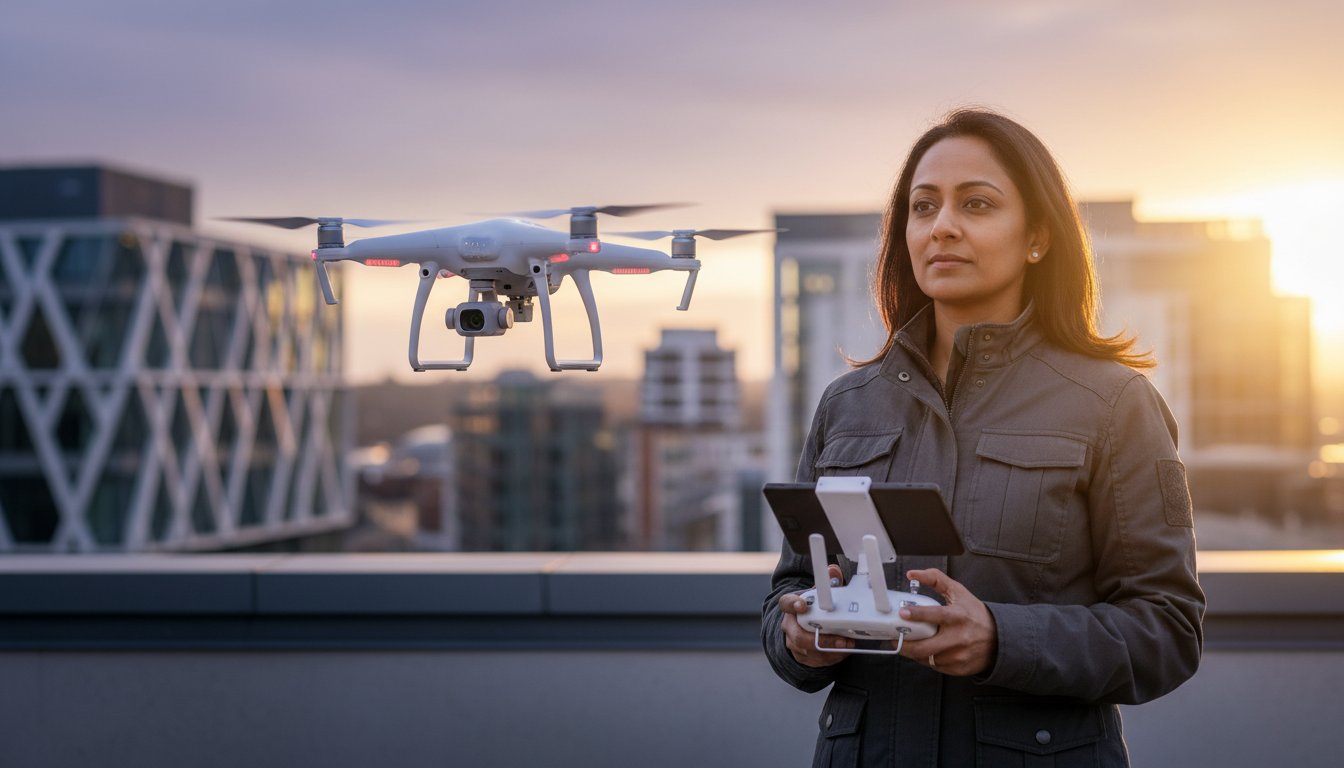
The potential of aerial footage is undeniable, offering perspectives that can transform your marketing, inspections, or project oversight. Yet, for many UK businesses, navigating the world of professional drone videography can seem complex. Concerns over strict CAA regulations, public liability, and the risk of receiving unstable, low-quality footage from an uncertified operator are both valid and significant barriers to entry.
This comprehensive guide is designed to provide complete peace of mind. We will demystify the entire process, from the initial pre-flight survey to the delivery of breath-taking, high-quality video that achieves your business goals. You will discover the tangible benefits aerial videography can bring to your specific industry and, more importantly, gain the confidence to make an informed and safe decision when hiring a provider.
Read on to learn exactly what to look for in a partner-from essential CAA GVC certification and commercial liability insurance to the professional equipment and meticulous planning required for a successful operation. By the end, you’ll be fully equipped to choose a certified specialist who can elevate your business, legally and effectively.
What is Professional Drone Videography? (And Why It’s More Than Just Flying)
At its core, professional drone videography is the art and science of capturing cinematic, high-quality aerial video footage. It’s a sophisticated discipline that goes far beyond simply launching a drone into the air. While hobbyists might capture a nice view, a professional service delivers a polished, strategic asset for your business. This is achieved by blending advanced piloting skills with a deep understanding of cinematography, a commitment to safety protocols, and a mastery of post-production techniques. It is a modern evolution of traditional aerial photography, leveraging cutting-edge technology to create dynamic, moving perspectives that were once only possible with helicopters and enormous budgets.
To see the fundamental principles in action, the following video provides an excellent introduction:
The Key Elements of High-Quality Aerial Video
Achieving a professional result depends on several critical technical and creative components working in harmony:
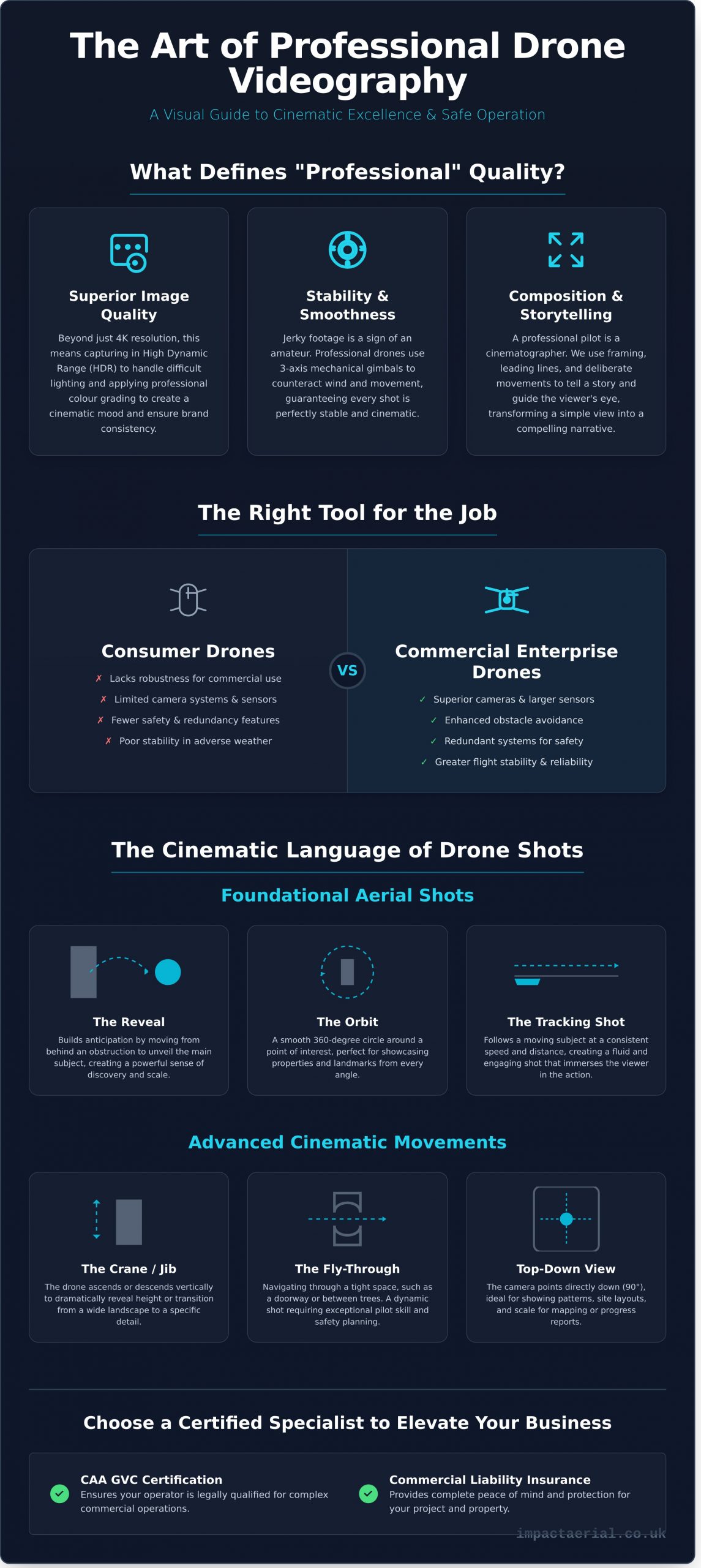
- Image Quality: This is about more than just resolution. While we capture in 4K or higher, we also utilise High Dynamic Range (HDR) to manage challenging light and apply professional colour grading in post-production to create a specific mood and ensure brand consistency.
- Stability & Smoothness: Jerky, unstable footage is the hallmark of an amateur. Our drones are equipped with 3-axis mechanical gimbals that counteract wind and movement, ensuring every shot is perfectly smooth and cinematic.
- Composition & Storytelling: A professional pilot is also a cinematographer. We don’t just show a location; we use leading lines, framing, and deliberate camera movements to tell a story and guide the viewer’s eye, transforming a simple view into a compelling narrative.
Consumer Drones vs. Commercial Enterprise Drones
While a consumer drone like a DJI Mini is a remarkable piece of technology for hobbyists, it lacks the robustness and advanced capabilities required for commercial operations. Professional operators utilise enterprise-grade drones, which feature superior camera systems with larger sensors, enhanced safety features like obstacle avoidance and redundant systems, and greater flight stability in adverse weather. This specialised equipment ensures not only top-quality, reliable data capture but also operational safety and compliance with CAA regulations, providing essential peace of mind for our clients.
The Cinematic Language: Key Drone Shots and Techniques
Effective drone videography is far more than simply launching a camera into the air. It is a form of cinematic language, where each movement and angle is deliberately chosen to evoke a specific emotion, reveal information, and tell a compelling story. An experienced, certified pilot is not just an operator; they are an aerial cinematographer who understands how to translate your project’s goals into dynamic, high-quality visuals. This expertise is what separates standard aerial footage from a truly professional production.
Foundational Aerial Shots
These core movements form the building blocks of most aerial sequences, each serving a distinct narrative purpose:
- The Reveal: This classic shot builds anticipation by moving the drone forward or sideways from behind an obstruction (like a building or a treeline) to unveil the main subject. It creates a powerful sense of discovery and scale, perfect for introducing a property or location.
- The Orbit: The drone flies in a smooth, 360-degree circle around a point of interest. This technique is invaluable for showcasing commercial properties, architectural landmarks, or event spaces, providing a comprehensive and contextual view from all angles.
- The Tracking Shot: In this shot, the drone follows a moving subject, such as a vehicle, a person, or wildlife. A professional pilot can maintain a consistent speed and distance, creating a fluid and engaging shot that immerses the viewer in the action.
Advanced Cinematic Movements
Executing these complex manoeuvres requires a higher level of technical skill and precise control, adding significant production value:
- The Crane/Jib Shot: Simulating a traditional camera crane, the drone ascends or descends vertically. This can be used to dramatically reveal the height of a structure or transition from a wide landscape view to a specific detail on the ground.
- The Fly-Through: A highly dynamic shot where the drone navigates through a tight space, such as an open doorway, between trees, or within an unfinished building frame. This manoeuvre requires exceptional pilot skill and a meticulous approach to safety, operating strictly within the guidelines of The Drone and Model Aircraft Code.
- Top-Down (Bird’s-Eye View): The camera points directly down at a 90-degree angle, capturing a unique perspective. This is ideal for showing patterns, layouts, and scale, making it highly effective for site progress reports, event planning, and mapping applications.
How These Shots Add Value to Your Project
An experienced drone videography partner knows precisely which shot will best achieve your objective. An orbit can provide the “money shot” for a property listing, while a series of tracking shots can create an energetic promotional video. By skilfully combining a variety of these foundational and advanced techniques, a pilot can create a final video that is far more engaging and professional, holding the viewer’s attention and communicating your message with clarity and impact. This thoughtful shot selection is a key differentiator that elevates your project from amateur footage to a polished, cinematic asset.
To understand how these techniques translate into high-impact visuals, see our showreel to see these shots in action.
Business Applications: How UK Industries Leverage Drone Videography
Beyond creating stunning visuals, professional drone videography is a powerful commercial tool that delivers a tangible return on investment. An experienced aerial partner understands how to translate a flight plan into tangible business outcomes, tailoring their approach to the unique operational and regulatory demands of different UK sectors. The versatility of this technology is unlocking new efficiencies and marketing opportunities for forward-thinking companies.
Property and Real Estate Marketing
For estate agents and property developers, perspective is everything. Aerial footage can capture an entire property, its boundaries, and the surrounding landscape in a single, compelling shot. This allows for the creation of high-quality marketing videos and virtual tours that not only showcase a building but also its valuable context-highlighting proximity to local schools, transport links, and green spaces. This comprehensive view gives potential buyers the confidence they need, often leading to faster sales cycles.
Construction and Development
In the construction sector, clear communication and safety are paramount. We produce detailed progress videos that provide stakeholders and investors with a clear, top-down view of site advancements. An experienced pilot understands the complexities of an active construction site, ensuring all operations are conducted safely and in full compliance with the UK Civil Aviation Authority’s Drone and Model Aircraft Code. From capturing ‘topping out’ ceremonies to creating powerful marketing assets for off-plan sales, aerial footage documents your project’s journey and helps secure future investment.
Marketing and Advertising
For marketing agencies and corporate brands, aerial footage delivers immediate impact. A sweeping establishing shot can set the scene for a corporate video or television commercial, conveying scale and professionalism instantly. We provide dynamic, cinematic content ideal for engaging social media campaigns that stop the scroll. Furthermore, for large-scale outdoor events, festivals, or brand activations, drones can capture the energy and scope of the occasion in a way that is simply impossible from the ground, creating unforgettable promotional material.
The Professional Workflow: From Initial Brief to Final Delivery
A breath-taking final video doesn’t happen by chance. It is the end product of a meticulous, safety-focused process that separates professional operators from hobbyists. An experienced partner demystifies this entire journey, providing clarity and peace of mind from the first conversation to the final file transfer. This structured workflow is what defines high-quality drone videography and ensures your project is delivered safely, legally, and to the highest standard.
Phase 1: Consultation and Pre-Production
The foundation of any successful project is laid long before the drone takes flight. This critical pre-production phase involves a methodical approach to planning and compliance.
- Initial Consultation: We begin with a discovery call to fully understand your objectives, creative vision, and the specific shots required to achieve your goals.
- Pre-Flight Survey & Risk Assessment: A detailed desktop survey of the location is conducted to identify potential hazards, obstacles, and environmental factors. This informs a comprehensive risk assessment, ensuring all operations are planned with safety as the priority.
- Permissions & Airspace Checks: As a CAA GVC Certified operator, we handle all necessary compliance, including checking for airspace restrictions (e.g., proximity to airports or restricted zones) and securing permissions from landowners or relevant authorities.
Phase 2: The On-Site Filming Day
With a robust plan in place, the filming day is executed with precision and professionalism. The focus is on capturing the planned footage efficiently while maintaining an uncompromising commitment to safety on site.
- On-Site Safety Briefing: Before any flight, our pilot conducts a thorough on-site safety briefing with all relevant personnel and establishes a secure flight area.
- Expert Execution: The certified pilot executes the pre-agreed shot list, using their expertise to capture smooth, cinematic footage that aligns with the project’s creative brief.
- Client Collaboration: Where practical and safe, clients can view a live feed from the drone’s camera. This real-time collaboration ensures the footage being captured meets your expectations instantly.
Phase 3: Post-Production and Delivery
Capturing the footage is only half the story. The raw data is then transformed into a polished, compelling video asset ready for your audience. This is where the full value of professional drone videography comes to life.
- Editing & Colour Grading: Our post-production team edits the best takes into a cohesive narrative, applying professional colour grading to enhance the visual mood and ensure brand consistency.
- Finishing Touches: We can incorporate branding elements such as logos and graphics, as well as licensed music and sound design, to create a complete, impactful final product.
- Final Delivery: The completed video is delivered to you in your required formats, fully optimised for web, social media, or internal presentations.
How to Hire a Drone Videographer in the UK: A Non-Negotiable Checklist
Choosing the right partner for your drone videography project goes beyond impressive showreels. To protect your business and ensure a high-quality outcome, you need to verify their credentials. This checklist covers the non-negotiable markers of a professional, experienced, and legally compliant drone operator in the UK, empowering you to ask the right questions and hire with confidence.
Certification: CAA GVC is the Professional Standard
The Civil Aviation Authority (CAA) is the UK’s aviation regulator. Any operator flying for commercial purposes must hold the correct qualifications. The General Visual Line of Sight Certificate (GVC) is the current professional standard, demonstrating a pilot has the required knowledge and practical skills. Hiring a pilot without a valid GVC and the necessary CAA Operational Authorisation is a significant risk, both legally and in terms of safety.
Insurance: Verify Commercial Liability Cover
Accidents, though rare with professionals, can happen. An uninsured operator exposes your business to immense financial and legal liability. For added peace of mind, a professional drone service must carry substantial commercial liability insurance. At Impact Aerial, we hold a £5 million policy. Always ask for a copy of their current insurance certificate before any work begins; a reputable provider will supply it without hesitation.
Portfolio and Equipment
A portfolio is the ultimate proof of capability. Review a provider’s past work, paying close attention to projects within your industry or that match your desired creative style. This demonstrates their experience and ability to deliver relevant results. Don’t be afraid to ask about their equipment. A professional will use high-grade drones and cameras suited to your specific project needs, a clear differentiator from an amateur’s off-the-shelf drone.
The Importance of a Detailed Quote
A professional quote is more than just a final price; it’s a transparent plan. It should clearly break down every phase of the project, including:
- Pre-flight planning, risk assessments, and airspace checks.
- On-site flight time and personnel costs.
- Post-production, including editing, colour grading, and final delivery.
This level of detail signals professionalism and ensures there are no hidden costs. To see how a professional drone videography project is structured, get a transparent, no-obligation quote from our team.
Elevate Your Vision with Professional Drone Videography
As we’ve explored, professional aerial footage offers a transformative perspective for UK businesses. It is a specialist discipline that combines cinematic skill with technical precision and, most importantly, a steadfast commitment to safety and regulatory compliance. From creating compelling marketing content to gathering critical project data, the key to success lies in partnering with a qualified, experienced operator.
When you’re ready to harness the power of an aerial perspective, it’s crucial to choose a partner who guarantees professionalism and quality. At Impact Aerial, we provide that assurance. Operating across the UK from our base in the West Midlands, we are CAA GVC Certified and fully insured for your complete peace of mind. Our state-of-the-art 4K HDR DJI Enterprise drones ensure every frame is captured with breath-taking clarity.
Ready to see your project from a new, impactful angle? Request a professional drone videography quote for your project and let’s discuss how we can bring your vision to life.
Frequently Asked Questions About Drone Videography
How much does professional drone videography cost in the UK?
The cost for professional drone videography in the UK typically ranges from £350 – £700 for a half-day to £700 – £1500+ for a full day. This price reflects not just the flight time, but the extensive pre-flight planning, risk assessments, CAA-certified pilot expertise, and high-end equipment involved. Factors like location complexity, editing requirements, and the need for specific operational authorisations will influence the final quote. A detailed proposal will always be provided for complete transparency.
Is it legal to fly a drone anywhere for a video shoot?
No, it is not legal to fly a drone anywhere in the UK. Operations are governed by strict Civil Aviation Authority (CAA) regulations. Flying is restricted near airports, over crowds, and above certain heights. A professional, CAA GVC Certified operator is essential as they are trained to conduct thorough pre-flight surveys and risk assessments to ensure every flight is conducted safely and legally, securing any necessary permissions for the proposed location and flight plan.
What happens if the weather is bad on the scheduled filming day?
Client and public safety is our highest priority. We cannot operate our drones in adverse weather conditions such as high winds or rain. If the forecast is unsuitable for a safe flight, we will contact you in advance to reschedule the shoot for the next suitable date at no additional cost. Our terms of service will clearly outline this weather contingency, providing you with complete peace of mind that we will only fly when it is safe to do so.
How long does it take to get the final edited video?
The turnaround time for a final edited video typically ranges from 5 to 10 working days after the filming is complete. This timeline can vary depending on the project’s complexity, the amount of footage captured, and specific post-production requirements such as colour grading, motion graphics, or music licensing. We will always provide a clear and realistic delivery schedule as part of our initial project proposal, ensuring you know exactly what to expect.
Can you fly drones indoors or close to buildings?
Yes, flights indoors or in close proximity to buildings are possible but require specialist expertise and equipment. Indoor operations often utilise smaller, specialised drones with propeller guards for enhanced safety. Flying close to structures requires a meticulous risk assessment and may require specific operational authorisation from the CAA. An experienced partner has the technical knowledge and procedural discipline to plan and execute these complex flights safely and effectively, capturing unique and dynamic perspectives.
What information do I need to provide to get an accurate quote?
To provide an accurate quote for your drone videography project, we require several key details. Please provide the precise location of the shoot (a postcode or What3Words is ideal), the primary objective of the video (e.g., marketing, inspection), and your required deliverables (raw footage or a fully edited film). Knowing your ideal filming dates also helps us conduct preliminary airspace checks and assess availability, ensuring our quote is both comprehensive and precise.
 2 Norton Drive, Wythall, Birmingham, B47 6HH Company registration number: 11138586. VAT Number: 366 9068 55